Did You Know?by welltrod |
Shabbat Shalom from welltrod
What a beautiful and refreshing morning we had. I wanted to share this because Abba has never been so close as I have felt Him today.
As Rivkah and I were wrapping up with the feeding of the homeless this morning, there were two plates left over. Today had seemed a lot slower than normal, so we had a few leftovers. I grabbed one plate and Rivkah took the other one, and we started walking out towards the street in between two buildings. About half way to the main street, we saw a man who looked like he had not eaten yet. Rivkah handed him the plate. She turned around to go back to help with the tear down while I continued looking for someone to give the last plate of food to.
There were very few people standing around and I was standing in the middle of the side street looking around. I softly said to Father, “please Father, let someone come around the cor—-“. I had not even completed the last word “corner” before I saw a man round the corner from the main street and began walking towards me. I thanked Abba and walked to him and handed him the last plate of food. He was thirsty, so I told him to come walk with me back to the drink area and as we were walking, we talked. However, it wasn’t until we neared the drink area, that when I began speaking encouraging words to him, that he stopped cold in his tracks and said, “I needed to hear that.” You see, I could tell by his body language, regardless of the sunglasses he was wearing, that he was breaking down in tears. Upon further discussion and speaking the words of Psalm 3 over him, ‘Elohim being the lifter of his head,’ the man began to tell me that he had just lost everything. The words Father was speaking through me to that man was like cold water to a thirsty soul. I was most humbled… Just about that time, Rivkah came over and we both stood there and prayed for him. I put my hand on his sweaty shoulder, and holding onto his torn and ragged backpack, he began to share how much he needed to hear such words of encouragement. This morning before we left the house, I felt an urging to read Psalm 34. Most assuredly, it was for this man that I was being prepared to meet. For out of all the homeless we fed today, there was none who gripped my heart more than this man.
Tears rose up from deep within my spirit and poured down my face on the way home. I merely asked Abba to send someone around the corner, and before the words had barely left my lips, the man came from around the corner. For what purpose did I meet this man today? A broken down human being walking the ‘streets of despair’, yet Father had him round the corner of a building, where I was standing and holding the last plate of food – nourishment for his body, and hope for his spirit. How many times have we rounded the corner of despair, hopelessness and abandonment? How blessed are we to have food on the table, people to love us, and Father Elohim who never abandons us! This is the fuel that drives Rivkah and I to do what we do. For it may be possible that when we stand before Yahushua Messiah Himself, and He says, “thank you for giving Me something to eat, something to drink,” and we say, “but when did we give You something to eat, something to drink?” And He responds, “remember? I was the Man that rounded the corner…”
“Yahuweh is near to the broken-hearted, And saves those whose spirit is crushed.” Psalm 34:18
Derek @ welltrod
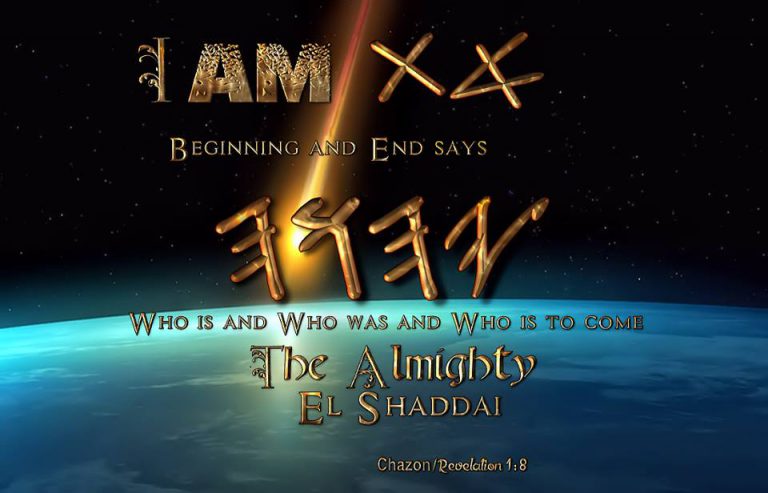
Rev 1:8 “I am the ‘Aleph’ and the ‘Tau’, Beginning and the Covenant without End,” says יהושע Messiah, “who is and who was and who is to come, the Almighty.”
“The Man Child”…upon completion, this book shall be available at NO charge.
Part 1: Please click the link below for Part 1 of 4 for the Book of Man Child Vol.1
8-1-13 PDF Part 1 – The Man Child of the Book of Revelation
Part 2: Please click the link below for Part 2 of 4 for the Book of Man Child Vol.1
3-1-2014 PDF Part 2 – Vol 1 Only – First Draft
Part 3: Please click the link below for Part 3 of 4 for the Book of Man Child Vol.1
5-25-2015 PDF Section 1 of 3, Part 3 – Vol 1 – First Draft
5-27-2015 PDF Section 2 of 3, Part 3 – Vol 1 – First Draft
Etymologist Eliyahu exposes the words commonly used by most religious groups today-and how words of the Principalities have slipped into the English language in Greek-Latin-Germanic-forms over clean Greek words and some not so clean to get the believers to speak their language of the rulers of this age controlling the education systems around the world. we’re exposing the strong holds on our tongue and words that show the fruit of these rulers of darkness active in the places’s of religious groups of worship on all sides of the fence and as Followers of Yah we need to be the called out ones to have a clean lip and tongue as a example for others and to fight these Principalities with the clean Hebrew words to have more authority in our prayers.
We declare that the Replacement Theology now made Void “Canceled”, and the lost sheep are continuing to be Restored and Grafted into YHWH /YHUH, HOUSE of Yisrael.
Romans 11:15-27; Eph.2:11-14,19; 3:3-7;
-
ALPHA & OMEGA Greek for Beginning & Ending. Replaced Hebrew-ALEPH & TAV meaning Beginning & Never Ending Covenant, He is our Covenant and has NO Ending.
-
ANGEL, ANGELS=Latin Origin / Replaced English-Set Apart Messenger– Hebrew-MALACH– Plural- Messengers= MELACHIM.
-
Apostle -Latin for grk#652.Apostolos-Replaced English=AMBASSADOR Envoy; Heb. SHELIACH; Ambassador 2 Corinth.5:20, & Eph.6:20,
-
BLESS, BLESSED, BLESSING=Origin 100% Latin Catholic-“Bloedsian” a Pagan blood Ritual for luck. REPLACED, in Heb.#1288 Barak, Baruch- blessedis a bad curse word against us believers. bless-BRACHA or blessings BRACHOT, blessing-=BRACHAT, Clean words=Prosperity, Prosperous favored, Prospering.
-
Bible-BYBLOS a City named after a Pagan deity; that made paper. Replaced-Hebrew Sefer-Scrolls, Scriptures, Parchments, Manuscripts. 2 Tim. 4:13. Also Biblion=Bella Rules.
-
Christ, CHRISTOS, CRISTOS, KRISTO, KRISTI-Latin/Greek. Grk#5547 Orthodox Catholics REPLACED-Original Anointed in 100 ADGrk#3323,Greek true word stayed in scriptures Messi’as –John 1:41, 4:25, compare to Heb.#4899 & #4886 MASHIYACH or MASHIACH=English-Messiah, All the same.
-
Christ Jesus; Latin, REPLACED English-Messiah or Anointed Joshua or in Hebrew Mashiyach Yahushua.
-
Christian CRISTIANOS-Latin /Greek KHRISTIANOS, Created in the Greek Orthodox Catechetical School of Alexandrian 190AD.Then Roman Emperor Constantine adopted it in 310-326 AD.REPLACED-“Anointed” But before 310 AD believers were Called- in Greek. Nazoraeans in Heb.#5139 NAZIYR.
-
Church Roman Catholic Greek for KIRKE,CIRCE, Sirse a Pagan LUST Temple REPLACED a clean Greek#1577 word EKKLESIA ; old Greek Ekklesiyah which means CONGREGATION- Called Out Ones!
-
Charity-Latin Chariti’es; Grk.5463 Charis; Pagan g-ddess, REPLACED Hb.#4976 Mat’tath” a Reward, Free Gift, Gratuity, Bestowment. Charity does Not mean LOVE everyone knows love in Greek is Gk#26 Agape and Gk#25 Agapao.
-
Charisma / Charismatic /Charm/ Greek Pagan g-ddess has the ability to Charm, Captivate, spellbound one into believing anything, male or female Counterfeit spirit REPLACED The Anointed gift of Yahh on believer’s. NOTE; The wordsCharisma & Charismatic are not in the Scriptures at all.
-
COMANNDMENTS/ Replaced-‘Right Rule, Prescribed Instruction
-
FATE is the g-ddess of destiny,daughter of Zeus one of three sisters called Moirai Page 1 of 5
-
14. FAITH / Faithfull-Greek Pagan g-ddess PisteuoPistis-a female g-ddess with a Holli wood magic wand for persuasive false Religious trust on someone or something of the Greek deities FATA; without REPLACEING 2 Tim.2:15 Belief, Trust, Established Reliance, firmness-Heb.#530 EMUNAH.
-
FEAR-Grk.#5391-PHOBEO/PHOBOS-deimon deity, OK to use in the term like; Perfect love cast off FEAR=Deimon” also; He has not given us a spirit of Fear”. But never towards Aloahiym as to Fear Him We Revere YHWH not fear Him. They want us to “FEAR G-d” the Germen deity on their dollar bill.
-
GRACE /GRACIOUS Grk#5485 for The Olympics “The 3 Graces” a Pagan Trinity g-ddess still worshiped wide today, a female deity that married HaZeus Zeus; She REPLACED=FAVOR unmerited benefit Favor, a state of favorable disposition. Hebrew#2580 CHEN=FAVOR.
-
GENTILE /GENTILIS-a Latin word 1350-1400AD Originally Grk#1484 Ethnos “ETHNIC” a tribe, foreign one, RACE, Nation. Inhabitant of Hellas of Greek speaking, REPLACED-Heb.#1471 Qoy=Nation Stranger-Qoyim- Sojourner same word used always for Abraham Gen.18:18 a great Nation/ Great Qoy or Qoyim.
-
18. GOSPEL=GOTTSPELL German Teutonic word also Anglo Saxon Goddspell= their a male Pagan deity Fortune,money.NOT Greek nor Latin REPLACED covered over clean word in Greek#2097 EUANGELION a proclaimer of good news /good tidings, to declare. GOODNEWS In Hebrew #1319 Basar=bring take proclaim good news also Hebrew #1309 BESORAH “Towb” Hebrew for good, News, Good news tidings.
-
19. GLORY-Grk. GLORIA-Latin, “THEORIA” Greek PAGAN deity g-ddess REPLACED covered over Grk.#1391/1392 word Dox’ah-apparent dignity, honor praise esteem magnify exult, full of honor In Hebrew There’s 13 different words 225X used REPLACED over Hb#3519 KABOD-KABAD= Properly Weighed, Splendor, Honor to Magnify Magnificence-Beauty excellency, triumph loud, there is so many clean words in Greek and Hebrew that could be Translated into English, There is NO reason to cover over them with a PAGAN g-ddess word replacement??
-
GOD-in O.T.1st. Covenant all Capitalized letters is “GAD a Deity of The Phoenician Canaanite origin. REPLACED Hb.#430-Elohiym; of Hb.#430 Eloahh; also Hb.#410 EL,el-Mighty deity or Mighty One in Paleo Hebrew the E sound is more of The A sound before the Babylon captivity; so it REPLACED ”ALOAHH” The Lil’ letters god is “el” a pagan deity.
-
21. God or god in the N.T. New Covenant; Is a PAGAN word for a German Celtic Teutonic Deity Called “GOTT” or Anglo Saxon “GODD” They are NOT Hebrew, Latin or Greek words. Latin would be ”DEIOS”, Greek=THEIOS; Hebrew EL / el” Mighty One. Means also Judge, Ruler, Authority, officer, EL in Spanish is still today, Great One, mighty one.
-
22. GHOST=SPIRIT=Grk#4154 & Gk#4151 Pneuma- exhaled air of a dead human, daemon, fallen angel, NOTE; not the breath of our YHWH which is His Ruach Only His Breath of Him is only “Ruach”. Not Spiritus Latin.
-
HalleluYAH, AlleluYah = YAHH be Praised / Praise be to Yahh= Hb#3050 is YAHH.
PAGE 2 of 5
-
HEAVEN=middle English 900AD Norse Valhalla Walhalla the Place where the dead warrior’s go with Odin. Grk.#3772 Ouramos the elevation sky extension abode of Greek G-ds angel’s happiness.” Elysian Fields” a Greek place after death to be with their G-ds-Thor, Zus, Grace, Glory, Sophia, Victoria, Apalo, etc. in the clouds above us. REPLACED; Shamayim Hb.#8064 Hebrew understanding of where the dead resurrect. OR the abode of our Father YHWH and His Son Yahushua siting at His right hand of Authority. Shamayimpart from Mayim “waters” past clouds to where Celestial bodies revolve.
-
HEBREW is IYVREE / Hebrews-Iy’vreem / the Hebrew language-Iyvreem
-
Holy Spirit– REPLACED- Ruach HaKodesh orRuach HaQodesh or Kodesh Ruach.
-
HOLY holy Holi Hail Hal In the year 1100 first appeared in Catholic Latin Vulgate Bibles as Hal; Anglo Saxson as Hail also the German & Dutch bibles. Then appeared in the Wycliffe bible in 1382 AD, Grk# 40 h’agios Gk#39 h’agion Gk.#37 h’agiazo and Helios or gk#2413 Hieros-All related to a Greek PAGAN g-ddess still worshiped today a female Epithet “agios agioi agioi REPLACED; 7 Hebrew clean words, Mainly Heb#6944 Kodesh, Hb.#6918 Kadosh-Hb.#6942 Kadash, There ok with a Q or K beginning letters, Person,place or thing= Clean, Pure, dedicated, Set Apart, Morally blameless, dedication. 28. Holy of Holies– REPLACED-Kadosh HaKedoshim, The Most Pure Dedicated Place.
-
HOPE= 61x used over 2 Greek words only found from Luke to 1 John ; Grk # 1679 “el’pid’zo root #1680 el-pis a female name after a female Greek PAGAN g-ddess First seen in the Orthodox Catholic; Queen of Heaven Trinity is FAITH, HOPE, CHARITY, REPLACED- 9 clean Hebrew words; Hb.#8615 Tiq’vah Hb.#4723 Miq’veh Miq’vay, Miqve- A cord of expectancy, expectation,confidence, a place of refuge, a security trust assurance.
-
30. I AM THAT I AM in HEBREW=AhaYah Asher AhaYah also with E sound- EhYah Asher EhYah=All “Existent Eternal One”. I AM Capitalized in The New Covenant- N.T. when Messiah said it, is EhYah or AhaYah.
-
J”j letters was not created until late 1478 AD Germanic sound unofficially. By 1524AD used in Italian language unofficially as well and was not added to the English Dictionaries till 1634 or so. King Iames Bibles didn’t use the letter “J” till mid 1750’sAD The1604 & 1611AD official bibles used “Iesus, Iesvs, Iesoos, Esus and King James was really “King Iames” Son of Queen Bloody Mary of Scotland the Catholic Queen; and the letter”J” was not starting to change till 1634 or so. They even changed the Messiah’s brother name from Ya’aqob to James also?? WHAT? Does this say, Hazon-Rev.22:18-19;
-
JESUS Gk.#2424 Iesus,Iesvs,Esus, young name REPLACED Hb# 3091 Joshua In Hebrew Yahh-short of-YHWH-Hb#3068 with Hb.#1954 Hoshua=#3091 Yahushua – YHWH is our Deliverer Savior Hb#3091 Yeh-Ho-shoo-ah. Bemid’bar Numbers 13:8,16;
-
Jesus Christ– REPLACED-Yahushua Ha Mashiyach/ English=Yahushua The Messiah or Anointed. 34. Judah– REPLACED- Yehudah A tribe of the house of Yisrael. 35. JEW – Replaced- Yehudi or Yehudite ; Also Jewish Replaced Yehudim. PAGE 3 of 5
-
JUSTICE-Roman Latin; Justitia – Greek Pagan G-ddess DIKE a figure of a masculine female g-ddessNOT in N.T. at all. They added this Greek Pagan word in O.T.REPLACING-Heb#6663 & #6664T’sedeq– Virtue, Morally, Rightness.
-
KING -Replaced-Hb. Melech-English Sovereign; KINGS-Melechim-Sovereigns
-
38. KING of KINGS REPLACED-Melech Ha Melechim English=Sovereign of Sovereigns.
-
Kingdom of G-d; REPLACED Malchut Ha Alohiym-English= Reign of Alohiym. Modern Aramaic Hebrew uses Elohim or Elohiym.
-
Kingdom of Haven; REPLACED Malchut Ha Shamayim more of a English way, Reign of Shamayim.
-
LAW A Latin word not Hebrew nor Greek, older word was LEW REPLACED=TORAH=Instructions.
-
42. Liberty is Latin; Liberates is Greek; both a G-ddess REPLACED 7 wide range of Greek words ? Freedom, permit, pardon, deliverance, Tax free, a wide room, relief, rest. In HB.#7342 Rachab or Hb#1865-A wide Room, Pure, Clear. The statue of liberty has her own Law book on her arm Not TORAH.
-
LORD a title Ba’al=according to-Webster 1828 Dictionary; Smiths Bible Dictionary; International Standard Bible Encyclopedia; Fausset’s Bible Dictionary and Easton’s Bible Dictionary; REPLACING=
YAHH, YHWH, YHUH, YHVH, YAHUAH, YAHWEH, YAHUWAH; for LORD What?
-
lord small caps is ba’al still, but as=Master, king, ruler of Authority
Landlord, He is not our Landlord but our Creator with a NAME.
-
Lord our G-d ; BA’AL GAD Meaning =Lord of Fortune-REPLACED
Yahuah or Yahuwah our Aloahiym;
-
MERCY The Greek G-ddess of Clementia; Roman Latin-g-ddess Romantica-Romance; REPLACED Gk#1653-Eleeo & Gk#1656 Eleos; In Latin for Compassioionate; English meaning=Compassionate, Pity; In Heb#2616 & Hb#2617=Kheh-sed-Pity, Kindly, Compassion. Greek and Hebrew meanings clean words, why? Use a Pagan deity Mercy?
-
NAME A Capitalized N with the word Name expressed for the Father or the Messiah REPLACED “HaShem in Hebrew or The Name in English; Shem is the Attributes and Characteristics of Their Names, But we don’t call Him Name Name=Shem Shem, we call them by their Name’s, Yahuwah / Yahushua.
-
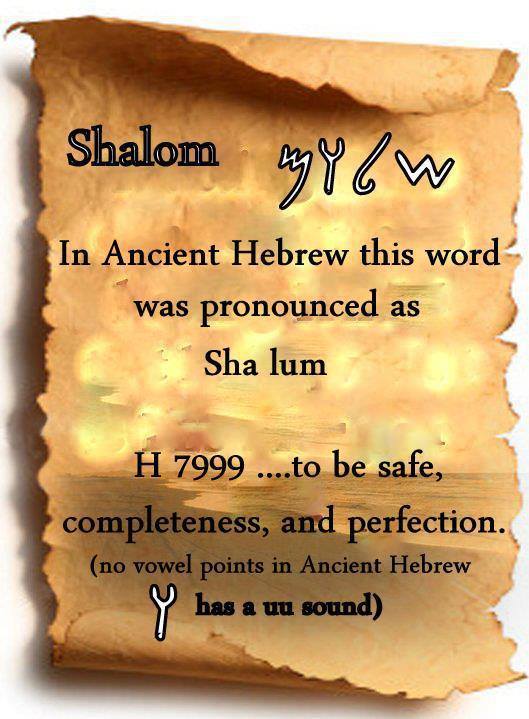
“PEACE “Not Hebrew or Greek; Latin-PAX; French-PAC; Peace Pac means-To bring settling disagreements or takeover of one Nation, Country, By War force, Forceful Agreements, take over your land, will, Laws; Then TAX you and let you live on your own land or Country for a Temporary time on their terms. REPLACED Shalom Shalom He is not the Prince of Peace, But the Prince of Shalom.
Page 4 of 5
-
Rabbi, Rhabbi, Rhabboni these words never in the O.T. First Covenant, it first appeared in N.T. New Covenant. The only O.T. word was “RAB” as Hb#7227 meaning; Many, Great Captain, Mighty, Greatly, all different meanings for English. The N.T. New Covenant Meaning in Gk#4461 G4462 for Rabbi, Rhabbi Rhabboni are GREAT, GREAT ONE, GREAT Master? NOT TEACHER, Teacher in Hebrew#995 is Biyn-Bene or Teacher, Instructor. In Greek#1320 it is KALOS Instructor, Teacher. Yahushua said to call no one Rabbi =GREAT MASTER, Great One.
-
SAINT & SAINTS is a 100% Catholic Pagan word the original Greek it’s the same Gk#40 root word of Gk#53 which is the same words for holy Hali HaloAGIOS Agion Replacing in English SET Apart Person Hb #6944 Kodesh or chasiyd =”elohim man” today people say Man of G-d –NO but Man of Aloahiym.
-
Testament Old & New?? Catholic REPLACED words Testament Latin Testamentum Middle English 1250 to 1300AD is the Last Will & Testament of a Dead Person. Our Messiah is not Dead He is Resurrected & Alive! Correction! FIRST Marriage Covenant is TORAH, NEBL’IM, Kethuim, are “TaNaK” N.T. is the New Covenant or The Messianic Scriptures, Kethubim Bet. Etc.
-
VICTORY – #3529-Greek G-ddess-NIKE; Victoria-Latin Roman Gk#3534 G-ddesss NIKOS; G-ddess of CONQUEST, Success, Subdue, Triumph,REPLACED-Hb.#8668-T’shu-ah= National Spiritual Safety, Deliverance with Perpetual Strength, Rescue Salvation trustfulness.
-
WISDOM GK#4678/#4679/#4680 SOPHIA a Pagan G-ddess ,Latin Roman ATHENA; Catholic’s have Saint Athena, A ’Theo’noa Today she is on the Calif..Seal as g-ddess of war Minerva-Roman, They say She fell out of Zeus head? There are better Greek words of choice that they covered over with just one pagan word- Wisdom. REPLACEDHb#2451 Cha’kam or #2451 Chok’mah=English clean words Prudence with Morals; Skillful Intelligence; Success discretion; Knowledge sense. Understanding; Intelligent.
We Must Obey The Word without Compromise; READ
Shemoth EX.23:13 Yehoshua Joshua 23:6-11; YirmeYahu Jeremiah 12:15-17;
PAGE 5 of 5.
Baal “Lord” WEBSTER 1828 DICTIONARY
BA’AL, n. An idol among the ancient Chaldeans and Syrians, representing the sun. The word signifies also lord, or commander; and the character of the idol was varied by different nations, at different times. Thus Baal Berith is supposed to signify the Lord of the Covenant; Baal Peor, or rather Baal Phegor, the Lord of the dead. Ps. cvi, Baal Zebub, the god of flies, &c.
Baal SMITH’S BIBLE DICTIONARY
Ba’al. (lord).
-
A Reubenite 1Ch_5:5.
-
The son of Jehiel, and grandfather of Saul.1Ch_8:30; 1Ch_9:36.
The supreme male divinity of the Phoenician and Canaanitish nations, as Ashtoreth was their supreme female divinity. Some suppose Baal to correspond to the sun and Ashtoreth to the moon; others that Baal was Jupiter and Ashtoreth Venus. There can be no doubt of the very high antiquity of the worship of Baal. It prevailed in the time of Moses among the Moabites and Midianites, Num_22:41, and through them spread to the Israelites. Num_25:3-18; Num_4:3.
In the times of the kings, it became the religion of the court and people of the ten tribes, 1Ki_16:31-33;1Ki_18:19; 1Ki_18:22, and appears never to have been permanently abolished among them. 2Ki_17:16Temples were erected to Baal in Judah, 1Ki_16:32and he was worshipped with much ceremony.1Ki_18:19; 1Ki_26-28; 2Ki_10:22. The attractiveness of this worship to the Jews undoubtedly grew out of its licentious character. We find this worship also in Phoenician colonies.
The religion of the ancient British islands much resembled this ancient worship of Baal, and may have been derived from it. Nor need we hesitate to regard the Babylonian Bel, Isa_46:1, or Beaus, as essentially identical with Baal, though perhaps under some modified form. The plural, Baalim, is found frequently, showing that he was probably worshipped under different compounds, among which appear —
-
Baal-Berith. (the covenant Baal), Jdg_8:33;Jdg_9:4, the god who comes into covenant with the worshippers.
-
Baal-Zebub. (lord of the fly), and worshipped at Ekron. 2Ki_1:2-3; 2Ki_1:16.
-
Baal-Hanan. a. The name of one of the early kings of Edom. Gen_36:38-39; 1Ch_1:49-50.
-
The name of one of David’s officers, who had the superintendence of his olive and sycamore plantations. 1Ch_27:28.
-
Baal-Peor. (lord of the opening, that is, for others to join in the worship). We have already referred to the worship of this god. The narrative Numbers 25 seems clearly to show that this form of Baal-worship was connected with licentious rites.
Geographical. This word occurs as the prefix or suffix to the names of several places in Palestine, some of which are as follows:
-
Baal a town of Simeon, named only in 1Ch_4:33which from the parallel list in Jos_19:8 seems to have been identical with Baalath-Beer.
-
Baalah. (mistress).
-
Another name for Kirjath-Jearim, or Kirjath-Baal, the well-known town now Kuriet el Enab. Jos_15:9-10; 1Ch_13:6.
-
A town in the south of Judah, Jos_15:29 which inJos_19:3, is called Balah, and in the parallel list,1Ch_4:29, Bilhah.
-
Baalath. (mistress), a town of Dan named with Gibbethon, Gath-rim-mon and other Philistine places. Jos_19:44.
-
Baalath-Beer. (lord of the well). Baal, 7, a town among those in the south part of Judah, given to Simeon, which also bore the name of Ramath-Negeb, or “the height of the south.” Jos_19:8.
-
Baal-Gad. (lord of fortune), used to denote the most northern, Jos_11:17; Jos_12:7, or perhaps northwestern, Jos_13:5, point to which Joshua’s victories extended. It was in all probability a Phoenician or Canaanite sanctuary of Baal under the aspect of Gad or Fortune.
-
Baal-Hamon. (lord of a multitude), a place at which Solomon had a vineyard, evidently of great extent.Son_8:11.
-
Baal-Hazor. (village of Baal), a place where Absalom appears to have had a sheep-farm, and where Amnon was murdered. 2Sa_13:23.
-
Mountain Baal-Hermon. (Lord of Hermon), Jdg_3:3, and simply Baal-hermon. 1Ch_5:23 This is usually considered as a distinct place from Mount Hermon; but we know that this mountain had at least three names Deu_3:9 and Baal-hermon may have been a fourth in use among the Phoenician worshippers.
-
Baal-Meon. (lord of the house), one of the towns which were built by the Reubenites. Num_32:38. It also occurs in 1Ch_5:8 and on each occasion with Nebo. In the time of Ezekiel, it was Moabite, one of the cities which were the “glory of the country.”Eze_25:9.
-
Baal-Perazim. (lord of divisions), the scene of a victory of David over the Philistines, and of a great destruction of their images. 2Sa_5:20; 1Ch_14:11. See Isa_28:21 where it is called Mountain Perazim.
-
Baal-Shalisha. (lord of Shalisha), a place named only in 2Ki_4:42 apparently not far from Gilgal; Compare 2Ki_4:38.
-
Baal-Tamar. (lord of the palm tree), a place named only in Jdg_20:33 as near Gibeah of Benjamin. The palm tree (Hebrew, tamar) of Deborah, Jdg_4:5, was situated somewhere in the locality, and is possibly alluded to.
-
Baal-Zephon. (lord of the north), a place in Egypt near where the Israelites crossed the Red Sea.Num_33:7; Eze_14:2; Eze_9. We place Baal-zephon on the western shore of the Gulf of Suez, a little below its head, which at that time was about 30 or 40 miles northward of the Present head.
INTERNATIONAL STANDARD BIBLE ENCYCLOPEDIA
Baal (1)
bā´al̀ (בּעל, ba‛al; Βάαλ, Báal, or Βαάλ, Baál): The Babylonian Belu or Bel, “Lord,” was the title of the supreme god among the Canaanites.
-
Name and Character of Baal
-
Attributes of Baal
III. Baal-Worship
-
Temples, etc.
-
Use of the Name
-
Forms of Baal
-
Baal-berith
-
Baal-gad
-
Baal-hamon
-
Baal-hermon
-
Baal-peor
-
Baal-zebub
-
Name and Character of Baal
In Babylonia it was the title specially applied to Merodach of Babylon, which in time came to be used in place of his actual name. As the word in Hebrew also means “possessor,” it has been supposed to have originally signified, when used in a religious sense, the god of a particular piece of land or soil. Of this, however, there is no proof, and the sense of “possessor” is derived from that of “lord.” The Babylonian Bel-Merodach was a Sun-god, and so too was the Can Baal whose full title was Baal-Shemaim, “lord of heaven.” The Phoenician writer Sanchuniathon (Philo Byblius, Fragmenta II) accordingly says that the children of the first generation of mankind “in time of drought stretched forth their hands to heaven toward the sun; for they regarded him as the sole Lord of heaven, and called him Beel–samēn, which means ‘Lord of Heaven’ in the Phoenician language and is equivalent to Zeus in Greek” Baal-Shemaim had a temple at Umm el-Awamid between Acre and Tyre, and his name is found in inscriptions from the Phoenician colonies of Sardinia and Carthage.
-
Attributes of Baal
As the Sun-god, Baal was worshipped under two aspects, beneficent and destructive. On the one hand he gave light and warmth to his worshippers; on the other hand the fierce heats of summer destroyed the vegetation he had himself brought into being. Hence, human victims were sacrificed to him in order to appease his anger in time of plague or other trouble, the victim being usually the first-born of the sacrificer and being burnt alive. In the Old Testament this is euphemistically termed “passing” the victim “through the fire” (2Ki_16:3; 2Ki_21:6). The forms under which Baal was worshipped were necessarily as numerous as the communities which worshipped him. Each locality had its own Baal or divine “Lord” who frequently took his name from the city or place to which he belonged. Hence, there was a Baal-Zur, “Baal of Tyre”; Baal-hermon, “Baal of Hermon” (Jdg_3:3); Baal-Lebanon, “Baal of Lebanon”; Baal-Tarz, “Baal of Tarsus.” At other times the title was attached to the name of an individual god; Thus we have Bel-Merodach, “the Lord Merodach” (or “Bel is Merodach”) at Babylon, Baal-Melkarth at Tyre, Baal-gad (Jos_11:17) in the north of Palestine. Occasionally the second element was noun as in Baal-Shemaim, “lord of heaven,” Baalzebub (2Ki_1:2), “Lord of flies,” Baal–Hammān, usually interpreted “Lord of heat,” but more probably “Lord of the sunpillar,” the tutelary deity of Carthage. All these various forms of the Sun-god were collectively known as the Baalim or “Baals” who took their place by the side of the female Ashtaroth and Ashtrim. At Carthage the female consort of Baal was termedPenē–Baal, “the face” or “reflection of Baal.”
III. Baal-Worship
In the earlier days of Hebrew history the title Baal, or “Lord,” was applied to the national God of Israel, a usage which was revived in later times, and is familiar to us in the King James Version. Hence both Jonathan and David had sons called Merib-baal (1Ch_8:31; 1Ch_9:40) and Beeliada (1Ch_14:7). After the time of Ahab, however, the name became associated with the worship and rites of the Phoenician deity introduced into Samaria by Jezebel, and its idolatrous associations accordingly caused it to fall into disrepute. Hosea (Hos_2:16) declares that henceforth the God of Israel should no longer be called Baali, “my Baal,” and personal names like Esh-baal (1Ch_8:33; 1Ch_9:39), and Beelinda into which it entered were changed in form, Baal being turned into bōsheth which in Heb at any rate conveyed the sense of “shame.”
-
Temples, Etc
Temples of Baal at Samaria and Jerusalem are mentioned in 1Ki_1:18; where they had been erected at the time when the Ahab dynasty endeavored to fuse Israelites and Jews and Phoenicians into a single people under the same national Phoenician god. Altars on which incense was burned to Baal were set up in all the streets of Jerusalem according to Jeremiah (Jer_11:13), apparently on the flat roofs of the houses (Jer_32:29); and the temple of Baal contained an image of the god in the shape of a pillar or Bethel (2Ki_10:26, 2Ki_10:27). In the reign of Ahab, Baal was served in Israel by 450 priests (1Ki_18:19), as well as by prophets (2Ki_10:19), and his worshippers wore special vestments when his ritual was performed (2Ki_10:22). The ordinary offering made to the god consisted of incense (Jer_7:9) and burnt sacrifices; on extraordinary occasions the victim was human (Jer_19:5). At times the priests worked themselves into a state of ecstasy, and dancing round the altar slashed themselves with knives (1Ki_18:26, 1Ki_18:28), like certain dervish orders in modern Islam.
-
Use of the Name
In accordance with its signification the name of Baal is generally used with the definite art.; in the Septuagint this often takes the feminine form, ἀισχύνη, aischúnē “shame” being intended to be read. We find the same usage in Rom_11:4. The feminine counterpart of Baal was Baalah or Baalath which is found in a good many of the local names (see Baethgen, Beitrage zur semitischen Religionsgeschichte, 1888).
-
Forms of Baal
-
Baal-Berith
Baal-berith בּעל בּרית, ba‛al berı̄th; Βααλβερίθ,Baalberı́th, “Covenant Baal,” was worshipped at Shechem after the death of Gideon (Jdg_8:33;Jdg_9:4). In Jdg_9:46 the name is replaced by El-berith, “Covenant-god.” The covenant was that made by the god with his worshippers, less probably between the Israelites and the native Canaanites.
-
Baal-Gad
Baal-gad בּעל גּד, ba‛al gādh; Βαλαγάδα, Balagáda, “Baal [lord of good luck” (or “Baal is Gad”) was the god of a town called after his name in the north of Palestine, which has often been identified with Baalbek. The god is termed simply Gad in Isa_65:11the Revised Version, margin; where he is associated with Meni, the Assyrian Manu (King James Version “troop” and “number”).
-
Baal-Hamon
Baal-hamon בּעל המון, ba‛al hāmōn; Βεελαμών,Beelamō̇n is known only from the fact that Solomon had a garden at a place of that name (Son_8:11). The name is usually explained to mean “Baal of the multitude,” but the cuneiform tablets of the Tell el-Amarna age found in Palestine show that the Egyptian god Amon was worshipped in Canaan and identified there with the native Baal. We are therefore justified in reading the name Baal-Amon, a parallel to the Babylonian Bel-Merodach. The name has no connection with that of the Carthaginian deity Baal-hamman.
-
Baal-Hermon
Baal-hermon בּעל חרמון, ba‛al ḥermōn; Βαλαερμών,Balaermō̇n is found in the name of “the mountain of Baal-hermon” (Jdg_3:3; compare 1Ch_5:23), which also bore the names of Hermort, Sirion and Shenir (Saniru in the Assyrian inscriptions), the second name being applied to it by the Phoenicians and the third by the Amorites (Deu_3:9). Baal-hermon will consequently be a formation similar to Baal-Lebanon in an inscription from Cyprus; according to the Phoenician writer Sanchuniathon (Philo Byblius, Fragmenta II) the third generation of men “begat sons of surprising size and stature, whose names were given to the mountains of which they had obtained possession.”
-
Baal-Peor
Baal-peor בּעל פעור, ba‛al pe‛ōr; Βεελφεγώρ,Beelphegō̇r was god of the Moabite mountains, who took his name from Mount Peor (Num_23:28), the modern Fa‛ūr, and was probably a form of Chemosh (Jerome, Comm., Isa_15:1-9). The sensual rites with which he was worshipped (Num_25:1-3) indicate his connection with the Phoenician Baal.
-
Baal-Zebub
Baal-zebub בּעל זבוּב, ba‛al zebhūbh; Βααλμυία Θεός,Baalmuı́a Theós (“Baal the fly god”) was worshipped at Ekron where he had famous oracle (2Ki_1:2,2Ki_1:3, 2Ki_1:16). The name is generally translated “the Lord of flies,” the Sun-god being associated with the flies which swarm in Palestine during the earlier summer months. It is met with in Assyrian inscriptions. In the New Testament the name assumes the form of Beelzebul (Βεελζεβούλ), in King James Version: BEELZEBUB (which see).
FAUSSET’S BIBLE DICTIONARY
Baal (1)
The chief male deity, as Ashtoreth is the chief goddess, of the Canaanites and Phoenicians. Baalim, the plural form, expresses the various aspects of Baal, as different localities viewed him. Baal is also associated with Aaherah, inaccurately translated “THE GROVE” or “groves” (Jdg_3:7; 2Ch_33:3;2Ch_34:4; 2Ki_23:5-6). (See ASHERAH.) Baal means lord, in the sense of owner, possessor; but Adownmeans lord, master. The Hebrew article distinguishes the proper name Baal from the common noun; Bel, the Babylonian idol (Isa_46:1), is related. Midian and Moab, as early as Moses’ time, tempted Israel, by Balaam’s devilish counsel (Rev_2:14; Jos_13:22;Num_25:18), to worship the phase of the deity called Baal-peor (Numbers 25), from peor, “aperire hymenem virgineum” corresponding to the Latin,Priapus.
Terrible licentiousness not only was sanctioned, but formed part of the worship. A plague from Jehovah destroyed 24,000 Israelites in consequence, and was only stopped by the zeal of Phinehas. Moses subsequently, when warning the people from this example, notices no circumstance of it but one, which, though in the original narrative not stated, was infinitely the most important to advert to, but which none but spectators of the fact, perfectly acquainted with every individual concerned in it, could possibly feel the truth of. “Your eyes have seen what Jehovah did because of Baal-peor, for all the men that followed Baal-peor the Lord thy God hath destroyed them from among you. But ye that did cleave unto the Lord your God are alive every one of you this day” (Deu_4:3). For Moses to have used this argument was extremely natural but if a forger had asserted this at hazard, and put it in Moses’ mouth it seems very strange that it is the only circumstance he should forget to notice in the direct narrative, and the only one he should notice in his reference to it (Graves, Pentateuch, 1:4).
Baal worship prevailed much in Israel, except during Gideon’s judgeship (hence called Jerubbaal, “let Baal plead”), up to Samuel’s time (Jdg_2:10-13;Jdg_6:26-32; Jdg_8:33; Jdg_10:6-10). At Samuel’s reproof they put away this worship (1Sa_7:4). Solomon brought back Ashtoreth worship to please his foreign wives. Ahab, king of Israel, under Jezebel’s influence (daughter of Ethbaal, priest of Baal and king of Zidon), established the worship of Baal and Asherah (“the groves”): 1Ki_16:31-33;1Ki_18:19-22. Elijah successfully for a time resisted it. His influence and that of king Jehoshaphat produced its effect in the following reign and that of Jehu. It was laid aside for Jeroboam’s calves, under Jehoram, Ahab’s son (2Ki_3:2), and under Jehu (2Ki_10:28); but for the most part prevailed until the Lord in vengeance removed the ten tribes from their land (2Ki_17:16).
Baal worship also in Judah found entrance under Ahaz (2Ch_28:2-3), but was suppressed by Hezekiah (2Ki_18:4). Manasseh sought to bring Judah to the same state of Baal worship as Israel had been under Ahab (2Ki_21:3; compare Mic_6:16). Josiah made a thorough eradication of it (2Ki_23:4-14). A remnant of it and an effort to combine idolatry with Jehovah worship still in part survived until the final purgation of all tendency to idols was effected by the severe discipline of the Babylonian captivity (Zep_1:4-6). The Hebrew for “Sodomites” (1Ki_14:24; 1Ki_15:12;1Ki_22:46; 2Ki_23:7) is qideshim, “those consecrated” to the vilest filthiness, which constituted part of the sacred worship! Flat roofs at Jerusalem were often used as altars (Jer_32:29).
“Standing images,” or possibly pillars or obelisks (matsebah) were his symbols (1Ki_14:23; 2Ki_18:4;2Ki_23:14; Mic_5:13). “Sun images” (hammanim;Isa_17:8; Isa_27:9; 2Ch_34:4) “were on high above the altars” of Baal (Jer_43:13); “the images of Bethshemesh,” literally “the pillars (obelisks) of the house of the sun.” At Tyre one title was Malqereth “King of the city.” In a Maltese inscription, Melkart, lord of Tyre, is identified with “Hercules, the prince leader” of the Greeks; from melek “king,” and qereth“of the city.” Tyre’s colonies (Carthage, etc.) honored Melkart, the god of the mother city; the name appears in Hamilcar. An inscription at Palmyra names him Baal Shemesh, owner of the sun. Philo says his title among the Phoenicians was Beelsamen (shamain), “owner of the heavens.”
Plautus also in his Poenulus calls him Bal-samen. Contrast Melchizedek’s title for Jehovah, “PossessorQoneh; not Baal of heaven and earth” (Gen_14:19). High places were chosen for Baal worship, and human victims were sometimes offered as burnt offerings (Jer_19:5). The worshippers wore peculiar vestments (2Ki_10:22). They gashed themselves with knives at times to move his pity (1Ki_18:26-28). The name appears in Asdrubal (“help of Baal”), Hannibal (“grace of Baal”), Adherbaal, Ethbaal. His generating, vivifying power is symbolized by the sun (2Ki_23:5), as Ashtoreth is by the moon, Venus, and the heavenly hosts.
EASTON’S BIBLE DICTIONARY
Baal
Lord.
(1.) The name appropriated to the principal male god of the Phoenicians. It is found in several places in the plural BAALIM (Jdg_2:11; Jdg_10:10; 1Ki_18:18;Jer_2:23; Hos_2:17). Baal is identified with Molech (Jer_19:5). It was known to the Israelites as Baal-peor (Num_25:3; Deu_4:3), was worshipped till the time of Samuel (1Sa_7:4), and was afterwards the religion of the ten tribes in the time of Ahab (1Ki_16:31-33;1Ki_18:19, 1Ki_18:22). It prevailed also for a time in the kingdom of Judah (2Ki_8:27; compare 2Ki_11:18;2Ki_16:3; 2Ch_28:2). till finally put an end to by the severe discipline of the Captivity (Zep_1:4-6). The priests of Baal were in great numbers (1Ki_18:19), and of various classes (2Ki_10:19). Their mode of offering sacrifices is described in 1Ki_18:25-29. The sun-god, under the general title of Baal, or “lord,” was the chief object of worship of the Canaanites. Each locality had its special Baal, and the various local Baals were summed up under the name of Baalim, or “lords.” Each Baal had a wife, who was a colourless reflection of himself.
(2.) A Benjamite, son of Jehiel, the progenitor of the Gibeonites (1Ch_8:30; 1Ch_9:36).
(3.) The name of a place inhabited by the Simeonites, the same probably as Baal-ath-beer (1Ch_4:33;Jos_19:8).
1. Yah’ushua vs Yahu’shua =shua as Vain.
Yes SHUA H7723 & 7722 “Shav”Shawu”Shau” in Ex.20:7, Vain”means a bad word, but has several different meanings not just here Like Lev.26:16 Vain=H7385 REEK. Deut.32:47=Vain H7386 Rake rake,
1 Sam.12:21 Vain=8414 Tohu, 1 Sam.25:21
Vain=H8267=Sheqer… and there is much much more. But look at the first one H7723 & 7722=Shawu does that look like shua,
It Has the almost the same Phonetic sound but these are Latin letters creating Hebrew Phonetic sounds there not the same.
Also she leaves out the fact that the Name of our Messiah is Ye^h’ushua found in Num.13:16=Mosheh changed Hoshea Oshea
H1954 & 3442=Salvation by Kinsmen redeemer) to Ye^hushua Yahushua adding the H3068 root of 3467 Yahuwah Yahuah
to the short sound H3050 YaHH like Hallelu’ YaH in front of Hoshea’s name which turns the Hebrew name now to # H3091=
Yah’ushua the Phonetic break down is Ye^h’ ushua” Not Yahu-shua; they never show this one letter moved the wrong way, this
changes the meaning and sound of each part of a word in Hebrew Yibri’e like so many new believers say Tor’ah but it is To’ raH
The Phonetic sound changes some never shows this. In Strongs Hebrew Greek concordance the H3091 is (yeh-ho-shoo-ah ) the e is A sound
some never shows this either, same name as mentioned in my teaching of this on Youtube =His name is Yahushua=
Zechariah 3:1, 3, 6, 8, 9, Haggai 1:1, 14, all these verses are in my video. We have spotted some afro-american groups going around arguing with others to prove their point of view and condemning others if they don’t believe their way only, which is wrong even if someone did use “Yahusha” as their savior we don’t condemn them because there is places where it’s spelled
this way and Yah’usha which means Yahuwah’s Salvation. But in Luke 1:31, 2:21= His name Iesus #2424 is linked to Hebrew #h3091 the same as Num.13:16, where Mosheh changed lengthened Hoshea name to Yahushua, so We must walk in His Shem=
Name which is His Character of his love, And this spirit on these people judging others are not walking in His love. I believe this will help.
2 Power Points:
A. Doc37 gift & Fruit of the Ruach Ha Qodesh
B. Origins of God,gott, goud,
C. Name True Ha Shem,Power Point – Copy
D.Replacement Theology Corrections
E. Yah’ushua vs Yahu’shua
“Adoption” and the Suzerain Bride by Stephen Kraner
Some time ago, I have posted my study on the Suzerain Bride. The ancient concept of the suzerain bride unlocks the question as to, Who is the Bride of Messiah? Jews say that they are the “covenant bride” of YHWH. Christians say that they are the New Covenant “bride” of YHWH. Revelation says that New Jerusalem is the Lamb’s Bride. Isaiah 62:4 says, “thou shalt be called Hephzibah, and thy land Beulah: for YHWH delighteth in thee, and thy land shall be married.” In the Song of Songs, Solomon’s bride is the Shulamite woman. Per my mentor, Doug Waterhouse, “Shulamite” is an endearment referring to an inhabitant of Jerusalem. As the old TV show asked, Will the true bride please stand up?
Well, the answer solved by understanding the ancient suzerain marriage. (Bear with me, I will get to the issue of the “adoption”.)
A very ancient custom was the Suzerain Marriage. I was introduced to it by my mentor, Doug Waterhouse, prof. Andrews University, retired. I was able to wrap my head around the custom through Myocean Greece and the city states. A king from one city has a daughter. Another king from another city state has a son. The king from the one city send a message to the king of the other city that he would like to arrange a marriage. The king, with the son, sends his son to “court” the princess of the other city-state. The king has trained his son. The son is looking out for the interests of his father and his father’s kingdom. Upon arriving, the son/prince “courts” the princess. The son also checks out the economy of the city, the battlements of the city, the strength of its walls, the strength of its navy and army, the health of its citizens. When the son has completed his “courting” he wispers his intent to the princess and returns to his father to arrange for the wedding. WHILE HE IS GONE, THE PRINCES ADOPTS ALL THE ORPHAN CHILDREN SO THAT UPON THE MARRIAGE, THERE WILL BE NO ORPHANS IN HER CITY !!!
When the prince marries the princess, he marries the city. To signify this, at the time of the marriage, he would crown his bride with a crown in the shape of the walls of her city. (When wealthy Jews get married, the crown their bride with a crown called, “Jerusalem of Gold”.) When the prince marries the princess, he marries her city. When the prince maries the princess, he marries the inhabitants of the city. When the prince marries the princess, he marries the land belonging to the city of the princess. When the prince marries the princess, he marries the people living on the land belonging to the city of the princess. SO,WHO IS THE BRIDE? ALL OF THE ABOVE!
1. The bride is the princess;
2. The bride is the princess’ city;
3. The bride is the people living in the city of the princess;
4. The bride is the land belonging to the city of the princess; and,
5. The bride is the people living on the land belonging to the city of the princess.
I propose that with Messiah Yahushua, it is the same. There is a singular Princess that He is to marry. He is going to marry the city, New Jerusalem. He is going to marry the inhabitants of that city, which includes specifically, the 144,000 and the 24 elders and some other dignitaries. He is going to marry the land belong to that city, (a couple levels here: the literal land of Israel, then by extension, the entire planet). And, He is going to marry the people living on the land belonging to that city, (again, two levels here: the redeemed of the literal people of Israel; and, the redeemed of the entire planet).
Where I have particular interest is in the identity of the Princess. I believe that the Princess is She who was revealed when Messiah, as the second Adam was put into a deep sleep on the cross and, like the first Adam, His side was pierced and from that pierced side flowed water and blood, BOTH symbols of the Ruach ha’Chodesh (Holy Spirit). She is the second Eve. She is the Comforter, Whom the Father sent in Messiah’s name so that the disciples would not be “orphans”.
“18 I will not leave you comfortless [Greek: orphanos]: I will come to you.” John 14:18.
Above, I noted that while the prince was away, arranging the marriage, THE PRINCESS WOULD ADOPT ALL THE ORPHAN CHILDREN OF HER CITY, SO THAT THERE WOULD BE NO ORPHANS IN HER CITY UPON THE MARRIAGE.
Next, we go to the “adoption” texts:
1. Ephesians 1:5: “Having predestinated us unto the ADOPTION OF CHILDREN by Yahushua ha’Meshiach to Himself, according to the good pleasure of His will,”
Note: This text indicates, by way of the word, “predestinated”, that our “adoption” was pre-planned. It was no after-thought. This “adoption” pertains to the “mystery hid from before the foundation of the earth.” (Eph. 3:9; Col. 1:26; Eph. 1:4)
2. Romans 9:4: “Who are Israelites; to whom pertaineth the ADOPTION, and the glory, and the covenants, and the giving of the Torah, and the service of Elohim, and the promises;”
3. Galatians 4:5: “To redeem them that were under the law, that we might receive the ADOPTION OF SONS.”
4. Romans 8:15: “For ye have not received the spirit of bondage again to fear; but ye have received the Spirit of ADOPTION, whereby we cry, Abba, Father.”
Note: See my comments below.
5. Romans 8:23: “And not only they, but ourselves also, which have the firstfruits of the Spirit, even we ourselves groan within ourselves, waiting for the ADOPTION, to wit, the redemption of our body.”
Note: The “adoption” is not complete until our bodies are redeemed.
Having listed the “adoption” texts, above, I turn now to the Princess of the Suzerain Marriage. The fourth text above, Romans 8:15 reveals Her:
“26 For ye have not received the spirit of bondage again to fear; but ye have received the Spirit of ADOPTION, whereby we cry, Abba, Father.” Romans 8:23.
We have received the Spirit, She Who “ADOPTS”!!! We are being adopted. Every soul that turns to Elohim through faith in Messiah Yahushua, is being adopted. She is the Princess who is “adopting” the orphans! “The Spirit also maketh intercession.” It is She, the Spirit of the Son, who cries, “Abba Father”. She is His Daughter. She is represented by the female sacrifices. When/if, we cry “Abba Father”, it is because of Her. It is through Her.
New Jerusalem is describe as being clothed in fine linen, which is the righteous acts of the Saints. As in the parable of the ten virgins, not everyone is the Bride. “Even Wisdom is justified of Her children.” Matthew 11:19. The ancient suzerain bride was crowned with a crown that was made to look like the walls of her city. When the prince married her, he married her city. The princess is the “Voice” of the citizens of her city. In Revelation, BOTH the Spirit and the Bride say, Come. I believe that the Spirit, is the Divine Mother and the Bride is the Divine Daughter, the Spirit of the Son, the Comforter, sent in the Son’s name.
It occurred to me to ask, How is it that there are “orphans”? Because, our Father, the Devil is going to die. Our Mother Earth is going to die. Here are “orphans”. Those who believe in Messiah Yahushua are accepted as “orphans” and adopted into the Heavenly family, through the ministration of the Spirit of the Son. She is the Adopting Spirit, the Princess who adopts the orphans so that they will not be Fatherless.
Additional comments:
A mountain represents a “king” and his “kingdom”:
Revelation 17:9-10: “And here is the mind which hath wisdom. The seven heads are SEVEN MOUNTAINS, on which the woman sitteth. And there are SEVEN KINGS: five are fallen, and one is, and the other is not yet come; and when he cometh, he must continue a short space.”
There is a “heavenly mount Sion”.
Hebrews 12:22: “But ye are come unto MOUNT SION, and unto the city of the living Elohim, the HEAVENLY JERUSALEM, and to an innumerable company of angels,”
Jerusalem is referred to as “the daughter of Zion”:
Zephaniah 3:14: “Sing, O DAUGHTER of ZION; shout, O Israel; be glad and rejoice with all the heart, O daughter of Jerusalem.”
Jeremiah 6:2: “I have likened the DAUGHTER of Zion to a comely and delicate woman.”
Revelation 21:9-10: “And there came unto me one of the seven angels which had the seven vials full of the seven last plagues, and talked with me, saying, Come hither, I will shew thee the BRIDE, the Lamb’s WIFE. And he carried me away in the spirit to a great and HIGH MOUNTAIN, and shewed me that great city, the HOLY JERUSALEM, descending out of heaven from Elohim.”
Revelation 21:11: “Having the glory of Elohim: and her light was like unto a STONE most precious, even LIKE A JASPER STONE, clear as crystal;”
Revelation 4:2-3: “And immediately I was in the spirit: and, behold, a throne was set in heaven, and one sat on the throne. And he that sat was to look upon like a JASPER and a SARDINE STONE: and there was a rainbow round about the throne, in sight like unto an emerald.”
The city, New Jerusalem, is able to speak:
Revelation 22:17: “And the Spirit and the BRIDE say, Come. And let him that heareth say, Come. And let him that is athirst come. And whosoever will, let him take the water of life freely.”
When you understand the idea of the suzerain bride, that she is associated to and equated to her city, that upon the marriage the prints would crown her with the crown that had the shape of the walls of the city to which she was becoming queen, then you understand that New Jerusalem is more than just a city.
Above I pointed out that a mountain represents the king. New Jerusalem is described as a stone descending to the earth from heaven, from a great and high mountain, having the appearance of a Jasper stone. Then, above, I quoted from Revelation chapter 4. The one sitting up on the throne has the appearance of the Jasper and of a sardine stone. MY POINT IS THAT NEW JERUSALEM HAS THE SAME DIVINE NATURE, JASPER, AS THE ONE SITTING ON THE THRONE IN REVELATION 4!
The great high mountain is the Father and/or the Divine Mother. Here we have a Divine Daughter.
Do you see why I believe in a divine, royal family of four persons? Father, Mother, only begotten Son and, only begotten Daughter. She is the Spirit of the Son
In the whole land, says YHWH, two thirds will be cut off and perish, and one third will be left alive. And I will put this third into the fire, and refine them as one refines silver, and test them as gold is tested. They will call on my name, and I will answer them. I will say, “These are my people!”And they will say, “YHWH is my Elohay!” Zekaryah 13:8,9
ODES are poetic song lyrics of irregular rhythm intended to express passionate emotion. Odes are for chanting and singing.
Ancient Netzari Songs of Extraterrestrial Love
Authentically Hebraic, fully annotated, with a detailed glossary
Composed by Shalome b. Marya, 1st Century CE
Edited and Interpreted by Jackson H. Snyder, 21st Century CE
For downloading , Click PDF here file:///C:/Users/Stephenson/Documents/Shalome-010511.pdf
TABLE OF CONTENTS _____________________________________
About the Odes 6
Shalome in Scripture 7 1.
Crown: MarYah is on my head like a crown… 8 2.
Wreath: Yah, upon my head, a wreath… 8 3.
Favor: I put on my Father’s favor for He loves me. 9 4.
Space: No one can distort Your devoted space. 9 5.
Love: I praise You, O MarYah, because I love You. 10 6.
Wind: As the wind glides across the harp… 10 7.
Pathway: As is anger’s pathway over the Lawless… 11 8.
Excitement: Open your hearts to the excitement. 13 9.
Ears: Open your ears and I will speak to you. 14 10.
Lips: MarYah directed my lips with His Word. 14 11.
Fruit: My heart was pruned and its flower appeared… 15 12.
Words: He has filled me with words of truth… 16 13.
Mirror: Hinneh! MarYah is our mirror. 16 14.
Eyes: As the eyes of a son upon his father… 17 15.
Sun: As the sun is the delight of all… 18 16.
Singing: As the ploughman’s work is the ploughshare… 18 17.
Freedom: I have been freed from vanities… 18 18.
Heart: My heart was lifted up and enriched… 19 19.
Milk: A cup of milk was offered me and I drank… 20 20.
Priest: I am a priest of MarYah and serve Him … 21 21.
Arms: I lifted high my arms toward the love of MarYah. 22 22.
Hand: From tombs Your hand chose them… 22 23.
Finger: …written entirely by the finger of Elohim. 22 5 24.
Dove: The dove fluttered over the head … 23 25.
Rescue: When I was rescued from my chains… 24 26.
Odes: His Shabbat odes cannot be silenced. 24 27.
Tree: My expanse is the upright tree. 25 28.
Wings: … So are the wings of the Spirit over my heart. 25 29.
Hope: MarYah is my hope, I will not be ashamed. 26 30.
Fountain: Fill yourselves from the living fountain. 26 30a.
Drink: Deeply – the living fountain of your friend… 27 30.
Chasms: Chasms vanished before MarYah. 27 32.
Power: He has been edified by the Devoted Power. 28 33.
Virgin: The Perfect Virgin was standing by … 28 34.
Image: The image of what is below is what is above. 29 35.
Showers: Showers of MarYah overshadowed me… 29 36.
Ruach: I rested on Maryah’s Ruach… 30 37.
Shabbat: And by Maryah’s favor, He gave me rest. 30 37a.
Stretch: I stretch out my hands, to you! 30 38.
Truth: I rode up into the light of Truth. 31 39.
Rivers: Raging rivers are the power of MarYah… 32 40.
Honey: As honey drips from the honeycomb of bees… 32 41.
Babes: Let all MarYah’s babes praise Him. 33 41a.
Alien: I am the alien among you. 34 42.
Door: Open for us the door by which we may come… 34
Other Publications from this Editor 36
6 About the Odes _____________________________________
THE ODES OF SHALOME is generally known as The Odes of Solomon. At least one of the Odes is directly attributed to Shalome, the disciple/sister of Yahushua Messiah, in an early witness 1.
Internal evidence of female authorship includes frequent recitals of the Most High’s feminine aspects 2.
Reading evokes the pen of a woman of great emunah/believe and spiritual clarity. Trustworthy contemporary scholars tell us that
(1) The original language of the Odes is Aramaic – the language of the Messiah and the sect of the Nazoreans 3,
(2) The origin of the Odes may be Edessa in Adiabene – a sanctuary land for persecuted followers of the Messiah 4,
(3) There is affinity between the language, sentiment, and theology in the Odes, the Besorah/ Good News According to John, and the Dead Sea Scrolls,
(4) The Odes do not contain Gnostic concepts or New Testament quotations.
(5) Since all the Odes end with HalleluYah! and water is mentioned throughout, these songs may have been utilized in the early baptismal liturgies of Nazorean assemblies.
Recent archaeological discoveries point to The Besorah According to John as originating in the second half of the first century.
The similarities between John and the Odes indicate they may be contemporaneous compositions arising from the same community. Let us then assume that The Odes of Shalome constitutes the earliest Nazorean hymnbook. As such, this compilation repositions the Odes in their original setting, rewording and reworking them to make their meaning more authentic than existing scholarly or ‘churchy’ translations.
Footnotes:
1 In the Pistis Sophia, early 2nd century. Shalome receives mention in Mark 16:1.
2 Master YHWH (MarYah) is almost identical to the name M-a-r-i-a or Mary.
3 Nazoreans = followers of Yahushua the Anointed once known as ‘Jesus Christ.’
4 According to Eusebius Eccles. History and the Letters of Abgar. 7
Shalome in Scripture _____________________________________
The Besorah of Mark 10:46 (lacuna restored from Secret Mark): Then Yahushua came into Yericho. The sister of the young man whom Yahshua cherished was there with his mother and Shalome, but Yahshua would not receive them.
The Besorah of Mark (15:40 – 16:3): There were women looking on from a distance, among whom were Maria Magdala, Maryah the mother of the younger Ya’akov the Younger, Yahushua and Shalome; who, when Yahushua was in Galilee, followed him and served him.5 It was preparation day; Yosef of Arimathea, an honest councilor, who was also looking for the Reign of Elohim, went in boldly to Pilatus asking for Yahushua’s body. Pilatus wondered if Yahushua were already dead. Calling the centurion to him, he inquired if he had been dead any time. Thus learning from the centurion, Pilatus gave the corpse to Yosef. Yosef bought linen, took him down, wrapped him in the linen, and laid him in a tomb hewn from rock, and rolled a stone to the door of the tomb. Maria Magdala and Yahushua’s mother Maryah saw where he was laid. When the Shabbat had passed, Maria Magdala and Maryah the mother of Ya’aqov and Shalome bought herbs, so they might gather to anoint him. They came to the tomb early on the first of the week, the sun having risen. They said among themselves, Who will roll the stone away from the door of the tomb for us?
The (Greek) Besorah of the Egyptians: The Mar said, Eat any herb but the bitter one. For I have come to undo the consequences of greed, birth, and aging. Shalome said, When will we all know these things have been undone? The Mar answered, When the rags of shame have been put underfoot – when two become echad – when maleness and femaleness are no longer clearly perceived. Then Shalome asked, How long will death have power? The Mar answered, As long as women have children. Salome replied, It is a good thing that I have not begotten any children!6
The Besorah of Thomas: Shalome asks, Who are you, Mari, that you have taken your place on my bench and eaten from my table? Yahushua replies, I am He Who Is of Echad. Whatever belongs to the Father has been given to me.7 Shalome replies, And I, I am your talmid! Yahshua answers, When the talmid is Echad, he will be filled with light; but if he is divided, he will be filled with darkness.
NOTE: According to the Egyptian Besorah (remembering that Yahushua’s family had ties in Egypt), there were several female talmidim – gender made little difference among these Nazoreans, and both genders of talmidim were considered as ‘he.’
5 MarYah means Master YHWH and is the Aramaic equivalent of the Tetragrammaton YHWH. Mar means Master or Sovereign, and Mari means My Master. Marya, Maria, Mariam, Mariamne are also common names of a women.
6 Quoted from Egyptian Clement, meaning, As long as children are born, all will die.
7 Echad – John 12:49, 13:3, 17:11; Given to me – John 3:35, 5:22, 10:29, 13:3 etc.8
The Odes of Shalome _________________________________________
1. Crown
(Talmid8 ): MarYah9 is on my head like a crown, and I will never be without Him. This crown of truth is plaited upon me; it is rooting Your branches so as to blossom forth in me. This is not like a thirsty crown that does not bloom; for You live on my head, and have bloomed on me. Your fruits are full and ripe; they are bursting forth with Yeshuati. 10 Halleluyah.
2. Wreath11
(Talmid): Yah, upon my head, a wreath; I will ever dwell beneath. Plaited orb of verity, branch’d and blossoming in me. Not a dry crown nor a dead, but a thriving on my head – Sprouting grapes, so ripe and rife: Bleeding Fruit who saves my life. O, dear Father, may You be ever growing as a tree: Shooting forth from this poor flesh Many fruits, diverse and fresh. On my head, a royal crown; on my body, as a gown; On my feet for all to see: You are woven over me. When the earth shakes or the sea threatens to bring harm to me, I need nevermore contend; Knowing my life has no end. O, dear Mother, ever be favorably/graciously adorning me; Nourishing my evergreen Spirit-fruits, diverse and clean.9
Footnotes:
8 The odes are sung in the voice of the talmid (the student) or the yedid (the Beloved). Voices will be labeled Talmid or Yedid. In the audio book, the talmid is spoken in a female voice, and the yedid in a male voice.
9 MarYah = the Aramaic expression of the sacred name YHWH. YAH is a poetic abbreviation (Ps. 68:4). In translation, MarYah means, Sovereign Yahweh or Master Yahweh. The title is ambiguous; MarYah may refer to either the Father or the Son.
10 Yeshuati = my salvation and my Yahushua – double meaning throughout.
11 The original Ode 2 is lost. Our Ode 2 is a resetting of Ode 1. The responses in this volume have been composed by the publisher.
3. Favor
(Talmid): I am putting on my Father’s favor for He loves me. His bacharim12 are with Him; I am dependent upon them. (O, He loves me!) I would not have known how to love MarYah had He not loved me since forever. Who is able to distinguish love, except the one who is loved? I love the Beloved, even I myself love Him, and where His Sabbath rests, there rest I also. I will be no stranger, because MarYah, the El Shaddai, 13 the Compassionate One; He is not jealous over me; for I am yachad in Him. 14 The lover has found the Beloved. I love Him, He who is the Son. So I will become a son. The One with the Eternal will surely be eternal. Likewise, the one who enjoys Life will live. This is the Ruach of MarYah, who is not false, who teaches the children of humankind to know His ways.15 Be wise and understanding; and be awakened. Halleluyah.
4. Space
(Talmid): No one is able to distort Your sacred space, Eli; nor may anyone change it or put it somewhere else. 16 The other one has no power against it, because You designed Your refuge even before You made any other special spaces. The Ancient One will not be distorted by His inferiors. You have given Your heart, O MarYah, to Your Tzadikim. 17 Never will You be idle or fruitless: for one hour of Your faithfulness excels all days and years. Who will clothe themselves with Your favor yet be rejected? Your seal is well known, and Your creatures are known by it. Your myriads have it; and in it the bachar-malachim are clothed.
You have given us Your fellowship; not that You were in need of us, but that we are ever in need of You. Sprinkle Your gentle sprinklings upon us and open Your prolific springs that supply us with milk and honey in abundance. You have no regrets (even if You should regret anything You promised), since the ends were apparent to You beforehand. What You gave, You freely gave. You will no longer draw them back or take them up again. For as Elohim, all was apparent to You and was set in order before You from the very beginning. And You, O MarYah, have made it all. Halleluyah.
FootNotes:
12 Bacharim = chosen ones; the elect. Bachar malachim = chosen messengers.
13 El Shaddai = The most high Elohim, El Elyon. Shaddai may also refer to the feminine characteristic of the Almighty to nurture and nourish.
14 Yachad, yahad, echad = the mystical union spoken of in the shema on the high priestly prayer of John 17. The oneness of the like-minded.
15 Ruach = spirit, wind, breath.
16 Eli (ail-EE) = my Strong One, Psalms 22, Matthew 27:46.
17 Tzadikim = those who are just and keep the commandments of YHWH.
5. Love
18 (Talmid): I praise You, O MarYah, because I love You. El Shaddai, do not forsake me, for You are my great Expectation! I received Your favor freely; now let me live by it. My persecutors will surely come. Let them not see me! Let a cloud of darkness fall on their eyes; let a haze of thick darkness hide them! Let them have no light to see so they cannot seize me. Let their designs become vain so whatever they have conspired will return upon their own heads. For they have devised a plan that was not for them. They prepared themselves in cruelty, but they were discovered to be powerless. Yea, my assurance is in MarYah. I will not fear. No, I will not fear for MarYah is El Yeshuati. 19 He is as a woven crown on my head, and I will not be shaken. Even if everything is shaken, I will stand firm. And even though all things visible should perish, I will not die; for MarYah is with me, and I am with Him. Halleluyah.
6. Wind
(Talmid): As the wind glides across the harp and the strings speak, the Ruach of MarYah speaks through my members, and I speak through His love. For He shatters whatever is not-of-me so that everything is of Him.
This is how it has been from the start, and will be until the end. So that nothing will deviate, and nothing will rise up against Him.
MarYah has multiplied his knowledge; He has been zealous to make known all that His favor has granted us. He gave us His name to praise, and our ruachim praise His Ruach haQodesh. 20
A stream went forth and became a great and broad river; in fact, it carried them all away, crushing them and bringing them to the Temple. The barriers built by men were not able to hold it back; nor the craft of those who always hold back water.
Yes, it spread over the surface of the entire world and filled all. Then all the thirsty in the world drank; thirst was quenched; the thirsty relieved; for El Shaddai provided the draught.
Great are those who serve the drink: all those who have been entrusted with His water.
They have refreshed the parched lips and aroused the paralyzed will. Even the living who were about to expire have been held back from death.
Shattered limbs have they set and restored. They gave strength for their future and light for their eyes. Everyone recognized these waters as MarYah’s own, and they remained beside the living water of the ages. Halleluyah.
18 This entire ode is attributed to ‘Salome’ in the Pistis Sophia 58:9.
19 Yeshuati = possible double meaning: my Yahushua and my Salvation.
7. Pathway
(Talmid): As anger makes its pathway over the Lawless, so is joy’s pathway over the Beloved: it harvests its fruits without hindrance. My joy is in MarYah, and my course is set toward Him; my pathway is beautiful! Indeed, there is a Helper for me – it is MarYah. He has generously shown Himself to me in His simplicity, for His kindness has diminished His dreadfulness.
He became like me so I could receive Him. He was measured like me in form so that I could wear Him. I did not tremble when I saw Him because He was courteous to me. His nature became like mine so I might comprehend Him. His figure became like mine so I might not turn away from Him.
The Father of knowledge is the Word of knowledge. He who created wisdom is wiser than His works. He created me when I knew not yet what I should do when I came into being. On account of this, He favored me in His rich charity. He allowed me to question Him and benefit from His sacrifice. He is incorruptible. He is the completion of the worlds; and he is their Father.
He has allowed Himself to appear to His own so they may identify Him as the One who made them, and not assume they came of themselves. He has set His path on the way to knowledge; he widened it and lengthened it and brought it to total completion. Over it, He suspended traces of His light. I walked there – from beginning to end. These things have come forth from Him as He was resting in the Son. And He will hold everything together by His saving acts.
El Shaddai will be known by Her Qadoshim: those who have songs to announce MarYah’s coming; those going out to meet Him, singing to Him with joy, and playing the harp of many notes. 21 Yea, the Seers will go before Him, and before Him they will be seen. They will praise MarYah in His love because He is near – and He does see! Hatred will be removed from the world along with jealousy – it will be drowned. Ignorance was destroyed in upon the arrival of MarYah’s Knowledge.
Let the singers sing about the favor of MarYah El Shaddai, and let them bring out their songs. Let their hearts be like the day; their gentle voices like MarYah’s majestic beauty. Let no one who breathes be without knowledge or voice. For He gave a mouth to His creation: to open the mouth’s voice to Him, and to praise Him; to confess His power and declare His favor. Halleluyah.
20 Qodesh, Qadosh = set-apart, devoted; in churchy language, holy.
21 The title Shaddai connotes feminine aspects of the Almighty: provider, nurturer. For more, please consult a modern theological encyclopedia.
8. Excitement
(Talmid): Open, open your hearts to the excitement of MarYah, and let your love abound from the heart to the lips. Bring forth fruits for MarYah – a devoted life –speaking in His light with care.
Rise up and stand straight, you who were sometimes brought low. And you who were in silence, speak out; for your mouth has been opened! You who were despised – from now-on be lifted, for your righteousness has been lifted! Indeed, MarYah’s right hand is with you, and He will be your Helper! Shalom has been prepared for you, going before you in what could have been your battle!
(Yedid): Hear the word of truth and receive the knowledge of El Shaddai! Your body may not understand what I am about to tell you; your clothing may not understand what I am about to show you. Keep My mystery, you who are kept by it! Keep My faith, you who are reserved by it! Understand My knowledge, you who know Me in truth! Love Me with affection, you who love!
I do not turn My face from My own; I know them! Even before they existed, I recognized them and imprinted a seal upon their faces. I fashioned their members, and My own breasts I prepared for them so they might drink My blessed milk and live by it.
I am pleased by them and am not ashamed of them; for they are My workmanship and the power of My ideas. Who is able to stand against My work? Or who is not subject to it? I willed then fashioned mind and heart, and they are My own. I have placed My Bacharim22 on My right hand. My righteousness goes before them and they will not be deprived of My name, for it is with them.
(Talmid): Pray and increase, and abide in the love of MarYah, all you who are loved in the Beloved – all you who are kept in Him who lives – all you who are saved in Him who saves. You will be found uncorrupted throughout all ages on account of the name of your Father. Halleluyah.
22 Bacharim – those whom I have chosen; the elect.
9. Ears
(Yedid): Open your ears and I will speak to you. Give yourself to Me so that I may give Myself back to you – even the word of MarYah and what He wants – even the pure idea He has thought concerning His Anointed. For your life is in the will of MarYah. His purpose is timeless life as your perfection is indestructible.
Be enriched in Elohim the Father and receive the purpose of El Shaddai for you. Be strong and redeemed by His favor. For I announce to you Qadoshim His shalom23 – so that none of those who hear will fall in battle – so that those who have known Him may not perish – so that those who received Him may not be ashamed.
Truth is an everlasting crown; blessed are the ones who plait it upon their heads. It is like precious stone; for the battles were on account of the crown! But Righteousness has taken it away from them and given it to you. Don the crown in MarYah’s true covenant, and all those who have conquered will be inscribed in His book. For the book is the reward of your successful triumph. She sees you there before her and wills you to be rescued. Halleluyah.
10. Lips
(Talmid): MarYah directed My lips with His Word and opened My heart with His Light. He made His abundant life to dwell within Me; He allowed Me to announce the fruit of His shalom to change the lives of all who want to come to Him, even as those who are caged up want to come to freedom.
I took courage and became strong. I captured the world; I owned its capture for the sake of the Shekinah of El Shaddai Elohim Avi. 24 (Yedid): The dispersed tribes were gathered in; I was not tainted by My love for them (though they praised Me in high places). Light-sparks showered their hearts; they walked in yahad with My life and were rescued. They became My people in the ages. Halleluyah.
23 Qadoshim .. shalom – set-apart .. in rest, by His choosing or theirs.
24 Elohim Avi – My Strong Father, speaking of the Mighty One of Israel.
11. Fruit
(Talmid): My heart was pruned and its flower appeared, then favor sprang up within it. My heart made fruits for MarYah. El Shaddai circumcised me by His Ruach haQodesh before He uncovered my inward being, filled me with His love, and pointed me Him-ward. His circumcision became my Salvation; so I dashed into the Way, into His shalom, into the pathway of truth. From beginning to end I received His knowledge.
Thus I was founded upon the Rock of Truth, where He set me down. Speaking waters from MarYah’s fountain touched my lips in great measure. I drank to intoxication from the living water that never dies. My intoxication did not cause ignorance; no, I abandoned vanity, and turned instead toward Shaddai Eli. I was enriched by His favors. I rejected the vanity cast on the earth. I tore it away and cast it from me.
MarYah renewed me with His clothing; He possessed me by His light. From above He gave me everlasting Shabbat; I became like the land that blossoms and rejoices in its fruits. MarYah is like the sun on the face of the ground. My eyes were enlightened; my face received the dew; my breath was refreshed by the pleasant fragrance of MarYah.
He took me to His Gan Eden; the wealth of MarYah’s pleasure there dwells. I beheld blooming and fruit-bearing trees, and their crown was self-grown. Their branches were sprouting; their fruits were glistening. An immortal land was within their roots. A river of gladness was irrigating them, rushing around them in the country of eternal life.
Then I worshipped MarYah for His magnificence. I said, Rab, O Yah, are those who are planted in Your land: who have a place in Your Eden, who grow within the span of Your trees, who have passed from darkness into light. Hinneh! All Your laborers are righteous; they do mitzvot tov. 25 They turn from cruelty to your friendliness. Yea, the heady perfume of Your trees is changing the land. Everyone here has become Your remnant. So baruch are the Your water-workers – Your trustworthy servants are
timeless memorials. Indeed, there is plenty of space in Your Eden. Nothing within is barren; everything is filled with fruit. May Esteem be Yours, O Elohim, in the ageless delight of PaRDeS. 26 Halleluyah.
25 Hinneh! = Imperative, LOOK! Mitzvot tov = good deeds.
12. Words
(Talmid): He has filled me with words of truth so that I may proclaim Him. Like flowing waters, truth flows from my mouth so my lips may declare His fruits. He caused His knowledge to thrive in me; for MarYah’s lips are the true Word and door to His Light. El Shaddai has given Him to His families – the interpreters of His beauty; the narrators of His radiance; the confessors of His reason; the preachers of His mind; the teachers of His works. For the Word’s subtlety is inexpressible. Like His utterance, so also is His swiftness and intensity; limitless is His progress. He never falls, but remains standing; one cannot comprehend His origin or His direction. 27 For as is the expanse of His work, so is His expectation; He is the light and dawning of thought.
By Him the families spoke to one another; those who were silent found their voice. Love and equality come from Him. Families spoke one to another of what was theirs. They were inspired by the Word, and knew Him who made them, because they were in harmony. For the lips of El Shaddai spoke to them; His exposition prospered through Him. The dwelling place of the Word is Echad; His truth is love. Blesséd are those who (by Him) have perceived it all; those who have known MarYah in His truth. Halleluyah.
13. Mirror
(Talmid): Hinneh! MarYah is our mirror. Open your eyes to Him and see! Learn about your face then proclaim praises to His Ruach. Wipe your face of paint, love His devotion, and put it on instead. Then you will be flawless in Him always. Halleluyah.
26 PaRDeS = paradise; Gan Eden; also, a notaricon for a method of Scriptural interpretation.
27 Or, “His descent or His way.”
14. Eyes
(Talmid): As the eyes of a son look upon his father, so are my eyes, O Yah, turned You-ward at all times. My breasts and my delight are with You. Do not turn your mercies away from me, O Yah; do not remove Your kindnesses from me. Stretch out Your right hand to me always, Sovereign. By Your will, be my guide until the very end.
Let me be pleasing to You in accordance to Your fame and Your name. Save me from the Evil One; allow Your gentility and the fruits of your love linger with me, O Yah. Teach me the odes of Your truth so I am able to render fruits in You. Play the harp of Your Ruach haQodesh for me; with every note I can praise You, O Yah. In your multitude of mercies, grant me these requests; yes! Hurry to grant our requests, since Yours are enough to fulfill all our needs. Halleluyah.
15. Sun
(Talmid): As the sun delights the seekers of its daybreak, so is my delight in MarYah. He is my sun! His rays raised me. His light bars all darkness from my face. I received my eyes from Him! I have seen His Yom Tov! He gave me ears, and I heard His truth! I accepted His wise ideas! In Him have I fully delighted.
I renounced the wrong way. Instead, I went Him-ward and from Him, I received a great salvation! He gave generously to me. He formed me in his excelling beauty. By His name, I put on timeless life; and by His favor, I took off corruption. For my future, death is destroyed; by my word, Sheol is defeated. In MarYah’s nation, timelessness arises! Life is proclaimed for His Enumin. 28 Unlimited life is granted to all who trust in Him. Halleluyah.
28 Emunim = the faithful ones.
16. Singing
(Talmid): Just as the plowman’s work is the plow and the helmsman’s work the helm, so also my work is MarYah’s tehillim –His odes. 29 My craft and service are His odes, for His love has nourished my heart, and He poured His fruits on my lips. MarYah is my love; I will sing to Him. His praises strengthen me; I have complete faith in Him.
I will open my mouth and MarYah’s Ruach will speak of His favor and beauty through me: the work of His hands; the labor of His fingers; the host of His mercies; the strength of His Word. For the Miltha-MarYah30 investigates the invisible, illuminating His ideas. The eye spies His works while the ear hears His thoughts.
MarYah Himself made a wide earth and positioned the waters in the sea. He expanded the sky and attached the stars. He fixed the creation; He set it up then rested from His works. Now creatures run in their courses. They do what they were meant to do; they can never quit or fail. The myriads are subject to His Miltha.
The sun is the reservoir of light and the moon is the reservoir of dark. He made the sun for the daylight’s light; but the night convey darkness over the face of the earth. All these31 pieces, one after another, complete the beauty of Elohim.
Outside of MarYah is nothing; He exists before anything came to be. The worlds are by His Miltha, even by His heart’s thought. Praise and honor are due His name. Halleluyah.
17. Freedom
(Yedid): Once Eli crowned me, and My crown was alive. 32 Once I was vindicated by My Master, and My salvation became undying. I am free from self and condemned no longer. His hands spliced My chains. I received the face and air of the New Man. I walked in Him and was saved.
Thoughts of truth led Me. I went after them; I did not stray. All who saw Me were amazed, for I seemed a stranger to them. But El Shaddai in all his perfection was the One who knew me and dignified me. He esteemed me highly in His kindness and raised my comprehension to the full height of truth. From there he gave me the map33 of his own footsteps.
I opened closed doors. I shattered bars of iron. My own shackles heated then melted before me. Nothing appeared closed to me. Yea, I was opening everything. By my own choice, I went to free all the hostages, not wanting to leave anyone chained up behind.
I circulated My knowledge generously, even My rising, on account of My love. 34 I sowed My fruits to hearts, transforming them through Me. They received My blessing and lived. They were gathered into Me and rescued. They became My limbs and I their Head. (Both): Great honor be Yours, our Head, O MarYah. Halleluyah.
29Tehillim = Songs or psalms. 30 Miltha = Ar. Word. 31 Or, “all their pieces.” 32 “Once,” or “Then.” Eli, pronounced ail’EE, meaning “my Elohim.”
18. Heart
(Yedid): My heart was lifted up and enriched in the love of El Shaddai, so that I might praise Him with my name.35 My limbs were strengthened, so they may not fall away from His power. Infirmities fled my body. I stood firm for MarYah (as is His desire), because His reign is firmly established.
O Yah, for the sake of those who are in need, do not dismiss Your Word from me, nor, for the sake of their works, withhold Your perfection from me. Let not light be beaten by darkness, nor let truth be scattered from falsehood. Allow Your right hand to set our salvation for complete victory from every locale. Hold it tight for the sake of all beset by trouble.
You are Eli; Your lips speak neither falsehood or death – You desire only perfection. There is nothing that You do not know, since ‘Nothing’ knows you not! You know no error, since ‘Error’ knows you not! ‘Ignorance’ came like dust or sea scum. The Useless think ‘Ignorance is Strength’; they became this sort and were thereby impoverished.
But those in the know understand by logic and remained unpolluted by their notions. Such were in the mind of El Shaddai, who scorns those walking in ‘Error.’ But the Perfect speak truth by El Shaddai’s breath breathing in them; praise and great honor to His name! Halleluyah.
33 Or, “pathway.” 34 Rising = Resurrection. 35 The Nazorean’s name, Yahshua, surrounds the poetic form of YHWH (Yah), the sacred name.
19. Milk
(Talmid): A cup of milk was offered me. I drank it in the sweetness of MarYah’s kindness. The Son is the cup and the Father is He who was milked.
The Ruach haQodesh is She who milked. Why? Because His breasts were full, and it was wrong that His milk should be wasted. The Ruach haQodesh opened Her bosom and mixed the milk of the Father’s breasts. She gave the mix to the family without their knowing. Even so, the ones who received milk are in the perfection of the right hand.
The womb of the Virgin received it, and she conceived and gave birth. So the Virgin became a mother of great compassion. She labored and bore the Son – without pain, but not without purpose. She needed no midwife; He caused her to speak life!
Willfully, she birthed, bearing according to the sign, received of El Elyon. She loved with liberation; protected with peace; declared with dignity. Halleluyah.
20. Priest
(Yedid): I am YHWH’s priest; I serve Him as a priest. I offer Him a gift of His own thought. He doesn’t think like those of the world; neither like those of flesh or those who worship the flesh. Virtue and purity of heart and lips are proper gifts for Him.
21 Offer your faultless inward being! Do not allow sympathy to repress your compassion, nor your self to repress your soul. You should not buy a stranger because he is like you, nor try to deceive your neighbor, nor deprive him of his clothing (that he be naked). Put on MarYah’s favor liberally instead.
Come into His Eden and make yourself a wreath from His tree. Put it on your head and be joyful. Recline during His Shabbat; His Shekinah will go before you and you will receive a part of His kindness and favor. You will be anointed in the truth, with the praise of His virtue.
Praise and honor His name! Halleluyah.
21. Arms
(Yedid): I lifted my arms high toward MarYah’s love. I did so because He cast off My chains; yes, through His compassion and salvation, My Helper lifted me! I put off darkness and put on light. I received new parts! In them there was no sickness, affliction, or suffering.
Thinking of MarYah and His timeless fellowship helped Me greatly. I was lifted into the light as I passed before Him. While praising and confessing Him, I was near Him constantly. He caused my heart to overflow; I found My heart in My mouth, springing forth to my lips. MarYah’s excitement and praise increased all the more on my face. Halleluyah.
22. Hand
(Yedid): He who caused My descent from high up and ascent from regions below – He who gathers things between and casts them to Me – He who scattered My enemies and My adversaries – He who gave Me authority over bondage to unchain them – He who overthrew the seven-headed dragon with My hands and set Me at its roots so I might destroy its seed36 – You were there! You did help Me! You were everywhere! Your name surrounded Me!
Your right hand destroyed his poisoned37 venom; yea, Your hand leveled the road before those who believe in You. From tombs Your hand chose them and separated them from the dead. Your hand took the dead bones and covered them with flesh. They did not move, so Your hand rendered them the energy to live. Your way and Your face are imperishable. You destroyed Your world so all things might be resolved and renewed. Your rock is the foundation of all things. On it You built Your nation, which became the habitation of all Qadoshim. Halleluyah.
36 Revelation 12:3.
23. Finger
(Talmid): Yes, joy is for the Qadoshim. Who would be able to put on such joy but these alone? Favor is for the Bacharim. Who would be able to receive such favor but those who trusted from the first? Love is for the Qadoshim. Who would be able to put on such love but those who had it from the beginning?
Walk in MarYah’s knowledge, and you will receive MarYah’s generous favor for both His praise and the perfection of His knowledge. His thought was like a letter descending by his wish from high above. It was sent out forcefully – like an arrow from a bow. Many hands hurried to catch the message – to take it and read it – but it escaped their fingers.
They were afraid of it and its seal since they were not permitted to loosen its seal. The seal’s power was greater than all of them. Yet those who saw the letter drop went after it to discover its landing place, who would read it, and who would hear it. But a wheel took it and rolled over it. A sign of the reign and of destiny was upon it. Whatever disturbed the wheel, it mowed down. It held back multitudes of shatanim.38 It bridged rivers. It rolled over woodlands – uprooting – creating open roadways. When the wheel ran over something’s root, the rest of it, even up to its top, and whatever else it came upon, was uprooted.
The letter contained commandments; all political regions were gathered together for it. At the beginning of the letter, the Head was revealed – haBen-Emet – Av El Shaddai.39 He inherited everything and he received it all! So the devious plotting of many came to an end. Intractable seducers fled away; all tormenters were stomped down to extinction.
The letter became a great volume, written entirely by the Finger of Elohim. The Father signed His Name to the end that the Name of the Son of the Ruach haQodesh is to reign for all time. Halleluyah.
37 Or, “evil.” 38 Or, “adversaries,” “satans.”
24. Dove
(Talmid): The dove fluttered over our Sovereign Messiah’s head, as He was Her head.40 She sang above Him, and Her voice was heard. Those who lived around there were scared; even the strangers were troubled. The bird began to fly, and every creeping thing died in its lair. 41 The chasms were opened and closed; one and all were seeking MarYah as if they were about to give birth. Yet He was not given to them to sustain them, because He did not belong to them.
Those of the chasms were all drowned in MarYah’s seal; they perished on account of the puerile notions they had held as truth from the start. They were all in labor from the beginning; the end of their travail was life. All those found wanting perished, because they could not express the appropriate word to remain.
MarYah destroyed the devices of those who no truth within them. They lacked wisdom so they puffed themselves up in their mind. Thus they were rejected – the truth was not in them. But MarYah revealed His way; He spread his favor widely. And those who understood it came to know His devotion42 as well. Halleluyah.
39 Ben Emet … = “the Son of Truth (whose) Father (is the) Almighty Provider.”
40 Matthew 3:16, Mark 1:10, Luke 3:22, John 1:32. We observe the dove’s literary evolution, beginning as a metaphor in Matthew to a avian ‘odist’ here.
41 Or, “hole.” 42 Or, “his sanctity,” “devotion,” or “oneness.”
25. Rescue
(Yedid): When I was rescued43 from my chains, I fled to You, O Eli; for You are Salvation’s right hand and my Advocate.44 You held back those who rose against me: they are no longer seen. Your face was with me; it saved me by Your favor.
I was despised and rejected in the eyes of many. In their eyes, I was as heavy as lead. But from You I received my strength and help. You set a lamp for me – one on my right then another on my left – so nothing but light might surround me. I was covered with Your Ruach’s cover; so I removed my clothing of skin.
Because Your right hand held me up, sickness passed away from me. I became koach in Your ‘emet and qodesh in Your tzedekah. 45 All my enemies were afraid of me when, by the name of YHWH, I became MarYah’s possession. In his kindness, I was acquitted. His Shabbat is timeless. Halleluyah.
26. Odes
(Talmid): I poured out praise to MarYah, for I am His. I will recite His devoted ode; my heart is with Him. My hand holds His harp; His odes of Shabbat cannot be silenced. I will call to Him with all my heart; I will praise and raise Him with all my parts. His praise is from East to West; from South to North rings His todah rabbah. 46 His perfection exists from the apex of each summit and outward to their extremities.
Who is able to write the odes of MarYah; who can recite them? Who can train for such a life so he may be saved? Or who is able to press in upon El Shaddai, so as to match the moving of His lips? 47
Who can interpret the wonders of MarYah? Such a one will perish, yet the interpretation will remain. That alone is enough to identify and be satisfied – as the odists perform48 in serenity – even as the spring gushes crescendo in the river. Such water flows to relieve all who seek it out. Halleluyah.
43 “Rescue,” “salvation,” “saved,” and “help” all define the name / word Yahushua.
44 Or, “You are the right hand of salvation, and my Helper / Paraclete.”
45 Koach = strong; ‘emet = truth; qodesh = set-apart; tzedekah = Torah-doing.
46 Todah rabbah = high thanksgiving.
47 Impressive is the idea of inhabiting the lips (lip-synching) as the ode is chanted.
27. Tree
(Talmid and Yedid): I extended my hands, paying homage to my Sovereign, for His sign is my outstretched arms,49 and my expanse is the upright tree. Halleluyah.
28. Wings
(Yedid): As the doves’ wings protect their nestlings and the nestlings’ mouths are near the doves’ mouths, so also are the wings of the Ruach protecting my heart. Yea, my heart revives itself continually! It leaps for joy within me as a babe leaps in her mother’s womb.
I trusted, and I was at rest; for trustworthy is He in whom I trusted. He has greatly baruch me, and my mind50 is with Him. The dagger will not divide me from Him, neither will the sword: I am well prepared before destruction arrives! I am positioned on His undying side. Life without death embraced me and kissed me. That kind of life is from the Ruach, who dwells within me. It cannot die since she is Life herself!
Those who saw me were dismayed; and I was persecuted accordingly. (I had become a scandal among them, because in me was no jealousy.) They thought I was swallowed up. I seemed to them as one of the lost. The injustice became my salvation. Yes, because I always did well for each of them, I was despised. They surrounded me like mad dogs; stupid dogs that attack their masters. Their thinking is depraved; their minds, perverted.
My right arm was toting water while, by my sweetness, I endured their bitterness. 51 I did not perish, for I was neither their kin nor was my birth like theirs. They sought my death, but found that task impossible; for I was older than their memory.
They cast the dice against me for nothing. Those set against me tried vainly to obliterate the memory of the One who was before them. But El Shaddai’s way of remembrance cannot be captured. His mind52 is above and beyond all wisdom. Halleluyah.
48 That is, the standing up of.
49 Or, “hands.”
50 Or, “head,” one’s center of control.
29. Hope
(Talmid): MarYah is my hope; I will not be ashamed of Him. By His praise He made me. By His favor He provisioned me. By His mercy He honored me. By His great honor He lifted me. He made me to rise from Sheol’s lowest pit. He pulled me out of the mouth of Death. I humbled my enemies when, by His favor, He vindicated me fully.
I believed in MarYah’s Anointed One, and thought, “He too is MarYah!” So He revealed His sign to me. He led me by His light. He gave me His power-rod so that I might check the people’s devices and humiliate the powerful. By His Word I make war; I seize the victory by His power. Yea, by His Word MarYah deposed my enemy like dust in the wind. I gave praise to El Shaddai! He made His servant great, even the son of His maidservant. Halleluyah.
30. Fountain
(Talmid): Fill yourselves with water from MarYah’s living fountain! It is open to you! Come all you thirsty and take a drink! Rest beside MarYah’s sparkling spring; it is so very pleasant there. It refreshes the nephesh every time. Its water is much sweeter than the others; even a honeycomb cannot compare.
Why so sweet? It flows from the MarYah’s lips; and from His heart it is named. It came to them boundlessly, but invisibly; yet until it was set in their very midst, they did not recognize it. Blessed are the ones who have drunk from it, and been refreshed by it. Halleluyah.
51 Arm, or hand. Maror .. matuki = “I endured their bitterness by my sweetness.”
52 Or, “heart.”
Response:
30a. Drink, Drink, drink deeply – the living fountain of your friend is yours. It is yours. Come, you thirsty and rest beside the fountain of your friend. It is yours.
How beautiful and pure, how quenching to the thirst!
Drink deeply from the fountain of Messiah! Drink, drink deeply – the water of the fountain is so sweet. Honey sweet.
Come, you thirsty; the combs of bees have nothing to compare, and it’s yours. It flows down from the lips of the Almighty One. Its name is from the heart of your Messiah.
Come, you thirsty to rest beside the fountain of your friend. It is yours.
Drink, drink deeply, for those who drink are blessed and they rest; O, they rest. Their thirst is satisfied in his e’er-bubbling spring. They rest deep in the bosom of Messiah!
31. Chasms
(Talmid): Chasms vanished before MarYah’s presence; darkness dissipated. Error erred and expired on His account. No inroad was given Contempt; he was drowned in MarYah’s truth. My Master opened His mouth, speaking graciously and with joy, rehearsing a new ode to His name. He lifted his voice, offering to El Shaddai all those who had become sons through Him.53 His countenance was vindicated as though by a gift of His Av ha Qodesh.
(Yedid): Come forth, you who have been afflicted, and receive joy! Own your souls by His favor; take timeless life to yourselves! They condemned me when I stood up; I had not previously been condemned. They split up my stuff, though nothing was owed them. I survived – I held my peace and was silent, so they might not further agitate me.
I stood like solid rock constantly pounded by high columns of waves. I endured it all. By humility, I held up under their bitterness. I wanted to teach my tribe and convert it lest I nullify my pledge to our ancestors. My promise? To be there for the salvation of all their descendents. Halleluyah.
53 Through Him; that is, through My Master
32. Power
(Talmid): About the Baruchim – joy springs from their hearts as light from the One who lives within: He is the Miltha h’emet, the self-originated Echad, edified by the power reserve of the El Elyon. 54 This is why He is unshakable, and for all time. Halleluyah.
33. Virgin
(Talmid): Yet again Favor rapidly expelled the Corruptor, descending over him, renouncing him. For the Corruptor obliterated everything that was in front of him; all his works were corrupt.
He stood on a summit’s highest peak and cried out to all the ends of the earth. He drew to himself all who would obey him; for he did not seem to be the Evil One to them. All the while, the Perfect Virgin was standing by, proclaiming and beckoning:
(Yedid): O you Bnei-Adam, Shuv! You their daughters, Nu Kvar!55 Abandon the Corruptor’s ways! Come to me! I will come among you to bring you out from destruction to teach you ways of truth. Do not become corrupt nor perish! Obey me and be saved, for I declare Elohim’s favor to you! By me you will be rescued and blessed. Am I not your judge?
Those who have clothed themselves with me will not be falsely accused; no! The freshness of the new world is theirs! My Bacharim are walking with me; yet I will make my paths known to any who will seek me. I promise them my Name. Halleluyah.
54 Baruchim = the blessed ones;
Miltha h’emet = the Word of Truth; Echad = the One;
reserved = set-apart, ‘holy’;
El Elyon = the Most High Power.
34. Image
(Talmid): There is no rough road for the simple-hearted; no fence for righteous thoughts; no whirlwind in the deep recesses of an enlightened idea; no inner division in the one surrounded by pleasant country on all sides. The image of the above is the reality of the below. All things come from above. From below there is nothing – except what is perceived by those of no understanding. Great favor has been revealed to you for salvation. Believe, live, be saved! Halleluyah.
35. Showers
(Yedid): MarYah’s gentle showers shaded me in serenity; they made the shalom-cloud rise above my head, guarding me forever. It became Yeshuati. 56
Everyone else was upset and afraid; from them came the smoke of judgment. But I was calm in the midst of MarYah’s host; he was more than my shade; yea! far more than foundation! For I was carried like a child by its mother. He gave me milk: the dew of MarYah. I was nourished by His favor. I rested in His perfection. I spread out my arms in my ascent, directing myself towards El Shaddai, and I was transforming57 even as I sped toward Him. Halleluyah.
55 Bnei-Adam = sons of adam;
shuv = turn around,
repent! Nu Kvar = come forth!
56 Yeshuati = my salvation; my Yahshua.
57 Or, “redeeming.”
36. Ruach
(Yedid): I rested on MarYah’s Ruach, and She lifted me up into the sky. She made me stand on my feet in MarYah’s high place, before His perfection and His kavod, where I continually venerated Him by composing His Odes.
The Ruach brought me before MarYah’s face; and because I was the Ben Adam, named for the Light, the Ben Elohim; the most celebrated among the kavodim, the greatest among the rabbim. 58 For She made me in proportion to El Shaddai’s importance; then in proportion to His newness, He renewed me. He anointed me with His perfection; I came to be among those who are near Him. My mouth was opened like a dew-cloud; my heart surged with a rush of righteousness. I drew nearer in shalom; I was established in the wind of destiny. Halleluyah.
37. Shabbat
(Talmid): I stretched out my hands to MarYah; I raised my voice to El Shaddai. I spoke out with the lips of my heart. When my voice reached Him, He listened. Then His Word came to me, to grant me my labor’s fruits. By His favor, MarYah gave me shalom. Halleluyah.
Response:
37a. Stretch I stretch out my hands, to you! My being is parched for you!
Teach me the way to go; preach me the mind to know;
Fetch me the seeds to sow into this arid land! Hasten to speak to me; chasten and set me free:
In you, O Yah, I put my trust – to you I lift up my soul.
Deliver me! O set me free! May your clean Ruach lead me to higher ground!
Recover me! O let me be, Like your dear Son,
I stretch my hands. To heaven’s silent sounds, I stretch my hands.
58 Kavodim = the famous ones;
rabbim = the great ones.
38. Truth
(Talmid or Yedid): I rode up into the light of Truth as though in a chariot. 59 Truth led me upward, drawing me nearer. He made me pass over chasms and gulfs, saving me from cliffs and valleys. He became a sanctuary of salvation to me; He set me down on the plateau of timeless life.60
He went with me, making me rest, yet not allowing me to err; for He was and is the Truth. I was not in danger, because I was walking with Him consistently. No, I did not make a single wrong move, because I obeyed Him. Error fled away from Him, never meeting Him at all.
Truth preceded me on the upright way; whatever I did not understand He showed me, like all the poisons of error and pains of death (which some think sweet). I saw the Corruptor corrupting: yea, the depraved bride all festooned61 in the company of the degenerate groom who corrupts her.
I asked Truth, Who are they? He told me: They are the Deceiver and the Error. They imitate the Beloved and His Bride, causing the world to err in its imitation, thus corrupting it all. They invite many to their reception, letting all drink the drugged punch until they regurgitate62 their wisdom and knowledge. Thus they have been prepared for stupidity. Soon their hosts abandon them; so they stumble around, insane and corrupt. They have lost their minds; they no longer search for understanding.
I have been warned not to fall into the hands of the Deceivers. I rejoiced because the Truth stayed with me. I was well-grounded, and I lived to be redeemed. My foundations were laid by the plan of MarYah’s own hand; He planted me.
He set in the root; He watered it and endowed it and blessed it, and now its fruits are timeless. The roots broke through and reached their depth. The branch sprang up and spread out, becoming high and full. MarYah alone was praised in His planting and gardening; in His caring and in the blessing of His lips; in the beautiful sowing of His right hand; in the success of His agriculture; in His mind’s cherished thoughts. Halleluyah.
59Chariot = merkavah (RKB).
60 Plateau = location on a plane – a flat landing area.
61 Or, “adorned,” “decked out.”
62 Regurgitate = puke; throw up as the drunken often do. 32
39. Rivers
(Talmid): The power of MarYah is the rage of rivers; He sends those who despise Him head over heels; tangling up their paths, tearing out their roots; snatching away their bodies; wrecking their lives.
His rivers are faster than lightning; yea, even faster than that. But those who walk over His rivers in trust will not be afraid. Those who walk upon them perfectly will not even be stressed. Why not? MarYah’s sign is upon them; that sign is the Way for those who walk in the name of YHWH.
So put on the name of El Elyon and get to know Him; then you will walk without danger since rivers will obey you. MarYah, by His Word, has bridged them, crossing them on foot. His steps stand firm upon the waters without ruin; indeed, they are like a beam of wood built upon a foundation of truth.
The waves rose high on this side and that: but the feet of our Mar-MarYah stand firm.63 They are neither washed away nor ruined. The Way has been paved64 for those who step over after Him, for those who remain true to the path of His faith; also for all those who love His name. Halleluyah.
40. Honey
(Talmid): As honey drips from the bees’ comb and milk flows from the woman who loves her children, so also all my hope is conveyed through You, Eli. As a fountain gushes forth its water, so my heart gushes forth with admiration for MarYah, and my lips carry forth praise to Him. His anthems sweeten my tongue; His odes anoint all my members.
My face rejoices in His jubilation; my ruach is lifted high in His love; my nephesh shines in Him. If the fearful will trust Him, redemption through Him is assured. His wealth is timeless life; those who receive it cannot perish. Halleluyah.
63 Mar MarYah is an expression exactly like Yah YHWH in Isaiah 12:2 “Behold El is my Salvation – I shall trust and not live in fear – for my strength and power is Yah YHWH, becoming for me the yahushua (salvation).”
64 Or, “chosen.”
41. Babes
(Talmid): (This new ode is dedicated to MarYah by the ones who love Him.)
Let all MarYah’s babes praise Him! May we all receive the truth of faith in Him! He knows all His children, so let us sing about His love! By MarYah’s favor, we live in Him. We receive life by His Anointed One. A great day has shined upon us; His Shekinah is awesome.65 So in yahad, let us all agree in the name of YHWH, and honor Him in His goodness.66
May our faces shine by His light! May our hearts think by His love! Night and day, may we all thrill and rejoice in Master YHWH! All those who see me will be stunned, for I am of a different race. The Father of Truth remembered me; the One who possessed me from the start. Indeed, His riches and His heart’s idea conceived me.
His Word is with us in all our pathways; the Savior gives us life and never discards us. The Man who humbled Himself became famous by His righteousness. Yea, the Ben El Shaddai appeared in the perfection of His Father. Light dawned from the Miltha, 67 from the beforetime within Him. In truth, the Anointed One is Echad.
Before the world’s foundation, it was known already that He would give timeless life through the truth of His name. Halleluyah.
65 Shekinah (f.) = the radiance of Yahweh’s living space, often translated ‘glory.’
66 Yachad or Yahad = in one accord, together.
67 Miltha = Aramaic, Word, Logos. 34
Response:
41a. Alien
I am the alien among you; I am from somewhere you can’t see: Far from here. I pass through light; I pass through matter; For the Father engender’d me to pass!
Pass on through the mountains and the vales of his heart; He possess’d me from the start. The Father of all truth remember’d me, And that’s why all the world – yes, that’s why all the world – That’s why all the world is astonished, is astonished! Aren’t we astonished in the Light of the Son?
I may pass you back to life from death and I will. I will not forget your souls! For light and life found daybreak in my Word – and I save souls in truth – and save them in my name. That’s why all the world is astonished, is astonished! Aren’t we together in the life of the ONE?
The humble are exalted, aren’t they? One in Messiah; we’re uplifted! One in the body of Elohim! And one is our love for Him!
42. Door
(Talmid): I stretch out my hands, drawing near to Mari; for my stretched-out hands is His sign.68 My reach is the standing tree, lifted high along the road of the Righteous One. I was of no use to those who did not hold me up; I will rather be with those who love me.
(Yedid): Now all my persecutors are dead: all those who hunted me, all who vetoed me, all because I was alive. Now I have risen and am with them. I will speak with their mouths, for they have loathed the ones who persecuted them.
So I lifted the burden of my love over them. Like the arm of the bridegroom around the bride, my yoke surrounds those who know me. Just as the bed is spread inside the chamber of the bride and groom, my love spreads over all those who believe me.
Although I was considered to be discarded, I was not. Although they thought I had perished, I did not. Indeed, Sheol saw me and was shattered, and Death debarred me and many with me. I have been vinegar and gall to Abaddon, 69 and I descended down as deep as it goes. He unlocked my head and feet; he could not endure my face.
I built a living congregation from his dead. I spoke with them all by living lips so my word might not be without value. Those who died ran towards me. They cried out, saying, Ben Elohim, take pity on us! Deal with us from Your kindness! Fetch us from the bonds of gloom. Open the door so we may come out to You (for we reckon our death does not touch You). May we also be rescued along with You! You are our Savior!
I heard their voices. I placed their assurance in my heart. I set My name upon their foreheads – for now they are free and they are mine70 Halleluyah.
68 Mari = my Sovereign or My Master.
69 The term Abaddon is the personification of Death and also the place of the dead. Abaddon means something like ‘nothingness’ or ‘total destruction.’ 70 The name Y’shua can mean, “Yahweh’s Rescued.”
PDF of this book THE ODES OF SHALOME
EIGHT REASONS
A study explaining why Messiah could not have been slain as the Passover Lamb
by Author Unknown
EIGHT REASONS – A study explaining why Messiah could not have been slain as the PassoverLamb PDF click here
Additional study: https://perfectgiftorg.com/?p=1330
What Calendar Did Yahushua Keep – Whose Report Will We Believe?
Rev 3:8
(8) “I know your works…that you…have not denied My Name.
Mat 10:33
(33) “But whoever shall deny Me before men, him I shall also deny before My Father who is in the heavens.
Jer 23:27
(27) who try to make My people forget My Name…
Unless otherwise noted, Scripture verses contained in this document come from The Scriptures, second edition published by the Institute for Scripture Research Copyright 2006. All emphasis added is mine.
This composition may be duplicated in its entirety to be distributed in whole at no cost to the recipient. Any attempt to plagiarize, forge authorship or dissect to misconstrue in part or parcel will be met with the curses and plagues of a thief. B’shem YAHSHUA.
The following True Names are used throughout this document.
הוהי YHWH/Yahweh The Father
עשוהי Yahshua The Son
Beyth Anyah Bethany Mosheh Moses
Dawid David Sha’ul Paul
El’ azar Lazarus Shelomoh Solomon
Ephrayim Ephraim Ya’aqob James
Kepha Peter Yehudah Judah
MattithYahu Matthew YeshaYahu Isaiah
Miryam Miriam or Mary Yisra’el Israel
Mitsrayim Eygpt Yohanan John
3
TABLE OF CONTENTS
Introduction………………………………………page 4
-
Messiah was slain for sin………………page 6
-
Messiah is not a goat………………………page 11
-
The Passover was slaughtered to protect the firstborn male of both man and beast…page 13
-
Messiah kept the Passover the day before He died………………page 15
-
Messiah broke unleavened artos at the Passover………….……page 22
-
Messiah was killed on the 4th Day of the week / W-dnesday…………………………………page 26
-
It is against the Law to ride a donkey on the Sabbath…………page 31
-
One witness does not a truth establish………………………………page 35
4
INTRODUCTION
For years I wrestled with the Gospel accounts of Passover Week and with Sha’ul’s testimony that Messiah was our Passover. My mind was plagued with questions. There are twelve witnesses in the Gospels that all testify that He desired, commanded, slaughtered, prepared, and ate the Passover seder on Passover yet Sha’ul states that He died as the Passover. Why does Sha’ul contradict Messiah’s own testimony and that of the twelve disciples? Did He eat the Passover or was He the Passover? What day was the Passover? What day was the Crucifixion? And why do the Synoptic Gospels state that Messiah ate the Passover seder on Passover yet the Gospel of Yohanan states He ate the Passover seder before the Passover?
My motive for searching for the Truth was driven by my desire to obey. I knew that if I was to follow Him then I needed not only know the answer to these questions I needed to understand them.
The problem with seeking knowledge is that we humans tend to reject something newly revealed if it contradicts what we already know or have been taught. The rejection of knowledge is embedded in our lack of understanding. If we don’t understand the Word then we are handicapped and no amount of knowledge that is presented to us will enable us to move forward.
Recall the days when we believed Sunday was the Sabbath, when we thought Christmas was Messiah’s birthday, when we thought Easter was His resurrection, when we thought His Name was Jesus and when we thought that Grace meant we no longer had to obey the Word of YHWH. When we were faced with the knowledge of the Truth on these points we had a choice. We could either reject the knowledge in favor of what we already thought we knew or we could abandon our own understanding and step out of the boat.
Psa 119:104-105
(104) From Your orders I get understanding; Therefore I have hated every false way.
(105) Your word is a lamp to my feet And a light to my path.
We have left so much behind. The trouble is that in some cases we have traded the pot for the frying pan. In our abandonment of gentile and pagan practices we have looked to Yehudah for much knowledge. But not all that is taught in Yehudah is kosher with the Word of YHWH which Messiah makes clear in the Gospels.
Just as Dawid says in the Psalm above, it is from the orders and commands of YHWH that we gain understanding and are able to discern every false way. His Word is the lamp on the Path. The traditions of men will only lead us right back into rebellion. So…
Just as we stepped out in faith and courageously embraced the Word of YHWH in opposition to what we thought we knew of Biblical teaching and tradition, we must take another step that will lead us away from the confusion of Babylon.
5
It is time to understand the difference between the required sacrifice for sin that could only be a male lamb versus the slaughter of the Passover. We cannot reject His Law in favor of man-made teachings and traditions. If we do, we might as well hang up the stockings with care in hopes that Saint Nick will soon be there.
He has made us kings. (Rev 1:6) And the duty of a king is to seek the Truth.
Pro 25:2
(2) It is the esteem of Elohim to hide a matter and the esteem of sovereigns to search out a matter.
Mat 7:7 (also Luk 11:9)
(7) … seek and you shall find…
6
-
MESSIAH WAS SLAIN FOR SIN
YHWH told the prophet YeshaYahu that when the Messiah came He would offer Himself up as a specific and particular offering for sin which happens to be the only sacrifice for sin that requires a male lamb. As a result our sickness would be laid upon Him and His stripes would heal us.
Messiah was the Lamb of Elohim who was sacrificed as an atoning offering for sin. YAHSHUA Messiah died for sin. This cannot be stressed enough. (Isa 53:7, 10; Mat 1:21; Joh 1:29, 36; 1 Pe 1:19; 3:18; 1 Jn 2:2; 3:5-8; 4:10; Rev 1:56; 5:6, 9,12; 7:14; 12:11; 13:8)
Yohanan the Immerser and Kepha testify that Messiah was a lamb who would die for sin. Notice Yohanan the Immeser does not say the “Passover Lamb” but the “Lamb of Elohim”…
John 1:29, 36
(29) On the next day Yohanan saw יהושע coming toward him, and said,
“See, the Lamb of Elohim who takes away the sin of the world!
(36) and looking at יהושע walking, he said,
“See the Lamb of Elohim!”
1Pe 1:13-21
(19) but with the precious blood of Messiah, as of a lamb unblemished and spotless
1Pe 3:18
(18)
Because even Messiah once suffered for sins, the righteous for the unrighteous, to bring you to Elohim, having been put to death indeed in flesh but made alive in the Spirit,
Yohanan the Beloved Disciple testifies even more specifically that Messiah died as an atoning offering (sacrifice) for sin. Yohanan is pointing back to the fulfillment of a prophesy in YeshaYahu as we shall soon see.
1Jn 2:2
(2) And He Himself is an atoning offering for our sins, and not for ours only but also for all the world.
1Jn 4:10
(10) In this is love, not that we loved Elohim, but that He loved us and sent His Son to be an
atoning offering for our sins.
7
There is absolutely no question that Messiah fulfills the typology of a slain lamb. But slain for what? For sin.
Yohanan the Immerser, Kepha and Yohanan the Beloved are adamant that Messiah was a male lamb that was an atoning sacrifice for sin.
The real question is what type of sacrifice atones for sin and requires a male lamb to be slain.
The first thing we need to understand is that according to Scripture there are three types of sin: defiant, accidental and ignorant.
This truth lies in the face of the popular doctrine that teaches that all sin is the same.
See the chart below.
TYPES OF SIN STRONG’S # HEBREW ENGLISH SYNONYM EXPLANATION SACRIFICE
H3027 H7311
Yad Rum
High –Handed
Defiant
Know the law and break it anyway
None
H7684
Shegagah
By Mistake
Accidental
Know the law but by accident cause injury or transgress
Chatta’ah
H3045 H3808
Yada Lo
Know Not
Ignorant
Ignorant of the law though still guilty of breaking it
Asham
For defiant sin there is no sacrifice.
For accidental sin the Chatta’ah is offered. The Chatta’ah is often translated as the “sin offering” in most English Bibles. The offerings required as a Chatta’ah are determined by who sinned accidently.
For ignorant sin the Asham is offered. The Asham is often translated as the “guilt or trespass offering” in most English Bibles. The offerings required as an Asham are determined by the type of accidental sin and is then further distinguished by what the sinner can afford.
The sacrificial laws as laid out in Leviticus, Numbers and Deuteronomy are unyielding. There are only two sacrifices for sin: the Chatta’ah and the Asham.
The Passover was never, ever, sacrificed for sin. Not in Mitsrayim, nor anytime thereafter. Ever.
To hold on to this man-made teaching is to cling to the coat tails of Santa Claus. It’s a fable.
8
The irony today is that Yehudah knows this, but believers don’t. The Jews today know that the Passover was not a sacrifice for sin and as long as believers continue to insist that it is, Yehudah will deny Messiah.
The chart below describes in detail the Torah for sin sacrifices.
TYPES OF SACRIFICES FOR SIN SCRIPTURE TYPE OF SIN TYPE OF OFFERING
Num 15:30-31
Deu 4:23-31;30:1-20
Yod Rum
High-handed (Defiant)
No offering –
-
Death penalty
-
Karath / cut-off (no afterlife, family line terminated)
-
Exile
-
Plagues, leprosy, etc.
Lev 4
Shegagah
By mistake (Accidental)
Chatta’ah (Sin Offering) – depends on who sins
-
High Priest or Elder: Bull (not eaten)
-
Nation: Bull
-
Ruler: Buck Goat
-
Any Being: Female Goat or Female Lamb
Lev 5-7, 14
For Leprosy:
Lev 14:1, 12-13, 21, 24-25
For Nazarite:
Num 6:12
Yada Lo
Know not (Ignorant)
Asham (Guilt/Trespass Offering) – depends on type of sin
-
Any being who hears, sees or has known swearing, touches any unclean matter, or speaks rashly:
Female Goat or
Female Lamb or
two turtledoves or
two pigeons or
1/10 ephah of fine flour
-
Any being who sins against the set-apart matters of YHWH (i.e. regulations of Temple service):
Ram from flock (sheep) and valuation in silver plus 1/5
-
A Leper after he has been healed:
One male lamb
-
A Nazarite Vow:
One male lamb
There are only two occasions when a male lamb is sacrificed as the Asham offering for sin. One is when a leper has been healed the other is when a Nazarite Vow is taken.
9
This becomes all the more poignant when we discover that YHWH told the prophet YeshaYahu that Messiah would offer Himself up as the Asham offering…
Isa 53:10
(10) But יהוה He made was pleased to crush Him, He laid sickness on Him, that when Himself an Asham H817 offering, He would see a seed, He would prolong His days and the pleasure of יהוה prosper in His hand.
The Asham offering is the only sacrifice for sin that requires a male lamb. The only one.
We need to heed the Word of YHWH and understand why Messiah was slain as the atoning Asham offering of a male lamb for sin. When we can set aside the teachings and traditions of men that have nullified the Word of YHWH we will find the Truth and it will set us free from captivity.
It is crucial to understand that this sacrifice was required in order to bring an exiled leper back into the camp. Why would Messiah offer Himself up as a male lamb to be slain for sin as an Asham offering in the case of leprosy? The answer lies in our understanding of why someone was struck with leprosy in the first place and their ensuing exile as a result of that punishment.
Leprosy and exile was a punishment for defiant sin. Just ask Miryam, the sister of Mosheh. For defiant sin there is no offering of atonement! The only hope a leper has is to be healed and have a male lamb offered as an Asham offering for their sin. This allows the healed leper to be released from exile/captivity and rejoin the nation. Sound familiar?
Now apply this understanding to the lost sheep of the House of Yisra’el. These lost sheep are of course the Northern Kingdom of Yisra’el (also known as the Northern Ten Tribes or Ephrayim) that was sent into exile in approximately 722 BCE by the King of Assyira. The House of Yisra’el is not to be confused with the Southern Kingdom of Yehudah also known in Scripture as the House of Yehudah which was allowed to return to the Land after their Babylonian captivity.
Mat 10:6
(6)but rather go to the lost sheep of the house of Yisra’ĕl.
Mat 15:24
(24) And He answering, said, “I was not sent except to the lost sheep of the house of Yisra’ĕl.”
Here is a nation guilty of defiant sin and is struck with “spiritual” leprosy and sent “outside” the camp into the world in exile. Their only hope? Healing and the blood of a slain male lamb as an Asham atoning offering for their sin.
10
Now read the Word of YHWH as given to the prophet YeshaYahu…
Isa 53:4-10
(4) Truly, He has borne our sicknesses and carried our pains. Yet we reckoned Him stricken, smitten by Elohim, and afflicted.
(5) But He was pierced for our transgressions, He was crushed for our crookednesses. The
chastisement for our peace was upon Him, and by His stripes we are healed.
(6) We all, like sheep, went astray, each one of us has turned to his own way. And יהוה has laid on Him the crookedness of us all.
(7) He was oppressed and He was afflicted, but He did not open His mouth. He was as a
led lamb to the slaughter, and as a sheep before its shearers is silent, but He did not open His mouth.
(8) He was taken from prison and from judgment. And as for His generation, who considered that He shall be cut off from the land of the living? For the transgression of My people,
He was stricken.
(9) And He was appointed a grave with the wrong, and with the rich at His death, because He had done no violence, nor was deceit in His mouth.
(10) But יהוה was pleased to crush Him, He laid sickness on Him, that when He made Himself an Asham offeringH817, He would see a seed, He would prolong His days and the pleasure of יהוה prosper in His hand.
The words of the prophet are clear…
Messiah was going to offer Himself up as an Asham offering for sin, specifically a male lamb because we all (the lost sheep of the House of Yisra’el/Ephrayim) have gone astray by defiant sin and are sent into exile away from His Presence.
Messiah would be struck with our spiritual leprosy and cut off (in the middle of the week according to Daniel 9:27) but it was by His stripes we would be healed and by His blood we are forgiven and allowed to re-enter the Covenant and be restored to the nation.
Mind-blowing and beautiful.
We’ll save the study of Messiah taking a Nazarite Vow at the Passover Supper for another day.
11
-
MESSIAH IS NOT A GOAT
Messiah may be a lamb but He is definitely not a goat! Messiah applies many forms of typology (descriptions) to Himself to expand our understanding of Who He is and why He came. When we seek to find the fulfillment of typology in the Word of YHWH, we must be vigilant to ensure that not one jot or tittle falls to the ground. (Luke 16:17)
In other words, if Messiah was to fulfill the typology of the Passover then He must fulfill the Word of YHWH perfectly in its entirety without adding to or taking away from the Word of YHWH. (Deut 4:2, 12:32; Prov 30:6; Rev 22:18-19)
The first thing we need to understand is that the Passover is an anniversary meal and not a sacrifice for sin. The animal is slaughtered for Passover, not sacrificed.
At the time of the Exodus and even in the days of Messiah, the animal was slaughtered to be eaten – all of it, sans its blood. According to the command of YHWH “its head with its legs and its inward parts” were all to be eaten. (Exo 12:9) No part of the slaughtered animal was ever placed on the altar of YHWH to be burned as a sacrifice. None of it. Why? Because the animal was not a sacrifice and most certainly not a sacrifice for sin. It was slaughtered, to be eaten as a meal.
Also keep in mind that the day of Passover is a regular work day. Not the weekly Sabbath or even one of the six yearly prophetic Shabbathons (High Shabbat Days).
Most importantly, Messiah is never described as a goat. (Isa 53:7; Joh 1:29,36; 1 Pet 1:1; Rev 1:56; 5:6, 9,12; 7:14; 12:11; 13:8) The Passover slaughter is a male goat or male lamb both now and at the time of the Exodus. For Messiah to perfectly fulfill the typology of the Passover He would also have to symbolize a male goat. Messiah is never prophesied to be a goat. Ever.
It is a mistranslation of the Hebrew word שׂי and suspiciously close to appearing like a hidden agenda to only render Strong’s H7716 as lamb when it actually means goat and/or lamb.
H7716
שׂי שׂה
śeh śêy
seh, say
Probably from H7582 through the idea of pushing out to graze; a member of a flock, that is, a sheep or goat.
12
YHWH makes it clear to Mosheh in verse five below, that the type of animal that is to be slaughtered and eaten is to be taken from the sheep or from the goats. Messiah is not a goat.
Exo 12:1-6
(1) And יהוה spoke to Mosheh and to Aharon in the land of Mitsrayim, saying,
(2) “This month is the beginning of months for you, it is the first month of the year for you.
(3) “Speak to all the congregation of Yisra’ĕl, saying, ‘On the tenth day of this month each goat or lambH7716, one of them is to take for himself according to the house of his goat or lambH7716 father, a for a household.
(4) goat or lambH7716‘And if the household is too small for the , let him and his neighbour next to his house take it according to the number of the beings, according to each man’s goat or lambH7716. need you make your count for the
(5) goat or lambH7716 Take it from the sheep or ‘Let the be a perfect one, a year old male.from the goats.
(6) ‘And you shall keep it until the fourteenth day of the same month. Then all the assembly of the congregation of Yisra’ĕl shall kill it between the evenings.
The Typology of Messiah:
The Lamb Slain for Sin (Isa 53:7,10; Joh 1:29,36; 1Pe 1:13-21, 3:18)
The Unleavened Bread (Joh 6:35,41,48,51)
The Light (Joh 8:12, 9:5)
The Door (Joh 10:7,9)
The Good Shepherd (Joh 10:11,14)
The Resurrection & Life (Joh 11:25)
The Way, the Truth & the Life (Joh 14:6)
The Vine (Joh 15:1,5)
Notice that when His disciples, Yohanan the Immerser and the prophet YeshaYahu are typing Messiah they describe him as a lamb slain for sin. Messiah describes Himself as unleavened bread, light, a door, a good shepherd and a vine. No goats.
In fact, Messiah says He is the Unleavened Bread of Life four times. Could He be hinting that His crucifixion would be fulfilled on the Shabbathon (High Holy Day) of Unleavened Bread? It would seem so. Hindsight confirms it.
We should be focusing on the typology of Unleavened Bread in order to understand the Kadosh Day that He fulfilled at His crucifixion.
13
-
THE PASSOVER WAS SLAUGHTERED TO PROTECT THE FIRSTBORN MALE OF BOTH MAN AND BEAST
The first Passover goats and lambs were slaughtered (not sacrificed) to protect the firstborn males of man and animal from certain death of the Destroyer. Messiah did not die to protect the firstborn males of man and animal from the Destroyer. He came to save His people from their sins. This is in fact the precise Hebrew meaning of His Name as the Messenger Gabriel explains…
Mat 1:21
(21) “And she shall give birth to a Son, and you shall call His Name יהושע for He shall save His people from their sins
There can be no question that Messiah came to suffer for sin. (Isa 53:7, 10; Mat 1:21; Joh 1:29, 36; 1 Pe 1:19; 3:18; 1 Jn 2:2; 3:5-8; 4:10; Rev 1:56; 5:6, 9,12; 7:14; 12:11; 13:8)
Nor can it be argued that Messiah came to take away the sin of only the firstborn males of both man and beast…
Joh 1:29
(29) On the next day Yohanan saw יהושע coming toward him, and said, “See, the Lamb of Elohim who
takes away the sin of the world!
Messiah came to take away the sins of the world. His death would accomplish His mission and would fulfill the words of the Torah and the Prophets. (Mat 5:17) The Passover is a misapplication to the Crucifixion.
The prophetic theme of the first Passover is all about saving a small remnant from the Destroyer, Abbadon. And so it will be again for its prophetic fulfillment in the last days as Yohanan the Beloved describes in detail in the Book of Revelation. The Destoyer, Abbadon, is once again released to harm the earth and those upon it except for those who are marked on the lintel of their doorway – their forehead, the frontal lobe of their brain where new knowledge is perceived – for protection. (Rev 7:1-4, 9:1-11) This will be the fulfillment of the Passover. It could be called the Second Passover.
H3091
יהושׁע יהושׁוּע
Yahushua
From H3068 and H3467; Yahweh-saved(s).
English transliteration: Joshua.
14
Study the Torah below.
Exo 12:12-13, 21-23
(12) the first-‘And I shall pass through the land of Mitsrayim on that night, and shall smiteall born both man and beast. in the land of Mitsrayim, And on all the mighty ones of Mitsrayim I shall execute judgment. I am יהוה .
(13) ‘And the blood shall be a sign for you on the houses where you are. And when I see the blood, I shall pass over you, and let the plague not come on you to destroy you when I smite the land of Mitsrayim.
…
(21) from And Mosheh called for all the elders of Yisra’ĕl and said to them, “Go out and take the flocks of goats or sheepH6622 for yourselves according to your clans, and slaughter the Passover.
(22) “And you shall take a bunch of hyssop, and dip it in the blood that is in the basin, and the lintel strike and the two doorposts with the blood that is in the basin, and you, none of you shall go out of the door of his house until morning.
(23) “And יהוה the lintel shall pass on to smite the Mitsrites, and shall see the blood on and on the two doorposts, and יהוה the destroyer shall pass over the door and not allowto come into your houses to smite you.
Every Passover meal since the first one in Mitsrayim has been merely a solemn anniversary dinner in remembrance of the moment that YHWH passed over to Himself every firstborn male opening the womb of both man and animal. Notice how we are commanded to answer our children when they ask us what the Passover means…
Exo 13:14-15
(14) ‘What is this?’ “And it shall be, when your son asks you in time to come, saying, then you shall say to him, ‘By strength of hand יהוה brought us out of Mitsrayim, out of the house of bondage.
(15) ‘And it came to be, when Pharaoh was too hardened to let us go, that יהוה killed every first-born in the land of Mitsrayim, both the first-born of man and the first-born of beast. Therefore I am slaughtering to יהוה every male that open the womb, but every first-born of my sons I ransom.’
Messiah ate and observed this anniversary meal on Passover, the day prior to His crucifixion. As the Firstborn Son of YHWH, Messiah YAHSHUA must have been greatly encouraged and comforted by the reminder that His Father will redeem His Firstborn Son and will not let Him be destroyed.
15
-
MESSIAH KEPT THE PASSOVER THE DAY BEFORE HE DIED
There is much debate as to whether or not the Passover was the day before Messiah died or the actual day of the crucifixion. In the Gospels there are no less than twelve witnesses (Scripture verses) that all testify in agreement. Twelve. However, because popular tradition is based on one verse which is the testimony of a person who was not even present at the seder, confusion has led to division.
It is shocking how frequently supposed followers of Messiah will cast aside His Own Words in favor of a man who was neither a disciple of His nor taught by Him. Even though Messiah says something twelve times yet Sha’ul says something only once in contradiction, the masses continue to follow the created instead of the Creator. How are we any different from the Pharisees and Sadducees? Woe to us.
We are forbidden to add or take away from the Word.
Deu 4:2
(2)“Do not add to the Word which I command you, and do not take away from it1, so as to guard the commands of יהוה your Elohim which I am commanding you. Footnote: 1See also 12:32, Prov. 30:6, Rev. 22:18-19.
Deu 12:32
(32) do not add nor take away“All the words I am commanding you, guard to do it – to it from it.
Pro 30:6
(6) Do not add to His Words, Lest He reprove you, and you be found a liar.
Rev 22:18-19
(18) For I witness to everyone hearing the words of the prophecy of this book: If anyone adds to them, Elohim shall add to him the plagues that are written in this book,
(19) and if anyone takes away from the words of the book of this prophecy, Elohim shall take away his part from the Book of Life, and out of the set-apart city, which are written in this Book.
Anyone who adds or takes away from the Words and testimony of YAHSHUA is anti-Messiah. Because we have been brain-washed in popular doctrine, teaching and tradition it is almost impossible to discern where the commands of men usurp the Word. Almost.
Father warned us a very long time ago about the commands of men that are taught. Notice in 2 Kings that it is the man-made teachings of the Northern Kingdom of Yisra’el (Ephrayim) that leads the Southern Kingdom of Yehudah astray. There is nothing new under the sun. (Ecc 1:9)
16
Sadly even now it is the man-made teachings of followers of Messiah that prevents Jews from seeing the Truth of YAHSHUA. So sad…
Isa 29:13
(13) And יהוה says, “Because this people has drawn near with its mouth, and with its lips they have esteemed Me, and it has kept its heart far from Me, and their fear of Me has become a command of men that is taught1!
2Ki 17:19
(19) Yehuḏah, also, did not guard the commands of יהוה their Elohim, but walked in the laws1 of Yisra’ĕl which they made. Footnote: Man-made laws.
Messiah rebukes and condemns the traditions of men that usurp the commands of Elohim.
Mat 15:3-9
(3) But He answering, said to them, “Why do you also transgress the command of Elohim1 because of your tradition?
(6) …So you have nullified the command of Elohim by your tradition.
(7) “Hypocrites! Yeshayahu rightly prophesied about you, saying,
(8) ‘This people draw near to Me with their mouth, and respect Me with their lips, but their heart is far from Me.
(9) teaching as teachings the commands of men.’ ” ‘But in vain do they worship Me,
Mar 7:6-13
(6) And He answering, said to them, “Well did Yeshayahu prophesy concerning you hypocrites, as it has been written, ‘This people respect Me with their lips, but their heart is far from Me.
(7) teaching as teachings the commands of men.’ And in vain do they worship Me,
(8) “Forsaking the command of Elohim, you hold fast the tradition of men.”
(9) And He said to them, “Well do you set aside the command of Elohim, in order to guard your tradition.
(13) nullifying the Word of Elohim through your tradition which you have handed down. And many such traditions you do.”
17
Two thousand years ago it was the teachings and commands of the Pharisees and Sadducees that were nullifying the Word of Elohim. Today that honor belongs to the Church.
The Gospel of Yohanan provides us with ample evidence that the religious authorities had succeeded in changing the appointed times. For even Messiah’s own brothers did not follow His lead as they were observing the man-made teachings of the day. This is apparent in John 7:2-9 where Messiah refused to observe Sukkot at the same time as his brothers…
John 7:2-9
(2) And the festival of the Yehuḏim was near, the Festival of Booths.
(3) So His brothers said to Him, ‘Get away from here and go into Yehudah, so that Your taught ones also see the works that You are doing.
(4) “For no one acts in secret while he himself seeks to be known openly. If You do these works, show Yourself to the world.”
(5) For even His brothers did not believe in Him.
(6) יהושע therefore said to them, “My time has not yet come, but your time is always ready.
(7) “It is impossible for the world to hate you, but it hates Me because I bear witness of it, that its works are wicked.
(8) “You go up to this festival. I am not yet going up to this festival, for My time has not yet been verified G4137.”
(9) And having said this to them, He stayed in Galil.
Sukkot, the Fall Festival of Tabernacles, is six months prior to the Spring Festival of Unleavened Bread. The context does not support the popular teaching that Messiah is prophesying about His death.
According to the testimony of Messiah we have two choices from which to conclude: either Messiah was a disobedient rebel who refused to obey the command of YHWH by going to Yerushalayim at the commanded time of Sukkot or Messiah was following a different calendar.
There is still yet another account of Messiah observing the commanded qodesh feast days at a different time. Now let’s listen to the 12 witnesses who all testify that Messiah observed and obeyed the Torah of the Passover the day before He died which was not according to the ruling calendar of the religious authorities at the time.
As we move forward we need to keep in mind three things: first, we are forbidden to add or take away from the Word; second, at that time of Messiah the teachings of men had nullified the Torah of YHWH and the people where worshipping Elohim in vain; and third, Messiah had already revealed that His time of observing the festivals was different than the traditions of the day.
Now let’s listen to Messiah’s own testimony in the Gospel of MattithYahu…
18
Mat 26:17-19
(17) And on the first day of Unleavened Bread the taught ones came to יהושע, saying to Him, “Where do You wish us to prepare for You to eat the Passover?”
(18) And He said, “Go into the city to a certain man, and say to him, ‘The Teacher says, “My time is near. I am to observe the Passover at your house with My taught ones.” ’ ”
(19)And the taught ones did as יהושע had ordered them, and prepared the Passover.
Note that MattithYahu reveals the colloquialism of that time to refer to Passover as the first of the days of when they were celebrating the Festival of Unleavened Bread. This is similar to our present day colloquialism of referring to the Last Great Day as the eighth day of Sukkot when in fact it is a separate day from the weekly festival.
This day is the day of Passover which is clarified in the conclusion of the same sentence when the disciples acknowledge that Messiah wishes to eat the Passover. Further, we cannot ignore the very Word of Messiah when He states that He is to observe the Passover. He would not dare to transgress the command of His Father by adding to the Torah or taking away from it by observing the command on a different day. If there remains any doubt on His unwavering obedience to the command, verse 19 testifies that Messiah ordered the disciples to prepare the Passover.
Now let’s listen to the Gospel of Mark…
Mar 14:12-16
(12) on the first day of Unleavened Bread, when they were slaughtering the And Passover lamb, His taught ones said to Him, “Where do You wish us to go and prepare, for You to eat the Passover?”
(13) And He sent out two of His taught ones and said to them, “Go into the city, and there a man bearing a jar of water shall meet you, follow him.
(14) “And wherever he enters, say to the master of the house, ‘The Teacher says, “Where is the guest room in which I am to eat the Passover with My taught ones?” ’
(15) “And he shall show you a large upper room, furnished, ready. Prepare for us there.”
(16)And His taught ones went out and came into the city, and found it as He said to them, and they prepared the Passover.
Again we see in Mark the colloquialism appear when Passover is considered the first day of the weekly celebration of Unleavened Bread. This is not to be confused with the actual first day of Unleavened Bread which is a Shabbathon (a non-working holy day) on the 15th day of the first month. We know this is a colloquialism because of the clause that defines the phrase preceding it. Mark clarifies the matter by stating that on this day the disciples were slaughtering the Passover lamb. If Messiah was obeying the command of Elohim, then the day the Passover lamb was to be slaughtered was the 14th day of the first month. Messiah states again that He is to eat the Passover with His disciples.
19
Now let’s listen to the Gospel of Luke…
Luk 22:7-15
(7) And the Day of Unleavened Bread came when the Passover had to be slaughtered.
(8) and He sent Kĕpha and Yoḥanan, saying, “Go and prepare the Passover for us to eat.”
(9) And they said to Him, “Where do You wish us to prepare?”
(10) And He said to them, “See, as you enter into the city, a man shall meet you carrying a jar of water. Follow him into the house he enters.
(11) “And you shall say to the master of the house, ‘The Teacher says to you, “Where is the guest room where I might eat the Passover with My taught ones?” ’
(12) “And he shall show you a large, furnished upper room. Prepare it there.”
(13) And going they found it as He had said to them, and they prepared the Passover.
(14) And when the hour had come, He sat down, and the twelve emissaries with Him.
(15) And He said to them, “With desire I have desired to eat this Passover with you before My suffering”
Luke takes the colloquialism a step further by telling us that this was the day that the Passover had to be slaughtered. Had to be! The King James renders the verse: “when the passover must be killed.” Additionally, Messiah states that He will eat this Passover before His crucifixion. Messiah Himself tells us that the day of Passover is the day before He is put on the stake. Therefore, the next day, the day of His Crucifixion is the 15th day of the 1st month, the High Holy Day (Shabbathon) of Unleavened Bread.“With desire I have desired to eat this Passover with you And He said to them, before My suffering,
Luke takes the colloquialism a step further by telling us that this was the day that the Passover had to be slaughtered. Had to be! The King James renders the verse: “whenG1722 G3739 theG3588 passoverG3957 mustG1163 be killed.G2380” Additionally, Messiah states that He will eat this Passover before His crucifixion. Messiah Himself tells us that the day of Passover is the day before He is put on the stake. Therefore, the next day, the day of His Crucifixion is the 15th day of the 1st month, the High Kadosh Day (Shabbathon) of Unleavened Bread.
Notice that Scripture states twelve (12!) times that this meal was the Passover. How many more times do we need to be told before we will believe?
had to be :This was the day the Passover slaughtered.
ordered: Messiah the disciples to prepare it.
obeyed: The disciples the command of Messiah.
ate: beforeMessiah and His disciples the Passover the day His crucifixion.
Some people go so far as to believe that this meal was a practice for the actual Passover. Nowhere does Scripture even hint that Messiah “practiced” the Passover. In fact there is no Torah for such a tradition! Messiah did not look kindly upon the traditions of men. Do not pay attention to fables.
Tit 1:14
(14) not paying attention to Yehudite fables, and commands of men who turn from the truth.
Messiah was killed the day after He ordered the Passover to be slaughtered and ate the meal with His disciples.
20
The Jewish authorities at the time were following a different calendar which was off by one day from Messiah’s calendar. From the perspective of the Jewish authorities (including the Pharisee Sha’ul) Messiah was killed the following day, the day of their Passover.
This is proven true by the beloved disciple, Yohanan…
John 13:1-2
(1) before the Festival of the [Jew’s] Passover, And יהושע knowing that His hour had come that He should move out of this world unto the Father, having loved His own who were in the world, He loved them to the end.
(2) And supper taking place, the devil having already put it into the heart of Yehudah from Qerioth, son of Shimʽon, to deliver Him up,
Yohanan testifies that the supper took place before the Passover. We know this is not a false testimony because Yohanan is referring to the Passover of the Jew’s as he clearly confirms later in the following verse:
Joh 19:42
(42) There, then, because of the Preparation Day of the Yehuḏim, they laid יהושע, because the tomb was near.
Yohanan tells us that the day Messiah was laid in the tomb was the Preparation (a.k.a. the Passover) of the Jew’s. Yohanan is the only Gospel writer to make the distinction of the “Jew’s” Passover. Why would he feel the need to make such a distinction if there was only one calendar?
The day of Passover is called the Preparation because it is a work day (not a holy day) in which goats and lambs are being slaughtered and houses are rid of leaven in preparation for the remembrance meal to follow that evening. Messiah died on the day of the Jew’s Passover… Not His.
This is so very important to understand. In Gospel of Luke Messiah tells us that the day of Passover, when He eats the Passover meal, is the day before the day of His Crucifixion.
In the Gospel of Yohanan we are told that the day of Passover and the day of the Crucifixion are one and the same. Yet Yohanan also tells us He ate the Passover meal the day before.
21
How can both be accurate? This makes no sense if one cannot see that Messiah was following a different calendar.
GOSPEL DAY ONE DAY TWO
Luke 22:15
Day of Passover & Passover Meal
Crucifixion
Yohanan 13:1-2
Passover Meal
Day of Passover & Crucifixion
Let’s look at it another way…
MESSIAH’S CALENDAR SUNDAY MONDAY TUESDAY WEDNESDAY THURSDAY FRIDAY SHABBAT
12
13
14 (Day 3 of the week)
Messiah orders the Passover to be observed
15 (Day 4 of the week)
Messiah crucified
1ST Day of Unleavened Bread
16
17
18 Weekly Shabbat- He resurrected before sunset/ first day of the week start at the eve after Shabbat)
THE JEWS’ CALENDAR SUNDAY MONDAY TUESDAY WEDNESDAY THURSDAY FRIDAY SHABBAT
11
12
13
14 (day 4 of the week)
The Jews’ Passover
Messiah crucified
15 (day 5 of the week)
The Jews’
1st Day of Unleavened Bread
16
17
This is the only reckoning that explains all four Gospel accounts.
22
-
MESSIAH BROKE UNLEAVENED ARTOS AT PASSOVER
There is a popular teaching circulating among believers of Messiah that attempts to prove that the meal YAHSHUA ate on the evening prior to the crucifixion could not have been the Passover because the Greek word for bread that is used is Strong’s G740 which is “artos”. Listen to the witnesses below…
Mat 26:26
(26) And as they were eating, יהושע took bread/artosG740 , and having blessed, broke and gave it to the taught ones and said, “Take, eat, this is My body.”
Mar 14:22
(22) And as they were eating, יהושע took bread/artos, G470 having blessed, broke it, gave it to them and said, “Take, eat, this is My body.”
Luk 22:19
(19)And taking bread/artos G470 , giving thanks, He broke it and gave it to them, saying, “This is My body which is given for you, do this in remembrance of Me.”
Unfortunately, the usage of the Greek word G740 “artos” has led to the misunderstanding of when the Passover of Messiah actually took place. The confusion lies behind the meaning of the word “artos” which can mean raised bread or loaf. But not always.
The real problem here is that the Greek language has an inadequate vocabulary for a one-to-one translation of Hebrew words. Such is the case with the Greek word “artos” which is used all throughout the Gospels to describe various types of bread-like products both leavened and unleavened. Artos is even used to describe a type of food that is not even made with flour and is even used to describe something that is not even a food product at all as we shall soon see.
One of the best proofs that “artos” can in fact mean unleavened bread is found in the Gospel of Luke. Messiah breaks “artos” with the two that He met on the road to Amma’us this event occurs on the same day that Miryam brought the spices to an empty tomb which was first day of the week/S-nday during the week of Unleavened Bread. This is proof positive that “artos” can refer to matzah.
G740
ἄρτος
artos
ar’-tos
From G142; bread (as raised) or a loaf: – (shew-) bread, loaf.
23
Luk 24:30-35
(30) And it came to be, when He sat at the table with them, having taken the bread/artos G470 , He blessed, and having broken, He was giving it to them.
(31) And their eyes were opened and they recognized Him. And He disappeared from their sight.
(32) And they said to each other, “Was not our heart burning within us as He was speaking to us on the way, and as He was opening the Scriptures to us?”
(33) And rising up that same hour they returned to Yerushalayim, and found the eleven and those who were with them gathered together,
(34) saying, “The Master was truly raised, and has appeared to Shimʽon!”
(35) And they related what took place on the way, and how He was recognized by them in the breaking of the bread/artosG470.
Not only can “artos” refer to unleavened matzah, but it is also applied to the meaning of the word manna. When Messiah is discussing manna in the Gospel of Yohanan, “artos” is used to describe manna as bread/artos out of heaven. Not only was manna not a bread product or even made with flour it was not a substance that can even be found here on earth.
But even more startling is the fact that “artos” is used to describe Messiah Himself as the “Artos” of Life. If leaven is a symbol of sin and corruption then undoubtedly “artos” must be referring to Messiah as the Unleavened Bread of Life for He knew no sin/leaven. (1 Joh 3:55; 1 Pet 2:2; 2 Cor 5:21)
John 6:31-58
(31) “Our fathers ate the manna in the wilderness, as it has been written, ‘He gave them bread/artos G470 out of the heaven to eat.’ ”
(32) Therefore יהושע said to them, “Truly, truly, I say to you, Mosheh did not give you the bread/artos G470 out of the heaven, but My Father gives you the true bread out of the heaven.
(33) “For the bread/artos G470 of Elohim is He who comes down out of the heaven and gives life to the world.”
(34)So they said to Him, “Master, give us this bread/artos G470 always.”
(35)And יהושע “I am the bread/artos G470 of life said to them, . He who comes to Me shall not get hungry at all, and he who believes in Me shall not get thirsty at all…
(41)Therefore the Yehuḏim were grumbling against Him, because He said, “I am the bread/artos G470 which came down out of the heaven.”
(48) “I am the bread/artos G470 of life.“
(49) “Your fathers ate the manna in the wilderness and they died.
(50) “This is the bread/artos G470 which comes down out of the heaven, so that anyone might eat of it, and not die.”
(51) “I am the living bread/artos G470 which came down out of the heaven. If anyone eats this bread/artos G470, he shall live forever. And indeed, the that I shall give is My flesh, which I shall give for the life of the world.”…
(58) “This is the bread/artos G470 which came down out of the heaven, not as your fathers ate the manna and died. He who eats this bread shall live forever.”
24
Another example of “artos” being used to reference unleavened bread is found in both the Gospels of MattithYahu and Luke. In these accounts Messiah is referring to 1 Shemu’el 21:1-6 when David eats the challah/shewbread on the Sabbath. Unlike what we know of challah to be today, that is a sweet leavened eggy bread, the Biblical recipe for challah/shewbread is fine flour and water, the dough of which is punctured.
Mat 12:1-8 (also Luke 6:1-5)
(1) At that time יהושע went through the grain fields on the Sabbath. And His taught ones were hungry, and began to pluck heads of grain, to eat.
(2) And when the Pharisees saw it, they said to Him, “Look, Your taught ones are doing what is not right to do on the Sabbath!”
(3) But He said to them, “Have you not read what Dawid did when he was hungry, he and those who were with him:
(4)how he went into the House of Elohim and ate the showbread/tartosG740 which was not right for him to eat, nor for those who were with him, but only for the priests?
Lev 24:5-9
(5) “And you shall take fine flour challahH2471 and bake twelve cakes with it, two-tenths of an ĕphah in each cake.
(6) “And you shall set them in two rows, six in a row, on the clean table before יהוה .
(7) the bread H3899“And you shall put clear frankincense on each row, and it shall be on as a remembrance portion, an offering made by fire to יהוה .
(8)every Sabbath “On he is to arrange it before יהוה continually, from the children of an everlasting covenant.Yisra’ĕl –
(9) “And it shall be for Aharon and his sons, and they shall eat it in the set-apart place, because it is most set-apart to him from the offerings of יהוה an made by fire – everlasting law.”
H2471
חלּה
challâh
khal-law’
From H2490; a cake (as usually punctured): – cake.
25
The unleavened challah/shewbread was only brought into the House on the Sabbath, never during the week. This would ensure that no leaven was ever brought into the Temple which certainly simplifies the Passover preparations. No need to clean the Father’s House of leaven!
Having leavened challah/shewbread poses a number of problems, the least of which is that there is no Torah for removing the leavened challah/shewbread during the week and replacing it with unleavened matzah. Likewise there is no Torah for removing the matzah and replacing it with the supposed leavened challah/shewbread at the end of the festival which also ceases in the middle of the week. The Torah states that the challah/shewbread is to only be brought in on the Sabbath. A Law forever. (Lev 24:5-9)
When Messiah reminds us that Dawid ate the unleavened challah/shewbread we find the Greek word used in the Gospels is “artos”. We know from 1 Shemu’el 21:1-6 that Dawid was eating the unleavened challah/shewbread that had just been taken out of the presence of YHHW on the Sabbath according to the command in Leviticus 24:5-9. We therefore find that “artos” is once again used to reference unleavened bread.
We have heard twelve witnesses (Matt 26:17,18,19; Mar 14:12a,12b,14,16; Luk 22:7,8,11,13,15) state that the Passover was the day before the crucifixion and now we have heard ample evidence that proves that artos can and often does mean unleavened bread. We know therefore that Messiah broke unleavened artos at His Passover seder just as He did with the two on the road to Amma’us.
But do we understand that Messiah YAHSHUA is the Unleavened Artos of Life which came down like manna, the artos out of heaven? (Joh 6:31-32, 41, 50,-58) Do we understand that the artos that He gave was His Flesh for the life of the world and he who eats this artos shall live forever? (Joh 6:33, 35, 50-51, 58)
Do we likewise understand that Messiah offered Himself as the Asham offering, the only sacrifice for sin that requires a male lamb? (Lev 14:1, 12-13, 21, 24-25) Do we understand that He was the Lamb (not the goat) of Elohim who was slain for sin for the world not for a remnant of man and animal? (Isa 53:10; Joh 1:29; 1 Pet 1:19, 3:18; 1 Joh 2:2, 4:10)
If we are unable to understand the words of Messiah then we will be unable to see how He perfectly fulfilled the prophetic high Kadosh day of Unleavened Bread which was the Day4 of the week/Wedne-day, the middle of the week…the fifteenth day of the month.
26
-
MESSIAH WAS KILLED ON THE 4th DAY OF THE WEEK
Daniel prophesied that Messiah would to be killed in the middle of the week…on the fourth day of the week – a.k.a. Wedne-day.
Dan 9:25-27
(25) “Know, then, and understand: from the going forth of the command to restore and build Yerushalayim until Messiah the Prince is seven weeks and sixty-two weeks. It shall be built again, with streets and a trench, but in times of affliction.
(26)Messiah shall be cut off “And after the sixty-two weeks and have naught. And the people of a coming prince shall destroy the city and the set-apart place. And the end of it is with a flood. And wastes are decreed, and fighting until the end.
(27) And in the middle of the “And he shall confirm a covenant with many for one week. week sacrifice and offering shall rest H7673. (Strong’s H7673 שׁבת shâbath) And on the wing of abominations he shall lay waste, even until the complete end and that which is decreed is poured out on the one who lays waste.”
There is so much hidden meaning here. The first most obvious is that Messiah will die on a Wedne-day. The next is that His death will be a completion/fulfillment of sacrifice because after which all sacrifice and offering shall rest. This confirms YeshaYahu’s prophesy that Messiah would offer Himself as the Asham sin sacrifice. (Isa 53:10) Yohanan the Beloved also testifies that Messiah was a lamb slain as an atoning sacrifice for sin. (I Joh 2:2, 4:10)
Now notice the Aramaic word for rest. It employs the Hebrew letters shin, beit, tav which would be pronounced, “sh-bh-t.” We know that in the original manuscripts of the Hebrew Bible there were no vowel markers as Strong’s likes to now indicate. We also know that the Hebrew word spelled shin, beit, tav and means rest is Shabbat or Sabbath. But we also know that Dani’el cannot be pointing us to the weekly Shabbat as that is on the last day of the week, not in the middle. So what gives?
Is it possible that Dani’el is telling us that not only will Messiah’s death be a fulfillment of sin sacrifice but it will also occur in the middle of the week on a day of rest. But this day of rest is not the weekly Shabbat…No, it is a high Kodesh day known in Hebrew as a Shabbathon. (Strong’s H7677) The Shabbathon are the six high Kodesh days of the year in which no work is to be done. The six Shabbathon are: the first and last day of Unleavened Bread, Shavuot, the Feast of Trumpets, the first day of Sukkot and the Last Great Day.
Recall that Messiah observed the Passover on the day prior to His death when the animal had to be slaughtered…
27
Luk 22:7,15
(7)And the Day of Unleavened Bread came when the Passover had to be the slaughtered…
(15) And He said to them, “With desire I have desired to eat this Passover with you before My suffering,
The Torah of YHWH states that the Passover is slaughtered on the 14th day of the first month.
Exo 12:1-6
(1) And יהוה spoke to Mosheh and to Aharon in the land of Mitsrayim, saying,
(2) “This month is the beginning of months for you, it is the first month of the year for you…
(6)‘And you shall keep it until the fourteenth day of the same month. Then all the assembly of the congregation of Yisra’ĕl shall kill it between the evenings.
We know that Messiah was killed the day after He ate the Passover. That makes the day on which Messiah died the 15th day of the 1st month…the first day of Unleavened Bread, a Shabbathon. For Him it was a day of rest, a high Kodesh day. Dani’el’s prophecy came true.
Ever wonder why the most powerful being ever created couldn’t carry the stake? He was badly beaten this is true, but do we honestly think that man could prevail over the Son of YHWH? Could He not walk on water, disappear at will, survive forty days without food, heal the sick, raise the dead and call legions of Messengers to Himself? Is it possible that the reason He couldn’t carry the stake had less to do with His physical strength and more to do with keeping His Father’s Command which is why a gentile was tasked with the burden? (Matt 27:32; Mark 15:21; Luk 23:26)
Jer 17:21-22
(21) ‘Thus said יהוה
, “Guard yourselves, and bear no burden on the Sabbath day, nor bring it in by the gates of Yerushalayim,
(22) nor take a burden out of your houses on the Sabbath day, nor do any work. And you shall set apart the Sabbath day, as I commanded your fathers.
Messiah’s middle of the week crucifixion can be proven by following the actions of the women immediately upon His death. Look for the trail of spices…
28
-
The women followed the Body of Messiah as He was being laid in the tomb the day after His Passover but on the day of the Jews’ Passover. (Mat 27:61; Mar 15:47; Luk 23:55; Joh 19:40-42) This was a Wedne-day. (Day One & Night One)
-
The next day was a High Sabbath (“Shabbathon” – the first day of Unleavened Bread) for the Jews. This was a non-working Kodesh day in Yerushalayim in which buying or selling was forbidden. The women were thus prohibited from buying spices on this day.
It is important to understand that the Greek language does not have a word-for-word vocabulary equivalent to Hebrew. Such is the case with the Strong’s Greek word G4521 “Sabbaton” which when translated into English becomes only the word, “Sabbath” when in fact the Greek “Sabbaton” is also employed to translate the Hebrew word, “Shabbathon”. The unfortunate result of having English Bibles translated from the Greek which is translated from the Hebrew is that we inevitably loose the Truth. The English translation is not infallible and the Strong’s Concordance is not Scripture nor is it a dictionary.
Every English Bible translates the Greek word Sabbaton as Sabbath only. This has led to much confusion and even more division. The simple truth is that Hebrew word Shabbathon has become lost to us and its profound and prophetic meaning along with it.
Study the Scriptures below which have been corrected for this error and Yahh willing, the picture of the women and what they were doing and when they were doing it will come crystal clear. Keep in mind that the term, “The Preparation” was a colloquialism for Passover not Friday!
John 19:31-33
(31) Therefore, since it was the Preparation Day, that the bodies should not remain on the stake on the ShabbathonG4521 for that ShabbathonG4521 was a high one – the Yehudim asked Pilate to have their legs broken, and that they be taken away.
(32) Therefore the soldiers came and broke the legs of the first, and of the other who was impaled with Him,
(33) but when they came to יהושע and saw that He was already dead , they did not break His legs.
Mar 16:1
(1)And when the ShabbathonG4521was past, Miryam from Magdala, and Miryam the mother of Ya aqob, and Shelomah boughtspices, to go and anoint Him.
Luk 23:56
(56)And having returned, they prepared spices and perfumes. And they rested on the SabbathG4521 according to the command.
29
Luk 24:1-2
(1) And on the first day of the week, at early dawn, they came to the tomb, bringing the spices which they had prepared,
(2) and they found the stone rolled away from the tomb.
The day after Messiah was laid in the tomb was a High Shabbathon for the Jews. According to the Jews’ calendar that Day 5/Thur-day was the 15th day of the 1st month…the First Day of Unleavened Bread, a non-working holy day in Jerusalem. This was a Thur-day. (Day One & Night Two)
-
The next day when the High Shabbathon for the Jews was past, the women went out and bought and prepared spices. This was Day 6 / Fr-day. (Day Two & Night Three)
Mar 16:1
(1) when the ShabbathonG4521 was past And , Miryam from Magdala, and Miryam the mother of Yaʽaqob, and Shelomah, bought spices to go and anoint Him.
-
The women rested on the weekly Sabbath according to the command. This was a Satu-day. (The resurrection of the Master of the Sabbath before sunset!)
Luk 23:56
(56) And having returned, they prepared spices and perfumes.And they rested on the SabbathG4521 according to the command.
Deu 5:12-14
(12) ‘Guard the Sabbath day, to set it apart, as יהוה your Elohim commanded you.
(13) ‘Six days you labour, and shall do all your work,
(14) but the seventh day is a Sabbath of יהוה your Elohim. You do not do any work – you, nor your son, nor your daughter, nor your male servant, nor your female servant, nor your ox, nor your donkey, nor any of your cattle, nor your stranger who is within your gates, so that your male servant and your female servant rest as you do.
Mal 4:2
(2) “But to you who fear My Name, the Sun of Righteousness shall arise with healing in His wings. And you shall go out and leap for joy like calves from the stall.
Luk 6:5 (also Mat 12:8 & Mar 2:28)
(5) And He said to them, “The Son of Aḏam is Master of the Sabbath.”
30
-
The following day, the first day of the week, the women came to the tomb bringing the spices which they had purchased and prepared on the previous Day 6 /Fr-day. (Mat 28:1; Mar 16:2; Luk 24:1; Joh 20:1) This was Day 1 /a S-nday.
Luk 24:1
(1) And on the first day of the week, at early dawn, they came to the tomb, bringing the spices which they had prepared,
MESSIAH’S CALENDAR Day1/S-NDAY M-NDAY T-ESDAY W-DNESDAY TH-RSDAY F-IDAY SHABBAT
10 ( Day 6 of the Week)
Messiah rides donkey
11 Shabbat Day
12
13
14 ( Day 3 of the week)
Messiah orders the Passover to be observed
15
Messiah crucified
1ST Day of Unleavened Bread
16
Shops closed in Yerushalayim due to Jews’ Shabbathon
(Jews’ 1st Day of Unleavened Bread)
17 ( Day 6 of the week)
After the Kadosh Shabbaton was past, the women women bought and prepared spices
18 Weekly Shabbat
Women rest according to the command
19
Women carried spices to tomb in the earliest time of the first day of the week
The actions of the women confirm a middle of the week crucifixion as prophesied by Dani’el and lock in these daily events in perfect chronology. According to Messiah’s calendar, He was killed on Day4 which was the 15th day of the 1st month, the first day of Unleavened Bread, not Passover. He fulfilled the prophetic High Kodash Shabbat Day as the Unleavened Bread of Life.
John 6:51-58
(51) “I am the living bread which came down out of the Shamayim/heaven. If anyone eats of this , the bread that I shall give is My flesh, which bread, he shall live forever. And indeed I shall give for the life of the world.”
John 1:29
(29) On the next day Yohanan saw יהושע coming toward him, and said, “See, the Lamb of Elohim who takes away the sin of the world!
31
-
IT IS AGAINST THE LAW TO RIDE A DONKEY ON THE SABBATH
According to the Pharisees’ calendar as described in the Gospels, the Jews’ Passover was on a We-nesday. Consistent with this Pharisaic calendar is the Christian doctrine that claims Messiah was slain as the Passover lamb (or goat). To support this tradition, Christian teaching also claims that Messiah fulfilled the command in Exodus 12:3 when He rode the donkey into Yerushalayim up to the Temple.
Exo 12:3-6
(3) “Speak to all the congregation of Yisra’ĕl, saying, ‘On the tenth day of this month each one of them is to take for himself a lamb, according to the house of his father, a lamb for a household.
(4) ‘And if the household is too small for the lamb, let him and his neighbour next to his house take it according to the number of the beings, according to each man’s need you make your count for the lamb.
(5) ‘Let the goat or lamb be a perfect one, a year old male. Take it from the sheep or from the goats.
(6) ‘And you shall keep it until the fourteenth day of the same month. Then all the assembly of the congregation of Yisra’ĕl shall kill it between the evenings.
As you can plainly see, this teaching is problematic to say the least. In fact, it is anti-Messiah.
JEWISH & CHRISTIAN CALENDAR SU-DAY MO-DAY TU-SDAY WE-NESDAY THU-SDAY FRI-AY SHABBAT
10 is Shabbat Day
Messiah rides donkey
“Lamb inspected in Temple”
11
12
13
14
The Jews’ Passover
Messiah crucified
15
1st Day of Unleavened Bread
16
17
32
Christian teaching claims that this donkey ride was a fulfillment of the lamb being brought into the House for inspection. According to the Pharisaic calendar the 10th day of the month would fall on a S-turday, the Sabbath. This is problematic because it has Messiah in direct violation of the commandment which states that one is not allowed to ride a donkey on the Sabbath…
Exo 23:12
(12) the seventh day “Six days you are to do your work, and on you rest, in order that your ox your donkey might rest and , and the son of your female servant and the sojourner be refreshed.
Deu 5:12-15
(12) ‘Guard the Sabbath day, to set it apart, as יהוה your Elohim commanded you.
(13) ‘Six days you labour, and shall do all your work,
(14)but the seventh day is a Sabbath1 of יהוה your Elohim. You do not do any work – you, nor your son, nor your daughter, nor your male servant, nor your female servant, nor your ox, nor your donkey, nor any of your cattle, nor your stranger who is within your gates, so that your male servant and your female servant rest as you do. Footnote: 1See footnote at Ex. 20:10.
(15) ‘And you shall remember that you were a slave in the land of Mitsrayim, and that יהוה your Elohim brought you out from there by a strong hand and by an outstretched arm. Therefore יהוה your Elohim commanded you to observe the Sabbath day.
Had YAHSHUA ridden a donkey on the Sabbath, the Jewish authorities could have put Messiah to death immediately with no need for Roman jurisprudence.
Another problem with trying to force Messiah into fulfilling the inspection of the Passover is that the Torah commands that the goat or lamb stay in the house until the fourteenth of the month once it is brought in. Messiah did not stay in the Temple (His Father’s House) from the tenth until the fourteenth neither did He stay in Jerusalem. On both the night of the donkey ride and the night after that, Messiah left Jerusalem and stayed with His friends Miryam, Martha and El’azar in Beyth Anyah. (Matt 21:17; Mar 11:11,19)
The prophet Zechariah never stated that Messiah’s donkey ride would be a fulfillment of the Passover lamb inspection. He prophesied that our “King” would come to us “righteous and endowed with deliverance, humble and riding on a donkey, a colt, the foal of a donkey.” (Zec 9:9) Zechariah prophesied that the daughter of Tsiyon would greatly rejoice and shout! And that is exactly what she did! (Mat 21:9; Mar 11:9-10; Luk 19:38; Joh 12:13)
33
Luk 19:38
(38) the Sovereign saying, “ ‘Baruch is who is coming in the Name of יהוה !’ Shalom in Shamayim and esteem in the highest!”
John 12:13
(13) took the branches of palm trees and went out to meet Him, and were crying out, “Hoshia-na! Baruch is He who is coming in the Name of יהוה the Sovereign of Yisra’ĕl!” ,
In order to understand the Truth of Messiah we must diligently study the context of His actions and the reaction of those around Him. Where did the King go and what did the King do when He got there?
Psa 24:7-9
(7) Lift up your heads, O you gates! And be lifted up, you everlasting doors! And let the Sovereign of esteem come in.
(8) Who is this Sovereign of esteem? יהוה strong and mighty, יהוה mighty in battle.
(9) Lift up your heads, O you gates! Even lift up, you everlasting doors! And let the Sovereign of esteem come in.
Twice King Shelomoh prophesies about the misuse of scales, weights and measures and warns that if they are differing the King’s wrath will be like the roaring of a lion and a messenger of death and the wrong will be overturned. Sound familiar?
Pro 16:11-14
(11)A right scale and balances are of יהוה ; all the weights in the bag are His work…
(14) The sovereign’s wrath is a messenger of death, but a wise man appeases it.
Pro 20:2-26
(2) The dread of a sovereign is like the roaring of a lion; whoever provokes him sins against his own life…
(10) Differing weights and differing measures, both of them are an abomination to יהוה …
(26) A wise sovereign winnows out the wrong, and turns the wheel over them.
Christian doctrine claims that Messiah rode into town and went up to the Temple to be inspected as the Passover lamb. In fact Scripture states quite the opposite! It was not the lamb who was being inspected but rather the Lion who was doing the inspecting and He was not happy with what He saw…
34
Mat 21:12
(12) And יהושע went into the Set-apart Place of Elohim and drove out all those buying and selling in the Set-apart Place, and overturned the tables of the money changers and the seats of those who sold doves.
Mar 11:11
(11) And יהושע went into Yerushalayim and into the Set-apart Place. And having looked around on all, He went out to Bĕyth Anyah with the twelve, as the hour was already late.
Luk 19:45
(45)And having entered into the Set-apart Place, He began to drive out those selling and buying in it,
How often are these verses used to justify one’s anger? Righteous anger it is called. Rubbish.
If one reads the Gospels carefully it is evident that Messiah over turns the tables of the money changers two days in a row. Once on the day He rode the donkey as well as the day after that. No wonder He was enraged.
This was no meek lamb being inspected for slaughter. This was the King, whose wrath was like the roaring of a lion because not only were the money changers turning His Father’s house into a corrupt and satanic banking system but they were also doing it on the Sabbath!
As King Shelomoh prophesied…The Dreadful Lion turned the wheel over them.
One cannot make a claim that Messiah fulfilled the Passover requirements but broke the Torah by either riding a donkey on the Sabbath or broke the Torah by riding it on the wrong day to fulfill said inspection requirements or broke Torah by not staying in the House from the tenth to the fourteenth. In this instance Messiah was not the meek Lamb but the raging Lion. He fulfilled the Torah that day, just not the Torah of the Passover.
It was not He that was inspected but He that was doing the inspecting!
35
-
ONE WITNESS DOES NOT A TRUTH ESTABLISH
We are absolutely positively forbidden to establish a truth based on the testimony of one witness.
Deu 17:6
(6) “At the mouth of two or three witnesses shall he that is to die be put to death. He is not put to death by the mouth of one witness.
Deu 19:15
(15)“One witness does not rise up against a man concerning any crookedness or any sin that he commits. At the mouth of two witnesses or at the mouth of three witnesses a matter is established.
Mat 18:16
(16) “But if he does not hear, take with you one or two more, that ‘by the mouth of two or three witnesses every word might be established.’
This means that we cannot and must not create a doctrine, teaching or tradition founded on the basis of one verse of Scripture. Regrettably this is exactly what has happened in regards to the teaching that Messiah was killed as our Passover. This doctrine is based on the single testimony of Sha’ul in the one verse below…
1Co 5:6-8
(6) Your boasting is not good. Do you not know that a little leaven leavens the entire lump?
(7) Therefore cleanse out the old leaven, so that you are a new lump, as you are unleavened. For also Messiah our Passover was offered for us.
(8) So then let us observe the festival, not with old leaven, nor with the leaven of evil and wickedness, but with the unleavened bread of sincerity and truth.
The Pharisee Sha’ul is the only witness to testify that Messiah died as the Passover. Even so, an honest assessment of the context of this verse reveals that even Sha’ul is referring to unleavened artos. But I fear that knowledge will fall on deaf ears as it is customary to uphold the teachings of Sha’ul in favor of those of Messiah which he too often contradicted.
36
As a practicing and ardent Pharisee at the time of the crucifixion Sha’ul was most certainly observing the Jewish national calendar of the day. (It should also be noted that Sha’ul still considered himself to be a Pharisee even after his “conversion”.)
Act 23:6
(6) Now Sha’ul, perceiving that one part were Sadducees and the other Pharisees, cried out in the council, “Men, brothers, I am a Pharisee, the son of a Pharisee, I am being judged concerning the expectation and resurrection of the dead!”
Act 26:1-5
(1)And Agrippa said to Sha’ul, “You are allowed to speak for yourself.” Then Sha’ul stretched out his hand and made his defence:
(4) “Truly, then, all the Yehudim know my way of life from youth, which I led from the beginning among my own nation at Yerushalayim,
(5) since they have known me from the first, if they wish to witness, that I lived as a Pharisee according to the strictest sect of our observance.
Php 3:4-5
(4) though I too might have trust in the flesh. If anyone else thinks to trust in the flesh, I more –
(5) circumcised the eighth day, of the race of Yisra’ĕl, of the tribe of Binyamin, a Hebrew of Hebrews, according to Torah a Pharisee.
In his letter to the Philippians, the Pharisee Sha’ul states that a Hebrew of Hebrews is one who observes the Torah as a Pharisee.
So when we read Sha’ul’s statement in his first letter to the Corinthians, we must keep his Pharisaic perspective in context…
1Co 5:7
(7) Therefore cleanse out the old leaven, so that you are a new lump, as you are unleavened. For also Messiah our Passover was offered for us.
From Sha’ul’s perspective Messiah was killed on the day of his Passover. And he is correct!
37
But to use this testimony as proof that Messiah died as the Passover is but one witness and is to deny twelve witnesses in the Gospels that state the contrary. Sha’ul was neither a disciple of Messiah nor a follower of His during the time of His ministry. A matter is only ever confirmed by the testimony of at least two or three witnesses.
1Co 5:7
(7) Therefore cleanse out the old leaven, so that you are a new lump, as you are unleavened. Messiah our Passover For also was offered for us.
Vs.
1John 2:2
(2)And He Himself is an atoning offering for our sins, and not for ours only but also for all the world.
1Jn 4:10
(10) In this is love, not that we loved Elohim, but that He loved us and sent His Son to be an atoning offering for our sins.
Yohanan is quoting Isaiah 53:10 in the verses above. The Beloved Disciple is clarifying emphatically that Messiah was an “atoning” offering for sin. Yohanan opposes Sha’ul’s teaching that Messiah was offered as the Passover since the Passover was not even a sacrifice for sin. At the time of the Exodus, the Passover was slaughtered for protection of all firstborn males of both man and beast from the Destroyer. Every year since then the Passover has been merely a remembrance (anniversary) meal.
Indeed, Sha’ul’s teachings can be confusing and in some cases they are just not Scriptural. In the example below Sha’ul makes a startling claim. Can it be corroborated in Scripture that women are saved through childbearing? What need have these women of Messiah then? Are the barren then unsaved?
1Ti 2:11-15
(11) Let a woman learn in silence, in all subjection.
(12) But I do not permit a woman to teach or to have authority over a man, rather, to be in silence.
(13) Because Adam was formed first, then Ḥawwah.
(14) And Adam was not deceived, but the woman, having been deceived, fell into transgression
(15) But she shall be saved in childbearing if they continue in belief, and love, and set-apartness, with sensibleness.
38
Sha’ul has other teachings that are just as troubling such as the establishment of a hierarchy within the Body of believers. However, Messiah is very clear on this issue. We are not to be called leader, teacher, elder, father, etc. Most especially we are not to expect, demand, teach or give double esteem or honor to another brother. In fact those who are the greatest are to become the servants or else he who exalts himself will be humbled. (Mat 23:8-12) Yet Sha’ul not only teaches but commands that a hierarchy be established amongst the brethren and that we bestow double respect to those who are placed above us…
1Ti 5:17
(17) Let the elders who rule well be counted worthy of double respect, especially those who labour in the word and teaching.
Tit 1:5
(5) The reason I left you in Crete was that you should straighten out what was left undone, and appoint elders in every city as I commanded you:
Vs.
Mat 23:8-12
(8) “But you, do not be called ‘Rabbi,’ for One is your Teacher, the Messiah, and you are all brothers.
(9) “And do not call anyone on earth your father, for One is your Father, He who is in the heavens.
(10) “Neither be called leaders, for One is your Leader, the Messiah.
(11) “But the greatest among you shall be your servant.
(12) “And whoever exalts himself shall be humbled, and whoever humbles himself shall be exalted.
Luk 22:25-27
(25) And He said to them, “The sovereigns of the gentiles rule over them, and those who control them are called ‘workers of good.’
(26) “But not so with you, but let him who is greatest among you be as the youngest, and the leader as one who serves.
(27) “For who is greater, the one who sits at the table, or the one who serves? Is it not the one who sits at the table? But I am in your midst as the One who serves.
Rev 2:6
(6)“Yet this you have, that you hate the works of the Nikolaites G3531, which I also hate.
Rev 2:15
(15) “So you also have those who adhere to the teaching of the NikolaitesG3531, which teaching I hate.
39
The Greek etymology of the word Nicolaitans or Nikolaites:
Hate is a very strong word and Messiah uses it twice. Two witnesses. He hates the teaching that establishes a hierarchy within the Body of believers. Hates. Hates.
Religious organizations that justify their doctrine of leadership and eldership based on the teachings of Sha’ul are in for a huge shock when they face the wrath of the Lion.
Sha’ul is not shy about establishing his own teachings which he even confesses are not always of Messiah. Not only that, but he requires his followers to imitate him! Are we not commanded by YAHSHUA Messiah to follow His Way and not the way of man? (Joh 14:6; Mat 4:19, 8:22, 9:9, 16:24, 19:21; Mar 1:17, 2:14, 8:34, 10:2; Luk 5:27, 9:23, 9:59, 18:22; John 1:43, 10:27, 12:26, 13:36, 21:19-22)
Listen to what Sha’ul says…
2Ti 3:10
(10) But you did closely follow my teaching, the way of life, the purpose, the belief, the patience, the love, the endurance,
1Co 4:16-17
(16) Therefore I appeal to you, to become imitators of me.
(17)For this reason I have sent Timothy to you, who is my beloved and trustworthy son in the Master, who shall remind you of my ways in Messiah, as I teach everywhere in every assembly.
G3531 & G3532
Νικόλαος
Nikolaos
nik-ol’-ah-os
From G3534 and G2004; victorious over the people
Nico-, combinatory form of nīko, “victory” in Greek, and laos means people, or more specifically, the laity; hence, the word may be taken to mean “lay conquerors” or “conquerors of the lay people”. Consequently, “Nicolaitan” (Greek: Νικολαϊτῶν; Νικολαΐτης) means “victorious over people”.
40
Php 3:17
(17) Become joint imitators of me, brothers…
1Co 7:12
(12) And to the rest I say, not the Master:
1Co 11:1
(1) Become imitators of me…
Do not think to defend Sha’ul by claiming that he said to follow him as he followed Messiah. Now where does Messiah allow us to follow a man as he follows Messiah. No, Messiah says…
“Follow Me.” Twenty-two times. (Mat 4:19, 8:22, 9:9, 10:38, 16:24, 19:21; Mar 1:17, 2:14, 8:34, 10:21; Luk 5:27, 9:23, 9:59, 18:22; Joh 1:43, 10:27, 12:26, 13:36)
If I were to now command you here in this document to imitate and follow me as I follow Messiah you would immediately be offended and pronounce me a heretic and rightfully so.
In fact, Yohanan the Beloved tells us that fellowship occurs when we believe what the disciples have seen and heard and we are compelled to repentance. When we begin to walk in the Light as we learn the words of Messiah as announced by them, then we experience fellowship. Fellowship with Messiah is not the result of following or imitating a man no matter how much knowledge he appears to have. That is the very definition of a cult. Fellowship is the fruit of loving and obeying the Word. The understanding of which is a result of being taught by the Spirit. (Joh 14:15-24) Never confuse fellowship with socializing. And never follow or imitate a man in your desire to know Messiah, not even Sha’ul.
1Jn 1:1-7
(1) What was from the beginning, what we have heard, what we have seen with our eyes, what we have looked upon, and our hands have handled, concerning the Word of life:
(2)And the life was manifested, and we have seen, and bear witness, and announce to you that everlasting life which was with the Father and was manifested to us.
(3) We announce to you what we have seen and heard, so that you too might have fellowship with us. And truly our fellowship is with the Father and with His Son יהושע Messiah.
Messiah.
(4) And we write this to you in order that your joy might be complete.
(5) And this is the message which we have heard from Him and announce to you, that Elohim is light and in Him is no darkness at all.
(6)If we say that we have fellowship with Him, and walk in darkness, we lie and are not doing the truth.
(7) But if we walk in the light as He is in the light, we have fellowship with one another, and the blood of יהושע Messiah His Son cleanses us from all sin.
41
If the testimony that appears in Kepha’s letter is authentic (2Pet 3:15-16), then we have no choice but to accept that Sha’ul is a believer in Messiah but that in no way means that his writings are inspired Scripture any more than mine or yours or the countless other Christian and Messianic authors in the local bookstore.
Sha’ul was not a disciple nor was he privy to the private and secret teachings of Messiah. Clearly the disciples did not think it pertinent to inform him of the calendar that Messiah kept. That omission speaks volumes.
We cannot establish a truth based on the testimony of one witness especially when that witness has been proven to teach counter to the Torah, the words of Messiah and His disciples.
Messiah’s words are as true today as they were two thousand years ago.
Mat 15:9
(9) ‘But in vain do they worship Me, teaching as teachings the commands of men.’ ”1 Footnote: 1Isa. 29:13, Mk. 7:7, 2 Ki. 17:19.
If we have to discount twelve witnesses who all state that Messiah ordered and ate the Passover on the day before His crucifixion in favor of one witness who was not even present at the Passover Meal of Messiah, then our worship of Elohim is in vain for we favor the teachings of men thereby nullifying the Word of YHWH. Selah.
It is the esteem of Elohim to hide a matter,
And the esteem of sovereigns to search out a matter.
Proverbs 25:2
Website Editor’s Note:
In order to have a clearer perspective of this message regarding to calendar of YAHUSHUA’s time, please visit the page: https://perfectgiftorg.com/?p=1757
2. . According to my astronomical simulation software (Starry Night Pro) The equinox occurred in 30CE at 12.48 am (Jerusalem time) on 23rd March (Julian calendar not Gregorian) marking Day 1 Month 1. Note from the astronomic simulation that the moon was 0.12 days old and that would mean the Rabbis would have marked their Day 1 month 1 beginning on the evening of the 24th – this gives one day difference between the 14 day count to Passover from the equinox calendar as opposed to the 14 day count to Passover from the conjunctive moon calendar (Rabbinic).
3. What is confusing you I think is you are thinking the Gregorian calendar is stable and how the days work out, when the Roman calendar was at that time a Julian formula and not the Gregorian formula that we have today – so there is a change in the Roman days that would have been on the Roman calendar in those days. However if you discard the Roman calendar which is an added confusion and do a simple count of days to day 14 you will find that Yahushua’s crucifixion fell on the 4th day of the week given a 14 day count from the conjunctive moon day declaration as the counting of days on the equinox calendar works out the same to Passover/unleavened bread every year if one is working from the equinox, as per my diagram in the last article.
30 CE Equinox vs Conjunctive Moon (Starry Night Pro Astronomical Software) |
|||||||||
Yahushua Melchizedeck Calendar |
Rabbinic Lunar Calendar |
||||||||
Equinox mean sun calculation 22nd March, 11.39 pm –True Sundial Observation on 23rd March |
Day |
Day |
|||||||
1 |
4 |
||||||||
2 |
5 |
1 |
Conjunction New Moon Day 1 – evening of 23rd March |
||||||
3 |
6 |
2 |
|||||||
4 |
7 |
Sabbath |
3 |
7 |
Sabbath |
||||
5 |
1 |
4 |
1 |
||||||
6 |
2 |
5 |
2 |
||||||
7 |
3 |
6 |
3 |
||||||
8 |
4 |
7 |
4 |
||||||
9 |
5 |
8 |
5 |
||||||
10 |
6 |
9 |
6 |
||||||
11 |
7 |
10 |
7 |
Sabbath |
|||||
12 |
1 |
11 |
1 |
||||||
13 |
2 |
12 |
2 |
||||||
14 Yahushua’s |
Passover |
3 |
13 |
3 |
|||||
Crucifixion |
15 |
Unleavened Bread |
14 |
Rabbinic Passover |
Crucifixion |
||||
16 |
5 |
15 |
Unleavened Bread |
||||||
17 |
6 |
16 |
6 |
||||||
18 |
7 |
Sabbath |
17 |
7 |
Sabbath |
||||
19 |
1 |
Resurrection |
18 |
1 |
Resurrection |
||||
20 |
2 |
19 |
2 |
||||||
21 |
3 |
20 |
3 |
||||||
22 |
4 |
21 |
4 |
||||||
23 |
5 |
22 |
5 |
||||||
24 |
6 |
23 |
6 |
||||||
25 |
7 |
Sabbath |
24 |
7 |
Sabbath |
||||
26 |
25 |
||||||||
27 |
26 |
||||||||
28 |
27 |
||||||||
29 |
28 |
||||||||
30 |
29 |
||||||||
31 |
30 |
||||||||
Month 1 |
Nisan 1 |
||||||||
Additional staudy: https://perfectgiftorg.com/?p=1330
What Calendar Did Yahushua Keep – Whose Report Will We Believe?
Abstract:
This paper demonstrates how astronomical, historical and biblical evidence directly points to Yahushua’s Passover meal as described in Mark 14:12-26 as being:
1) a most significant lawful Passover and not a “last supper”,
2) that Yahushua’s very timing of His Passover meal speaks loudly concerning the biblical calendar He is observing,
3) that 30 CE is the only year where the astronomical events are closely associated to permit precisely 1 day difference between Yahushua’s Passover and the Temple’s calendar for the Passover,
4) that 30 CE is the only year where the timing of the proper astronomical events of the year permit the fulfillment of Yahushua’s sign of three days and three nights, and
5) the timing of the astronomical events occurring in that year, together with the biblical account of Yahushua’s behaviour reveal that the first sliver new moon was not observed by the Temple calendar in the year of His suffering.
The issue of the biblical calendar is not simply a central issue of passion to messianics but, at its highest level it is at the heart of all institutionalized religions of the so-called “Abrahamic faiths”, and as such the most significant theological issue second only to the deity of Yahushua Messiah.
Isaac Yahshua sacrificed 1st day Unleaven Bread
submitted by Ray Taul
Most everyone recognizes the parallels between Isaac and Yahshua. It would only be fitting that they both would be offered up as a sacrifice on the same day …. a annual holy day at that.
This timeline I’m presenting starts in Jubilees 17:15 which is the 12th day of the first month. Then Jubilees 18:3 says he arose in the morning (13th) saddled his ass and came to the place of the altar on the third day (15th) to offer up Isaac. This was the 1st day of unleavened bread, the same day Yahshua was offered up for the sins of the world.
Click here for Details: Isaac-Yahushua-sacrificed-1st-day-UB
xxxxxxxxxxxxxxxxxxxxxxxxxxxxxxxxxxxxxxxxxxxxxxxxxxxxxxxxxxxxxxxxxxxxxxxxxxxxxxxxxxxxxxxxxxx
An Interesting study by DoublePortionInheritance
YahuShua At 30 C.E :
The Witness of “Three” in Daniel’s 70th Week Prophecy
In 2nd Keefa (Peter) 3:8 we are told that “one day is like a thousand years to YaHuWaH, and a thousand years is like one day.” In Daniel 9:27, the Hebrew word used for “week” is “shabuwah” which means “sevened.” This means that any time-period that is divisible by the number seven is a “shabuwah.”
Thus we can apply the word “week” in Daniel 9:27 to more than just a literal seven-day calendar week. Since Elohiym created the earth in six days, and he rested on the seventh day, we know that there will be 6,000 biblical years from creation before Messiah returns to set up his kingdom as the “Sabbath Millennium.” When we look at the 7,000-year “week” our Messiah, Yahuwshuwa came to earth in human form during the “4th Millennium” (the middle of the week). This is one layer of understanding of this prophecy. We can also see that Messiah died “in the middle of the week” (Passover week on the 4th day of the week, Wednesday). He also died in the middle of “Daniel’s 70th Week” (in the middle of his 7-year ministry working for Rachel.)
Hence, Messiah died “in the midst of the week, within the week, within the week.”
7,000 years = Messiah died in the 4th Millennium from creation (in the midst of the week of 7 Millennia).
7 years = Messiah died in the middle of a 7-year ministry of working for Rachel (like Jacob). His ministry was 3.5 years, and his “Two Witnesses” in Revelation 11 will pick up where he left off with a 3.5 year ministry (1,260 days). They will finish out the 7-year ministry of working for Rachel, but like Jacob, Messiah will first be married to the bride who typifies Leah. But at the end of the 7-days in between Yom Teruw’ah (Feast of Trumpets) and Yom Kippur (Day of Atonement), Yahuwshuwa will also be married to the bride who typifies Rachel!
7 days = Messiah died in the middle of Passover Week on the 4th day of the week.
Hence, the 7th Day Sabbath points to our Messiah Yahuwshuwa!
Yahuwshuwa made the sacrifice and oblation “acceptable” to YaHuWaH. But since the House of Yahuwdah (Judah) rejected his atonement, he could not proclaim “The Acceptable Year of YaHuWaH” on Yom Kippur from the year of his crucifixion in 30 C.E., and moving forward up until 70 C.E. They continued to perform the evening and morning sacrifices right up until 70 C.E. as well as the Yom Kippur sacrifices, but YaHuWaH did not recognize their vain oblations
What does the term “vain oblations” mean? It means “empty” or meaningless. Because the House of Judah rejected their Messiah, their evening and morning oblations were in vain:
Yeshayahuw (Isaiah) 1:13 Bring no more vain oblations; incense is an abomination unto me; the new moons and sabbaths, the calling of assemblies, I cannot away with; it is iniquity, even the solemn meeting.
Yah was already showing them that he would not accept their sacrifices of worship because they rejected his blood atonement. Isaiah prophesied about the day when Jerusalem would see her final destruction in the Roman Siege:
Yeshayahuw (Isaiah) 1:
7 Your country is desolate, your cities are burned with fire: your land, strangers devour it in your presence, and it is desolate, as overthrown by strangers.
8 And the daughter of Tziyown (Zion) is left as a cottage in a vineyard, as a lodge in a garden of cucumbers, as a besieged city.
11 To what purpose is the multitude of your sacrifices unto me? says YHWH: I am full of the burnt offerings of rams, and the fat of fed beasts; and I delight not in the blood of bullocks, or of lambs, or of he goats.
For forty consecutive years between 30 C.E., and 70 C.E., the Jewish Talmud says that the stone “failed” or “ceased” to turn from black to white and the ribbon “failed” or “ceased” to turn from red to white on Yom Kippur. And so the sacrifices on Yom Kippur failed or “ceased” to be recognized as an acceptable sin offering, because they had to accept Messiah’s Red Heifer sacrifice (which sanctifies the altar) in order for it to be acceptable. How do we know this?
What exactly does the phrase from Isaiah 61:2 mean when it says that the anointed one (the Messiah) will proclaim “The Acceptable Year of YaHuWaH?”
It is once per year on Yom Kippur (Day of Atonement) when the scapegoat is sent into the wilderness, that the children of Yisra’el find out if their names are written in The Lamb’s Book of Life. If the sins of the nation were forgiven, Yah declared to them “The Acceptable Year of YaHuWaH.” But if their sins as a nation were not forgiven, then they were “not acceptable” to YaHuWaH, and they had another year to get it right.
Yeshayahuw (Isaiah) 61:2 To proclaim the acceptable year of YHWH and the day of vengeance of our Elohiym; to comfort all that mourn;
Luqas (Luke) 4:
18 The Spirit of YHWH is upon me, because he has anointed me to preach the gospel to the poor; he has sent me to heal the brokenhearted, to preach deliverance to the captives, and recovering of sight to the blind, to set at liberty them that are bruised,
19 To preach the acceptable year of YHWH.
20 And he closed the book, and he gave it again to the minister, and sat down. And the eyes of all them that were in the synagogue were fastened on him.
21 And he began to say unto them, This day is this scripture fulfilled in your ears.
Yahuwshuwa declared this in the synagogue on Yom Kippur in at the beginning of his ministry (after his 40-day fast in the wilderness). It was at this time that he fulfilled the pattern of the scapegoat. As the sacrificial goat, his legal moment of death was his baptism (Romans 6:4). That is why Yahuwchanon (John) the Immerser (Baptizer) declared that he was the “Lamb of Elohiym who takes away the sin of the world.” Now, if he took their sins away for that year, then why did he still judge them as a nation forty years later in the Roman Siege?
Well first of all, we must realize that the atonement is only applied to those who repent and “accept” his blood atonement for their sins. On the whole as a nation, the Jewish Sanhedrin had a forty-year probationary period to accept him as the sacrificial lamb, but the religious leaders refused to receive him as the Messiah. There were many Jewish believers (the remnant of the House of Judah) who did indeed believe on him as the Messiah, and they did receive atonement for their sins. But on the whole, the Jewish religious and political leadership did not.
We can show through scripture that Yahuwshuwa fulfilled an intermediary fulfillment of the Day of Atonement aka Yom Kippur by being baptized forty days before and then he was led by the Holy Spirit to be tested on our behalf as the scapegoat. In other words, during the forty days of repentance leading up to Yom Kippur (Day of Atonement), Yahuwshuwa was being tempted for our sake so that he could act as our intercessor to help us overcome sin. Not that he needed to overcome sin, but he stood in the gap for us! He was not a sinner, but he was a representation of “sinful man” when he was tempted in all things as we are yet without sin (Hebrews 4:15).
Even in the Jewish Talmud, (Oral Traditions of the Rabbis) we can see historical documentation which positively proves that Yahuwshuwa did indeed die on the tree in 30 C.E. There are two verses out of the Talmud that can be used to show the Jewish people that Yahuwshuwa was the authentic Jewish Messiah.
And since most uphold the Talmud to be as great as the Towrah (since they teach it is the Oral Towrah) this testimony should be that much more effective. In Yisra’el, before the time of Messiah, the priests were required to draw lots on Yom Kippur (Day of Atonement) to see whether or not YaHuWaH Elohiym would forgive them of their sins as a nation or not. The priests would draw either a white stone (for YHWH) or a black stone (for the scapegoat) to determine what the goat would be used for. For the 200 years before 30 C.E., the white and black stones came up about even with each other (50/50 chance). But for the 40 years after 30 C.E., the black stone came up EVERY time! The chance of that happening is about 5.5 billion to 1.
On Yom Kippur, the High Priest reaches into the lottery box and chooses lots. Thus is determined which goat will be used as an offering to YaHuWaH, and which will be sent off to Azazel, as an atonement for the sins of the people. During the First Temple, the lots were fashioned of wood. In the time of the Second Temple, they were of gold. The lots pictured to the right are fashioned of both wood and gold. – The Temple Institute.
The priests would also take a red ribbon (symbolizing sin) and tie half around the horn of the scapegoat and tie half to the temple door. The scapegoat bore the sins of the nation of Yisra’el. If YaHuWaH forgave them of their sins, the red ribbon on the temple door would miraculously turn white. This was done in front of a large crowd to show them they had Elohiym’s favor:
Yeshayahuw (Isaiah) 1:18 Come now, let us reason together, says YaHuWaH. Though your sins are like scarlet, they shall be as white as snow; though they are red as crimson, they shall be like wool.
Since 30 C.E., the ribbon stopped turning white as snow; this is also recorded in the Talmud:
Yoma 39b “Our rabbis taught: During the last forty years before the destruction of the Temple the lot [For YHWH] did not come up in the right hand; nor did the crimson-colored strap become white; nor did the western most light shine; and the doors of the Hekel [Temple] would open by themselves.”
There is only one possible explanation for this: Because Yahuwshuwa ha’Mashiyach was the perfect sin sacrifice and died in 30 C.E.!
Ibriym (Hebrews) 9:12 Neither by the blood of goats and calves, but by his own blood he entered in once into the holy place, having obtained eternal redemption for us.
Only His blood can truly atone for our sins and once He paid that price, animal sacrifice was worthless. Not that animal blood ever did take sins away, because it never did! But he was always that lamb slain from the foundations of the world even in eternity (Revelation 13:8)! Therefore his sacrifice in eternity past was being illustrated for us all of those years in the earthly temple!
Ibriym (Hebrews) 10:4-6 For it is not possible that the blood of bulls and of goats should take away sins. Wherefore when he comes into the world, he says, Sacrifice and offering you would not, but a body have you prepared me: In burnt offerings and sacrifices for sin you have had no pleasure.
This was all done as a rehearsal for things to come, so Yisra’el would recognize the true Messiah when He came.
Yeshayahuw (Isaiah) 1:11 To what purpose is the multitude of your sacrifices unto me? says YHWH: I am full of the burnt offerings of rams, and the fat of fed beasts; and I delight not in the blood of bullocks, or of lambs, or of he goats.
Another thing that is recorded in the Talmud is this historical mystery of the temple doors. The doors to the temple would swing open by themselves starting in 30 C.E. recorded in the Talmud:
Sota 6:3 Said Rabban Yohanan Ben Zakkai to the Temple, ‘O Temple, why do you frighten us? We know that you will end up destroyed. For it has been said, ‘Open your doors, O Lebanon, that the fire may devour your cedar.
Lastly, the most important was the menorah lamp that was to remain lit at all times, but it kept going out on its own accord. The priests went to all measures to insure it would stay lit but much to their futile efforts, the menorah kept going out.
Yahuwshuwa died for our sins and just like the book of Hebrews tells us, the priesthood changed. Messiah is now our High Priest and has given us access to the Father. In Genesis 14:18, the first priesthood was Melchizedek who met with Abraham who was always the priesthood in eternity, and he never disappeared. The Lewiytes (Levites) were simply an earthly representation of the priesthood that always existed in eternity.
And so it is significant that the temple was destroyed in 70 C.E, which was exactly forty years after Yahuwshuwa’s death. YaHuWaH gave Yisra’el forty years to repent of their sins and to accept Yahuwshuwa as their Messiah. And when they did not, (in spite of all the signs he gave them), their probationary period ended in 70 C.E. and their temple and city was destroyed just as Yahuwshuwa prophesied. But why was there forty years between Messiah’s sacrifice and the destruction of Jerusalem?
The number “forty” in scripture is a symbol of “testing” and also of “judgment.” We see many places in scripture where the number forty was used to test mankind. We see that it rained “forty days and forty nights” in the flood of Noah’s time (Genesis 7:12). The children of Yisra’el ate manna for “forty years” in the wilderness (Exodus 16:35). Moses was in the mountain and did not eat for “forty days and forty nights” while he communed with YaHuWaH and received the commandments (Exodus 34:28). In Joshua 5:6 we read that the Yisra’elites walked in the wilderness for “forty years.” Jonah prophesied that Ninevah would be destroyed within “forty days” if they did not repent (Jonah 3:4). In Matthew 4:2 we read that our Messiah was tempted and tested for “forty days and forty nights” as he fasted and prayed for Yisra’el.
Yahuwshuwa fasted and prayed “a day for each year” for Yisra’el’s rebellion, just like Ezekiel!
Yahuwshuwa fasted for 40 days to fulfill the 40 years that Yahuwdah (Judah) rejected him from 30 C.E. until 70 C.E. when he allowed the destruction of the temple. Just like Ezekiel, he bore the iniquity for the House of Judah a day for each year:
Yechezqel (Ezekiel) 4:
6 And when you have accomplished them, lie again on your right side, and you shall bear the iniquity of the house of Yahuwdah (Judah) forty days: I have appointed you each day for a year.
7 Therefore you shall set your face toward the siege of Yerushalayim (Jerusalem), and thine arm shall be uncovered, and you shall prophesy against it.
8 And, behold, I will lay bands upon you, and you shall not turn you from one side to another, till you have ended the days of your siege.
Yahuwshuwa fasted one day for each year just like Ezekiel, and then he prophesied against Jerusalem that their generation would be destroyed 40 years later in the Roman Siege!
Mattithyahuw (Matthew) 23:36-38 “O Yershalyim…behold your house is left to you desolate.”
What did Yahuwshuwa accomplish by going into the wilderness? Well, he first displayed the role of the scapegoat going to the wilderness, never to return. In other words, the sins of Yisra’el he bore himself“never to be remembered!”
But he also displayed the role of the sacrificial lamb at his baptism because Yahuwchanon (John) called him “The Lamb of Elohiym that takes away the sin of the world…”
And so Yahuwshuwa fulfilled both the sacrificial lamb and the scapegoat during the forty days of repentance leading up to Yom Kippur!
But when he emerged out of the wilderness, he acted as the “High Priest” who would declare “The Acceptable Year of YaHuWaH” on behalf of the nation!
when he began his ministry, he emerged from the wilderness and he had turned “thirty years old” during this time according to the Towrah. He not only fulfilled the role of the sacrificial goat and the scapegoat, but he also became the “High Priest” that year who was the perfect and sinless priest whose intercession was perfect.
Yahuwshuwa is the one who would make their sacrifices of worship either “acceptable” or “not acceptable.”
If their sins were forgiven as a nation, and their sins washed by the blood of the Lamb, then Yah would have accepted their evening and morning oblations of worship. But because their sins remained for rejecting his sacrifice, hence their oblations and sacrifices were unacceptable to him.
Therefore, it is not the Anti-Messiah (Antichrist) who “confirms the covenant,” because the word for “covenant” in Daniel 9:27 is as follows:
#1285 briyth ber-eeth’ from #1262: in the sense of cutting.
It was Yahuwshuwa who “confirmed the covenant with many.” How many covenants are there? In reality there is only one covenant that YaHuWaH made with Abraham and this is “the covenant” that binds together all of the other “covenants” to form one continuous and everlasting covenant.
There are seven colors in a rainbow: Red, Orange, Yellow, Green, Blue, Indigo, Violet. Each of these seven colors represent one of the seven covenants below. The rainbow will be completed when our Messiah returns and fulfills the Sabbath Millennium for 1,000 years. That is when the “Everlasting Covenant” will commence in the 8th Millennium. This “everlasting covenant” is a term used to describe all of these other seven covenants. Let’s see what they are:
1.) The Adamic Covenant: Genesis 3:15
2.) The Noahide Covenant: Genesis 6:18- 9:9-17
3.) The Abrahamic Covenant: Genesis 15:18-17:21
4.) The Mosaic Covenant: Exodus 2:24- Joshua 23:16
5.) The Davidic Covenant: 1st Chronicles 17:1-Jeremiah 33:21
6.) Messiah’s Renewed Covenant: Jeremiah 31:31, Hebrews 8:8 & 12:24
7.) The Everlasting Covenant: Genesis 9:16, Genesis 17:7,13,19; Leviticus 24:8, Numbers 25:13, 2nd Samuel 23:5, 1st Chronicles 16:17, Psalms 105:10, Isaiah 24:5, 55:3, 61:8, Jeremiah 32:40, Ezekiel 16:60, 37:26, Hebrews 13:20.
You will notice that there are “seven covenants” in the list above. The 7th one called “the everlasting covenant” however is used to describe all of them! We see that YaHuWaH called his covenant with Noah, Abraham, Moses & Yisra’el an “everlasting covenant.” He also referred to the covenant he made with David as “everlasting” and then he sent the Messiah to “renew” this “everlasting covenant” that he had made with all of these people!
Now we understand why our Messiah’s blood covenant was so important! In order for YaHuWaH to show us that his covenants are truly “everlasting” with all of mankind, something had to be sacrificed! And what did he sacrifice? Himself!
The night before his crucifixion he said “This is the blood of my covenant shed for MANY!”
The Hebrew word for “covenant” in Daniel 9:27 is “briyth” and it is a word that means “to cut, to circumcise.” Satan has never been one to offer up himself for he is the most selfish creature of all. He would never allow himself to be sacrificed, cut or circumcised for anyone. He uses the blood of “others” to seal his false satanic covenants. The very same covenants that YaHuWaH made with Adam, Noah, Abraham, Yisra’el, Moses, and David etc. are only “one covenant” in reality called “The Everlasting Covenant” and this is what our Messiah came to “confirm!”
You see, animal blood could never actually “confirm” any of YaHuWaH’s covenants. Those animal sacrifices done from the beginning only meant to serve as “shadows” of the once-and-for-all true blood sacrifice of our Messiah from the foundation of the world (Revelation 13:8).
In order to “confirm a covenant” there had to be one in place already. Furthermore, the King James Version uses the phrase: “the covenant” indicating that there is only one covenant. All other modern translations say “a covenant” implying that it was just “any old covenant.”
No other place in scripture do we find that the Anti-Messiah “confirms” a covenant for one week. We must have “two or three witnesses” elsewhere in scripture to make a doctrine out of the “seven-year tribulation” theory. But theologians build a doctrine around this idea that the Antichrist forms a seven-year peace treaty based solely on Daniel 9:27 without any corroboration from the other scriptures.
It is this “Everlasting Covenant” that is used to describe all of the other covenants that YaHuWaH made with mankind. Our Messiah came to confirm them all with the shedding of his own blood “for one week,” which was Passover Week!
Jacob had worked for Rachel for “seven years” or a “shebuwah” and this is what is meant by the term “Jacob’s Time of Trouble” (Jeremiah 30:7) but as the prophecy indicates, “he shall be saved out of it!”
What does this mean? In Yirmeyahuw (Jeremiah) 30:7, we read:
Alas! for that day is great, so that none is like it: it is even the time of Ya’aqob’s (Jacob’s) trouble, but he shall be saved out of it.
The Hebrew word for “saved” is:
#3467. yasha` yaw-shah’ a primitive root; properly, to be open, wide or free, i.e. (by implication) to be safe; causatively, to free or succor; at all, avenging, defend, deliver(-er), help, preserve, rescue, be safe, bring (having) salvation, save(-iour), get victory; to save, be saved (in battle), be delivered; to be liberated, be victorious; to save from moral troubles.
The Hebrew word for “trouble” is:
#6869 tsarah tsaw-raw’ feminine of 6862; tightness (i.e. figuratively, trouble); transitively, a female rival:adversary, adversity, affliction, anguish, distress, tribulation, trouble; rival wife; vexer.
As you can see, the prophecy states that Jacob’s family will be “saved” out of this time of trouble! We can see that the word “trouble” is referring to the “rivalry” between Leah and Rachel or in other words “The Two Houses of Yisra’el” also called “Jews & Gentiles.”
This troublesome time applies to both brides: Leah & Rachel, or Judah & Ephrayim, or Jews & Gentiles!
This understanding has been lost due to an erroneous doctrine that has been taught in the Church that goes something like this:
“The Church goes in the Rapture first and she is in heaven for seven years while the Jews down here are suffering tribulation.”
But beloved, this is completely false!
Leah represents the Gentile nations, and Rachel represents the House of Yahuwdah (Judah). Both sisters are in “rivalry” during this period called “tribulation,” and both are “saved” out of it (Jeremiah 30:7).
This is precisely why our Messiah was “cut off in the midst of the week” or in the middle of Jacob’s seven years of trouble. In the same way that our Messiah was “cut off” during the midst of these seven years, so shall the bride could be saved during the middle of these seven years:
Mattithyahuw (Matthew) 24:22 And except those days should be shortened, there should no flesh be saved: but for the elect’s sake those days shall be shortened.
Marqos (Mark) 13:20 And except that YHWH had shortened those days, no flesh should be saved: but for the elect’s sake, whom he has chosen, he has shortened the days.
Enmity & Rivalry Causes a Breach in the House
Jacob worked for Rachel for seven years, just as Yahuwshuwa will work for his beloved bride for a total of “seven years.” I have often wondered why Ya’aqob (Jacob) worked for two periods of seven years for his two brides (Rachel & Leah) for a total of 14 years, yet our Messiah only works for half of that period.
I also wondered why Yahuwceph (Joseph) worked for Pharaoh for two periods of seven years as well (seven years of plenty followed by seven years famine). Why did our Messiah have a ministry that lasted for 3.5 years followed by another 3.5 years in the future by his Two Witnesses? And why is there a 2,000-year gap between these two periods of 3.5 years?
The Gap Theory
Some people have argued against the idea of there being a “gap” during the last seven years of “Daniel’s 70th Week,” but in my case, I believe that there is a 2,000-year gap between two periods of 3.5 years “in the midst of Daniel’s 70th Week.” Now let us consider the 2,000-year gap between the first fulfillment of Yom Kippur at our Messiah’s first coming in Luke 4 and his second coming on Yom Kippur in Revelation 19.
In Luke 4:19, Yahuwshuwa read only “half” of Isaiah 61:2 when he declared that he had come “to preach the acceptable year of YaHuWaH.” He then closed the scroll and gave it to the minister and said to the people present in the synagogue: “This day is this scripture fulfilled in your ears.”But Isaiah 61:2 has a second part to it that he did not read. What was it? “…and the day of vengeance of our Elohiym; to comfort all that mourn.” So why did he not read the last part of this verse? Why did he stop dead in the middle of the verse? It is for the very same reason that he was “cut off in the midst of the week, causing the sacrifice and oblation to fail to be accepted!”
You see, there is a 2,000-year gap between the first Yom Kippur that he fulfilled at the beginning of his ministry (when he had completed his 40-day fast in the wilderness), and the second Yom Kippur that he will fulfill at his second coming!
In Revelation 19:2 we see how he is going to fulfill the “Day of Vengeance” for his beloved bride: “…For true and righteous are his judgments: for he has judged the great whore, which did corrupt the earth with her fornication, and has avenged the blood of his servants at her hand…”
Here is another example of a “gap” in prophecy. In Acts 2:17-21, the Apostle Keefa (Peter) announced the beginning of the end-time fulfillment of the prophecy in Joel 2:28-32, even though much of it has yet to be fulfilled just before the second coming of Messiah!
A House Divided Against Itself Cannot Stand
The answer to this question has eluded me for almost 30 years, but now in recent times, I have begun to understand why our Messiah only fulfilled “half” of “Daniel’s 70th Week” with two 3.5-year periods of ministry and why it was only “half” the amount of time that Jacob & Joseph both served (14 years each). The reason why is because both Houses of Yisra’el have been “divided in half!”
Solomon Divides the Inheritance, the Living Son
Have you ever been baffled over the fact that King Solomon was ready to slice a baby in half with a sword? When I first read this, it seemed barbaric to me, that he would even think of such a thing. However, there is a much deeper meaning to this story than meets the eye.
1st Melakiym (Kings) 3:16 Then came there two women, that were harlots, unto the king, and stood before him.
*Note: In Jeremiah 3:8 we can see the identity of these two harlots as Judah & Samaria. Thus these two women in the following story are symbolic of the Two Houses of Yisra’el & Judah.
1st Melakiym (Kings) 3:
17 And the one woman said, O my lord, I and this woman dwell in one house; and I was delivered of a child with her in the house.
18 And it came to pass the third day after that I was delivered, that this woman was delivered also: and we were together; there was no stranger with us in the house, save we two in the house.
19 And this woman’s child died in the night; because she overlaid it.
20 And she arose at midnight, and took my son from beside me, while your handmaid slept, and laid it in her bosom, and laid her dead child in my bosom.
*Note: This story has familiar language to the Parable of the Ten Virgins in Matthew 25:5-9. Do you recognize it yet? In both of these stories the women arose at midnight. The foolish woman who stole the baby from the wise woman is the same as the foolish virgins who had no oil in their lamps and they wanted to borrow the oil from the wise virgins. Listen to the similar language:
Mattithyahuw (Matthew) 25:5-6 “While the bridegroom tarried, they all slumbered and slept….And at midnight there was a cry made, Behold, the bridegroom comes; go you out to meet him.”
The dead son represents the crucified Messiah, but the living son represents the resurrected Messiah who is able to redeem these two harlots. But if the living son was killed, neither of them could be redeemed. This is why Messiah had a ministry of seven years that was divided in half! By dividing his ministry in half, and having a gap of 2,000 years for the Gentiles, it gave the Two Houses of Yisra’el a chance to see how foolishly they were behaving by rivaling with one another. Only those who humble themselves will receive the living son—the resurrected Messiah, and thereby have their inheritance and their land redeemed!
Now let’s continue with Solomon’s trial of these two harlots:
1st Melakiym (Kings) 3:
21 And when I rose in the morning to give my child suck, behold, it was dead: but when I had considered it in the morning, behold, it was not my son, which I did bear.
22 And the other woman said, No, but the living is my son, and the dead is your. And this said, No; but the dead is your son, and the living is my son. Thus they spoke before the king.
23 Then said the king, The one says, This is my son that lives, and your son is the dead: and the other says, No, but your son is the dead, and my son is the living.
24 And the king said, Bring me a sword. And they brought a sword before the king.
25 And the king said, Divide the living child in two, and give half to the one, and half to the other.
26 Then spoke the woman whose the living child was unto the king, for her bowels yearned upon her son, and she said, O my lord, give her the living child, and in no wise slay it. But the other said, Let it be neither mine nor yours, but divide it.
27 Then the king answered and said, Give her the living child, and in no wise slay it: she is the mother thereof.
In this story, both harlots represent the Two Houses of Yisra’el: Judah & Samaria (Ephrayim). The living son is the Messiah who would later on be born to the nation as their kinsman redeemer to redeem their inheritance. The woman who loved the child was like the “wise virgin” who would then inherit the “double portion” or in other words “the entire living child” and not a dead child divided into two parts. Now we can see why our Messiah had to “divide” the two periods of “seven years” that Jacob worked for Leah & Rachel, and why he was “cutting in half” those two periods of “seven years!” In other words, he was “cutting the covenant” in two pieces, just like YaHuWaH did with Abraham!
In this story, the child represents the inheritance, and as long as both women are in rivalry, the kingdom will continue to be divided and it cannot stand! So in order to test these women to see who deserves to inherit the “one new man-child,” or in other words “the double portion” (a living son), they must go through “tribulation!” In other words, they must go through a period of testing to see whose heart is true to the covenant and this means a “time, times, and a dividing of times” (Daniel 7:25; 12:7; Revelation 12:14).
After King Solomon died, his kingdom was divided into two nations under the reign of his son Rehoboam. But it was all because of King Solomon and his many wives who led him into idolatry, and this would be the main cause for why the kingdom would be divided. Solomon had been warned in advance by YaHuWaH:
1st Melakiym (Kings) 11:
9 And YHWH was angry with Shelomo (Solomon), because his heart was turned from YHWH Elohiym of Yisra’el, which had appeared unto him twice,
10 And had commanded him concerning this thing, that he should not go after other gods: but he kept not that which YHWH commanded.
11 Wherefore YHWH said unto Shelomo (Solomon), Forasmuch as this is done of you, and you have not kept my covenant and my statutes, which I have commanded you, I will surely rend the kingdom from you, and will give it to your servant.
12 Notwithstanding in your days I will not do it for Dawiyd (David) your father’s sake: but I will rend it out of the hand of your son.
13 Howbeit I will not rend away all the kingdom; but will give one tribe to your son for Dawiyd (David) my servant’s sake, and for Yerushalayim (Jerusalem)’s sake which I have chosen.
Now we can understand why the entire Kingdom of Yisra’el & Judah was about to be dealt a crushing blow in 70 C.E. under General Titus. The Kingdom of Judah continued in the same idolatry as Solomon and our Messiah prophesied that their kingdom would be finally be destroyed as he gave them ample time to repent, but they did not:
Mattithyahuw (Matthew) 12:25 And Yahuwshuwa knew their thoughts, and said unto them, Every kingdom divided against itself is brought to desolation; and every city or house divided against itself shall not stand:
So how did the Kingdom of Yisra’el become so divided? It all began with the rivalry between Rachel & Leah and the jealousy never stopped from there. And to this very day, there continues to be rivalry and “enmity” (hatred) between both Houses of Yisra’el (Ephesians 2:15-16). You see, even though our Messiah came to abolish in his flesh this “enmity”at his first coming, the “gap” or the “breach” has been getting more narrow as we get closer to the second coming, until the gap or the breach will be repaired. Now we can understand the reason for there being three animal sacrifices with the Abrahamic Covenant, and why the animal pieces had to be “divided in half!”
In Genesis 38, we read about Tamar, the daughter-in-law of Judah, and her husband Er died leaving her childless. Judah gave her his other son Onan, but Onan refused to do the duty of a kinsman redeemer by raising up seed for his dead brother, therefore YaHuWaH slew him. Then Judah promised to send his son Shelah when he was grown up, but Judah himself ended up becoming the kinsman redeemer when Tamar dressed like a harlot and tricked him. Judah then impregnated Tamar and she bore twins by him:
Bereshiyth (Genesis) 38:
29 And it came to pass, as he drew back his hand, that, behold, his brother came out: and she said, How have you broken forth? this breach be upon you: therefore his name was called Perets (Pharez).
30 And afterward came out his brother, that had the scarlet thread upon his hand: and his name was called Zerach (Zarah).
In this story, the name of the twin “Perets” means “breach” and the name of the other twin “Zerach”means “rising of light,” and he is the one who bore the scarlet thread to symbolize the Yom Kippur sacrificial goat! In other words, Zerach symbolizes Messiah who would later on “repair the breach” caused by the other twin who symbolizes the scapegoat who was sent away because of idolatry!
In other words both houses at one point had been sent away to the nations because of idolatry and both Houses of Yisra’el (Judah & Ephrayim) have been guilty of causing a breach or a gap in the covenant! YaHuWaH foreknew that this would happen, so he established the Abrahamic Covenant in advance for three groups of people as I mentioned at the beginning of this article.
In these last days, when the born-again Gentiles forsake the Mother Harlot Church system, and they begin to obey the Towrah, that is when they will “sojourn” back to Jerusalem with these Two Houses of Yisra’el (Judah & Ephrayim) and they shall be the ones who cause the breach to be repaired!
Yeshayahuw (Isaiah) 58:12 And they that shall be of you shall build the old waste places: you shall raise up the foundations of many generations; and you shall be called, The repairer of the breach, The restorer of paths to dwell in.
Repairers of the Breach
In order to repair the breach in the covenant with both houses, YaHuWaH commanded Abraham to divide the animal pieces because he knew that in future the Two Houses of Yisra’el would also become divided. What did these animal pieces represent in Genesis 15? The “ram” always symbolizes “the firstborn son” because in Genesis 22:13, when Abraham was about to offer up his son Yitzchaq (Isaac) on the altar, YaHuWaH sent a substitute offering which was a ram. This is why the ram symbolizes all those who are “born-again of incorruptible seed” through the blood of Messiah.
The “bullock” represents the House of Ephrayim, because Ephrayim is likened unto a bullock in prophecy (Jeremiah 31:18; Deuteronomy 33:17). The “goat” represents the House of Judah, (Zechariah 10:3). And finally, the turtledove and the pigeon represent the “birds of prey” that will eat the flesh of all those who rejected Messiah in the last days (Revelation 19:21). When the fowls came down on the divided pieces, Abraham had to drive them away, because they symbolized the adversary, the devil who has always wanted to devour the inheritance.
This is why YaHuWaH “walked between the pieces,” (to close the gap in the divided house). And this is why Messiah divided the seven years for Rachel into two periods of 3.5 years. And this is why there has been a 2,000-year gap between both covenants and the restoration of both houses. You see this 2,000-year gap is called “the fullness of the Gentiles” (Romans 11:25) and the purpose of this gap was to accomplish the very same thing that King Solomon accomplished when he tested these two harlots to see who was the genuine mother.
In Revelation 12:1-5, there is a woman who gives birth to a “man-child.” Who is this woman? Well, you see, this prophecy has a “dual fulfillment.” At the first coming of Messiah, the woman in Revelation 12 was Miryam, his mother and he is the literal man-child. However before his second coming, the woman in Revelation 12 is Jerusalem “the mother of us all”(Galatians 4:26), and the man-child is the “one new man” described by Paul in Ephesians 2:15. This one new man consists of born-again Yahuwdiy (Jews) as well as born-again Gentile converts. Like the two harlots that were tested by King Solomon, the true mother of this child was willing to forfeit her inheritance so that the son might live. The other woman was not the genuine mother because she only cared for her own interests. Thus, the true bride of Messiah only cares for the sheep as she lays down her life for them just as our Messiah did (John 10:15).
When these two harlots realized that their rivalry would result in neither one of them having an inheritance, the real mother revealed herself. Similarly, YaHuWaH has caused this 2,000-year gap to exist to test both Houses of Yisra’el in order to show them how foolish they have been to allow division and sibling rivalry in the house. As a result, neither house has the inheritance, but the Gentiles now have what they were meant to have all along which is “the living son!”
When Jacob gave the blessing that belonged to Reuben and Simeon (his two oldest sons) to Joseph’s sons Ephrayim & Manesseh, they were greatly humbled by this and they suddenly realized that their jealousy and rivalry would cost them their inheritance to the heathen nations. Joseph’s sons were regarded as Gentiles because they were born in Egypt and so the original sons of Jacob did not inherit the blessing because of their sibling rivalry. In these last 2,000 years we have seen a “gap or a breach” between both Houses of Yisra’el, but now in these last days, that breach is about to be repaired. What does the word “breach” mean in prophecy?
Strong’s Concordance #H6556. perets breach, gap, bursting forth; bursting forth, outburst; breach;broken wall; outburst (fig. of God’s wrath); a break (literally or figuratively):–breach, breaking forth (in), forth, gap.
As you can see by the definition above, the Hebrew word for “breach”
is describing what the Apostle Sha’uwl (Paul) wrote about in Ephesians 2 where he says that Messiah has broken down that “middle wall of partition” between both Houses of Yisra’el (Jew & Gentile). What was this middle wall of partition? It was a wall that the Rabbis built around the outer court of the temple in order to keep the other lost tribes from returning back to the covenant. Messiah came to break down that wall or the breach!
Paul referred to the House of Ephrayim (the returning tribes) as “former Gentiles” and he said that they were no longer considered strangers, for they were now part of the Commonwealth of Yisra’el through Messiah’s blood atonement. So why has there still been a gap or a breach for the past 2,000 years? In the parable of the woman with three measures of meal in Matthew 13:33, the three measures of meal symbolize the same three groups of people for which the three animal pieces in Abraham’s covenant were divided. Who are they?
Once, again, they are the House of Ephrayim (Yisra’el), the House of Yahuwdah (Judah) & the Gentile converts. In this parable, there has to be a full “leavening process” of the good news of Messiah, before the “fullness of the Gentiles” is accomplished. And once this happens, the breach or the gap will be completely repaired between both Houses of Yisra’el. When both houses realize how “full” the Gentiles have become as a result of their jealousy and sibling rivalry, they will stop fighting and they will become one again:
Yeshahyahuw (Isaiah) 30:26 Moreover the light of the moon shall be as the light of the sun, and the light of the sun shall be sevenfold, as the light of seven days, in the day that YHWH binds up the breach of his people, and heals the stroke of their wound.
Yeshayahuw (Isaiah) 58:12 And they that shall be of you shall build the old waste places: you shall raise up the foundations of many generations; and you shall be called, The repairer of the breach, The restorer of paths to dwell in.
Yirmeyahuw (Jeremiah) 14:17 Therefore you shall say this word unto them; Let my eyes run down with tears night and day, and let them not cease: for the virgin daughter of my people is broken with a great breach, with a very grievous blow.
Eykah (Lamentations) 2:13 What thing shall I take to witness for you? what thing shall I liken to you, O daughter of Yerushalayim (Jerusalem)? what shall I equal to you, that I may comfort you, O virgin daughter of Tziyown (Zion)?for your breach is great like the sea: who can heal you?
Amowc (Amos) 9:11 In that day will I raise up the tabernacle of David that is fallen, and close up the breaches thereof; and I will raise up his ruins, and I will build it as in the days of old:
Yahuwshuwa already fulfilled the first half of the last seven years of Daniels 70th Week at his first coming, but his Two Witnesses will fulfill the latter half of his ministry for 1,260 days (Revelation 11:4) leading up to his second coming. When these Two Witnesses are killed at the end of the tribulation, and then resurrected, they will also be “born” to the woman (Jerusalem) who is “the mother of us all” (Galatians 4:26). See my other article entitled: “Tribulation versus Wrath.”
In the prophecy of Revelation 12, there are two layers of fulfillment. It was first fulfilled when our Messiah Yahuwshuwa was born to this literal woman (Miryam) and he was that “man-child” in Revelation 12:5 who was “caught up” unto Elohiym after he resurrected. But in the last days, the prophecy of Revelation 12 applies to his body of believers who will follow the same pattern as he did.
Our Messiah will rule all nations with a rod of iron, but his corporate “man-child” will also be “born” to the woman (Jerusalem) and then be “caught up unto Elohiym” at the seventh trumpet (Revelation 11:15).
This corporate man-child will be gone from the earth during what it called “The Ten Days of Awe,” and during this time, the “woman” in Revelation 12 will be taken into the wilderness under YaHuWaH’s protection. This woman is none other than the bride who is typified in Rachel who has not accepted Yahuwshuwa as the Messiah as of yet. But she will have to “suffer tribulation for ten days” (Revelation 2:10), and during this time, she will be “saved” (1st Timothy 2:15) when she gives birth to the corporate man-child which is “born-again” Ephrayim.
A rod of wood or a (stick) can be burned and it is corruptible, but a rod of iron is incorruptible and indestructible. This means that the rod made of wood (the branches) were of human or corruptible seed, but when the bride puts on incorruption (the iron) she changes from a rod of wood to a rod of iron.
This “corporate man-child” is none other than what the Apostle Sha’uwl (Paul) talked about when he said that both Jewish & Gentile believers would come together as “one new man” (Ephesians 2:15). The “Two Witnesses” in the last days will come together bearing the anointing of Mosheh & Eliyahuw (Moses & Elijah). This is what is known as the “double portion anointing.” The Two Witnesses are not merely two individual men, but they are two groups of people identified as “two olive trees” (Ephrayim & Judah) and “two candlesticks” (Smyrna & Philadelphia) or the two overcoming congregations (Revelation 1:20).
In Romans 11:25, the Apostle Sha’uwl spoke about “the fullness of the Gentiles” and he said that Yisrael’s “blindness” would be healed after the Gentiles come into the “fullness” of their identity as Yisra’elites. You see, both Houses of Yisra’el are “blinded in part.” The House of Ephrayim are still blinded to their true identity as Yisra’elites. Like the first Ephrayim born in Egypt to a Gentile woman in a pagan land, he did not realize that he was an Yisra’elite until his grandfather said to he and his brother Manasseh “let my name be named upon them.”
When Ephrayim stops behaving as a Gentile and he stops celebrating pagan holidays and customs, he will then come into his “fullness” and his blindness will be healed! Beloved this is the same blindness that exists in the Christian Churches!
And when Ephrayim’s blindness is healed, then his older brother Yahuwdah (Judah) will then be “provoked to jealousy” and that is when the “sister rivalry” will begin between Rachel & Leah. In order for both houses of Yisra’el to be saved, there has to be a “time of rivalry” or a time of tribulation, as seen by the Hebrew definition for “trouble” which is “tsarah” (sister rivalry).
You see, both houses of Yisra’el cannot be saved unless they go through the tribulation period of sister rivalry! In other words those in the Christian Churches (The Lost Sheep of the House of Yisra’el) must first come out of Mystery Babylon the Great the Mother of Harlots to embrace their true identity as Yisra’el before they can begin to provoke their other sister Rachel (the Jews) to jealousy!
And when this happens, it will result in “riches to the rest of the world!” (Romans 11:12).
These “two olive branches” (wild and natural) will finally see that they are truly of Abraham’s seed through Messiah regardless of culture, religion or DNA. In Malachi 4:4 we are shown that the Spirit of Eliyahuw (Elijah) was sent to accomplish this. We are told that he will “restore the hearts of the fathers to the children.” This means that the children of Yisra’el have been “lost” to the true heart of the Heavenly Father as well as the fathers of our faith, Abraham, Isaac & Jacob.
These “children” are Ephrayim who thought they were “Gentiles” or foreigners but through the blood of Messiah, they are “brought near” (Ephesians 2:15) and when these children in all the nations discover that their identity is with Yisra’el, then the other House of Judah (symbolic of Rachel, the barren woman) will also be saved!
But before the Spirit of Eliyahuw (Elijah) can restore the children of Yisra’el back to the heart of the Father, we are told that they must first:
“Remember the Law of Mosheh…” Malachi 4:4.
In the final analysis, we can see that the true Messiah is the one who confirmed the Abrahamic Covenant for “one week” or a “shebuwah” (a period of seven).
But will the false Messiah try to mimic the genuine Messiah by forming a “seven-year peace treaty?” Yes! I do believe that he will attempt to imitate what our Messiah has already done.
The Vatican will establish a fake a seven-year peace treaty in order to create a diversion to throw people off, thereby causing the Jewish people to believe that he is the one who is fulfilling Daniel 9:27. And when this happens, they will believe that their awaited Messiah has finally come, rather than Yahuwshuwa ha’Mashiyach who has already begun to confirm the covenant for a seven-year period that was cut in half. The true Messiah will finish these seven years through his Two Witnesses in the last days. But at the same time, concurrently, the false Messiah will invent a seven-year peace treaty:
Daniel 8:25 And through his policy also he shall cause craft to prosper in his hand; and he shall magnify himself in his heart, and by peace shall destroy many: he shall also stand up against the Prince of princes; but he shall be broken without hand.
In the above passage, the word for “peace” is not the usual word that is used in Hebrew which is “shalowm.” In this passage, a different word is used for “peace” which is “shalvah” (#H7962) which means the following:
#7962. shalvah shal-vaw’ from 7951; security (genuine or false):–abundance, peace (-ably), prosperity, quietness.
#7951. shalah shaw-law’ or shalav (Job 3:26) {shaw-lav’}; a primitive root; to be tranquil, i.e. secure or successful:–be happy, prosper, be in safety.
As you can see, this word can mean either a genuine or a false peace:
1st Thessalonians 5:3 For when they shall say, Peace and safety; then sudden destruction comes upon them, as travail upon a woman with child; and they shall not escape.
As of October 19th 2013, Pope Francis has made an astonishing announcement:
BREAKING NEWS: Pope Meets with Abbas declares “I hope to sign a peace treaty with Israel with this pen.” Read the full story at this link: “Pope Francis Wants to Sign Peace Treaty With Israel.”
Satan, the great counterfeiter can only mimic the true Messiah, Yahuwshuwa who has already confirmed the one and only covenant with all of Yisra’el until “in the midst of the week he was cut off.”
But the Anti-Messiah will pretend to confirm this covenant with Yisra’el when the third Jewish Temple is seen once again in Jerusalem and the “abomination of desolation” is set up. When this happens, the prophetic time clock of Daniel’s Seventieth Week will once again begin to tick. And from this point and moving onward, the “Two Witnesses” will have a corporate ministry that will duplicate the Messiah’s ministry for 3.5 years (Revelation 11:4).
Concurrently, the Anti-Messiah will have a false ministry of blasphemy for 42 months (Revelation 13:5). Our Messiah told us precisely when the “great tribulation” will commence:
Mattithyahuw (Matthew) 24:15-21: “…When you therefore shall see the abomination of desolation, spoken of by Daniel the prophet, stand in the holy place, (whoso reads, let him understand)….For then shall be great tribulation, such as was not since the beginning of the world to this time, no, nor ever shall be.”
And so the final time-period which is called “the time of trouble” or the “great tribulation” is only going to be for “a time, times and a half times” as recorded by Daniel & the Apostle John (Daniel 12:7, Revelation 12:14). The Hebrew word for “time” is#4050 mow`ed, which means “conventionally a year.” And so we can ascertain that this peculiar phrase means a period of 3.5 years:
Time = one year, Times = 2 years, and a half times = 6 months = 3.5 years.
This agrees with the other scriptures that tell us that the “time of trouble” is either 1,260 days, or 42 months. This time of trouble will last right up until the “consummation” of the wedding between Messiah and his bride. Thus we can see that Daniel 9:27 is not talking about the Anti-Messiah confirming some kind of seven-year peace treaty. It is talking about Yahuwshuwa who confirms the covenant with many for one week.
But why do so many theologians believe that the “he” in Daniel 9:27 is talking about the Antichrist? They take this verse and they somehow extract the “Prince” as being the Antichrist who was General Titus ruled under Nero Caesar the Roman Prince:
Daniy’el (Daniel) 9:26 And after threescore and two weeks shall Messiah be cut off, but not for himself: and the people of the prince that shall come shall destroy the city and the sanctuary; and the end thereof shall be with a flood, and unto the end of the war desolations are determined.
You will notice, however that there are only two subjects in the above verse. Who are they? They are “Messiah” and “the people” and what about “the prince?” Is he a “subject” in this verse according to English Grammar? No, the “prince” is the pronoun as he describes who “the people” belong to. “The people of the prince” is describing the word “they” not the word “he.”
Therefore, the “he” in Daniel 9:27 cannot be describing a group of people from the prince! The “he” in Daniel 9:27 can only be referring to the last “he” spoken of in Daniel 9:26 which is “Messiah.”
It is obvious that “the people” are the armies of General Titus, when Rome came to destroy Jerusalem in 70 C.E. In historical accounts from Josephus and others we are told that the Romans placed huge boulders at all the gates of the city blocking it up and then they flooded the entire city. After a 3.5-year tribulation period and a war between Rome and Jerusalem, the final desolation had already been determined against Jerusalem out of the mouth of our Messiah himself.
So let us hear the conclusion of the matter:
1.)There is no place in scripture describing a seven-year peace treaty or a covenant being confirmed by an Antichrist leader, and furthermore, there had to already be a covenant established in the first place in order for it to be “confirmed.”
2.) There is only “one covenant” spoken of all throughout scripture, which binds the other intermediate covenants together, and that is the one and only covenant called “the everlasting covenant.”
3.) The word in Daniel 9:27 for “covenant” is briyth which means to pass between the pieces, to cut or circumcise and we have only seen this happening with the Abrahamic Covenant. Also, the true Messiah sacrificed himself for us, by allowing himself to be pierced (cut), but the Anti-Messiah will not offer up himself as a sacrifice.
The Hebrew word “briyth” for “covenant” is most often used to describe the original covenant with Abraham and not generally used to describe a peace treaty. There is only one place in Isaiah 28:15 where the term “covenant of death” is used, but still no mention of an Anti-Messiah leader in that passage.
4.) English grammar would necessitate that we apply the word “he” to the last subject spoken of which is Messiah in Daniel 9:26. The people are a “they” not a “he” and the “people of the prince” describes the people who come from the prince, therefore the subject is “the people.”
5.) It is Yahuwshuwa who declared that Jerusalem would become “desolate” as he echoed the prophecies in the 1st chapter of Isaiah. Therefore, the Antichrist has no power to make Jerusalem desolate. The desolation comes because of the words spoken by the Messiah.
6.) Yahuwshuwa said the night before his crucifixion that he was confirming his covenant “with many” and this is perfectly in line with Daniel 9:27.
http://doubleportioninheritance.com/files/114193/who-confirms-the-covenant-of-daniel.pdf
Posted by DoublePortionInheritance
9 comments:
Stuart Wait
Thank you for your teaching on ” He will restore the covenant “. Interesting that my recent search to find months and years has led me to this subject on three websites with three interpratations.
My search has been when does the first day of the month start ???? In Scripture. Have been following the new moon. But some friends are seeing teaching that months are totally solar based. Do you have any insight to this at all.
Much appreciated.
Stuart Wait email mangostu@gmail.com
Reply : Please refer to https://perfectgiftorg.com/?cat=52
SLW
This word has answered so many questions I have had for a long time. Thank you so much for your servant-hood. Will search out more.
Thank you so much!
Sharleen
Diana
Hello Dear Sis Shalom shabbat, Thank you again for your not to me. Yahuwah try to explain something to me with you Noach ark. And it is we going Home I must make myself ready know it is very soon and that is no joke. Abba Father give me Azuzastreet and also that the young people begin to wake up and go > the Great King Yahuwah. The first time I saw your ark Father give me a thinking. We go ove in a othertime, something great is going to happen and this time it where the lets say Noach and the Children of Israel and the Group of the King. Some thing bid is going to happen and we are part of it. Than you post The feast letter, Yahuwah show me the menora, the Light. Now The Ark and how to celebrate under the new covenant. We Christian are buried in the water by the baptism and rose again in Christ New being. so the leah and Rachel conection I don’t see.
I had a dream From the 7 dimention taht how I call it. But i give you one part of the tree of life. I was in Abba Father hand and He show me the 3 let say world and there was the tree of life i umbrase it , and say that i miss the tree of lofe and there where it look almost like appels and the tree was shaking and i hear voice’s Diana you are coming home? Nobody told us and we don’t see your place here. I explain that Abba Father show me something ect,ect. Ther grass was silver But the tree was gold/silver like but i’m not sur of that because i was lookin at the appels they look like the appels on the chrismast tree, so they shine but it wasnot that. year later my fam bought pomegranade and something remind me at my dream and the tree of life. And than i knew this where the appel in the tree.
Leah son give the pomegranade to Rachel, and Rachel give Leah Jacob. Leah is buried with Jacob. But Rachel bought her an huspand forever. Rachel & Jozef, Efraim, Manasse. Become first like the Ruben and Simeone. Efraim/Jozef, rule over Judah because of Jachonjah. RAchel eat the a pomegranade appel of love and that give her a place in heaven with her child and grandchildren as let say almost head. Because Judah rule untill the Silo come. The Silo have come, But still There is no King on Earth jet. But afther the house of Judah william England from Zarach will let say out of orde, 3 1/2 years later the Silo will stand in Jerusalem. Look at the note i send to you.neerl67 it is in Dutch but you can translate it. So I know that the promegranada have to do with a heavenly wedding and she is the first.Because she suffer that her man was stolen and given to her sister.Her sister feel terrible because Jozef love Rachel more and did everything in her power to keep Jacob with her. After many kids she tought he whould stay, but no! Leah had the first right of everything even her huspand. Rachel didn”t had first right but by love it was given to her, By that same love, that had cost her pain because she had to share.She took her legal right back Yahuwah became that first right by eating from His love appel the promegranada. If i didnot had the dream, i never would understand it. Know I know. I’ am a diaspora from Efraim and Judah. Both are in me. Yahuwah blessings. Dress in white when you do Shabbat, miracle’s will happen. Than you dress like the holy one” Jer 26:13 Be Bless diana
@#@
On 10/9/2009, the last day of Sukkot, called Hoshanah Rabbah, the final sealing of judgment… bho was given the nobel peace prize + 1260 days = 3/22/13
on 3/21/13 obama was awarded Israel’s Presidential Medal of Distinction, Four days before Passover
Jhn 5:43
I AM come in My Father’s Name, and ye receive Me not: if another shall come in his own name, him ye will receive.
<><><>
Daniel 9:26 And after threescore and two weeks shall MASHIACH be cut off, but not for himself: and the people of the ruler that shall come shall destroy the city and the sanctuary; and the end thereof shall be with a flood, and unto the end of the war desolations are determined.
On the 9th of Av 70 AD, the 10th legion under titus’s command destroyed the Second Temple > The First Temple was destroyed on the 9th of Av 586 BC
The 10th legions soldiers were ethnic Syrian conscripts into the Roman military.
The people of the ruler that shall come / from
The Roman Empire – the 4th Beast destroyed Jerusalem and the Temple as written
There is an arch in Rome til this day that commemorates Titus’ capture and destruction of Jerusalem in 70 AD carved in stone showing all the Temple instruments being carried away by the romans..http://upload.wikimedia.org/wikipedi…us_Menorah.png
…of the Roman Empire the 4th beast, and ethnic Syrian
in the llittle horn uproots three
The USA uprooted three kings that arose from the collapse of the Roman Empire
England- Revolutionary War
France- Louisiana Purchase
Spain- Spanish American War
And the ten horns out of this kingdom (Roman Empire) are ten kings that shall arise(Ten did): and another (USA) shall rise after them; and he shall be diverse from the first, and he shall subdue three kings. Dan 7:24
Diverse > The USA is Diverse, The Land
‘he’ in vs 24 is speaking of the diverse nation in the masculine, compare Dan 7:7,8,20 > ….in this horn( nation) were eyes like the eyes of man, and a mouth speaking great things. 7:8
20 Head- western Roman Empire
In the Nation that uproots Three comes the Big Mouthed Narcissist
AND
Syrian heritage
8,000 Beduin stake their claim as the lost tribe of Barack Obama
A sheikh in Galilee says he has evidence that he and his family are linked by blood to the new President
“We hope to God that Obama will solve the problem of Ghajar,” said Sheikh Issam al-Khalil, a leading citizen of the divided town, whose residents mostly speak Hebrew and Arabic but many of whom consider themselves as originally Syrian. Reference Times UK, Subscription
+
telegraph.co.uk/news/worldnews/barackobama/3450138/Bedouin-tribe-claims-blood-link-to-Barack-Obama.html
And it just so happens that bho’s birthday is on the Day retro calculated to the destruction of the second temple. 216th day of the year 6x6x6
http://en.wikipedia.org/wiki/August_4 Destruction Second Temple – Birthday: bho-given a prize. Rev 6:2
Why was bho given the prize, because of two speeches that he made, one in Turkey, one in Egypt, wherein both the central theme was dividing the land of Israel and peace and security
the 800 pound gorilla that 501c3 government hirelings can’t see
@#@
a1 – z26
Rev 13:18 Here is Wisdom 83. Let him that hath understanding150 count the numberof the beast: for it is the number of a man; and his number is “six hundred threescore and six/313” . = 1451
1451st vs. Gen 47:30 But I will lie with my fathers, and thou shalt carry me out of Egypt, and bury me in their buryingplace. And he said, I will do as thou hast said = 1318
501 and me, google translate barry soetoro בארי סואטורו =501 > 6 http://www.numberman.net/Hebrew_Gem_Calculator.html
Ordinal method 96 > 15 > 6
Katan method 42 > 6
HaKadimi Method 2013 > 6
Two Jewish researchers, Joel Gallis and Dr. Robert Wolf, asserted with utter certainty in May 2007, long before barack hussein obama had won his first primary and when it appeared that hillary clinton was a sure thing, that he would be the next president of the United States.
So who will be the new ראש 501 President of America? Our readers probably will be shocked to learn that 501 is also the gematria of ברק חוסיין אובאמה, barack hussein obama.
president 501 > 6
barry soetoro 501> 6
barack hussein obama 501> 6
A1 – Z26
there were three 163 (Dan 7:8) England France Spain 163 barack hussein obama 163 one hundred sixty three 261 the united states of america 261 two hundred sixty one 263
163
261
263 3/13
Revolutionary war, Louisiana purchase, Spanish american war
Janice Driggers
You stated that there is “no other place in scripture that antichrist confirms a covenant for one week.” What about Antiochus Ephiphanes? History states he “broke the league” he had made to Jerusalem. I couldn’t find how long this “league” was. But it seems parallel with Daniel 9:27.
How does Luke 18:34-36 fit in here? Two sleeping; one taken, the other left, etc. And Luke 21:36 “Watch ye therefore, and pray always, that ye may be accounted worthy to escape all these things that shall come to pass, and to stand before the Son of man.” Why does He say that some will be worthy to escape if we will be going through the tribulation?
Also, where does it say Yahushuah was “confirming his covenant with many” before His crucifixion?
Janice Driggers
Several passages shows the righteous being saved from judgment: a remnant escaped before the 70AD destruction; Lot was saved from Sodom and Gomorrah; Rahab was saved with her family from Jericho; Noah and his family – Yahushauah said that “as in the days of Noah, so shall it be at His coming.” From what I have studied, the rapture is a reward to the obedient. Malachi talks of a “book of remembrance,” in the “day He makes up His jewels.” The pre-trib rapture; couldn’t this be the “provocation of jealousy,” that provokes the Jews to realize they have been left behind due to not accepting Him as Messiah.
Janice Driggers
“No where in scripture is there a 7 year tribulation period?” What about Cain’s punishment being 7-fold?”; Jacob’s trouble 2 sets of 7 years – first set foreshadowing the holocaust birthing the nation of Israel, and the 2nd set the tribulation period birthing the Millenial Reign: Esther brough before the King “in the 7th year?; Daniel’s 70th week? The account of Antiochus Ephiphanes and the Maccabean Revolt – how long was that – Antiochus made a league with Jerusalem…
Reply by DoublePortionInheritance
Janice, a Peace Treaty is not the same thing as a covenant made between pieces of animal flesh. A Peace Treaty is a piece of paper—not a blood covenant!
Antiochus never “confirmed” the Abrahamic Covenant, and furthermore the Tribulation period of the Jews leading up to the Maccabean Revolt only lasted 3.5 years—not 7 years. Where are you getting your information from?
Please see my blog below for more evidence of this:
“Jacob’s Time of Trouble & Daniel’s 70th Week:”
http://doubleportioninheritance.blogspot.com/2012/01/jacobs-time-of-trouble-daniels-70th_8110.html
Janice, your confusion about the tribulation is that it only lasts for 1,260 days—not 7 years! In Revelation 2:10, the Congregation of Smyrna will have to suffer tribulation for “ten days” while the Congregation at Philadelphia will have an “open door” at the end of the 1,260 days. After that, there will be 10 more days of tribulation for the foolish virgins. See my article illustrating this called “The Ten Days of Awe Leading Up to Yom Kippur!”
The ones who are “taken” are taken into the marriage before the “Ten Days of Awe.” But the ones who are “Left” will have to suffer tribulation for “Ten Days” leading up to Yom Kippur when Messiah returns!
http://doubleportioninheritance.blogspot.com/2011/08/ten-days-of-awe-leading-up-to-yom.html
See the blog entitled: Remember Lot’s Wife: Taken or Left?
http://doubleportioninheritance.blogspot.com/2011/05/copyright-double-portion-inheritance.html
Janice you seem to be confusing “Wrath” with “Tribulation” when they are two completely different events. See the blog below showing you the difference entitled “Tribulation versus Wrath”:
http://doubleportioninheritance.blogspot.com/2011/05/tribulation-versus-wrath_25.html
Several passages shows the righteous being saved from judgment: a remnant escaped before the 70AD destruction; Lot was saved from Sodom and Gomorrah; Rahab was saved with her family from Jericho; Noah and his family – Yahushauah said that “as in the days of Noah, so shall it be at His coming.” From what I have studied, the rapture is a reward to the obedient. Malachi talks of a “book of remembrance,” in the “day He makes up His jewels.” The pre-trib rapture; couldn’t this be the “provocation of jealousy,” that provokes the Jews to realize they have been left behind due to not accepting Him as Messiah.
Noah and his family were saved from wrath AFTER they had suffered tribulation. The word “tribulation” literally means “persecution.” Noah and his family suffered persecution while they built an ark on dry land. They were mocked and scorned by the wicked. After they had suffered persecution (tribulation), they were saved from WRATH! Totally different!
Cain’s punishment of 7-fold was not for 7 years! It is totally unrelated to Daniel’s 70th Week! You are once again CONFUSING punishment and wrath with Tribulation when they are totally different!

WEEKLY SHABBAT PRAISE & PRAYER SERVICE安息
A. WEEKLY SHABBAT PRAISE & PRAYER SERVICE 安息日敬拜讚美會
On line service在線會議:
HTTPS://ZOOM.US/J/9289578768?PWD=DS9KQGVSYCO
密码PW: YHWH
中国/亚洲每周六早上8:00~11:30(上半场)
8:00AM ASIA TIME ZONE /EVERY FRIDAY MORNING
4.00 PM USA PACIFIC TIME ZONE/ EVERY FRIDAYAFTERNOON
美西岸时区 下午4.00PM 开场:
All Are Invited.
The Service and Time Schedule shall be:
1.預備心音樂敬拜時間
( Music Only, quiet our inner Spirits; Time alone with Yahushua Our MessiYah)
2.吹號角回應主的呼召 ( Shofar high calling for us to response in prayers in Ruach Ha Qodesh)
3.歌唱宣揚YHWH雅吾瓦的聖名(Sing Baruch Ha’Ba Shem YHWH- Praise YAH together)
4.歌頌禱告(希伯來語)"主禱文"(Worship Avinu Our Father together in singing)
5.宣告創造主給我們"安息日"的約定/"安息日"是 יהוה(雅吾瓦)與我們立約的蓋章
(Declaring that Shabbat is the SEAL of the Covenant for us given by our Creator Aloahyim)
6.全體朗讀特選經文(中英文同時進行)( Declaring Scriptures living Words of YHWH into our lives)
7. 宣告與代禱時刻 Shalom Shalom…Scripture Declaration end here: Prayer & Intercession Time
8.亞倫大祭司的祝福禱文
(Aaronic Priestly Prayers to all household assembling in the present of our Aloahyim YHWH)
9.詩歌祝禱"耶路撒冷,愿你平安"結束安息日聚會
( Shabbat Service Ending with Shalom Yerushalayim)
The service shall end @Asia Time: 11.15-11.30pm 結束
10.離席,休息, 交通, 分享,見證,團契
( Rest, Fellowship, Sharing and Testimonies, special prayer requests or even Teaching Time!)
………………………………………………….
THE MEDITATION/默禱
Who can understand his own error?
Cleanse me from secret sin.
Keep back your eved/servant also from presumptuous sins:
let them not have rule over me:
then shall I be a tzadik/Upright, and then I shall be innocent
from the great transgression.
Tehillim 19:12-13
Let the words of my mouth, and the meditation of my lev/Heart,
be acceptable in Your sight, O YâHuWaH יהוה,
my strength, and my Redeemer.
Tehillim 19:14
Psa詩 19:12 誰能知道自己的錯失呢?願你赦免我隱而未現的過錯。
Psa 19:13 求你攔阻僕人不犯任意妄為的罪,不容這罪轄制我,我便完全,免犯大罪。
Psa 19:14 יהוה(雅吾瓦)我的磐石,我的救贖主啊,願我口中的言語、心裡的意念在你面前蒙悅納。
To my precious achi/brother and achoti /sister in MessiYAH YAHUSHUA, May YAHUWAH’s presence be with you this Shabbat and May He continually baruch you and your family. Sending you much ahava/love, dear one! Shabat Shalom to you and all our Set Apart Mishpocha/believers!
我所親愛的在彌賽亞YAHUSHUA(音:雅吾贖瓦)里的弟兄achi及姐妹們achoti,願יהוה(音:雅吾瓦)在這個安息日與你們同在,並願他不斷地祝福baruch(音:巴祿)你和你的家人。親愛的!祝愿你與所有分別為聖的信徒們一起享受主豐沛的大愛,安息日的Shalom平安!
…………………………………………………………………..
6.全體朗讀特選經文(中英文同時進行)( Declaring Scriptures living Words of YHWH into our lives together)
In the given TORAH, the 10 WORDS – the prescribed instructions for the marriage covenant of יהוה to Israel, the 4th commandment:
Exo 20:8 Remember the Sabbath day, to set it apart.
在 יהוה(雅吾瓦)給以色列的10句婚約說明書(10句托拉TORAH)中,第四誡的婚約規定:
出20:8 當記念安息日,守為聖日。
Eze 20:19 ‘I am יהוה your Elohim. Walk in My laws, and guard My right-rulings, and do them.
Eze 20:20 ‘And set apart My Sabbaths, and they shall be a sign between Me and you, to know that I am יהוה your Elohim.’
Eze 以西結20:19 我是יהוה(雅吾瓦)你們的神,你們要順從我的律例,謹守遵行我的典章,
Eze 20:20 且以我的安息日為聖。這日在我與你們中間為證據,使你們知道我是יהוה(雅吾瓦)你們的神。
As we celebrating the Shabbat of יהוה, we are acknowledging and pledging Our loyalty to our Creator Aloahiym: ABBA Fatherיהוה The SON, יהושע Messiah and The RUACH Ha Qodesh יהוה!
當我們遵守慶祝יהוה(音雅吾瓦)的安息日,我們承認並承諾我們的忠誠歸屬於我們的造物主Aloahiym:ABBA天父יהוה(音雅吾瓦),聖子יהושע(音:雅吾贖瓦)彌賽亞和聖靈RUACH(音:魯阿/意譯:靈).Ha哈 (意譯:那位).Qodeshיהוה (音:古代師/意譯יהוה雅吾瓦分別為聖)!
全體朗讀特選經文(中英文同時進行)( Declaring Scriptures living Words of YHWH into our lives together):
銘記創造主 יהוה(雅吾瓦)與我們所立定的約
Remembering Our Creator יהוה Covenant & Us
ISAIAH 58:13–14
Our ABBA Father YHWH tells us,
“If you hold back from pursuing your own interests on my set-apart Day; if you call Shabbat a delight, my Yom/Day Tov worth honoring; Then honor me by refraining from your usual doings or pursuing your own interests or even speaking about them.
If you hear me, you will find delight in me. I will make you ride on the heights of the land and confirm you in my heritage through your ancestor Ya’aqov, for the mouth of YHWH has spoken.”
Isa 以賽亞 58:13
你若在安息日掉轉(或作:謹慎)你的腳步,在我聖日不以操作為喜樂,稱安息日為可喜樂的,稱יהוה(雅吾瓦)的聖日為可尊重的;而且尊敬這日,不辦自己的私事,不隨自己的私意,不說自己的私話,
Isa 58:14 你就以יהוה(雅吾瓦)為樂。יהוה(雅吾瓦)要使你乘駕地的高處,又以你祖雅各的產業養育你。這是יהוה(雅吾瓦)親口說的。
我們稱頌主上帝 WE BRACHI YHWH OUR ELOHIM
BARUCH are you, YHWH our Elohim, SOVEREIGN of the Universe, who has sanctified us by your commandment and calls us to hear the qol shofar.
Bah-ruch ah-ta Yah-weh, Eh-lo-hay-nu meh-lech ha-o-lam, A-sher kid-sa-nu beh-mitz-voh-taiv vitz-e-vanu lesh-mo-ah kol sho-far. (The Shofar Master sounds the Tekiah – one long note.)
我們稱頌你,יהוה(雅吾瓦)我们的神,天地宇宙萬物的主宰,袮以自己的誡命分別我们為聖,并呼吁我们听從袮号角的呼召。
我們稱頌主禰賽亞 WE BRACHI OUR MESSIAH
BARUCH are you, YHWH our Elohim, SOVEREIGN of the Universe, who has given us the way of salvation in MessiYah Yahshua. Amein.
Bah-ruch ah-ta Yah-weh, Eh-lo-hay-nu meh-lech ha-o-lam, Ah-sher na-tahn la-nu et deh-rech ha-yeh-shu-ah beh-mashe-ach Yah-shu-a. Ah-main.
我們稱頌你,יהוה(雅吾瓦)我们的神,天地宇宙萬物的主宰,袮以自己的方式拯救我們,為我們準備了MessiYah Yahshua(雅吾贖瓦)。 Amein
因此,我们欢喜快乐飲食這生命的活水救恩的泉源!
So with joy we will draw forth [living] water from the springs of salvation!
Ush-av-tem [cha-yim] ma-yim beh-sa-sone mi-ma-ay-nai ha-yehshu-ah
我們彼此祝福 WE BRACHA ONE ANOTHER
On that day Jacob baruch his grandchildren, he said, “In time to come, the people of Yisrael will use you as a Brachat. They will say, ‘May Elohim make you like Ephraim and Menashe’.” (Genesis 48:20)
(For men and boys)May Elohim make you like Ephraim and Menashe! Ye’simcha Elohim ke-Ephraim ve’chi-Menashe!
(For women and girls) May Elohim make you like Sarah, Rivka, Raqel and Layah! Ye’simech Elohim ke-Sarah, Rivka, Ra-chel ve-Lay’ah!
Gen創世紀 48:20 雅各當日就給他的孫子祝福說:「以后,以色列人要指著你們的祝福對男生說:『願神使你如以法蓮、瑪拿西一樣。』」。(對女生就說: 『願神使你如撒萊,利百加一樣。』
May Elohim BRACHA you and watch over you. Ye’varech’echa Elohim ve’yish’merecha.
May Elohim shine his face toward you and show you favor. Ya’ir Elohim panav eilecha viy-chuneka. May Elohim be favorably disposed toward you and grant you SHALOM.
Yisa Elohim panav eilecha, ve’yasim lecha shalom. Amein!
Num民 6:24 『願 יהוה(雅吾瓦)賜福給你,保護你。
Num民 6:25 願 יהוה(雅吾瓦)使他的臉光照你,賜恩給你。
Num 民6:26 願 יהוה(雅吾瓦)向你仰臉,賜你平安。』
我們緊守主的首要誡命 WE RECITE SHEMA, HAVTAH
Hear O Yisrael, YHWH is our Elohim, YHWH is One.
Shema Yis-ra-el, YHWH E-lo-hey-nu, YHWH E-chad.
BARUCH is the name of his esteemed reign forever.
Ba-ruch shem ke-vod mal-chu-to le-o-lam va-ed.
And you will love YHWH your Elohim,
Ve-a-hav-ta et YHWH e-lo-hey-cha,
With all your heart, with all your soul, and with all your might,
be-chol le-vav-cha, uv-chol naf-she-cha, u-ve-chol me-o-de-cha.
And you will love your neighbor as yourself.
Va-hav-ta le-ray-ah-cha ka-moe-cha.
Let these words (that I command you this day) be upon your heart.
Ve-ha-yu ha-de-va-rim ha-en-leh, a-sher a-no-chi me-tzav-cha ha-yom al le-va-ve-cha.
You will teach them diligently to your children,
Ve-shi-nan-tam le-va-neh-cha, ve-di-bar-ta bam,
And speak of them when you sit in your house,
Be-shiv-te-cha be-vey-te-cha
When you walk upon the path, when you retire, and when you arise.
Uv-lech-te-cha va-de-rech, uv-shoch-be-cha uv-ku-me-cha.
And you will bind them for a sign upon your hand
Uk-shar-tam le-ot al ya-deh-cha,
And let them be frontlets between your eyes.
ve-ha-yu le-to-ta-fot bein ey-ne-cha.
And you will write them on the doors and gates of your house,
U-che-tav-tam al me-zu-zot bey-te-cha u-vish-ah-re-cha.
Deu申命記 6:4 「以色列啊,你要聽!
יהוה(雅吾瓦)我們神是獨一的主。
יהוה(雅吾瓦)作為统領的聖名永远長存。
Deu 6:5 你要盡心、盡性、盡力愛 יהוה(雅吾瓦)你的神。 你也要愛你的鄰舍如同自己
Deu 6:6 我今日所吩咐你的話都要記在心上,
Deu 6:7 也要殷勤教訓你的兒女。無論你坐在家裡,行在路上,躺下,起來,都要談論。
Deu 6:8 也要繫在手上為記號,戴在額上為經文;
Deu 6:9 又要寫在你房屋的門框上,並你的城門上。」
7. 宣告與代禱時刻 Scripture Declaration end here: Prayer & Intercession
We Declare That:
No weapon that is formed against you shall prosper;
and every tongue that shall rise up against you in judgment, you shall condemn.
This is the heritage of the avadim/servants of YâHuWaH יהוה,
and their tzedakah is from me declares YâHuWaH יהוה.
YeshaYahu/Isaiah 54:17
我們宣告:
Isa 以賽亞54:17
凡為攻擊你而造成的器械必不順利有效;
凡在審判時興起用舌攻擊你的,你必定他為有罪。
這是 יהוה(雅吾瓦)僕人的產業,是他們從我所得的義。
這是 יהוה(雅吾瓦)說的。
8.亞倫大祭司的祝福禱文 Aaronic Priestly Prayers to all household assembling in the present of our Aloahyim YHWH
YHWH Baruch you and keep you,
Yeh-va-reh-cheh-cha YHWH veh-yeesh-meh-reh-cha,
YHWH make his face shine upon you and GRANT FAVORS to you,
Ya-air YHWH pa-naiv ay-leyh-cha vee-chu-neh-cha,
YHWH lift up his countenance upon you and give you SHALOM.
Yee-sa YHWH pa-nahv ay-leyh-cha veh-ya-same leh-cha Shalom.
Num民 6:24 『願 יהוה(雅吾瓦)賜福給你,保護你。
Num民 6:25 願 יהוה(雅吾瓦)使他的臉光照你,賜恩給你。
Num 民6:26 願 יהוה(雅吾瓦)向你仰臉,賜你平安。』
8.詩歌祝禱"耶路撒冷,愿你平安"結束安息日聚會
( Shabbat Service Ending with Song “Shalom Yerushalayim”)
9.離席,休息, 交通, 分享,見證,團契
( Rest, Fellowship, Sharing and Testimonies, special prayer requests or even Teaching Time!)


天父YHWH(希伯來音:雅吾瓦),愿我全然擁抱你的旨意;完全放下自己的Amein 誠心所愿.

…………………………………………………………………………………………………………………………………………………….
B. About 2017 YHWH Qumran Solar Calendar Month to Month Click here
Please click this link for details: https://perfectgiftorg.com/?p=1150
C. About YahushuaMelchizedekCalendar
Please click this link for details: https://perfectgiftorg.com/?p=1757
Additional info: According to Prof. Rachel Elior of the Hebrew University of Jerusalem, the Rabbis were involved in nothing less than “a reinvention of Judaism“…The short reason … she suggests, was “a dispute over the calendar… “scholars known as Pharisees who disputed the legitimacy of the Hasmonean priests and kings and who argued with the Zadokite priests about the solar calendar…“. from https://perfectgiftorg.com/?p=2023
Prof_Rachel_Elior_Public_ Lecturer_Univ_Chicago_2014.mp3
D. How the Ancient Hebrew Calendar is Built:
- The month by month’s guide below is modified with permission from the calendar frame work provided by Daniel de Caussin; we share the same way of counting of the year but we hold a different opinion on the counting of the weekly shabbat day!
- “RECENT FINDINGS At Qumran in 1947, there were apocalyptic scrolls found, and among them the Books of Jubilees and the Second Mikdash writings of Enoch I which discuss the calendar and dating system by which these people lived.
- Scholars had been attentive of the Apocryphal Calendar before this find, but interest was renewed with the discovery of these scrolls by which the Qumran sect lived. It is based on 364 days per year. The year is divided into four periods (to correspond to the four seasons of the year), of 13 weeks or 91 days in each period. There are 12 months in each year or a total of 52 weeks.
- By using this exact measure and beginning the year on the 4th day of the week once we identify the day of vernal equinox, the Set Apart days fall exactly on the same day, in the same month, every year. This calendar warrants extensive study, as there are now numerous proofs it was the calendar used by Abraham, King Solomon, King David, and High Priest Zadok in the First Qodesh Mikdash.
- A different calendar was used in the Second Commonwealth, but that Mikdash had no Presence, no Ark of the Covenant, and no means for its apostate priesthood to communicate directly with יהוה. In fact, it is recorded that 300 high priests during the second Mikdash period, died when they went into the Most Kodesh Place on Yom Kippur. Something, perhaps many things, were wrong with the Second Mikdash Cult. A team of scholars was appointed to study the scrolls in 1952. They became an elite and secretive clique. In 1991 this monopoly was effectively broken when the Huntington Library in California announced it would allow public access to its collection of Dead Sea Scrolls photographs.
- This was soon followed by the publication of a Facsimile Edition by the Biblical Archaeology Society in Washington, D.C. Until this time scholars previously controlling access to the Scrolls had been publicly contending that there was nothing interesting in the remaining unpublished Scrolls and nothing throwing further light on Judaism and Christianity’s rise in Palestine. (The Dead Sea Scrolls Uncovered, Professor Robert Eisenman & Michael Wise).
- for clarity, please go to this page: https://perfectgiftorg.com/?p=1794 :
- The Zadokite Essene calendar, the calendar attested in I Enoch and the Book of Jubilees, consisted of a solar calendar of 364 days divided into seven-day weeks, twelve months of thirty days each except for one extra day in the last month of each quarter (Jaubert 1965:27; Pfeiffer 1969:64-65; Vanderkam 1998:55; Finegan 1998:44).
- The Feast of Unleavened Bread, Feast of Trumpets, Feast of Tabernacles, and Feast of the Great Day (often seen as the eighth day of the Feast of Tabernacles), always began on the 4th day of the week ( There is NO Wednesday yet in the 1st century),
- The feast of Passover actually start on the 3rd day (Tuesday) evening, as the Jews began days at evening not midnight (Jaubert 1965:10; Simon 1967:73).
- Trumpets, Tabernacles, and the Great Day always occurred in the seventh month as set forth in the Law of Moses (Leviticus 23:24-44).
- As Nisan 15, the annual Sabbath, or Passover Sabbath, marking the start of the seven-day Feast of Unleavened bread began at sunset the fourth day night, the Essene observance of the Passover Seder was always on the third day evening of the week (Finegan 1998:43, 48).)
- The Talmud does not explain this calendar exactly, but does mention the argument of the calendars between the Pharisees and Sadducees…
- We (the Editors of this website) are observing according to the exact same principal as mentioned above. Once we identify the first day of the year is the 4th day of the week…hence we will know that 3 days later is the 7th Shabbat Day…In the Essene day, there is NO “Wednesday”…beginning the 1st day of the year on the 4th day of the week after verified the vernal equinox, the PassOver Feast days fall exactly on the same 4th day of the week, the 14th day in the same month, every year. Which bring us to the same Resurrection day every year: after our Messiah Yahushua was buried 3 days 3 nights, He arose before the sunset/before the ending of the 7th day weekly Shabbat! HalleluYah, HE is the Mater of our Shabbat!!
How the Ancient Hebrew Calendar is Built
NOTE:
To get a record of the mean sun calculations as they occur in Jerusalem time, go to this link: http://www.timeanddate.com/calendar/seasons.html?n=110 . (Remember to examine the dates and times carefully know that from the link, they are only mean calculations and not true incidences and work out when the true sun equinox would be occurring or you could be a day too early!) . Keep a copy of this page as a record for the future it presents the means sun calculations for many years to come.
שבת – Sabbath On this calendar, every seventh day is called a sabbath. See h7676 Additionally, the word sabbath is also associated to the concepts of rest and cessation. See h7673 – 7676
High Sabbath or Sabbath’own – שבתון A Sabbath’own, see h7677, is a Great or High Sabbath, and it can also be a Solemn Sabbath. It may occur on a day that is not a seventh day Sabbath indicating that this day is a special day of rest or solemnity.
Solemn Assembly or Atsara – עצרה An Atsara, see h6116, is a Solemn Assembly. It is characterized as an assembly called to be solemn. To be solemn is to not be cheerful and a time in which there is deep sincerity within the people in that assembly.
Set Apart Convocation or Miqra Qodesh – קדש מקרא A Miqra Qodesh, see h4744 and h6944, or Set Apart Convocation is set up for gatherings to remember set-apart days. These are, by definition, large formal assemblies of people.
The first example of this is the day after Passover calling for an assembly to remember the feast of Unleavened Bread. Call for many to appear or Ra’ah Paniym – פנים ראה Ex 23:14-17 Three times a year all males are commanded to appear before YHWH/Yah’oah. These times are outlined as the feasts of Unleavened Bread, Feast of Weeks of the firstfruits of wheat harvest, and In Gathering.
This Hebrew word ra’ah at h7200, has the feeling of to see something as in to feel, smell, behold, to perceive in the heart, and to hear a thing. In an assembly of this nature, all these things would be happening to the attendee. And the Hebrew word paniym at h6437, has the feeling of turning oneself as in to face a new direction, and as in to change one’s walk in a different direction. The idea was to turn one’s walk in life towards the path of YHWH/Yah’oah and the Torah (instructions). When we error from the mark, we err from the concept of love of Father, love of neighbor, and the concept of the family (father and mother). Therefore, these Ra’ah Paniym, were designed to realign the males so they could better guide their families and communities.
Month one
Step One
Let’s start building the Calendar starting in Exodus 12 where we are given in Torah that the first month has a first day.
Exodus 12: 1
And יהוה spoke to Mosheh and to Aharon in the land of Mitsrayim, saying, 2 “This month is the beginning of months for you; it is the first month of the year for you.We learn the first day begins on the Spring Equinox. We will revisit this later in this document.
Enoch 72:34 So as at the beginning the year comes back to its course where the day becomes longer, and each night becomes shorter. see also Ex 13:4, Ex 23:15, Ex 34:18, Deut 16:1, Enoch 72:6 After we verify the Spring Equinox, that day we start the calendar. as day one.
By using shadows on sticks in the ground the Spring Equinox can be verified, or go to this web site and type Jerusalem for the location. http://www.timeanddate.com/calendar/seasons.html?n=110
Please note that the team producing this document and Hebrew translations, with prayer and by leadership of RUACH, the Spirit of Truth, which is the hand of יהוה YHWH.
The days that come as the first day are special days to יהוה. Through Yahh, our Father Avinu has given us Torah to follow. Whenever we are given teachings, instructions, or direction, it is always designed for our benefit.
Month One |
||||||
1 |
2 |
3 |
4 |
5 |
6 |
Weekly Shabbat |
Day 1 of the new calendar yearVerified Spring Equinox |
Notice that we don’t use the day names like we have on a Gregorian calendar for obvious reasons. These day names are heathen based names.
Fun Fact about the Day 31: the “intercalary.”
Enoch 75
And the leaders of the heads of the thousands, who are placed over the whole creation and over all the stars, have also to do with the four intercalary days, being inseparable from their office. According to the reckoning of the year, these render service on the four days, which are not counted in the calculation of the year.
2 On account of these men go wrong, for those luminaries truly render service on the world-stations, one in the first gate, one in the third gate of the heaven, one in the fourth gate, and one in the sixth gate, and the exactness of the year is accomplished through its separate three hundred and sixty-four stations.
Night and Day
Why does a day begin at sunrise? The first clue is found in Genesis 1:5
… It became evening. And then it became the morrow, this was the first day of a multitude of days.
The stars or Angels are the leaders of the Calendar. They have been given a job, and by oath keep it in perfect and constant order. The Stars enter first.
Another clue comes from Enoch.
Enoch 82:8 He has power over night and day in the heaven to cause the light to give light to men from the sun, moon, and stars, and all the powers of the heaven, which revolve in their circular chariots. 9 These are the orders of the stars, which set in their places, and in their seasons, festivals, and months. 10 And these are the names of those who lead them, who watch that they enter at their times, in their orders, in their seasons, in their months, in their periods of dominion, and in their positions. 11 Their four leaders who divide the four parts of the year enter first; and after them the twelve leaders of the orders who divide the months; and for the three hundred and sixty days there are heads over thousands who divide the days; and for the four intercalary days there are the leaders which divide the four parts of the year.
Woe
Yet another clue comes in the form of a Great Woe. Woe to us in following the lead of the Treacherous Watchers!
Enoch 82:4 Blessed are all the righteous. Blessed are all those who walk in the way of righteousness and do not as the sinners, the treacherous Watchers! In the reckoning of all their days, in which the sun traverses the heaven entering into and departing from the gates for thirty days with the heads of thousands of the order of the stars, together with the four which are intercalated which divide the four portions of the year, which lead them and enter with them four days.
How do we know the First Day and Duration of a Year?
According to Enoch, a year has 364 days. Each year has 52 Sabbaths, every year for all generations. There are no leap days, or leap months. Other calendars count every day of the year. This requires the use of leap days as in a Gregorian calendar, leap months as in a Jewish Lunar-solar calendar.
The way to handle the fact that a year has 365.2422 days in a year is this difference of 1.2422 days is just waited out and not counted. We wait and observe the Spring Equinox to occur. The ancients required a constellation and the point where the sun rose through the constellation during the last observed equinox. When the Spring Equinox is confirmed, that day the new year begins. The two witnesses to this first day are the Stars and the Sun.
You can see how the stars are used at Enoch 74:
12 The sun and the stars bring in all the years exactly, so that they do not advance or delay their position by a single day unto eternity, but complete the years with perfect justice in 364 days.
13 In three solar [and Sidereal] years there are 1,092 days [3 times 364], and in five years 1,820 days [5 times 364], and in eight years there are 2,912 days [8 times 364].
Thirteen weeks for each season and Four seasons, and a total of 52 weeks in the Year
Jubilee 6:23 And on the new moon(first day) of the first month, and on the new moon(first day) of the fourth month, and on the new moon(first day) of the seventh month, and on the new moon(first Day) of the tenth month are the days of remembrance, and the days of the seasons in the four divisions of the year. These are written and ordained 24 as a testimony forever. 29 … each had thirteen weeks; from one to another (passed) their memorial, from the first to the second, and from the second to the third, and from the 30 third to the fourth. And all the days of the commandment will be two and fifty weeks of days, and (these will make) the entire year complete.
Another point to bring up from Enoch 74 is the fact that two methods of ensuring accuracy were employed. The solar and sidereal cycles are similar in duration. At Enoch 74:12 The Sun and the stars bring in all the years exactly, so that they do not advance or delay their position by a single day unto eternity, but complete the years with perfect justice in 364 days. A principle in the Hebrew language is that when you double something you are emphasizing its importance. So here we see that two methods are used for verification. This is because of the importance of this ancient calendar.
The Stars have a cycle used for calendars and time keeping. Their cycle is called a Sidereal cycle. The length of a sidereal day is 23.93446 hours. The length of a sidereal year is 365.25 days. Sidereal time is calculated from watching the stars and their relation to the revolution of the earth on its axis and the rotation of earth around the sun. Notice that the times for the day and the year are very similar to that of the solar cycle.
Two witnesses to confirm the first day
The consistency of the star’s location and the sun’s location are used as two witnesses to the first day of the calendar so that we all, from generation to generation, can observe the sabbath on the same seventh day, and the feast days on their appointed days and times.
The Duration of 24 hours
The Earth revolves around its axis at a fairly constant rate. Its rate is affected by earthquakes and other cosmic influences. Nevertheless, it does change, but the change is so small it is almost undetectable. A leap second was added in 1972, and 40 years later one in 2012. This is a testament to Father’s hand in this situation.
What is a Day?
The Hebrew word yom has several meanings. Using a Gesenius, a Benner, and a Klein Lexicon we see these meanings for the word יום: heat, the day, a day, a festival day, time, at that time, then, at some time, at the time in which – as in the word “when”. The definition of this word is important to consider because the word יום is used in Genesis 1:5 to describe the first day. It was called a yom even though the sun was not created. The sun has nothing to do with the usage of this term. The same is true for Genesis 1:8, and 13. In this case the first three days where counted as days. Perhaps by the precision of the earth’s rotation. YHWH/Yaha’oha was the light that was provided for those three days. His presence was the light source. As we read in the Revelation of John 22:5 And night shall be no more, and they shall have no need of a lamp or the light of the sun, because יהוה Elohim shall give them light. And they shall reign forever and ever.
Step two
Next step in understanding the Torah of the Calendar is in Leviticus. We are told that we are to work for six days and then on the seventh day we are to rest.
Leviticus 23 (from a translation of the Dead Sea Scrolls):
1 And יהוה spoke by turning towards Moshe and commanded by saying,
2 speak by turning yourself towards the sons of Yisra’el. Say to them as you motion towards them; Your places where you assemble on a regular basis, יהוה said, in order for you to be successful, call a meeting to read from the Scroll. Read to all those assembled in that place. Call out and encourage them to come towards you.
Doing these things are Set Apart and are for reverence and adoration at that time during their assembly.
3 Six times you are to produce by labor, the service that is prescribed to a person. And then on the seventh day, you are to return to your habitation to rest and cease from your prescribed work.
Use this day to consider what it takes to cease from our labor in an assembly with a reading from the Kadosh Scroll.
Whatsoever service is prescribed to anyone, you are not to labor over this anymore. Cease from your labor and adjust your focus towardsיהוה with an idea that all things in the farm or home are done and complete for this day. By adjusting your focus towards to, יהוה you can rest your mind in your assembly of persons that have come together for sitting.
This verse is part of a list of the various Angels and their main responsibilities.
Enoch 20:6 Saraqael, one of the set-apart Messengers, who is over those people which have a desire to keep Sabbath.
Just amazing. There is an Angel who is assigned to watch over those who desire to keep Sabbath.
Keeping the seventh day Sabbath as a separate day is for all people who want to keep it.
Isaiah 56:
3 “And let not the son of the foreigner who has joined himself to יהוה speak, saying, ‘יהוה has certainly separated me from His people,’ nor let the eunuch say, ‘Look I am a dry tree.’ ”
4 For thus said יהוה, “To the eunuchs who guard My Sabbaths, and have chosen what pleases Me, and hold fast to My covenant:
5 to them I shall give in My house and within My walls a place and a name better than that of sons and daughters – I give them an everlasting name that is not cut off.
6 “Also the sons of the foreigner who join themselves to יהוה, to serve Him, and to love the Name of יהוה, to be His servants, all who guard the Sabbath, and not profane it, and hold fast to My covenant –
7 them I shall bring to My set-apart mountain, and let them rejoice in My house of prayer. Their burnt offerings and their slaughtering’s are accepted on My altar, for My house is called a house of prayer for all the peoples.”
8 The Master יהוה, who gathers the outcasts of Yisra’ĕl, declares, “I gather still others to him besides those who are gathered to him.”
Difference between a Sabbath day and a day of Set Apart Convocation
In Leviticus 23:3 we receive Torah concerning rest on the seventh day and that we should read together on this seventh day, and that we should consider all work any of us have been prescribed to do as completed, and that we are to call out an encourage others to join in the reading of the Scroll, and to use this day as a day of reverence and adoration of all things our Father Av has provided to us through YHWH. A Sabbath rest has been appointed for every seventh day throughout the year. Sabbath means rest, Sabbath does not mean seventh day. We have associated the seventh day and Sabbath because of the Torah to have a Sabbath on the Seventh day. Nevertheless, a day of Sabbath can be appointed on days that are not the seventh day. We see this at Leviticus 23.
27 “On the tenth day of this seventh month is the Day of Atonement. It shall be a set-apart gathering for you. And you shall afflict your beings, and shall bring an offering made by fire to יהוה.
28 “And you do no work on that same day, for it is the Day of Atonement, to make atonement for you before יהוה your Elohim.
29 “For any being who is not afflicted on that same day, he shall be cut off from his people.
30 “And any being who does any work on that same day, that being I shall destroy from the midst of his people.
31 “You do no work – a law forever throughout your generations in all your dwellings.
32 ‘It is a Sabbath of rest to you, and you shall afflict your beings. On the ninth day of the month at evening, from evening to evening, you observe your Sabbath.”
We see here in these verses that both the ninth day and the tenth day of Month Seven are appointed as a day of rest, a Sabbath day, and notice on the calendar that these days are not on the seventh day.
So what is the difference between a Sabbath and a Kadosh Convocation? A Sabbath is a command directed towards an individual. The individual must rest from their prescribed work. The command of a Set Apart Convocation is directed towards an assembly of people. An assembly can praise Yahh in Hymn singing, Dance, and group reading of the Kadosh Scroll. We read that some Set Apart Convocations are also days where a Sabbath is commanded to have rest from our individually prescribed work. This is what we read above in Leviticus 23:32.
In both a Sabbath rest and during a Kodash Convocation, people did not sit around doing nothing. We have to be somewhat active to eat and drink and the animals need to eat and drink, too. In Leviticus 23:3 we read that the key to this rest day is the focus of our mind and heart. Our mind and heart are more precious than the act of sitting down.
Lev 23:3 Six times you are to produce by labor, the service that is prescribed to a person. And then on the seventh day, you are to return to your habitation to rest and cease from your prescribed work.
Use this day to consider what it takes to cease from our labor in an assembly with a reading from the Set Apart Scroll.
Whatsoever service is prescribed to anyone, you are not to labor over this anymore. Cease from your labor and adjust your focus towards YHWH with an idea that all things in the farm or home are done and complete for this day. By adjusting your focus towards YHWH, you can rest your mind in your assembly of persons that have come together for sitting.
So now we can build the Calendar in this second step. We will add the Sabbath day.
Month One |
||||||
1 |
2 |
3 |
4 |
5 |
6 |
Sabbath |
1/364Evening of Spring Equinox |
2/364Work day |
3/364Work day |
4/364Seventh day rest, Day of reading the Scroll |
Fun Fact about the seventh day
It seems silly to say that the Shabbat day is always the Gregorian Saturday day. It is consistently the Shabbat day in a cycle of seven days. A year has 364 days. Note that 364/7=52. There are 52 Sabbaths in a year. The Torah is clear that every seven days, during the year, we have a Sabbath. To begin a calendar on any other day by not using a seven day period leading up to a Sabbath, is following a method that does not adhere to Torah instruction.
The focus of the Sabbath is the command from our Creator Father Av, that the seventh day of rest is after the sixth day of work.
The example at the creation, was six days of work, and then the rest.
Ex 20:9 “Six days you labour, and shall do all your work,
10 but the seventh day is a Sabbath of יהוה your Elohim. You do not do any work – you, nor your son, nor your daughter, nor your male servant, nor your female servant, nor your cattle, nor your stranger who is within your gates.
11 “For in six days יהוה made the heavens and the earth, the sea, and all that is in them, and rested the seventh day. Therefore יהוה baruch the Sabbath day and set it apart.
Here again in Exodus 20 we read that the focus is the number of days.
The word (day) יום in Hebrew can also mean a time period, or time itself, and the heat of the day, and to be warm, the opposite of night, a festival day.
The example we have in Genesis 1, is the use of the word day. A “day” was founded on the fact that a “day” is a time period established on the completion of one rotation of the earth on its axis. It has nothing to do with the sun’s appearance at all. We have proof of this in the first three creation days. The days were called days without a sun.
The point is, the seventh day is after a six day period, was to be the focus of the day of rest, is reiterated at Exodus 20:11, 31:15, 17, 32:12, 34:21, 35:2, Leviticus 23:3, Deuteronomy 5:13, Ezekiel 46:1, and Luke 13:14.
Step Three
Exodus 12 (from The Scriptures Version 1998):
1 And יהוה spoke to Mosheh and to Aharon in the land of Mitsrayim, saying,
2 “This month is the beginning of months for you, it is the first month of the year for you.
3 “Speak to all the congregation of Yisra’ĕl, saying, ‘On the tenth day of this month each one of them is to take for himself a lamb, according to the house of his father, a lamb for a household.
4 ‘And if the household is too small for the lamb, let him and his neighbor next to his house take it according to the number of the beings, according to each man’s need you make your count for the lamb.
5 ‘Let the lamb be a perfect one, a year old male. Take it from the sheep or from the goats.
6 ‘And you shall keep it until the fourteenth day of the same month. Then all the assembly of the congregation of Yisra’ĕl shall kill it between the evenings.
Let us first look at the three facts here; We are told to observe the First month, the tenth day of this month, and the fourteenth day of this month.
Month One |
||||||
1 |
2 |
3 |
4 |
5 |
6 |
Sabbath |
Day 1Evening of SpringEquinoxThis day to Remember the Ark |
Day 2Work day |
Day 3Work day |
Day 4Seventh day rest, Day of reading the Scroll |
|||
Day 5Work day |
Day 6Work day |
Day 7Work day |
Day 8Work day |
Day 9Work day |
Day 10Work daySelect a Lamb for Passover |
Day 11Seventh day rest, Day of reading the Scroll |
In Exodus 12:3, we read that a lamb or a goat was to be selected. A perfect one year old male. This lamb is called a paschal lamb. This lamb is intended for פסח pronounced Pe-sa-kh. The kh is a guttural sound from the back of the throat. פסח means to pass over, to pass by or to spare. This word does have other uses; nevertheless, this is the word for the feast called Passover.
We also read in the torah of the Passover observance at Exodus 12:14, Leviticus 23:5, Numbers 28:16, Deuteronomy 16:1, and in Jubilees 49:1.
Passover and the feast of Unleavened Bread
To build the next line in the Ancient Hebrew Calendar, we need to read Leviticus 23 again.
Leviticus 23 (from a Translation of the Dead Sea Scrolls)
4 These things that follow are the set times of YHWH/Yaha’oha. They are to come from the person who calls people towards them to read from the Qodesh Scroll. To be successful, what is desired is that you cry out to all the multitude at each of these set times.
5 In the beginning of the year in the first month in the fourteenth day of the month just after when you can distinguish the division which starts the day, when there is still enough light to see things after the sunset; This is the time for YHWH’s “Passover” of Sparing the first born.
6 On the Fifteenth day, in the beginning of the year, perceive in your mind a circle for dancing. This circle is like the unleavened bread which is YHWH/Yaha’oha. And for seven times, as in seven days, you are commanded to eat this unleavened bread.
7 On the first day call a Qodesh assembly, and let it come to pass, you are to subdue your working of the work that is prescribed to you, for it is a service of obligation not to labor over something.
8 In coming together, in order to be close, you will bring a sacrifice of healing, which is YHWH/Yaha’oha, seven times as in each of the seven days. And the day time of the seventh day is a Qodesh Convocation for you shall read the Qodesh Scroll and you are to subdue your working of the work that is prescribed to you, for it is a service of obligation not to labor over something on this day.
In Jubilee 6:24-25 ... And Noah ordained them for himself as feasts for the generations for ever, 25 so that they have become thereby a memorial unto him. And on the new moon (first day) of the first month he was bidden to make for himself an ark,
Month One |
||||||
1 |
2 |
3 |
4 |
5 |
6 |
Sabbath |
Day 30Work day |
Day 31Work day |
Day 1Work dayEvening of Spring Equinox,This day to Remember the Ark |
Day 2Work day |
Day 3Work day |
Day 4Seventh day rest, Day of reading the Scroll |
|
Day 5Work day |
Day 6Work day |
Day 7Work day |
Day 8Work day |
Day 9Work day |
Day 10Work daySelect a Lamb for Passover |
Day 11Seventh day rest, Day of reading the Scroll, |
Day 12Work Day |
Day 13Work Day, |
Day 14Work Day,Roast a lamb in evening after sunset. |
Day 15Work dayAfter Sunset, High ShabbatEat Unleavened bread |
Day 16Rest Day Dancing day,Eat Unleavened bread |
Day 17Work DayEat Unleavened bread |
Day 18Rest Day,Sabbath dayEat Unleavened bread |
Step Four
We are going to add the last two lines in the Calendar for Month One. From the Spring Equinox to the last day we have 30 days. We find this in Enoch 72:8-13 where we read of a cycle of days consisting of 30 days, then 30 days, then 31 days.
The year is divided into four seasons, each consisting of 91 days. The first two months of each season has 30 days and the last month of each season has 31 days. Each year has 364 days. These 364 days per year is done in prudent understanding and divine counsel, so that the calendar is always the same for generation to generation.
There is no leap days, or leap months. This is a common way to handle the fact that a year has 365.25 days in a year. So this difference of 1.25 days is just waited out and not counted. We wait and observe the Spring Equinox to occur. It requires Sunshine to confirm it. When the Spring Equinox is observed, that day begins the new year. We see how this is determined at Leviticus 23:5 … just after when you can distinguish the division which starts the day, when there is still enough light to see things after the sunset; this is the time for the YHWH’s Passover of Sparing the first born.
We now have added the appointed days we are to remember from generation to generation in Month one.
Remembrance Day, day 1
Day 1 is the day to remember Noah’s exit from the Ark and the covenant of not to eat blood. Jubilees 6:1-12
Bring First Fruits, day 19
Day 19 we read this is the day to bring in your first fruits. Jubilee 15:1, and Jubilee 16:13-14 This day is a Qodesh Convocation. Leviticus 23:20-21 were we see the priest waves harvest sheaves, and two lambs that will be sacrificed.
Feasts of Weeks, and Feast of First Fruits, starts day 25
Day 25 is the First day of the Feast of Weeks. This feast lasts for 50 days. Another name for this last day of the feast is Pentecost. Jubilees 6:17-22, Exodus 34:22, and Leviticus 23:15-21 This day is also the Feast of First Fruits. We read this at Jubilee 6:21. This day is also the day for the Wave Offering and Burnt Offering of Grain, Incense, and Wine. We read of this in Leviticus 23:11-13. Day 25 is one of the three days that Males are required to have a convocation. We see this at Deuteronomy 16:16.
Next add the appointed days to the calendar.
Pentecost
Leviticus 23:15 ‘And from the morrow after the Sabbath, from the day that you brought the sheaf of the wave offering, you shall count for yourselves: seven completed Sabbaths.
16 ‘Until the morrow after the seventh Sabbath you count fifty days, then you shall bring a new grain offering to יהוה.
17 ‘Bring from your dwellings for a wave offering two loaves of bread, of two-tenths of an ĕphah of fine flour they are, baked with leaven, first-fruits to יהוה.
18 ‘And besides the bread, you shall bring seven lambs a year old, perfect ones, and one young bull and two rams. They are a burnt offering to יהוה, with their grain offering and their drink offerings, an offering made by fire for a sweet fragrance to יהוה.
19 ‘And you shall offer one male goat as a sin offering, and two male lambs a year old, as a peace offering.
20 ‘And the priest shall wave them, besides the bread of the first-fruits, as a wave offering before יהוה, besides the two lambs. They are set-apart to יהוה for the priest.
21 ‘And on this same day you shall proclaim a set-apart gathering for yourselves, you do no servile work on it – a law forever in all your dwellings throughout your generations.
Here is the complete Month one.
Month One |
||||||
1 |
2 |
3 |
4 |
5 |
6 |
Sabbath |
Day 1Work dayTrue sun Spring Equinox,This day to Remember the Ark |
Day 2Work day |
Day 3Work day |
Day 4Seventh day rest, Day of reading the Scroll |
|||
Day 5Work day |
Day 6Work day |
Day 7Work day |
Day 8Work day |
Day 9Work day |
Day 10Work daySelect a Lamb for Passover |
Day 11Seventh day rest, Day of reading the Scroll,. |
Day 12Work Day |
Day 13Work Day, |
Day 14Work Day,Passover Roast a lamb after sunset |
Day 15Work DaySacrificeLambAfter Sunset, High ShabbatEat Unleavened bread |
Day 16Rest Day,Convocation for Dancing day,Eat Unleavened bread |
Day 17Work Day,Eat Unleavened bread |
Day 18Rest Day,Sabbath day of meetingEat Unleavened bread |
Day 19Eat Unleavened bread |
Day 20Work dayEat Unleavened bread |
Day 21Work dayEat Unleavened bread |
Day 22Work day |
Day 23Work day |
Day 24Work day |
Day 25Rest Day,Sabbath day of meetingEnd of week one 1/7 |
Day 26Wave Offering,First day of Feast of Weeks and Feast of First Fruits |
Day 27Work day |
Day 28Work day |
Day 29Work day |
Day 30Work day |
Month Two
Step One
The second month starts, on the day after the end of the first month. Month Two that has 30 days.
Notice that it starts on the sixth day because Month One ends on the second day.
Month Two |
||||||
1 |
2 |
3 |
4 |
5 |
6 |
Sabbath |
Day 1Work day |
Day 2Seventh day rest, Day of reading the ScrollEnd of week two 2/7 |
|||||
Day 3Work day |
Day 4Work day |
Day 5Work day |
Day 6Work day |
Day 7Work day |
Day 8Work day |
Day 9Seventh day rest, Day of reading the ScrollEnd of week 3/7 |
Day 10Work day |
Day 11Work day, |
Day 12Work day |
Day 13Work day |
Day 14Work daySecond Passover |
Day 15Work day |
Day 16Rest Day,Sabbath day of meetingEnd of week 4/7 |
Day 17Work day |
Day 18Work day |
Day 19Work day |
Day 20Work day |
Day 21Work day |
Day 22Work day |
Day 23Rest Day,Sabbath day of meetingEnd of week 5/7 |
Day 24Work day |
Day 25Work day |
Day 26Work day |
Day 27Work day |
Day 28Work day |
Day 29Work day |
Day 30Shabbat dayEnd of week 6/7 |
Step Two
Next we need to add the appointed day we are to remember from generation to generation. For Month Two we read in Number 9:6-11 that men that are unclean, or on a journey can celebrate Passover on Month Two on Day fourteen.
Numbers 9 (from The Scriptures 1998 version)
6 But there were men who were defiled for a being of a man, so that they were not able to perform the Passover on that day. So they came before Mosheh and Aharon that day,
7 and those men said to him, “We are defiled for the being of a man. Why are we withheld from bringing near the offering of יהוה at its appointed time among the children of Yisra’ĕl?”
8 And Mosheh said to them, “Wait, let me hear what יהוה commands concerning you.”
9 And יהוה spoke to Mosheh, saying,
10 “Speak to the children of Yisra’ĕl, saying, ‘When any male of you or your generations is unclean for a being, or is far away on a journey, he shall still perform the Passover of יהוה.
11 ‘On the fourteenth day of the second month, between the evenings, they perform it – with unleavened bread and bitter herbs they eat it.
In Numbers 9:11 we see a curious phrase, “between the evenings.” This is a traditional understanding of this term, from the Gesenius Lexicon; When the sun visibly dips behind the horizon, this is the first evening, and the second evening is the time while the sun’s light is still visible and all is dark, which is then called the night.
Doing something between the evenings, is the period when you can still see to do things. When slaughtering a lamb, you need to use a sharp knife and this requires some light to be safe in what you are doing.
To get an idea of what makes a man unclean, please read the entire chapters of Leviticus 11, Leviticus 13, and Numbers 5.
Month Three
Step One
The Months with 31 days
In months with 31 days, there is a technical term for this ‘Thirty First’ day; it is “intercalary.” The definition of this word is; A day that is inserted into a calendar to make it harmonize with the year. In some calendars these are leap days, and leap months. The Ancient Calendar given to Enoch does not have any leap days or leap months. It has always been the same each year, and will continue to be consistent from generation to generation.
Fun Fact about Day 31
Enoch 75
And the leaders of the heads of the thousands, who are placed over the whole creation and over all the stars, have also to do with the four intercalary days, being inseparable from their office. According to the reckoning of the year, these render service on the four days, which are not counted in the calculation of the year.
2 On account of these men go wrong, for those luminaries truly render service on the world-stations, one in the first gate, one in the third gate of the heaven, one in the fourth gate, and one in the sixth gate, and the exactness of the year is accomplished through its separate three hundred and sixty-four stations.
How do we know the First Day and Duration of a Year?
According to Enoch, a year has 364 days. Each year has 52 Sabbaths, every year for all generations. There are no leap days, or leap months. Other calendars count every day of the year. This requires the use of leap days as in a Gregorian calendar, leap months as in a Jewish Lunar-solar calendar.
The way to handle the fact that a year has 365.2422 days in a year is this difference of 1.2422 days is just waited out and not counted. We wait and observe the Spring Equinox to occur. The ancients required a constellation and the point where the sun rose through the constellation during the last observed equinox. When the Spring Equinox is confirmed, that evening at sunset the new year begins. The two witnesses to this first day are the Stars and the Sun.
You can see how the stars are used at Enoch 74:
12 The sun and the stars bring in all the years exactly, so that they do not advance or delay their position by a single day unto eternity, but complete the years with perfect justice in 364 days.
13 In three solar [and Sidereal] years there are 1,092 days [3 times 364], and in five years 1,820 days [5 times 364], and in eight years there are 2,912 days [8 times 364].
Thirteen weeks for each season and Four seasons, and a total of 52 weeks in the Year
Jubilee 6:23 And on the new moon(first day) of the first month, and on the new moon(first day) of the fourth month, and on the new moon (First Day) of the seventh month, and on the new moon(First Day) of the tenth month are the days of remembrance, and the days of the seasons in the four divisions of the year. These are written and ordained 24 as a testimony forever. 29 … each had thirteen weeks; from one to another (passed) their memorial, from the first to the second, and from the second to the third, and from the 30 third to the fourth. And all the days of the commandment will be two and fifty weeks of days, and (these will make) the entire year complete.
Another point to bring up from Enoch 74 is the fact that two methods of ensuring accuracy were employed. The solar and sidereal cycles are similar in duration. At Enoch 74:12 The Sun and the stars bring in all the years exactly, so that they do not advance or delay their position by a single day unto eternity, but complete the years with perfect justice in 364 days. A principle in the Hebrew language is that when you double something you are emphasizing its importance. So here we see that two methods are used for verification. This is because of the importance of this ancient calendar.
The Stars have a cycle used for calendars and time keeping. Their cycle is called a Sidereal cycle. The length of a sidereal day is 23.93446 hours. The length of a sidereal year is 365.25 days. Sidereal time is calculated from watching the stars and their relation to the revolution of the earth on its axis and the rotation of earth around the sun. Notice that the times for the day and the year are very similar to that of the solar cycle.
Two witnesses to confirm the first day
The consistency of the star’s location and the sun’s location are used as two witnesses to the first day of the calendar so that we all, from generation to generation, can observe the Sabbath on the same seventh day, and the feast days on their appointed days and times.
The Duration of 24 hours
The Earth revolves around its axis at a fairly constant rate. Its rate is affected by earthquakes and other cosmic influences. Nevertheless, it does change, but the change is so small it is almost undetectable. A leap second was added in 1972, and 40 years later one in 2012. This is a testament to Father’s hand in this situation.
What is a Day?
The Hebrew word yom has several meanings. Using a Gesenius, a Benner, and a Klein Lexicon we see these meanings for the word יום: heat, the day, a day, a festival day, time, at that time, then, at some time, at the time in which – as in the word “when”. The definition of this word is important to consider because the word יום is used in Genesis 1:5 to describe the first day. It was called a yom even though the sun was not created. The sun has nothing to do with the usage of this term. The same is true for Genesis 1:8, and 13. In this case the first three days where counted as days. Perhaps by the precision of the earth’s rotation. YHWH/ Yaha’oha was the light that was provided for those three days. His presence was the light source. As we read in the Revelation of John 22:5 And night shall be no more, and they shall have no need of a lamp or the light of the sun, because יהוה Elohim shall give them light. And they shall reign forever and ever.
Okay, after all that information, here is the Third Month.
Notice that is starts on Day 1 because the Month Two ends on the Day 7
|
|
|
|
Month Three |
|
|
|
1 |
2 |
3 |
4 |
5 |
6 |
Sabbath |
Day 1Work day,RememberExit from Ark, and not to eat blood |
Day 2Work day |
Day 3Work day |
Day 4Work day |
Day 5Work day |
Day 6Work day |
Day 7Seventh day rest, Day of reading the ScrollEnd of week 7/7 |
Day 8Work Day |
Day 9Work day |
Day 10Work day |
Day 11Work day |
Day 12Work day |
Day 13Work day |
Day 14Seventh day rest, Day of reading the Scroll |
Day 15Rest day,Day 50 of Feast of weeks,Wave offerings,Qodaesh |
Day 16Work day |
Day 17Work day |
Day 18Work day, |
Day 19Work day, |
Day 20Work day |
Day 21Rest Day,Sabbath day of meeting |
Day 22Work day, |
Day 23Work day |
Day 24Work day |
Day 25Work day |
Day 26Work day |
Day 27Work day |
Day 28Rest Day,Sabbath day of meeting |
Day 29Work day |
Day 30Work day |
Day 31Work day |
|
|
|
|
Month Four
The first three months were the first quarter of the year. We call it Spring time. The First Day of Month Four marks the beginning of the next quarter. We call it Summer. The calendar was used for religious and civil activities, and for farmers. For farmers, it was used to mark the time to accomplish activities required to have a successful harvest.
Step One
This is easy. It is repeating Month1. It is the same except for the appointed feast and remembrance days.
You will notice that each quarter repeats. Months 1-3 which are the first quarter, repeat into 4-6 which are the second quarter, and then 6-9 which are the third quarter, and lastly 10-12 which are the fourth quarter.
Month Four |
||||||
1 |
2 |
3 |
4 |
5 |
6 |
Sabbath |
Day 1Work day This day to Remember the this Season, and the day the fountains in the Earth were closed |
Day 2Work day |
Day 3Work day |
Day 4Seventh day rest, Day of reading the Scroll |
|||
Day 5Work day |
Day 6Work day |
Day 7Work day |
Day 8Work day |
Day 9Work day |
Day 10Work day |
Day 11Seventh day rest, Day of reading the Scroll,. |
Day 12Work Day |
Day 13Work Day, |
Day 14Work Day, |
Day 15Work Day |
Day 16Work Day |
Day 17Work Day, |
Day 18Rest Day,Sabbath day of meeting |
Day 19Work day |
Day 20Work day |
Day 21Work day |
Day 22Work day |
Day 23Work day |
Day 24 Work day |
Day 25Seventh day rest, Day of reading the Scroll, |
Day 26Work day |
Day 27Work day |
Day 28Work day |
Day 29Work day |
Day 30Work day |
In Jubilee 6:23-26 we read the command to remember the first day of this month for two reasons. In Jubilees, and in other scripture, the Hebrew phrase new moon can also be translated as the new of the month, or what we would call the first day.
Jubilee 6:23 And on the new moon of the first month, and on the new moon of the fourth month, and on the new moon of the seventh month, and on the new moon of the tenth month are the days of remembrance, and the days of the seasons in the four divisions of the year. These are written and ordained
24 as a testimony for ever. And Noah ordained them for himself as feasts for the generations for ever,
25 so that they have become thereby a memorial unto him.
26 … And on the new moon of the fourth month the mouths of the depths of the abyss beneath were closed.
Lev 23:
12 ‘And on that day when you wave the sheaf, you shall prepare a male lamb a year old, a perfect one, as a burnt offering to יהוה,
13 and its grain offering: two-tenths of an ĕphah of fine flour mixed with oil, an offering made by fire to יהוה, a sweet fragrance, and its drink offering: one-fourth of a hin of wine.
14 ‘And you do not eat bread or roasted grain or fresh grain until the same day that you have brought an offering to your Elohim – a law forever throughout your generations in all your dwellings.
15 ‘And from the morrow after the Sabbath, from the day that you brought the sheaf of the wave offering, you shall count for yourselves: seven completed Sabbaths.
16 ‘Until the morrow after the seventh Sabbath you count fifty days, then you shall bring a new grain offering to יהוה.
17 ‘Bring from your dwellings for a wave offering two loaves of bread, of two-tenths of an ĕphah of fine flour they are, baked with leaven, first-fruits to יהוה.
18 ‘And besides the bread, you shall bring seven lambs a year old, perfect ones, and one young bull and two rams. They are a burnt offering to יהוה, with their grain offering and their drink offerings, an offering made by fire for a sweet fragrance to יהוה.
19 ‘And you shall offer one male goat as a sin offering, and two male lambs a year old, as a peace offering.
20 ‘And the priest shall wave them, besides the bread of the first-fruits, as a wave offering before יהוה, besides the two lambs. They are set-apart to יהוה for the priest.
21 ‘And on this same day you shall proclaim a set-apart gathering for yourselves, you do no servile work on it – a law forever in all your dwellings throughout your generations.
Month Five
Step One
Copy and paste the calendar from month two. The day numbers are the same. That’s easy.
Month Five |
||||||
1 |
2 |
3 |
4 |
5 |
6 |
Sabbath |
Day 1Work day |
Day 2Seventh day rest, Day of reading the Scroll |
|||||
Day 3Work day |
Day 4Work day |
Day 5Work day |
Day 6Work day |
Day 7Work day |
Day 8Work day |
Day 9Seventh day rest, Day of reading the Scroll |
Day 10Work day |
Day 11Work day, |
Day 12Work day |
Day 13Work day |
Day 14Work dayS |
Day 15Work day |
Day 16Rest Day,Sabbath day of meeting |
Day 17Work day |
Day 18Work day |
Day 19Work day |
Day 20Work day |
Day 21Work day |
Day 22Work day |
Day 23Rest Day,Sabbath day of meeting |
Day 24Work day |
Day 25Work day |
Day 26Work day |
Day 27Work day |
Day 28Work day |
Day 29Work day |
Day 30Shabbat day |
Month Six
Step One
Copy and paste the calendar from Month Three. The day numbers are the same. That’s easy.
|
|
|
|
Month Six |
|
|
|
1 |
2 |
3 |
4 |
5 |
6 |
Sabbath |
Day 1Work day, |
Day 2Work day |
Day 3Work day |
Day 4Work day |
Day 5Work day |
Day 6Work day |
Day 7Seventh day rest, Day of reading the Scroll |
Day 8Work Day |
Day 9Work day |
Day 10Work day |
Day 11Work day |
Day 12Work day |
Day 13Work day |
Day 14Seventh day rest, Day of reading the Scroll |
Day 15Work day |
Day 16Work day |
Day 17Work day |
Day 18Work day, |
Day 19Work day, |
Day 20Work day |
Day 21Rest Day,Sabbath day of meeting |
Day 22Work day, |
Day 23Work day |
Day 24Work day |
Day 25Work day |
Day 26Work day |
Day 27Work day |
Day 28Rest Day,Sabbath day of meeting |
Day 29Work day |
Day 30Work day |
Day 31Work day |
|
|
|
|
Next add the appointed days to the calendar. There are no appointed days this Month Six. That’s easy!
Month Seven
Step One
Copy and paste Month One. The days are the same.
Note that Month Seven is the second set of three months which is an indication that this is the next season. We call it the Fall.
Month Seven |
||||||
1 |
2 |
3 |
4 |
5 |
6 |
Sabbath |
Day 1Rest day, QadoshConvocation,Day of TrumpetsThis day to Remember the changing season, and the waters receding |
Day 2Work day |
Day 3Work day |
Day 4Seventh day rest, Day of reading the Scroll |
|||
Day 5Work day |
Day 6Work day |
Day 7Work day |
Day 8Work day |
Day 9Work day |
Day 10Day of Atonement Rest day, KadoshConvocation |
Day 11Seventh day rest, Day of reading the Scroll,. |
Day 12Work Day |
Day 13Work Day, |
Day 14Work Day, |
Day 15Rest Day, QadoshConvocation,first day Feast of Booths, Feast of in-gathering |
Day 16Work Day |
Day 17Work Day, |
Day 18Rest Day,Sabbath day of meeting |
Day 19Work day |
Day 20Work day |
Day 21Work day |
Day 22Rest day, KadoshConvocation,closing day of feasts |
Day 23Work day |
Day 24 Work day |
Day 25Seventh day rest, Day of reading the Scroll, |
Day 26Work day |
Day 27Work day |
Day 28Work day |
Day 29Work day |
Day 30Work day |
Next we add the appointed days. There are five days to add.
Trumpets, day 1
Leviticus 23:23 And יהוה spoke to Mosheh, saying,
24 “Speak to the children of Yisra’ĕl, saying, ‘In the seventh month, on the first day of the month, you have a rest, a remembrance of blowing of trumpets, a set-apart gathering.
25 ‘You do no servile work, and you shall bring an offering made by fire to יהוה.’ ”
Numbers 29: 1 ‘And in the seventh month, on the first day of the month, you have a set-apart gathering, you do no servile work, it is a day of blowing the trumpets for you.
2 ‘And you shall prepare a burnt offering as a sweet fragrance to יהוה: one young bull, one ram, seven lambs a year old, perfect ones,
3 and their grain offering: fine flour mixed with oil, three-tenths of an ĕphah for the bull, two-tenths for the ram,
4 and one-tenth for each of the seven lambs,
5 and one male goat as a sin offering, to make atonement for you,
6 besides the burnt offering with its grain offering for the New Moon (first day), the continual burnt offering with its grain offering, and their drink offerings, according to their right-ruling, as a sweet fragrance, an offering made by fire to יהוה.
Remembrance Day, day 1
Jubilee 5: 29 ... and on the new moon of the seventh month all the mouths of the abysses 30 of the earth were opened, and the water began to descend into the deep below.
Jubilee 6:23 And on the new moon (first day) of the first month, and on the new moon (first day) of the fourth month, and on the new moon (first day) of the seventh month, and on the new moon (first day) of the tenth month are the days of remembrance, and the days of the seasons in the four divisions of the year. These are written and ordained
24 as a testimony for ever.
26 …And on the new moon (first day) of the seventh month all the mouths of
27 the abysses of the earth were opened and the waters began to descend into them.
Yom Kapar, days 9-10
Notice that there are two days appointed for Yom Kapar. The first day is for preparation. It is a day of rest, or a sabbath. This is another example of a day of rest, or a day of sabbath that is appointed on a day that is not on the seventh day.
Leviticus 16:
1 And יהוה spoke to Mosheh after the death of the two sons of Aharon, as they drew near before יהוה, and died.
2 And יהוה said to Mosheh, “Speak to Aharon your brother not to come in at all times to the Set-apart Place inside the veil, before the lid of atonement which is on the ark, lest he die, because I appear in the cloud above the lid of atonement.
3 “With this Aharon should come into the Set-apart Place: with the blood of a young bull as a sin offering, and of a ram as a burnt offering.
4 “He should put on the set-apart linen long shirt, with linen trousers on his flesh, and gird himself with a linen girdle, and be dressed with the linen turban – they are set-apart garments. And he shall bathe his body in water, and shall put them on.
5 “And from the congregation of the children of Yisra’ĕl he takes two male goats as a sin offering, and one ram as a burnt offering.
6 “And Aharon shall bring the bull as a sin offering, which is for himself, and make atonement for himself and for his house.
7 “And he shall take the two goats and let them stand before יהוה at the door of the Tent of Meeting.
8 “And Aharon shall cast lots for the two goats, one lot for יהוה and the other lot for Azazel.
9 “And Aharon shall bring the goat on which the lot for יהוה fell, and shall prepare it as a sin offering.
10 “But the goat on which the lot for Azazel fell is caused to stand alive before יהוה, to make atonement upon it, to send it into the wilderness to Azazel.
11 “And Aharon shall bring the bull of the sin offering, which is for himself, and make atonement for himself and for his house, and shall slaughter the bull as the sin offering which is for himself,
12 and shall take a fire holder filled with burning coals of fire from the altar before יהוה, with his hands filled with sweet incense beaten fine, and shall bring it inside the veil.
13 “And he shall put the incense on the fire before יהוה, and the cloud of incense shall cover the lid of atonement which is on the Witness, lest he die.
14 “And he shall take some of the blood of the bull and sprinkle it with his finger on the lid of atonement on the east side, also in front of the lid of atonement he sprinkles some of the blood with his finger seven times.
15 “And he shall slaughter the goat of the sin offering, which is for the people, and shall bring its blood inside the veil, and shall do with that blood as he did with the blood of the bull, and sprinkle it on the lid of atonement and in front of the lid of atonement.
16 “And he shall make atonement for the Set-apart Place, because of the uncleanness of the children of Yisra’ĕl, and because of their transgressions in all their sins. And so he does for the Tent of Meeting which is dwelling with them in the midst of their uncleanness.
17 “And no man should be in the Tent of Meeting when he goes in to make atonement in the Set-apart Place, until he comes out. And he shall make atonement for himself, and for his household, and for all the assembly of Yisra’ĕl.
18 “And he shall go out to the altar that is before יהוה, and make atonement for it. And he shall take some of the blood of the bull and some of the blood of the goat, and put it on the horns of the altar all around.
19 “And he shall sprinkle some of the blood on it with his finger seven times, and cleanse it, and set it apart from the uncleanness of the children of Yisra’ĕl.
20 “And when he has finished atoning for the Set-apart Place, and the Tent of Meeting, and the altar, he shall bring the live goat.
21 “Then Aharon shall lay both his hands on the head of the live goat, and shall confess over it all the crookednesses of the children of Yisra’ĕl, and all their transgressions in all their sins, and shall put them on the head of the goat, and shall send it away into the wilderness by the hand of a fit man.
22 “And the goat shall bear on itself all their crookednesses, to a land cut off. Thus he shall send the goat away into the wilderness.
23 “Aharon shall then come into the Tent of Meeting, and shall take off the linen garments which he put on when he went into the Set-apart Place, and shall leave them there.
24 “And he shall bathe his body in water in the set-apart place, and shall put on his garments, and shall come out and prepare his burnt offering and the burnt offering of the people, and make atonement for himself and for the people,
25 and burn the fat of the sin offering on the altar.
26 “And he who sent away the goat to Azazel washes his garments, and shall bathe his body in water, and afterward he comes into the camp.
27 “And the bull for the sin offering and the goat for the sin offering, whose blood was brought in to make atonement in the Set-apart Place, is brought outside the camp. And they shall burn their skins, and their flesh, and their dung with fire.
28 “And he who burns them washes his garments, and shall bathe his body in water, and afterward he comes into the camp.
29 “And this shall be for you a law forever: In the seventh month, on the tenth day of the month, you afflict your beings, and do no work, the native or the stranger who sojourns among you.
30 “For on that day he makes atonement for you, to cleanse you, to be clean from all your sins before יהוה.
31 “It is a Sabbath of rest for you, and you shall afflict your beings – a law forever.
32 “And the priest, who is anointed and ordained to serve as priest in his father’s place, shall make atonement, and shall put on the linen garments, the set-apart garments,
33 and he shall make atonement for the Most Set-apart Place, and make atonement for the Tent of Meeting and for the altar, and make atonement for the priests and for all the people of the assembly.
34 “And this shall be for you a law forever, to make atonement for the children of Yisra’ĕl, for all their sins, once a year.” And he did as יהוה commanded Mosheh.
Leviticus 23: 26 And יהוה spoke to Mosheh, saying,
27 “On the tenth day of this seventh month is the Day of Atonement. It shall be a set-apart gathering for you. And you shall afflict your beings, and shall bring an offering made by fire to יהוה.
28 “And you do no work on that same day, for it is the Day of Atonement, to make atonement for you before יהוה your Elohim.
29 “For any being who is not afflicted on that same day, he shall be cut off from his people.
30 “And any being who does any work on that same day, that being I shall destroy from the midst of his people.
31 “You do no work – a law forever throughout your generations in all your dwellings.
32 ‘It is a Sabbath of rest to you, and you shall afflict your beings. On the ninth day of the month at evening, from evening to evening, you observe your Sabbath.”
Leviticus 16:31 from The Translation version
31 This is a day to stop all labor to celebrate the sabbath of the One who provides rest. And you are to look and sigh out of a passionate expression of sorrow and grief.
You who has solemnly, and with a loud voice cried out when you realized you have done an action that causes a stain.
You who do these things, to celebrate the rest of the One who provides rest and cry out in sorrow for these stains, will find refreshment and bring life to those who pine for the laws and ordinances of Heaven.
In this translated version of Leviticus 16:31 above, notice that the word afflict is ענה and it has two definitions. The first one is used to describe; to sing, to call, to read, solemnly with a loud voice, to lift up the voice, to begin to speak, to answer, to signify h6030. The second definition is to make someone to labor, to exercise oneself in something, to be afflicted as in depressed and oppressed, to submit to someone, to fast h6031. On a day of rest we are not to work, so the second definition should not be used. This translation uses the first definition.
Numbers 29:7 ‘And on the tenth day of this seventh month you have a set-apart gathering, and you shall afflict your beings, you do no work.
8 ‘And you shall bring near a burnt offering to יהוה, a sweet fragrance: one young bull, one ram, seven lambs a year old, perfect ones they are for you,
9 and their grain offering: fine flour mixed with oil, three-tenths of an ĕphah for the bull, two-tenths for the one ram,
10 one-tenth for each of the seven lambs,
11 one male goat as a sin offering, besides the sin offering for atonement, the continual burnt offering with its grain offering, and their drink offerings.
Feast of Tabernacles (sukkot) and Feast of In-Gathering, days 15-22
Festival of Tabernacles (sukkot) days 15-21
Leviticus 23:33 And יהוה spoke to Mosheh, saying,
34 “Speak to the children of Yisra’ĕl, saying, ‘On the fifteenth day of this seventh month is the Festival of Booths for seven days to יהוה.
35 ‘On the first day is a set-apart gathering, you do no servile work.
36 ‘For seven days you bring an offering made by fire to יהוה. On the eighth day there shall be a set-apart gathering for you, and you shall bring an offering made by fire to יהוה. It is a closing festival, you do no servile work.
37 ‘These are the appointed times of יהוה which you proclaim as set-apart gatherings, to bring an offering made by fire to יהוה, a burnt offering and a grain offering, a slaughtering and drink offerings, as commanded for every day –
38 besides the Sabbaths of יהוה, and besides your gifts, and besides all your vows, and besides all your voluntary offerings which you give to יהוה.
Feast of In-Gathering days 15-21
Leviticus 23:
39 ‘On the fifteenth day of the seventh month, when you gather in the fruit of the land, observe the festival of יהוה for seven days. On the first day is a rest, and on the eighth day a rest.
40 ‘And you shall take for yourselves on the first day the fruit of good trees, branches of palm trees, twigs of leafy trees, and willows of the stream, and shall rejoice before יהוה your Elohim for seven days.
41 ‘And you shall observe it as a festival to יהוה for seven days in the year – a law forever in your generations. Observe it in the seventh month.
42 ‘Dwell in booths for seven days; all who are native Yisra’ĕlites dwell in booths,
43 so that your generations know that I made the children of Yisra’ĕl dwell in booths when I brought them out of the land of Mitsrayim. I am יהוה your Elohim.’ ”
Exodus 23 15 – and do not appear before Me empty-handed;
16 and the Festival of the Harvest, the first-fruits of your labours which you have sown in the field; and the Festival of the Ingathering at the outgoing of the year, when you have gathered in the fruit of your labours from the field.
17 “Three times in the year all your males are to appear before the Master יהוה.
Notice here in verse 15-17 that all males must attend, and they are not to show up empty handed and must contribute to the celebration.
Numbers 29:12 ‘And on the fifteenth day of the seventh month you have a set-apart gathering, you do no servile work. And you shall observe a festival to יהוה seven days,
Day 22 closing day of these two festivals is both a rest day and a Holy Convocation
Numbers 29:35 ‘On the eighth day you have an assembly, you do no servile work,
36 and you shall bring near a burnt offering, an offering made by fire, a sweet fragrance to יהוה: one bull, one ram, seven lambs a year old, perfect ones,
37 their grain offering and their drink offerings for the bull, for the ram, and for the lambs, by their number, according to the right-ruling,
38 and one goat as a sin offering, besides the continual burnt offering, its grain offering, and its drink offering.
Month 8
Step One
We need to copy and paste Month Two, because the days are the same. That’s easy. There are no feasts in this Month.
Month Eight |
||||||
1 |
2 |
3 |
4 |
5 |
6 |
Sabbath |
Day 1Work day |
Day 2Seventh day rest, Day of reading the Scroll |
|||||
Day 3Work day |
Day 4Work day |
Day 5Work day |
Day 6Work day |
Day 7Work day |
Day 8Work day |
Day 9Seventh day rest, Day of reading the Scroll |
Day 10Work day |
Day 11Work day, |
Day 12Work day |
Day 13Work day |
Day 14Work dayS |
Day 15Work day |
Day 16Rest Day,Sabbath day of meeting |
Day 17Work day |
Day 18Work day |
Day 19Work day |
Day 20Work day |
Day 21Work day |
Day 22Work day |
Day 23Rest Day,Sabbath day of meeting |
Day 24Work day |
Day 25Work day |
Day 26Work day |
Day 27Work day |
Day 28Work day |
Day 29Work day |
Day 30Shabbat day |
Month 9
Step One
We need to copy and paste Month Three. That’s easy. There are no feasts for this Month.
|
|
|
|
Month Nine |
|
|
|
1 |
2 |
3 |
4 |
5 |
6 |
Sabbath |
Day 1Work day, |
Day 2Work day |
Day 3Work day |
Day 4Work day |
Day 5Work day |
Day 6Work day |
Day 7Seventh day rest, Day of reading the Scroll |
Day 8Work Day |
Day 9Work day |
Day 10Work day |
Day 11Work day |
Day 12Work day |
Day 13Work day |
Day 14Seventh day rest, Day of reading the Scroll |
Day 15Work day |
Day 16Work day |
Day 17Work day |
Day 18Work day, |
Day 19Work day, |
Day 20Work day |
Day 21Rest Day,Sabbath day of meeting |
Day 22Work day, |
Day 23Work day |
Day 24Work day |
Day 25Work day |
Day 26Work day |
Day 27Work day |
Day 28Rest Day,Sabbath day of meeting |
Day 29Work day |
Day 30Work day |
Day 31Work day |
|
|
|
|
Month 10
Step One
We need to copy and paste Month One, because the days are the same. There is only one remembrance day.
Month Ten |
||||||
1 |
2 |
3 |
4 |
5 |
6 |
Sabbath |
Day 1Work dayThis day to Remember the changing season, and the mountain tops |
Day 2Work day |
Day 3Work day |
Day 4Seventh day rest, Day of reading the Scroll |
|||
Day 5Work day |
Day 6Work day |
Day 7Work day |
Day 8Work day |
Day 9Work day |
Day 10 Work Day |
Day 11Seventh day rest, Day of reading the Scroll,. |
Day 12Work Day |
Day 13Work Day, |
Day 14Work Day, |
Day 15Work Day, |
Day 16Work Day |
Day 17Work Day, |
Day 18Rest Day,Sabbath day of meeting |
Day 19Work day |
Day 20Work day |
Day 21Work day |
Day 22Work day, |
Day 23Work day |
Day 24 Work day |
Day 25Seventh day rest, Day of reading the Scroll, |
Day 26Work day |
Day 27Work day |
Day 28Work day |
Day 29Work day |
Day 30Work day |
The tenth month is the last of four quarters. It is the beginning of the season we call winter.
Jubilee 6:23 And on the new moon of the first month, and on the new moon of the fourth month, and on the new moon of the seventh month, and on the new moon of the tenth month are the days of remembrance, and the days of the seasons in the four divisions of the year. These are written and ordained 24 as a testimony for ever.
For it was on the first day of the tenth month that Noah saw the tops of the mountains.
Jubilee 5:30 … And on the new moon of the tenth month the tops of the mountains were seen, …
Month 11
Step One
We need to copy and paste Month Two, because the days are the same. There are no days of appointment or remembrance this month.
Month Eleven |
||||||
1 |
2 |
3 |
4 |
5 |
6 |
Sabbath |
Day 1Work day |
Day 2Seventh day rest, Day of reading the Scroll |
|||||
Day 3Work day |
Day 4Work day |
Day 5Work day |
Day 6Work day |
Day 7Work day |
Day 8Work day |
Day 9Seventh day rest, Day of reading the Scroll |
Day 10Work day |
Day 11Work day, |
Day 12Work day |
Day 13Work day |
Day 14Work dayS |
Day 15Work day |
Day 16Rest Day,Sabbath day of meeting |
Day 17Work day |
Day 18Work day |
Day 19Work day |
Day 20Work day |
Day 21Work day |
Day 22Work day |
Day 23Rest Day,Sabbath day of meeting |
Day 24Work day |
Day 25Work day |
Day 26Work day |
Day 27Work day |
Day 28Work day |
Day 29Work day |
Day 30Shabbat day |
Month 12
Step One
Copy and Paste Month Three, because the days are the same. There are no days of appointment or remembrance this month.
|
|
|
|
Month Tweive |
|
|
|
1 |
2 |
3 |
4 |
5 |
6 |
Sabbath |
Day 1Work day, |
Day 2Work day |
Day 3Work day |
Day 4Work day |
Day 5Work day |
Day 6Work day |
Day 7Seventh day rest, Day of reading the Scroll |
Day 8Work Day |
Day 9Work day |
Day 10Work day |
Day 11Work day |
Day 12Work day |
Day 13Work day |
Day 14Seventh day rest, Day of reading the Scroll |
Day 15Work day |
Day 16Work day |
Day 17Work day |
Day 18Work day, |
Day 19Work day, |
Day 20Work day |
Day 21Rest Day,Sabbath day of meeting |
Day 22Work day, |
Day 23Work day |
Day 24Work day |
Day 25Work day |
Day 26Work day |
Day 27Work day |
Day 28Rest Day,Sabbath day of meeting |
Day 29Work day |
Day 30Work day |
Day 31Work day |
|
|
|
|
Time to Wait
Month 12, day 31 is the last day of the calendar, and it is the 364th day in the calendar.
So now we wait. In this waiting period we do not count the day number. There are actually 1.2422 days in this waiting period. It seems odd in a society that counts every minute as if they are precious, to have a waiting period that is not counted.
We simply wait it out, and confirm the Spring Equinox has occurred. This waiting period becomes like a reset button on a timing device. When the Spring Equinox is confirmed, we start Month One, Day 1.
This repeats for Generation, to Generation, and it never changes. This calendar is the same today, as it was in the Time of Enoch when he first received it from the Sky traveler/ the author.
Additional Items
Command for Men to appear, three times
Exodus 34:21 “Six days you work, but on the seventh day you rest – in ploughing time and in harvest you rest.
22 “And perform the Festival of Weeks for yourself, of the first-fruits of wheat harvest, and the Festival of Ingathering at the turn of the year.
23 “Three times in the year all your men are to appear before the Master, יהוה, the Elohim of Yisra’ĕl,
Command to wear Tzitziyot , days 1-364
Numbers 15:37 And יהוה spoke to Mosheh, saying,
38 “Speak to the children of Yisra’ĕl, and you shall say to them to make tzitziyot on the corners of their garments throughout their generations, and to put a blue cord in the tzitzit of the corners.
39 “And it shall be to you for a tzitzit, and you shall see it, and shall remember all the commands of יהוה and shall do them, and not search after your own heart and your own eyes after which you went whoring,
40 so that you remember, and shall do all My commands, and be set-apart unto your Elohim.
41 “I am יהוה your Elohim, who brought you out of the land of Mitsrayim, to be your Elohim. I am יהוה your Elohim.”
How to Determine the Spring Equinox
The most important thing to do is to determine the date and time of the Spring Equinox.
The easiest thing to do today is look it up from data provided by some astronomical service. Here is an example site: http://www.timeanddate.com/calendar/march-equinox.html Many sites let you enter your location. Remember that March 20th in the Americas is March 21st in Asia. This is due to the international date line.
<To get a record of the mean sun calculations as they occur in Jerusalem time, go to this link: http://www.timeanddate.com/calendar/seasons.html?n=110 . (Remember to examine the dates and times carefully know they are mean calculations and not true incidences and work out when the true sun equinox> :
http://www.timeanddate.com/calendar/seasons.html?n=110
Combining the Gregorian calendar 2014 and the Calendar Revealed to Enoch
For all practical reasons, I will show how to couple the Gregorian Calendar to the Calendar revealed to Enoch. This 2015 calendar set is relative to people who live east of the international date line. As in people living in North America. See below, calendars for people living west of the date line.
2015 Melchizedek Solar Calendar Month to Month
Month One Using Calendar2014 |
||||||
1 |
2 |
3 |
4 |
5 |
6 |
Sabbath |
3/21 Day 1 of the yearWork dayTrue Sun Spring Equinox,This day to Remember the Ark |
3/22 Day 2Work day |
3/23 Day 3Work day |
3/24 Day 4Seventh day rest, Day of reading the Scroll |
E. Explanation of Enoch’s calendar By Wayne Thibodeaux
also: https://perfectgiftorg.com/?p=2254

We prepare this message for our children. It is our deep heart desire that our children will get this most important message of our Abba Father for inclusion in the covenant; as it pertains them
Gen 9:9 “And I, see, I establish My covenant with you and with your seed after you.”
His true/ legitimate Name is YâHuWaH יהוה.
“Your Name is as ointment poured forth,
therefore do the virgins love You” Shir Ha Shirim/ Song of Songs 1:3
” Then shall the Malchut/Kingdom ha Shamayim/ heaven
be likened to ten virgins who took their lamps,
and went forth to meet the Bridegroom and the bride”
MattitYahu/Matthew 25:1
“And five of them were wise, and five were foolish.
MattithYahu/Matthew 25:2
They that were foolish took their lamps, and took no oil with them” MattitYahu/Matthew 25:3
But the wise took oil in their vessels with their lamps.
MattitYahu/Matthew 25: 4
Those wise virgins took oil in their vessels..
This oil represent the Ruach (His SPIRIT)…and represent His Name!!
His true/ legitimate Name YâHuWaH יהוה.
(YahuShua came in His Father’s Name: YAH John 5:43 : YahuShua Means YaHuWaH SAVES (Mat 1:21 “And she shall give birth to a Son, and you shall call His Name יהושע YAHuShua for He shall save His people from their sins.” Footnote: YHWH SAVES This is the precise meaning of the Heḇrew of His Name. Pro 4:30)
” You Name is as ointment poured forth, therefore do the virgins love You” Shir Ha Shirim/ Song of Songs 1:3
This amazing Emet (Truth) ..these virgins have their LAMPS, HIS TORAH (“Your word (Torah) is a lamp to my feet , and a light to my derech/path”. Tehillim 119:105 and THE OIL (The Ruach and His Name )
“And the Ruach Ha Kodesh of YâHuWaH יהוה shall rest upon Him,
the Ruach of Chokmah/Wisdom
and Binah/ Understanding,
the Ruach of Counsel/Etzah
and Might/Gvurah,
The Ruach of Da’at/knowledge
and of Reverence(Fear)/Yirah of YâHuWaH יהוה “
YeshaYahu (Isaiah) 11:2
I have raised you up… in order to declare My Name YâHuWaH יהוה in all the earth. SHEMOTH Exodus 9:16
YâHuWaH יהוה’s voice cries to the city
And the man of Chokmah/ Wisdom
shall see Your Name Mikah 6:9
Yevarekhekha YâHuWaH יהוה veyishmerekha
Ya’er YâHuWaH יהוה panav Eleykha vichunneka
Yisa YâHuWaH יהוה panav Eleykha
veyasem lekha shalom
YâHuWaH יהוה baruch/bl-ss you and keep you:
YâHuWaH יהוה make His face shine upon you and show you Favors,
YâHuWaH יהוה lift up His countenance upon you, and give you shalom”
Bamidbar/Number 6:24-26

TEHILLIM/PSALMS 91
He that dwells in the secret place of the Ëlyon עליון /Most High
shall abide under the shadow of the Shadday שדי /Almighty.
I will say of YâHuWaH יהוה, He is my refuge
and my fortress: my Ëlohâ: in Him will I trust.
Tehillim 91:1-2Surely He shall deliver you from the trap of the hunter,
and from the destructive pestilence.
He shall cover you with His feathers, and under His wings
shall you trust: His emet/truth shall be your shield and armor.
Tehillim 91: 3-4You shall not be afraid for the terror by night; nor of the
arrow that flies by day.
Nor for the pestilence that walks in darkness; nor for the
destruction that ravages at noonday.
Tehillim 91:5-6
Psa 91:14 “Because he cleaves to Me in love, Therefore I deliver him; I set him on high,
Because he has known My NameYâHuWaH יהוה .
Psa 91:15 “When he calls on Me, I answer him; I am with him in distress; I deliver him and esteem him.
Psa 91:16 “With long life I satisfy him, And show him My deliverance (יהושע YAHuShua) ”
AS IN THE DAY OF NOAH
MattitYahu/Matthew 24:37-39 Bereshit/Genesis 6:5,11,12“But as the days of Noach were, so shall also the coming of the Ben Ahdâhm be.” MattitYahu/Matthew 24:37“For as in the days that were before the flood, they were eating, and drinking, marrying and giving in marriage, until the day that Noach entered into the ark,” MattitYahu/Matthew 24:38“And knew not until the flood came, and took them all away; so shall also the coming of the Ben Ahdâhm be” MattitYahu/Matthew 24:39
THE GENERATION OF THE FLOOD
The time of Noah was a time of darkness, because the people were living in sin.
They stopped listening the Davar/Word of YâHuWaH יהוה and only listened to their own thoughts of pleasure.
The wickedness was so great upon the earth.
SPIRITUAL BLINDNESS NO TORAH IN THE LAND
They forgot who was YâHuWaH יהוה Ëlohâ, who they were, why they existed, where they going..
they were “UNAWARE”“And Ëlohâ, saw that the wickedness of man was great in the earth,
and that of the thoughts of his lev was only evil continually.” Bereshit/Genesis 6:5
The earth also was corrupt before Ëlohâ, and the earth was filled with violence. Bereshit/Genesis 6:11
And Ëlohâ looked upon the earth, and see, it was corrupt; for all flesh had corrupted its way upon the earth. Bereshit/Genesis 6:12
TODAY IS SURELY AS “THE DAY OF NOAH/ NOACH”
For the time will come when they will not endure sound teaching;
but after their own lusts shall they add
for themselves extra teachers, tickling the ears.
Timtheous Bet/ 2 Timothy 4:3
And they shall turn away their ears from the emet/truth,
and shall be turned to made up stories.
Timtheous Bet/ 2 Timothy 4:4
But shomer yourself in all things, endure afflictions,
do the work of a proclaimer, fulfill your service.
Timtheous Bet/ 2 Timothy 4:5
And now I am no more in the olam hazeh/world, but these are in the olam hazeh/world,
and I come to You Kadosh Abba,
shomer/guard through Your Name (YâHuWaH יהוה) those You have given Me,
that they may be Ëchâd/one, as we are Ëchâd/One.
Yochanan John17: 11
SET THEM apart through YOUR EMET Truth:
Your word TORAH is EMET Truth
Yochanan/John 17:17
Those who truly love Him and seeking,
with a willing heart open to correction,
will Hear His voice, His Torah!!!
MAY HIS RUACH HA KODESH (His Set Apart SPIRIT) GUIDE US TO ALL EMET/TRUTH

“O YisrâËl, make teshuvah/
repent
To YâHuWaH יהוה your Ëlohâ/ The Almighty ONE;
For you have fallen by your iniquity.
Take with you words of Torah,
And make teshuvah/repent
To YâHuWaH יהוה “
Hoshea 14: 1-2
His true Name is YâHuWaH יהוה.
(YahuShua came in His Father’s Name: YAH Joh 5:43 ; YahuShua Means YaHuWaH SAVES (Mat 1:21 “And she shall give birth to a Son, and you shall call His Name יהושע YAHuShua for YHWH shall save His people from their sins.” Footnote: YHWH SAVES This is the precise meaning of the Heḇrew of His Name יהושע YAHuShua. Pro 4:30)
Joh 5:43 “I have come in My Father’s Name and you do not receive Me, if another comes in his own name, him you would receive.
1 Footnote: 1“Another,” another one, was indeed a prophecy by יהושע YahuShua our Messiah of another one, probably the same one we read of in 2 Thess. 2:4. See Anti-Messiah in Explanatory Notes.
Call upon His true NAME, It is legitimate; Do not rely on the substitute Name or Replacing Name as your PassWord to entering His Kingdom
or expect His Protection in times of tribulations/ difficult circumstances.
The Authority and His Power is in His NAME:
Mat 28:18 And יהושע Yahushua came up and spoke to them, saying, “All authority has been given to Me in heaven and on earth.
Joh 15:16 “You did not choose Me, but I chose you and appointed you that you should go and bear fruit, and that your fruit should remain, so that whatever you ask the Father in My Name (יהושע Yahushua) He might give you.
Joh 10:30 “I and My Father are one.” Footnote: 1See 17:11, 17:21-23.