Messiah returns in wrath and in deliverance. Art used by permission of Pat Marvenko Smith, copyright 1992. Visit her ‘Revelation Illustrated’ website.
The End-Time Flight to Bozrah during the final 3.5 years of this age and the ensuing Bozrah Exile during the Great Tribulation, is a subject that is almost never spoken about by Bible teachers. But this is laid out in the Holy Scriptures quite clearly in Micah 2:12-13 and Revelation 12. And now the subject of the magnificent Bozrah Deliverance by our returning Messiah is no longer cloaked and under wraps. It is in fact going viral! There will be and it is already happening a great parting of the ways and an epic division of people during the Babylonian’s Beast economic system of the Antichrist. Those who reject the Babylonian Beast system of marking will be on the outer.
What about the women and the children? Is all lost? No. Apparently not.
Micah 2 The Exile
12. I will surely assemble, O Jacob, all of thee;
I will surely gather the remnant of Israel;
I will put them together as the sheep of Bozrah,
As the flock in the midst of their fold:
they shall make great noise
by reason of the multitude of men.
The Deliverance 13. The Breaker is come up before them: they have broken up, and have passed through the gate, and are gone out by it: and their king shall pass before them, and Master YAHUWAH on the head of them.
–Mic. 2:12-13 KJV
– (The word ‘Breaker’ is capitalized by GWF
since there are no capitals in the original Hebrew
and we are surely looking here at the coming Messiah.)
SUMMARY:
The Bible paints a picture of a magnificent deliverance at the end of the age. It involves the returning Messiah and the covenant people of the Almighty Eloah of Abraham, Isaac, and Jacob. The scriptures point to Bozrah as a place where the Elect, YAHUWAH’s covenant people, are in exile. It is the time of “Jacob’s trouble”. From the Bozrah connection to Edom it appears that they are held under the jurisdiction of the wild, untamed, and Godless children of Esau. The Edomites are still with us today. An epic future time, the 70th Week of Daniel, will see them rise up just as Jacob prophesied. (Gen.27:39-40) They will be given dominion over YAHUWAH’s covenant people. Micah sees the second coming of Messiah and the conclusion to the drama. He sees the Shepherd of Israel entering His sheepfold in the hours before dawn. Out there at Bozrah He becomes “the Breaker”.
This wonderful prophecy of the Bozrah Deliverance is there in our Bibles. But it remains hidden. It is “cloaked” by the powers that be. The Bozrah deliverance would be quite problematical for the western church to address since it presupposes a preceding Bozrah exile. It also leaves us to wonder about an earlier ‘flight to Bozrah’ by YAHUWAH’s covenant people in what must be a future exodus involving an epic airlift of hundreds of millions of people. This latter-day mega-event would be a great and awesome migration of Biblical proportions.
John the Apostle tells us in Revelation 12 that this gathering or sheltering of YAH’s covenant people is for their nurturing and their feeding. Surely a spiritual feeding is in view here as well as physical care and the sustaining of human life. Micah in Micah 2:12-13 refers to the ‘sheepfold of Bozrah”. But only the KJV and Young’s Literal Translation have allowed this information to pass through to us. Unfortunately, this reference to the “Bozrah sheepfold” is not to be found in the modern translations. It seems to have been “lost in translation”. Search the passages presented to us in the modern versions of the Bible and you will not find the word “Bozrah”. Guardians of the religious status-quo in those translation committees apparently saw fit to leave it out. Why? We shall look into this matter further.
In Revelation 12:6 and 12:14we see quite clearly that this end-time exile will be going on during the last 3.5 years or 1260 days of this age. So, the Micah 2:12-13 passage concerning the gathering of Jacob, (YAH’s covenant people before they are refined to become Israel, – Prince with YAHUWAH), cross references with John’s account of the flight and exile of the woman in Revelation 12.John saw the woman in travail being delivered of the man-child. This is precisely what we would expect in the end-time drama. This is clearly an apocalyptic event since the 1260 day/3.5-year time period coincides exactly with the Great Tribulation. Messiah Yahushua tells us that this Great Tribulation will come after the midweek abomination of desolation which is half way through the 70th Week of Daniel, the final seven years of this age.
So, we have two perspectives on this magnificent story, one from the Old Testament and one from the New Testament. The dramas involving Bozrah in Micah 2:12-13 may be cross-referenced in the message John the Beloved brings to us in Revelation 12:13-17. Here in this passage, we see the end-time flight of the woman.
The suggestion of an exile of YAH’s believers in the final seven years of this age would be very disturbing for most. And so, the fact of the matter is that most believers/Christians are being deliberately misinformed about these important matters. This information is being blocked or censored out. Most believers know that some group of saints will finish the race at the end of the age. (Heb.12:1) But they are being told that these future saints will not and cannot be them. They are not being told the real story about the late “Resurrection-Transformation’. They are not being spiritually prepared by the church for the end-time witness of the saints.
This is understandable. These hidden pearls of Biblical truth should not be handed out to the profane religious crowds. Most Christians in the west are only nominal in their faith. And we, as evangelicals, are for the most part living on the carnal side of our nature right now. The Bozrah Deliverance is truly a magnificent soon coming future event. But such knowledge is too wonderful for us it seems. The thought of an exile cannot be received by most Christians today without them responding in fear and hiding. Many Biblical Christians will be offended by this call to witness and inclined to follow some pied piper espousing some sort of militant violent nationalism. Some may shake their fist at our Creator Father, declare a “raw deal”, throwing down their Bibles go off into apostasy. Many will rage off onto the low road of personal survivalism and down a pathway that leads to tragedy.
Here is the truth of the matter. Many Christians in America are armed. If their constitutional freedoms are threatened, they become very fearful and may be inclined to act out politically and also perhaps in unpredictable ways. And so, if the true and biblically correct end-time truth was to be taught openly from the pulpits it could prove to be socially disruptive. Disgruntled unprepared uninformed Christians could become violent in their actions, particularly as the climax of the age drew near. So, if this sensitive Biblical information must be kept under wraps right now perhaps it is for the best. The true saints like the noble Bereans in past times will not be dissuaded by disinformation. They will seek out and find the truth. When the trials come the wise will not be caught unawares. Nor will they be surprised like the wicked when that Day sneaks up on them like a thief in the night. They will search the scriptures for themselves. Those who are wise will know what they are called to do and do it. Then, under the power and the guidance of the holy Spirit they will respond to these hard sayings honorably and faithfully. These are the committed saints, the sold-out ones.These people, true truth seekers and believers from all nations, are special. They do what they do out of love and devotion. They are in a blood covenant relationship as a Bride to her Bridegroom. They sign on the dotted line, right there on the same document with their Messiah.They are on the spiritual battlefield campaigning with the Word of YHWH and intercession under the guidance of the Set-Apart Spirit. They are out there in the field and their lives are on the line. So, they deserve to be “in the know”.
The secular and ecclesiastical rulers are well aware of the dangers of Bible Prophecy. Messages on the Second Coming of Messiah are strictly banned from the government regulated “Three Self” Church in China. There are not any Bible readings on the Second Coming of Messiah in the liturgy of the Church of England. The Church in the west seems to have deliberately set out to either exclude or distort Bible Prophecy. Trustworthy Bible teachers have been pushed aside in favor of motivational speakers geared towards pleasing the “me-first” generation.
There are reasons for this, some good, and some bad. First of all, soporific religion is what the crowds and deacon boards want. It is popular and revenue positive. The powers are also committed to maintaining peace and order. So, they think that this is best achieved by downplaying any new Christian movements and upholding the status quo. The second reason is Church leaders do not like change. They remember the stormy periods of past Church history. The bloody mayhem in central Europe during the Reformation was a sad chapter in our past. The Amish and Mennonites remember it as well. If you ask them about what happened back, then to the Anabaptists, they will tell you. The rulers are concerned that end-time truth, including this Bozrah Deliverance story, (should it get out), may trigger a repeat of the awful civil and societal disruptions seen in times past.
Their fears are probably well founded. Carnal Christians have caused considerable trouble, even bloody mayhem, in days gone by. And firebrand Christians could certainly rise up again in the turbulent times of trial that lie up ahead. And so, at this point in time the entire Bozrah drama, wonderful and inspiring as it is, remains an untold story. It is “cloaked” and under a religious smokescreen.
It is easy to see how this state of affairs goes on. The sheep of YAH’s pasture are being fleeced but all too often are not being fed. Most Christians have no idea that they are a part of ‘the woman’ we see showcased in the Scripture from Genesis to Revelation. Nor do born again believers realize that they are no longer heathen gentiles. As “new creatures” they have a “new citizenship” and through the blood of Messiah Yahushua they have entered into the Commonwealth of Israel. See this passage in Ephesians 2:11-13. The Seed of Abraham, the indwelling Messiah, has come inside “born again” or regenerated believers to make them new creatures. Our Apostle Paul has also spoken on this matter of the Seed of Abraham in Galatians 3:29. And in Romans 11 we see the final salvation and regathering of the whole family of Greater Israel. As Paul says, “And so All Israel shall be saved”.
This is a magnificent element to the story of the end-time restoration of Israel. But the flight of ‘the woman’ to a place of refuge in Bozrah is virtually unknown in Christendom. It has been hidden. The true and genuine ‘flight to Bozrah’ story has been crafted, re-engineered, and downsized into a much lesser story. In the place of Bozrah we have been given a cover story. It involves to rock city of Petra in Jordan. We hear a story of a supposed ‘flight of the Jews in Jerusalem to Petra’ at the end of the age. But this is just a religious fable, and it is “small potatoes” compared to the massive Bozrah prophecy we see in Micah 2.
The prophet Micah speaks about this huge end time gathering and exile of the saints at Bozrah.
The prophecy is laid out for us here in Micah 2:12-13.
But unfortunately, this Bible passage is ignored by our Bible prophecy teachers. They do not dare touch it because of the hope and encouragement it gives for believers who are just now beginning to understand their vital blood covenant role of witness in the 70th Week of Daniel.
And so, this splendid salvation and deliverance story remains unknown. The prophet Isaiah also spoke about Bozrah in Apocalyptic tones and language. He spoke about the return of Messiah in wrath on His enemies and in deliverance of His saints.
And where will this epic deliverance take place? At Bozrah. (See Isaiah 63).
But to this day it remains an untold story.
THE SHEEPFOLD OF BOZRAH, THE IMPLIED EXILE OF THE WOMAN OF ISRAEL AT BOZRAH. AND THE END TIME DELIVERANCE OF THE ELECT
Going into Exile at Bozrah.
Image by acclaimed Australian photographer Peter Walton.
The Bozrah deliverance is a story of great wonder. And yet it has not been spoken about. Christian Bible teachers are not expounding on this good news of the end time. And we are not hearing about it from the pulpit or Christian television.
The Bozrah deliverance is truly extraordinary. It is the climax of a series of events that some believers and Messianic Bible students believe will occur at the end of this age. Bozrah is the scene of a spectacular break-out. The deliverance of YAH’s single undivided Elect is performed by none other than our own Messiah.
This is amazing. How will this deliverance happen? Let us back up and take in the earlier events that led up to this. At the end of the age YAH’s covenant people are off in some place of exile or incarceration. This epic ‘break out’ at Bozrah is cross referenced in Isaiah 62. So, the climax of the Bozrah story is prophesied to occur at Messiah’s second coming. See Micah 2:12-13 and Isaiah 63 Day of YAHUWAH will open up and the heavens will be unrolled as a scroll. This epic day of wrath and deliverance follows immediately after the final wrap-up Day of Reckoning or Day of Atonement which is the six of the Seven Feasts of Israel.
After the judgment of the wicked and the deliverance of the Elect Messiah will judge the nations at the Sheep-Goat Judgment. (Mat.25) Then He will establish up His Millennial Kingdom. on earth for a thousand years. So, as we can see, the details of these Apocalyptic events at Bozrah can be pieced together from key passages in the Old Testament prophecies of Isaiah 63, Micah 2:12-13, as well as the prophecy of the flight of the woman, YAH’s covenant people, in Revelation chapter 12.
To understand the Bozrah deliverance some background information from the Bible is necessary. An understanding of the meaning of the word ‘Bozrah’ and its implications is absolutely crucial here. ‘Bozrah’ means ‘sheepfold’.Bozrah was a pastoral city of Edom east of the Dead Sea. But there is more. The Edomite sovereignty over the city of Bozrah is an exceedingly important issue here as well. Because from what we see in the prophecy of Isaac over Esau the children of Esau, the godless Edomites, are prominent players in the end time drama. This is another vital truth about the end-time that virtually no-one, not even in evangelical circles, is speaking about.
And so here is a main lesson to be understood. The name and character of Bozrah belongs to Edom, the children of godless Esau. And that is how it will be in the end time drama. Bozrah is apparently a place geographically far removed from the Middle East and the international action we see there when the Dragon sends his armies west towards Jerusalem. We know for a certainty that Bozrah will be far “away from the face of the dragon”. So, Mystery Bozrah will probably be a place, (or places), out at the ends of the earth.
The Edomite name and character of Bozrah in the latter days is critical information. This cannot be over-emphasized. Esau was the wild hunting hustling brother of the nurturing family man, the patriarch Jacob. Jacob’s concern was always for the tents of his fathers and a nurturing of the flocks. Even if Jacob was somewhat of a “heel” and a grasper and a trickster his heart was for the family of the promise. The other brother, Esau was untamed and ungodly. He was a hunter and a hustler, a “take you down” sort of a guy. The Bozrah deliverance completes the story of these two wrestling brothers. The Bozrah Deliverance brings it all right through to its epic climax in the Apocalypse.
JACOB AND ESAU HAVE WRESTLED WITH EACH OTHER FROM THE BEGINNING. THE STRUGGLE COMES TO ITS EPIC CONCLUSION AT THE END OF THE AGE.
Here is some background information on Jacob and Esau. These two sons of Isaac were twins. They began wrestling with each other when they were still within their mother Rebekah’s womb. When she inquired of God as to the cause of this awful wrestling within her she was told that the twins within her womb would become two nations.
Jacob and Esau have been wrestling with each other for approximately 4,000 years. Apparently, this wrestling will come to an epic climax at some point in holy history. And here in the Bozrah story we find out when and where this will all come down. The wrestling will end with the return of Messiah, …… – at Bozrah.
Jacob and Esau grew up together, sons of Isaac and Rebekah. The two were quite different in character. Jacob was a nurturing, person, a man of the flocks. There was a dark side to his early character development. This is embodied in the name, ‘Jacob’, which means ‘heel grasper’, ‘trickster’, or ‘supplanter’. Nevertheless, Jacob’s place was as a caregiver, shepherd, and husbandman. And there at home with family at the homestead he immersed himself in the belief of his fathers. Eventually, after going through many trials his pilgrimage will take him to a threshold and through a strait gate. As the patriarchal and prophetic story unfolds Jacob does indeed undergo a character change. And so, he gets an appropriate name change. After the death of Rachel and the birth of his last son Benjamin, which means “son of my right hand” Jacob becomes Israel, which means “prince with EL his Eloah”.
Esau was quite different. He was a hunter and a wild man. He was a free-ranging spirit of the open field, open minded, open to anything and everything. Esau had little time for the narrow way, the life at home and for the Almighty of his father’s Abraham and Isaac. Esau was a rover. He eventually took a foreign Canaanite wife and worshiped foreign gods bringing his parents and his family much grief.
Jacob began his heel grasping ways by stealing Esau’s birthright. He also deceived his father. He tricked his brother Esau out of the berakah/blessing that was due him as the firstborn. When Esau realized the full implication of what had happened, he went to his father weeping. Esau asked if there was any berakah left over for him.
Well, there was. And this is the big story that has been all but forgotten by Bible teachers today. Isaac gave his eldest son Esau a leftover berakah. Yes, Esau would become restless and break loose of the bonds of civility and law and order to be given dominion over Jacob in the latter days. This must be a reference to the Bozrah exile in the latter days.
Jacob’s berakah over Esau has huge implications for the Judeo-Christian peoples as they come into the arena of the end-time drama. Let us look at the details here. Isaac pronounced a prophecy over his eldest son. He said that Esau would eventually become restless. Eventually the time would come when Esau’s children would rise up against the peaceful rule of the nurturing children of Jacob. Esau would break the yoke from around his neck and cast lose all civilized constraints. Jacob’s yoke (of peaceful submission) would be broken off from his neck.
Dear saints, this is an extremely significant prophecy. YAH is telling us what will happen in the latter days. As we look all around us in our society and in the popular culture today, we realize that this is already starting to happen. There is a wild and angry culture of godlessness abroad. Just step into the bookstore or video store and look at the images and titles. This culture of godlessness is now expanding and beginning to gain the upper hand. Is this resurgent fleshly nature the spirit of Esau at work? Isn’t this declension of godliness and civility something we are seeing on a major scale now as we approach the end of this age?
The resurgence of the Edomites in the end-time is an untold story. We should not be surprised or unduly alarmed about all this. It provides some explanation for the present-day moral meltdown in the world. It also provides the background information for the Bozrah exile and the Bozrah deliverance. YAH said that Esau would rise up. And so, we must face up to it. Here is the scripture passage showing us Isaac’s berakah over his eldest son Esau.
GENESIS 27
39 Then Isaac his father answered and said to him:
“Behold, your dwelling shall be of the fatness of the earth,
And of the dew of heaven from above.
40 By your sword you shall live,
And you shall serve your brother.
And it shall come to pass, when you become restless,
That you shall break his yoke from your neck.”
–Gen.27:39-40
The implication of this prophecy is that Esau will be greatly Baruch in riches and berakah. But that eventually he will run wild. The wild and brutish sons of Esau, the Edomites, have not disappeared into history. They must still be here with us and alongside us if YAH is going to deal with them decisively at Bozrah. The children of Esau will emerge into history in a big way. So much so that Messiah has to come to a place the Bible calls Bozrah and deal with the Edomites decisively as history comes to its climax. This was clearly prophesied by the prophet Isaiah in that awesome passage of scripture, Isaiah 63.
The Edomites were always an untamed, predatory, and godless race of people. The prophecy in Esau’s blessing suggests that the children of Esau will erupt into history. They will break free of constraint as this age comes to its tumultuous and climactic conclusion. King David also alluded to this casting loose of the bonds of submission to YAH’s righteous law. He tells us about it in the song he wrote in Psalm 2. The prophet Daniel, inDaniel 11:41confirms this as well. He indicates that Edom, the children of Esau, will become restless and run wild. They will even escape the control of the coming Antichrist.
THE END-TIME DRAMA, AND THE RETURN OF MESSIAH AS “THE BREAKER” COMING IN WRATH AND DELIVERANCE, AT BOZRAH.
One important aspect of the Second Coming of Messiah is the arrival of Messiah at a place identified in the Old Testament as Bozrah. This is a place in the sphere of Edom, the children of Esau. The name Bozrah means “sheepfold” and this along with its Edomite connection provides the reason for the return of Messiah to Bozrah. Messiah is coming in wrath on His enemies and deliverance of His Elect people. Bible students are beginning to discuss the implications of this Bible prophecy. Isaiah and Micah both prophesy that the coming Messiah is coming to judge the wicked and deliver His covenant people at a place or places identified prophetically as Bozrah.
The prophet Isaiah in Isaiah 63shows the returning Messiah in graphic prophetic poetry. He is trampling His enemies on the Day of Judgment. The place of this divine wrath is out at Bozrah which was the pastoral territory of Esau’s sheepfolds. Apparently, a protectorate of Edom known as Bozrah will be a place of YAH’s visitation for judgment of the wicked and deliverance of the Elect at the end of the age. The returning Messiah will punish the wicked there. It will be similar to the sort of divine Messianic judgment Zechariah has prophesied will be carried out against the armies of the nation’s threatening Jerusalem from the Valley of Armageddon.
But the Bozrah scriptures tell more than just a story of divine wrath on YAH’s enemies. Out at Bozrah there will also be a dramatic prison breakout. The returning Messiah will deliver His covenant people from incarceration by Esau. Apparently, they will be penned up at a place or places identified prophetically as Bozrah. The prophet in Micah 2:12-13 identifies the coming Messiah as “the Breaker”. This means that the returning Messiah will be breaking something. What might that be?
We are not left to guess here. The pastoral scene is well known. When Messiah returns, He acts in great compassion and deliverance. The Shepherd of Israel breaks His people out.
Breaks His people out?
Breaks them out from what?
The answer is quite clear. Our returning Messiah breaks them out of Esau’s sheepfold.
Bozrah is apparently a place of exile. Bible students are not constrained to believe that Bozrah at the end of days has to necessarily be located in the same geographical area of the ruins of ancient city of Bozrah southeast of the Dead Sea. From the apocalyptic nature of the Bozrah passages in Isaiah 63 and Micah 2 it seems clear that the place will appear on some map in the latter days. But just where is a subject for speculation. The Bozrah Isaiah and Micah saw will certainly be controlled by the Edomites of the latter day. The same wild hustling children of Esau will be on the scene. They will be giving the children of Abraham, Isaac and Jacob grief and correction just as they did in former times.
Isaiah sees the returning Messiah dealing with His enemies. He will crush them in a military sort of way just as described in Isaiah 63. The prophet Micah picks up the dramatic rescue element to the Bozrah story. He shows Messiah in His deliverance role. He has allowed His remnant covenant people to be penned up in Esau’s sheepfold. He has done this for their protection and their nurturing. (See the article on ‘The Woman and the Dragon of Revelation 12.’
Messiah is no absentee the Almighty. Here at the end of the age we see Him returning to those of His people who are in exile under Edomite dominion out at Bozrah.
Micah 2
King James Version
12. I will surely assemble, O Jacob, all of thee. I will surely gather the remnant of Israel. I will put them together as the sheep of Bozrah, As the flock in the midst of their fold: they shall make great noise by reason of the multitude of men.
13. The breaker is come up before them:
they have broken up,
and have passed through the gate,
and are gone out by it:
and their king shall pass before them,
and the LORD on the head of them. –Mic. 2:12-13 KJV
The image above shows a stone sheepfold of the type seen in biblical times. Here the sheep would be confined by their shepherd during the hours of darkness in a place of protection. As the dawn approached the shepherd would come into the sheepfold among His sheep. They would gather around the shepherd as he prepared to open a way for them to be delivered from the stone enclosure. As he opened a way out for them, they would crowd up alongside him pushing against the gateway with a lot of force. This is the same picture spoken of by Matthew in that difficult and problematic verse inMatthew 11:12.
“The Kingdom of YAHUWAH suffers (allows) violence
and the violent (are pressing in to) take it by force.” (Mat.11:12)
When the breakthrough came the whole flock would pour out of the sheepfold through the breach together with the Messiah as “the Breaker” going before them. They would follow on the heels of the Shepherd as he led them out to find pasture. This is the magnificent pastoral picture of the “man child company” breaking forth into this Set-Apart history at the end of the age.This will change the destiny of heavens and earth. The stars and angelic dominions will fall. And here on earth Messiah brings in His Millennial Kingdom. He will minister and rule for a literal one thousand years.
This detailed picture of the deliverance of the Electby Messiah (and not by the Dominionist church) comes at the second advent. This message of hope is given to us in Micah chapter 2. The drama begins with the gathering of Jacob, (which includes the both houses of Unrefined Israel). The true and genuine believer’s group will eventually come to realize their identity in the Commonwealth of Israel. This gathering leads to the Bozrah exile and then culminates with the Bozrah deliverance. This sequence of events is laid out for us quite clearly and in detail in Micah 2:12-13.
Note well that the Second Coming of Messiah is what brings the breakthrough here and not a Dominionist Church. Our Messiah is the Deliverer here. He and He alone is “the Breaker”. No churchman will get Messiah’s esteem and honor here even if he claims some super-anointed status in the charismatic “five-fold ministry” and pretends to be up to the task of bringing in the Kingdom Now. Neither today’s “apostolic/prophetic”, or the Papal/Jesuit Catholic leaderships cannot fit the bill here. Nor can today’s political Puritan leaders or political Ecumenical leaders bring in the final breakthrough. Such actions in the flesh lead only to the Ecclesiastic harlotry John saw in Revelation 17. No crusading religious champions can lay claim to this end time brilliance moments. Our Messiah Yahushua Ha-mashiach is our Savior and our Redeemer. He is also our future Deliverer. Man cannot do this. The scriptures declare unequivocally that there is one and only one intermediary between the Almighty Creator and man, the man Yahushua.
1 TIMOTHY 2
5 “For there is one Almighty, and one mediator between the Almighty and men,
the man Messiah Yahushua.
6 Who gave himself a ransom for all, ….”
He and He alone is “the man”. No one else is capable of filling His shoes.
The Bozrah deliverance is a thrilling element of the Second Coming of Messiah. He is the Anointed One and our coming Messiah. The Micah 2 scripture shows the connection of the Second Coming of Messiah to Bozrah, (an Edomite domain), very well. We also see The Bozrah deliverance laid out for us in spectacular fashion in Isaiah 63. This is the judgment side to the Second Coming of Messiah. YAHUWAH is obviously telling us something here in these Bozrah scriptures. Each of them clearly relates to the return of Messiah.
Why has this crucial information regarding the deliverance of YAH’s elect from Edomite incarceration at the end of the age been omitted from teachings on end-time themes? Is this not some exceedingly good and encouraging news?
Why haven’t we heard this before?
The Old Testament is absolutely full of inspiring Millennial poetry. YAHUWAH’s Qodesh Word is in concert together bringing us different elements of the same message of the Second Coming of Messiah. There will be a great turnaround at the end of the age. This is exceedingly good news. It is dramatic and inspiring beyond measure. Yet many Christians have not heard this before. Why might this be?
Well, it seems that Christian leaders today prefer to keep the emphasis on “The Church”. They are the “New Testament people”. These dark dramas of the end-time are “for the Jews”. This is “Jacob’s trouble”. It will be trouble for the Jews and the Jews only we have been told. But is this entirely true?
Here are the facts of the scripture. YAHUWAH will surely deliver [all] of His hard-pressed people from out of captivity at the end of this age. He will come in the clouds, and this is well known by evangelicals today in the rapture context. They also know that He will also deliver our Jewish brethren when He comes at the Mount of Olives. When Yahushua returns, He will deliver the Jewish nation from the end-time siege by the surrounding nations at Jerusalem. – Zech.12:7-13:1Christians know about Armageddon. Is this all there is to the Second Coming of Messiah?
What Christians do not know is that at His Second Coming Messiah will also come in vengeance upon His enemies and He will deliver His saints at a place, (or places), known as Bozrah. All of this is part and parcel of the Resurrection-Transformation seen at the end of the age.
The glorious Millennium of Messiah will follow this end-time deliverance precisely as the scriptures have laid out for us.
1 “Even the wilderness will rejoice in those days.
The desert will blossom with flowers.
2 Yes, there will be an abundance of flowers and singing and joy!
The deserts will become as green as the mountains of Lebanon,
as lovely as Mount Carmel’s pastures and the plain of Sharon.
There Master YAHUWAH will display his esteem and honor, the splendor of our Almighty.
3 With this news, strengthen those who have tired hands,
and encourage those who have weak knees.
4 Say to those who are afraid, “Be strong, and do not fear,
for your Master YAHUWAH is coming to destroy your enemies.
He is coming to save you.” –Isa 35:1-4
At this point, here is the question we need to ask ourselves. Are the Edomites, those godless children of Esau still with us today? Were they scattered into the nations as the Jewish nation was in the Diaspora? And if they are going to coalesce and regroup into some sort of a power force in the rich nations of the earth and dominate the nurturing people of Jacob just, what role are they going to play in the end time drama?
Here is what the scriptures are telling us. The Edomites, it seems, are still with us. They are all around us, fellow citizens in our nations. Indeed, they are very prominent players at the end of the age. Even the Antichrist will not conquer them or rule over them during the regime of the Babylonian’s Beast system. (Dan. 11:41) Apparently, he will not even bother to mess with them during the Great Tribulation, those final 3.5 years of this age. He will allow them to do what Edomites do. Create chaos in society that calls for a crackdown, even martial law. End-Time Esau will rise up in the end time and achieve mastery over his brother Jacob just as Isaac prophesied. This is the hidden information and extremely important for us to know about and prepare our hearts for. But it is being kept from the saints.
The “cloaking” of this information about End-Time Bozrah is probably done with good intentions. It has been hidden from the Church at large and it has been kept from them for their own good. The western Church is still immature and shielded from Biblical truth. Christians in the West for the most part is still a carnal and potentially violent people. According to Micah 2 YAH will allow this exile and incarceration of His covenant people to proceed. And in Revelation 12:6 and 12:14 we see that this will go on for the limited time of 3.5 years. Here in this scripture passage in Micah 2 regarding End-Time Jacob, (YAH’s covenant people), they are in their unfinished unrefined state. This is why the Kodesh Spirit refers to them here as Jacob and not Israel.
So here we come to an interesting question. Is this Bozrah Exile all just so much bad news? Or might it be “good grief”? Just what will be happening during the Tribulation period? And why might it be a good thing for the saints to fly off to this place of mystery out at the sheepfolds of Bozrah? Is it possible that the Bozrah exile will be more than just be an incarceration or exile story? Might the Bozrah enclosure also provide some degree of shelter and even nurturing or spiritual nourishment for the children of Abraham, Isaac, and Jacob in the end-time? Is Bozrah in fact a place of relative safety, “away from Babylonian’s beast system, away from the face of the dragon”?
Well as a matter of fact we do have some good solid evidence of this. The latter-day exile of YAH’s people will indeed be for their spiritual feeding and nurturing. Our other Scripture passage come from the book of Revelation chapter 12. And so, to pick up the “rest of the story” our journey of inquiry takes us on into the New Testament and to the Apocalypse of the Apostle John. In the saga of ‘the woman of Revelation 12’ we see the story of an astounding massive exodus of people. Judging from Revelation 7 this company of Tribulation Saints probably numbers in the hundreds of millions. Here in this pivotal passage in Revelation 12 we see the flight of the woman, (a picture of YAH’s covenant people), during the Babylonian’s Beast system period, the final 3.5 years of this age. She is given the wings of a great eagle. (What great country associated with the eagle might be involved here?) And her flight is “away from the face of the dragon”. She flies off to “her place”, her place of exile. And according to John’s prophecy in Revelation 12:6and repeated again in Rev. 12:14the woman, (another handle on God’s covenant people in the end-time), flies off to exile in Bozrah for two specific purposes.
1. She is there to be protected. And
2. She is there to be fed or nurtured.
This Bozrah Exile must first and foremost involve a spiritual nurturing or nourishment. John sees this vision of the woman, (and in scripture this represents YAH’s covenant people). She is given the wings of an eagle. And on her own volition she flies off to a place of nurturing for the said 1260 days or 3.5 Biblical (360 day) years. John’s vision is clearly telling us a story of the end-time gathering Micah saw and his vision we see in Revelation 12 actually parallels the story of the gathering of Jacob in Micah 2:12-13. This gathering of Jacob involves the children of Abraham, Isaac, and Jacob, and Joseph in end-time. Bozrah is the place, (or places), where this exile takes place. This is where Jacob will be nurtured in the things of YAH for 1260 days – (Rev. 12:14), or 3.5 Biblical years – (Rev. 12:6). This is happening during the last half of the 70th week. This is precisely the time period of the Great Tribulation, the final 3.5 years of this age.
The Bozrah story apparently involves a end time gathering of YAH’s single remnant Elect. During the Apocalypse the covenant people of YAH are being gathered from out of the Judeo-Christian people and the nations. This is all happening during the latter half of the 70th Week of Danial. Jacob is wrestling with YAH once again, just as he did back in the times of the patriarchs.
THE BOZRAH DELIVERANCE AND THE YEAR OF JUBILEE.
The Bozrah story is yet to occur. It will be played out on earth before angels and men during the final 3.5 years of this age. See the article on ‘The Woman of Revelation 12’This would be during the time of “Jacob’s trouble”. (Jer.30:7) Jeremiah clearly tells us that Jacob, YAH’s covenant people, will get themselves into some serious trouble and tribulation by their compromises with the powers of this world. And yet he will be saved out of it.
The Bozrah deliverance, as we can see, is too awesome a story for our modern church and our present carnal Christian people to handle. Out of the crucible of Bozrah the silver (of redemption) and the gold of Kavod/The Esteem and Honor will be refined. YAHUWAH will refine His people “in the furnace of affliction/tribulation”. (Isa.48:10) In the following verse He tells us why it must be this way. It is to bring YAHUWAH’s people into a place of Set-Apartness where they will no longer pollute YAHUWAH’s Most Set-Apart Name.
Even Moses told the covenant people of YAH that this would happen to them. He said quite clearly that they would go into tribulation in the latter days.
DEUTERONOMY 4 29 ….if from thence thou shalt seek the YHWH thy Eloah, thou shalt find him, if thou seek him with all thy heart and with all thy soul. 30 When thou art in tribulation, and all these things are come upon thee, even in the latter days, if thou turn to YAHUWAH thy YAH, and shalt be obedient unto his voice; 31 (For YAHUWAH thy YAH is a compassionate YAH;) He will not forsake thee, neither destroy thee, nor forget the covenant of thy fathers which he swore unto them.”
The prophet Zechariah tells us the same story.
ZECHARIAH 13
13:9 And I will bring the third part through the fire,
and will refine them as silver is refined,
and will try them as gold is tried:
they shall call on my name,
and I will hear them:
I will say, it is my people:
and they shall say, YAHUWAH is my Eloah.
Our Apostle Paul fills in the story in Romans 11.
“And so, all Israel will be saved”. (Rom. 11:26)
O yes, all these wonders are yet to unfold into world history. And they will, in the coming Day of Vengeance, Even the long awaited awesome, climactic Year of Jubilee.
THE BOZRAH DELIVERANCE IN THE CONSTELLATION OF THE LESSER SHEEPFOLD OR “LITTLE DIPPER” AS SEEN BY THE PATRIARCHS IN ANCIENT TIMES.
The very same story of a climactic deliverance and a break-out from a sheepfold is told in the constellations of the stars. The heavens are declaring the esteem and honor of YAH, and here His esteem and honor is in deliverance. The magnificent story is told in the constellation of the ‘Lesser Sheepfold’, Ursa Minor, or the ‘Little Dipper’. The article on the “Lesser Sheepfold” which outlines the connection of the Lesser Sheepfold to the story of the Bozrah deliverance.
Yes, the Bozrah story will be told eventually. Because it is an important spiritual place in which YAH will protect, preserve, refine, and nurture His people in the end-time drama. Apparently, YAH thinks it is a big story as well. The heavens are telling this wonderful story. They are inscribed by YAH in the constellations of the stars.
Where will end-time Bozrah be located? Right now, we do not know where Bozrah might be geographically. It may be many places. Or it may be one place. It may be one large central dumping ground for Judeo-Christian troublemakers and other the Babylonian’s beast system rejectors.
Oh yes, Bozrah is not just an ancient ruin. Nor is it just “past history”. It is not just an archeological dig on a ruin of an ancient pastoral city of Esau southeast of the Dead Sea. For those who are there at this appointed place in the latter days this will be the place the prophets Isaiah and Micah spoke about. Bozrah will be a very real place under the control of modern day Edomites. It may well turn out to be a geo-political area far from the promised land. It may be a modern geo-political area out at the ends of the earth. The covenant people of YAH may look up in those days to find themselves in the place the Old Testament prophets spoke of over 2700 years ago.
And there, in that place they will find their Most High YAHUWAH.
They will find Him
“…as rivers of water in a dry place,
as the shadow of a great Rock in a weary land.”(Isa.32:2)
This is crucial information for you and your children, grandchildren, great-grandchildren, friends, and fellow believers, especially for those in public schools or parents of young ones in public schools, those who still watch Satan’s mind programming devices, spend time on them or listen to the lying mind-control news. I refuse to listen to anything that crosses the WHOLE Word of Yahuwah as taught and interpreted by the Spirit of Yahuwah Himself! Thus, I have a strong filter, which filters out deception, lies, and subtle trickery. I live by my re-born spirit, and so my mind is totally submitted to Yahuwah and Yahushua. This has to be your lifestyle if you will come out of the days ahead into the Kingdom of Light.
This information comes from the highest of sources, and the witness of the Spirit is that it is not only true, but He wants us to pay close attention and act.
I, like all the “older” watchmen, have laid their lives to warn Yah’s people – to teach, to edify, and to try to “wake up” His people, as in Revelation 3:1-5.
I have dropped the plumb line for years literally with evidence of its spiritual power to divide within congregations. Abba is dividing the Kingdom-bound from those who do not qualify. (Amos 7:7-8)
Here is a picture of my “tribulum” someone made for me in which I put rocks from Tiberias, and Jerusalem, my plumbline, and the grinding stone I found at my feet while praising Yahuwah over caves at Qumran.
Religion is like driving a car in such heavy rain that even the windshield wipers are not fast enough to clear your view. It can almost be like driving blind at times, so you just pull over to the side of the road and wait it out. This happened last Saturday as I headed for home from the Prayer Center. The sky opened up. I could hardly see the road most of the way home. Religion is also like getting into a car whose windshield is covered in dust. It has to be washed off. In both cases you can’t see clearly, and it is dangerous to drive until the windshield is clean and dry.
Yahuwah is taking His people out of all the blinding, smudging, cover-ups of man who control religion for Lucifer – for Lucifer via Nimrod is the originator of all religion that came forth after the Flood that is anti-Yahuwah, anti-Yahushua, anti-Their Word, Their nature, Their ways, and Their thinking.
Thus, Yahuwah is not only cleaning up our ability to see clearly, He is showing what is to come quickly so that we act and prepare. The apathetic, fearful, lazy do-nothings will crash for sure because of the “clouded vision” they have allowed by man’s theories or treacheries. Meditate onJeremiah 17:5-10for Yahuwah’s input.
From Paul Begley’s interview with “Mike from around the world” Thursday, June 30: Mike, a high-ranking traveling intelligence officer with the military, also a strong believer in Messiah, tells us about the mind-programming that is coming.
Regarding earth’s Magnetosphere: “Mike” said it is weakened, allowing the radiation from the sun to come into the earth at a higher and higher rate.
The LHC at CERN is 100X longer than our magnetosphere – earth’s shield against radiation for one thing. Both the magnetosphere and the LHC are now running at maximum speeds – higher than ever before.
What is CERN trying to do? Actually, they are tearing the fabric of the universe in order to discover new things out in space, so they say – but it is also a concentrated effort to open the gates for the cosmic aliens to invade.
These are not Nephilim, or fallen angels for multi-millions of them are already here. Aliens are of fallen angel creation, or should I say the mixing of matter – DNA or otherwise – like the “grays” which come in all sizes, and reptilians of all sizes.
Folks there are underground bases all under America and the world, and in them are reptilians in status or not. They are all being activated, as was Nimrod himself in 2003 from Iraq. I have reports from top sources of militaries in Israel and the U.S. of our military, from the 1950s or earlier, working with these reptilian “aliens.” In one of my podcasts recently, I told of a dream I saw of the reptilian in a saucer over me, and what it did to put me in awe and thankfulness. It was frightening my reaction to it. The world’s people will bow to these aliens, as they invade earth, claiming to be our parents. More later on that.
Speaking of CERN, Mike said: “They’ve already created weapons.” “They are celebrating a new discovery now.” Their collider contains a nuclear disaster. Its tube is like the heart of a nuclear bomb – crashing the particles. They split it to the basic point – they study the elements – they’ve been colliding billions of particles. They are going to ramp up the power! The collisions will be colliding at such power that new particles will be formed.
“Mike said that if we had the ability to split one atom, we could release enough power to destroy the whole earth.” CERN is splitting atoms in their hyperbaric chamber and new particles are being created. Their assigned task was to open new worlds, new portals, releasing the fallen ones, releasing the giants of old. Now, they are ramping up their power even more.”
Mike’s concern: “When the human mind is under a heavy magnetic pressure – the brain waves alter, and the spiritual world is revealed. This is a direct magnetic change. CERN is affecting the magnetosphere. Your subconscious can be awake – receive the spiritual realm – very dizzy – scream because you cannot process what is happening – a nightmare while wide awake. Others would see it too. They speak to the mind – not in words. Of course, these are lost people – because the spirit is dead, and cannot interfere. The minds of humans can be scrambled so that their brain’s abilities are blocked.
Mike: “There is a `human resonance.’ If that is removed, people turn hate-filled, violent, irritated, not caring by consequences. The earth is turning now – out of Yahuwah’s perfect balance – and it affects our brain and emotions.
Without magnetic shielding – nothing in our body is going to work right and our mind will be affected. When the magnetism starts producing more magnetism than usual it affects our minds and bodies.” He talked about dreams and how this affects dreams. It causes nausea too – without magnetic shielding.
Mike: “The story people are about to hear is that these aliens are our parents, aka `panspermia.’ People of earth will believe them, and most will welcome them. They will usher in the Beast’s reign. The `false prophet’ makes fire come down from heaven. This is simply saucers with lazar-beams. But it will scare most all into bowing the knee.”
Mike: “The news will come out to tell people where they came from. Most everyone’s DNA has been captured and kept (i.e. in China), so they will be able to tell where everyone came from specifically. They are going to hook human origin areas with various fallen angels over those areas.
They’ve already done surveys in various colleges, and found that young people believe that they are not solely human, but they are mixed with something else. Youth are being programmed already that they are from other galaxies, and are being ready to receive their `ancestors.’
The people will be told that by their DNA, they’ve found that some came from the Pleiades, or some came from Alpha Centore, or some came from Mars, or some came from other planets … The reptile species is being introduced in universities as a root of our species.”
Military reports in Israel and the U.S. militaries are reporting that these reptilians have IQs of around 9,000. Oh yes, they are super intelligent, but also super-stupid. The smallest child with faith in our Savior is more intelligent! For that child has eternal life in the Kingdom outside of all other dimensions, and the 9,000 idiots are bound for the lake of fire. The awful thing is that most humans will bow to worship the fallen ones disguised as aliens (i.e. Revelation 13). The fallen angels are a reptile species, as with the Seraphim – or Lucifer himself – a Dragon. The Dragon of Revelation 12for example. The fallen ones want the people of earth to believe that they came from an ancient reptilian species, that is highly superior to the human species.
Adam and Eve were the highest of human species and had zero reptile DNA!
Yet, a Dragon, a Serpent – Lucifer himself – conned Adam and Eve into believing that his race had all the secrets of Yahuwah that Yahuwah was hiding from them.
So, we back to Genesis 3.The fallen ones still convinced humanity that their true beginnings were reptilian. Now, however, we have close to 8 BILLION people on planet Earth.
The fallen ones that work with the Israeli military and U.S. military/Pentagon are reptilian in appearance, though they can take on any size and form.
“The word `reptile’ will be glorified,” Mike said, “as the Origin of our species. The `species’ of the one who deceived Adam and Eve … is what will be introduced as the basis of our DNA.”
“The species represents a system that operates under Lucifer’s rule, the Beast’s rule. Everything now is operating by the Draconian identity.”
They will show examples of this reptilian species and humankind – from what they are working so hard to create in underground laboratories.
Of course, this species has met with General/President Eisenhower, and other Presidents, with chiefs of the U.S. military, and perhaps the militaries of other key nations. Admiral Byrd encountered them over Antarctica with his flotilla in 1947.
These beings will begin to manifest, perhaps as Anunnaki – which was Hitler’s race of blond blue-eyed beings. This is the race Hitler sought to rule the earth.
Mike said: “Their manifesting will be “very – very soon. They perhaps will begin teaching this in colleges big time, and perhaps in churches even, or on the news, etc. as early as this Fall. Once this comes out, then the aliens will manifest and the people will receive them as our parents.”
The Pope will play a big part in receiving them as the series “V” showed, but also as the Pope has been preparing for. Years ago, another pope spoke of baptizing them. The astronomers are talking about them. The American Indians might promote them too. The Vatican uses one verse in John where the Messiah said: “Other sheep have I which are not of this fold – them I will also bring.” Of course, He was talking about the gentiles.
Of course, once the Beast takes Lucifer’s power, authority, and throne, true born-again believers cannot be allowed to live, thus the purge under the Beast, using the Khazars/rabbis and their followers – with the Illuminati, Ultra-Secular Zionists, Jesuits, Scottish-rite Masons.
So, the word will go forth that man has evolved from many species who came from many areas of our solar system, and outside our solar system from many other planets, to seed us on earth. If so, why is the nature of man at its root so opposite of the nature of the fallen ones? Well, the “aliens” won’t appear to be “fallen.” They will appear to be kind, loving, compassionate, only wanting our good.
Also, I ask: Why do most all life forms in the universe, even “aliens,” no matter what form it takes, have certain features that are human-like, i.e. a body with eyes, nose, ears (though some are embedded), some device to hold things, some device to walk on, or be propelled by, a stomach, an elimination function, a heart that beats, a way to procreate, and other such things that Yahuwah created?
All the fallen ones can do is pervert and counterfeit what Yahuwah created. All they can do is use what they stole from Yahuwah and share some of it with men, to make themselves look real smart. Yet, all they can do is lie, deceive, and use their power for their own evil – and it will frighten most all mankind – but not all! Yahuwah has His special forces in His people who know how to function in Ephesians 6:10-18 with Galatians 5:22-24.
Really BIG INFORMATION about how full-blooded humans are being injected with fallen angel DNA, and what they become
Please read or re-read two articles under the Mikvah of Present Reality: “Is the Covid Vaccine the Mark of the Beast?” Parts I and II #86.0 and 87.0 Mikvah of Set-Apartness. The answer is “yes” and “not yet.”
This information is vital for you to know, especially when you read what is written here. The information by Anthony Patch is right on – yet we learn also that from the first “jab,” human DNA is affected and the process of turning man into an A.I. extension is underway. As I said, coroners are speaking out about the condition of dead bodies from the vaccine, no matter the company the vaccine comes from it. He said their inner organs look like mush.
From a Steve Quayle briefing, including his science informant’s details. His science informant is very high up in military intelligence – a genius, as well as our brother in Messiah. What he says is numbing but true, absolutely true.
Don’t skim any of this or anything that I am sharing with you that is meant for you to act on! Immediately go before Abba and give your entire life to Him as a servant in training for the Kingdom, so you are not like those of Luke 21:25-26 who are so terrified they drop dead of heart failure.
You are either “dwelling” continually, or “abiding” continually in His Presence within your re-born spirit, or you are left to the manipulation by the technology of the mind that will be shut down, re-programmed, and taken over by the Beast and the fallen angels very, very shortly. All your head belief systems will be totally erased. Technology can erase the brain’s ability to even have faith/belief. This is why you MUST live out of your re-born spirit! Only Who and what is in your eternal spirit within your “belly area” (John 7:37-39) is going to be able to help and direct you.
Quotation of Steve Quayle: “…genetic modification, or tampering with, the human genome. This nefarious tampering was portrayed in the Scriptures about Nimrod, and in the legends concerning Atlantis, Lemuria, Thule, and in all the mythological civilizations prior to the creation of Adam and Eve. There was an angelic civilization inhabiting the Earth before God created mankind and a Fallen Angel civilization that took over after the Genesis 6 affair.” [A creation, and a re-creation: In between, fallen angels ruled the earth, as documented in the Table of the Kings found in Sumer. In between, the earth was destroyed and left desolate. The re-creation begins with Genesis 1:3]
In my article “Terraforming the Earth…”/Mikvah of Present Reality, we see that the fallen ones are again doing all they can to destroy the earth and all on it that reminds them of the nature, ways, and thinking of Yahuwah and Yahushua. This is why the Word says that unless Messiah returns, NO FLESH will be left alive. Now even cattle, and all life forms included, even plants, food crops, etc. the air, the water, the earth-protection belts – everything is being destroyed and hybridized by adding the DNA of fallen ones to about everything.
I included quotes from Enoch I, Yasher, and Jubilees, that tell of the pre-Flood mixing of species: “Mind Take Over – Urgent Need For Transfer of Authority.” Mikvah of Present Reality, June 28, 2022.
Quayle continued: “When Jesus said that the days leading up to His second coming would be just as the Days of Noah, most people dismiss His words as simply a metaphor. It should be obvious by now that Jesus meant His words: LITERALLY. Whatever genetic transformation endowed Nimrod with his strength, power, and egotistical rebellion against the Living God, is the same force being used today in modern science. Fauci the Jab King, and so many others lurking in the shadows, are right now fomenting a genetic Armageddon on an unimaginable scale! The current super-soldier program (which I described over 25 years ago) is a takeoff of the Nazis’ desire to have a super race known as the ‘Ubermensch’. Guard your humanity! The rise of modified soldiers is making way for the armies of the antichrist, but he will also use this same technology to modify all of humanity into something else, and thereby steal man’s ability to receive God’s Plan of Salvation through Jesus Christ.”
The “SCIENCE GUY” REPORT: Date: July 4, 2022 Subject: REPHAIM and how the evil of covid and the other pandemics are connected to them.
The truth of the covid covering the earth is not about covid itself but in fact, it is the “vaxx” jabs which carry with their death in many forms which we will get into detail about…, 4 THE CURRENT DANGER: If we look carefully at covid the true dangers of covid are not the pandemic itself but the following things which are a result of the pandemic: 4.1 The global fear which the pandemic caused and the crying of people to “save them” did they turn to Jesus and repent of sins to and seek God’s promised protection? No, the people did not do that. 4.2 Instead the people turned to the very ones who were intent on the destruction of the human race…
5 The Keys to the plan: of the fallen angels are the same today as it was in Genesis 6, the destruction of humans by the corruption of the DNA. In the time of Genesis 6, this was accomplished by the fallen angels having sex with human women and creating hybrid offspring who from the time they were born had no future past earthly death because their DNA was part human and part fallen angel, and by definition, any fallen angel DNA is bound to hell and has no hope of salvation. While it is sure that the fallen angels enjoyed the sex with the human women, they had to devise a method of high volume DNA contamination as well as tracking the contamination. 6IS THERE ANY HISTORY OF OTHER DNA CORRUPTION: Yes, there is historical interaction between the Egyptians and fallen angels which in fact shows in glyph form the required DNA modifications required to do different types of hybrids, as well as how the Egyptians interacted with the “gods from the sky” (fallen angels) to achieve their own goals as Egyptians as well as to meet the goals of the fallen angels. While there is not a lot of detail in the Egyptian writings there is enough to accomplish a number of things even in their time and moving forward. 7HOW IS THE HIGH VOLUME DNA ALTERATION BEING ACCOMPLISHED NOW AND ALSO BEING TRACKED AND WHY DOES IT MATTER TO YOU?: 7.1 HOW THE HIGH VOLUME DNA ALTERATION IS BEING DONE: 7.1.1 Although the “vax” shots are made by different companies with variations in the solutions, there are several common things to all the shots worldwide: 7.1.1.1 There is an injectable system that is included in each syringe and is injected along with the fluids of the “vax or booster or xxx at the time”. More about this system in the next section. 7.1.1.2 Each of the injections contains key fallen angel DNA sections. 7.1.1.3 Each injection also contains altered human DNA sections. 7.1.1.4 THE INITIAL “VAXX” SHOT AND ALL THE BOOSTER SHOTS CONTAIN FALLEN ANGEL DNA AND OTHER HUMAN DNA, AND THE INJECTABLE SYSTEM CONTROLLER (FOR BACKUP). THIS WAS DONE SO THAT BY DESIGN A PERSON COULD NOT COME FOR A “BOOSTER SHOT” TRYING TO AVOID SOMETHING IN THE PRIMARY SHOT BECAUSE THE KEY COMPONENTS OF THE ORIGINAL SHOT AND THE BOOSTER ARE SUBSTANTIALLY THE SAME. 7.1.1.5 I CAN HEAR PEOPLE SAYING THIS: OH BUT I HEARD FROM MY PASTOR THAT THE “VAXX” WAS A GOOD THING. DID YOU CHALLENGE YOUR PASTOR ABOUT HOW HE DECIDED IT WAS A GOOD THING? …REMEMBER JESUS SAID THIS: IF I DID NOT SHORTEN THE DAYS THERE WOULD BE NO HUMAN FLESH SAVED! 7.2 HOW THE HIGH-VOLUME DNA ALTERATIONS ARE BEING MANAGED AND TRACKED: 7.2.1 In each shot of the “vaxx or booster” there is an injectable system which manages the whole DNA manipulation process once the first injection is completed. 7.2.2 The system consists of the following things: 7.2.2.1 An energy collector which can collect the system running energy from any available RF energy source but is optimized for Bluetooth and 5G sources. 7.2.2.2 It has a Bluetooth transmitter and receiver as well as an ultra-low power 5G transmitter and receiver. 7.2.2.3 It also contains a small computer to run the entire injected system and each system has a unique serial number which means if you have been injected you can be picked out of a crowd by your unique serial number which is now part of you. 7.2.2.4 The system also contains some DNA splicing and modification tools to be used as needed.
7.3 WHY DOES THIS MATTER TO YOU: 7.3.1 This matters to you for the following reasons: 7.3.1.1 If you have been injected then your DNA can (and will as the fallen angels decide) altered and once altered you are NO LONGER PURE HUMAN BUT IN FACT YOU ARE PART HUMAN AND PART FALLEN ANGEL AND SUBJECT TO THE SPIRITUAL LAWS WHICH GOVERN BOTH FALLEN ANGELS AND HUMANS. 7.3.1.2 REMEMBER FALLEN ANGELS CAN NEVER BE SAVED BECAUSE THEY SAW GOD FACE TO FACE AND REJECTED GOD, AND THIS IS IMPORTANT BECAUSE FALLEN ANGEL DNA CARRIES THAT MEMORY JUST LIKE YOUR HUMAN DNA CARRIES ALL YOUR MEMORIES NOW FILLS YOUR BODY AND NOW YOU CARRY THE CONTAMINATION OF THE FALLEN ANGELS SO YOU CAN NO LONGER PLEAD FOR SALVATION IF YOU WILLINGLY STOOD IN LINE ASKING TO BE INJECTED WITH THE “VAXX” 8I CAN HEAR ALL OF YOU SAY THAT YOU ARE MAKING SOME BOLD STATEMENTS ABOUT THE INJECTABLE SYSTEM AND WHAT IT DOES AND SO ON. THAT IS TRUE BUT THE FACT IS THAT A FORMER CLOSE ASSOCIATE OF MINE IS THE CHIEF SCIENTIST WHO DESIGNED THE INJECTABLE SYSTEM AND NOW IS BRAGGING TO ME HOW HE WILL BE A BILLIONAIRE BECAUSE OF THE CHIP. MY QUIET REPLY IS NOTHING CAN TAKE THE PLACE OF ETERNITY WITH JESUS, AND WHAT WILL YOU DO IF YOUR DOLLARS TURN INTO DUST? HE LAUGHED AND SAID THAT CAN NOT HAPPEN.
9. EACH OF THE MAJOR COUNTRIES HAVE ITS OWN VARIATIONS ON HOW THEY RUN THE PROCESS BUT THEY HAVE ALL BEEN DOING THIS FOR MANY MANY YEARS ATTEMPTING TO CREATE THE PERFECT SUPER-SOLDIER. 9.1 COMMON EFFORTS: 9.1.1 COMMON GOALS: 9.1.1.1 SOLDIERS WHO HAVE 5X THE ENDURANCE OF A VERY WELL-TRAINED SPECIAL OPS SOLDIER. 9.1.1.2 SOLDIERS WHO HAVE EXCEPTIONAL LONG-RANGE VISION AS WELL AS SUPER-SENSITIVE NIGHT VISION. 9.1.1.3 ABILITY TO RUN AS FAST AS 35 MILES PER HOUR IN BURSTS LIKE A CHEETAH. 9.1.1.4 SOLDIERS WHO CAN SURVIVE IN HOT AND COLD WITH MINIMAL SUPPORTING CLOTHING. 9.1.1.5 ABLE TO WORK IN LOW OXYGEN FOR HIGH MOUNTAIN WORK WITHOUT BASIC BODY STRESS. 9.1.1.6 SELF HEALING FROM WOUNDS LIKE BASIC GUNSHOT WOUNDS ETC. 9.1.2 COMMON FAILURES UNTIL THIS TIME: 9.1.2.1 THEY HAVE NOT BEEN ABLE TO PERFECT SELF-HEALING FROM WOUNDS LIKE BASIC GUNSHOT WOUNDS ETC. 9.1.2.2 RAPID CLONING (WHICH HAS NOT YET BEEN ACHIEVED FOR HIGH-STRENGTH SUPER SOLDIERS) 9.1.3 COMMON SUCCESSES: 9.1.3.1 SOLDIERS WHO HAVE 5X THE STRENGTH AND 6X THE ENDURANCE. 9.1.3.2 SOLDIERS WHO HAVE EXCEPTIONAL LONG-RANGE VISION AS WELL AS SUPER-SENSITIVE NIGHT VISION. 9.1.3.3 SOLDIERS WHO CAN SURVIVE IN HOT AND COLD WITH MINIMAL SUPPORTING CLOTHING. 9.1.3.4 ABLE TO WORK IN LOW OXYGEN FOR HIGH MOUNTAIN WORK WITHOUT BASIC BODY STRESS. 9.1.4 FUTURE HOPES: 9.1.4.1 SELF HEALING FROM WOUNDS LIKE BASIC GUNSHOT WOUNDS ETC. 9.1.4.2 RAPID CLONING (WHICH HAS NOT YET BEEN ACHIEVED FOR HIGH-STRENGTH SUPER SOLDIERS) 9.2 USA EFFORTS WHICH ARE UNIQUE: 9.2.1 THEY ARE ATTEMPTING TO HAVE FEET THAT CAN IMPROVE SWIMMING SPEED. 9.3 RUSSIAN EFFORTS WHICH ARE UNIQUE: 9.3.1.1 THEY ARE ATTEMPTING TO GREATLY EXTEND THE HEARING ABILITIES OF THEIR SUPER-SOLDIERS, MORE THAN ANY OTHER NATION. 9.4 CHINESE EFFORTS WHICH ARE UNIQUE TO CHINA 9.4.1 ATTEMPTING TO GROW RETRACTABLE CLAWS TO AID IN CLIMBING ICE IN THE MOUNTAIN REGIONS FOR BOTH OFFENSE AND DEFENSE…
After you have read this report do not get discouraged remember that Jesus is with you always if you have made the choice to repent then you claim His salvation.”
OK, that’s it for now. I’ve followed these things for many years. The information is very real. Recently, I learned more about the cloning going on all over the U.S. So many are deceived by social media. Many are communicating with an A.I. program and think it’s a new friend. Get off of social media!!! DO NOT waste time!
I’ve done extensive research on what I hear or read for 22 years, much of it in the Bible. Recently, Abba has narrowed me down to two 2 watchmen and a few of their associated friends who fill in for them. I read a few articles now. I do not watch YouTube or any other videos unless Abba leads. I take notes on what I hear and follow up with my own research. In all the years, I’ve been a prophetic watchman, I always make sure my keen sense of discerning spirits is in full operation! But also, because I know the Word so well. I also know when religious people are quoting their favorite pastor, teacher, or rabbi. I can easily discern by their body language, attitude, voice inflection, mental confusion, and falsehood that goes against the whole of the Word! Religious people often carry a Luciferic pride and arrogance, along with incredible ignorance of the Word and the nature of Yahuwah.
So, folks, GAIN Chokmâh (חָכְמָה)wisdom by diligence, always LED BY THE RUACH/SPIRIT for understanding. Yahuwah leads as we seek Him!
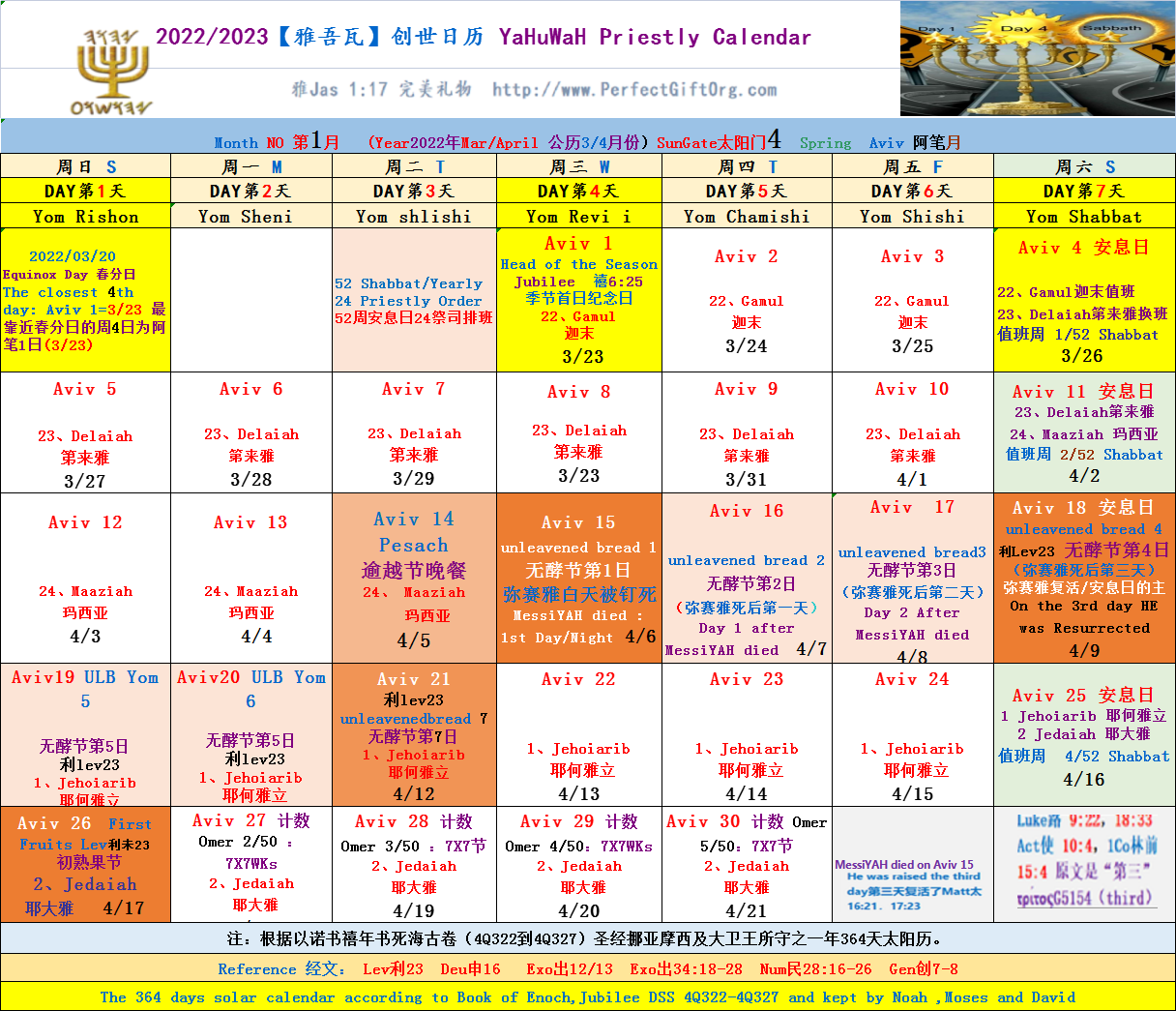
A complete timeline for the time around of Yahusha Ha’Mashiach’s sacrifice is not available from what I can find. So I will show what is written and how it lines up.
John’s gospel is written from a rabbinical viewpoint so the sabbath days listed and how the days line up are from a rabbinical observance view.
Note for those who hold the view that scripture says messiah rose on the first day of the week; all corrupted texts will render that translation.
If you look at the interlinear scripture in the original language they ALL say in the dawning toward one of the sabbaths (weekly or 7th day) http://www.bayithamashiyach.com/Matthew_28.pdf http://www.bayithamashiyach.com/Mark_16.pdf http://www.bayithamashiyach.com/Luke_24.pdf http://www.bayithamashiyach.com/John_20.pdf
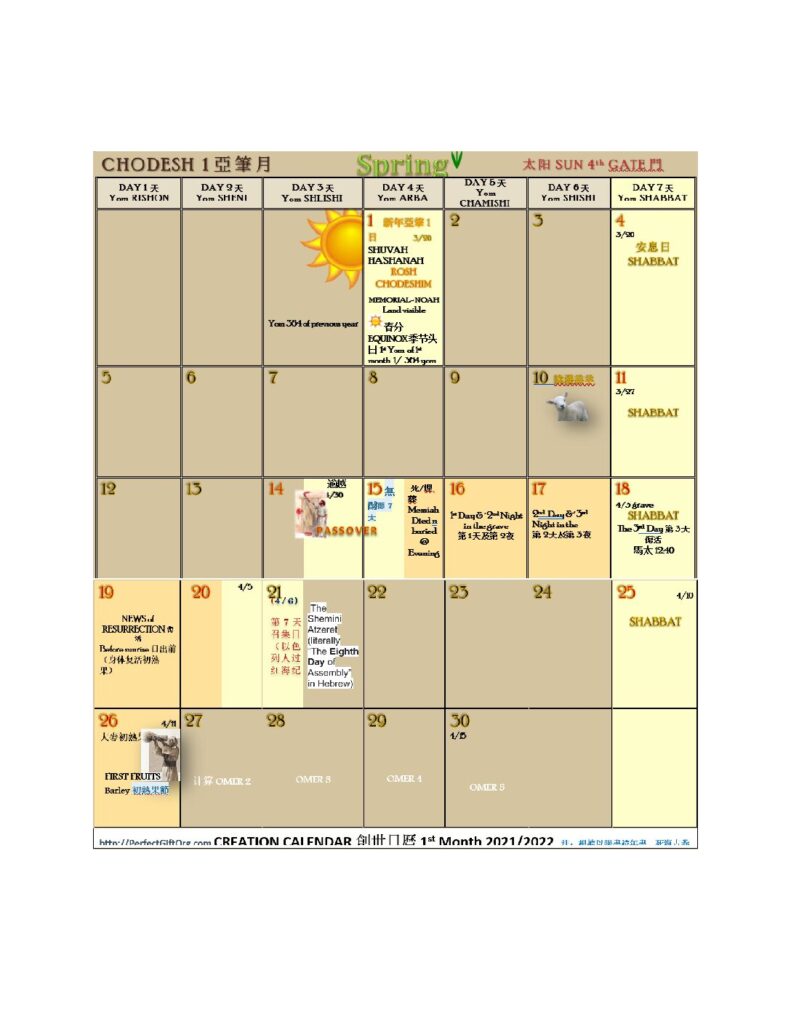
In John 11 after Yahushua raises Lazarus from the dead he stays in a city called Ephraim by the wilderness (vs 54). At some point He leaves there and travels to Jericho (mat 20:29) and on to Bethany (Beth Ayna) where Lazarus was staying Day 10Matt 21:1-3 nearing Jerusalem messiah sends two disciples for a donkey and colt
(Zechariah 9:9) enters Jerusalem on the donkey Mat 21:7-11
goes to temple and drives out all the money changers and merchants Mat 21:12&13
leaves the city and spends the night in Bethany Mat 21:17
while staying the night in Bethany Messiah stays at the house of jar merchant Simon (Mat 26:6, Mark 14:3).
It is during his stay here he is anointed for burial by a woman with an alabaster box Day 11 comes back into city in the morning and seeing the fig tree without fruit curses it Mat 21:18-22
Messiah has many altercations with scribes and pharisees and their students Mat 21:23-23:39
this apparently happens all four days messiah visits the temple from Aviv 10 to Aviv 13 and is seen as “testing the lamb for any defect”
Messiah tells many parables and prophecies Mat 24:1-25:46 Mat 26:2 messiah states after two days is the moed of pesach (Aviv 14). also by this statement we know this must be the Day 12 as the moed of pesach is in the evening and as per John 11:9.
Messiah defines a day as having twelve hours
Day 14 Messiah observes the Zadokite priestly Pesach with His disciples Mark 14:12.
That evening after the meal Messiah goes to the garden of gethsemane with his disciples to pray (except
Judas who had left during the meal to do his evil deed) Mark 14:32-42. Then Messiah is
betrayed and taken to trial Mark 14:43-72. Day 15 Messiah is brought before high priests and before Pilot and Caesar Mark 15:1-20
Messiah is put in tomb by Joseph of Arimathea after death Mark 15:43-46 Day 18 SHABBAT Messiah is resurrected before shabbat;
Mary Magdalene and the other Mary arrive at the tomb EARLY before shabbat I believe.
All three accounts say it differently but I believe the correct interpretation is
before morning comes so this would have Messiah leaving the tomb before shabbat
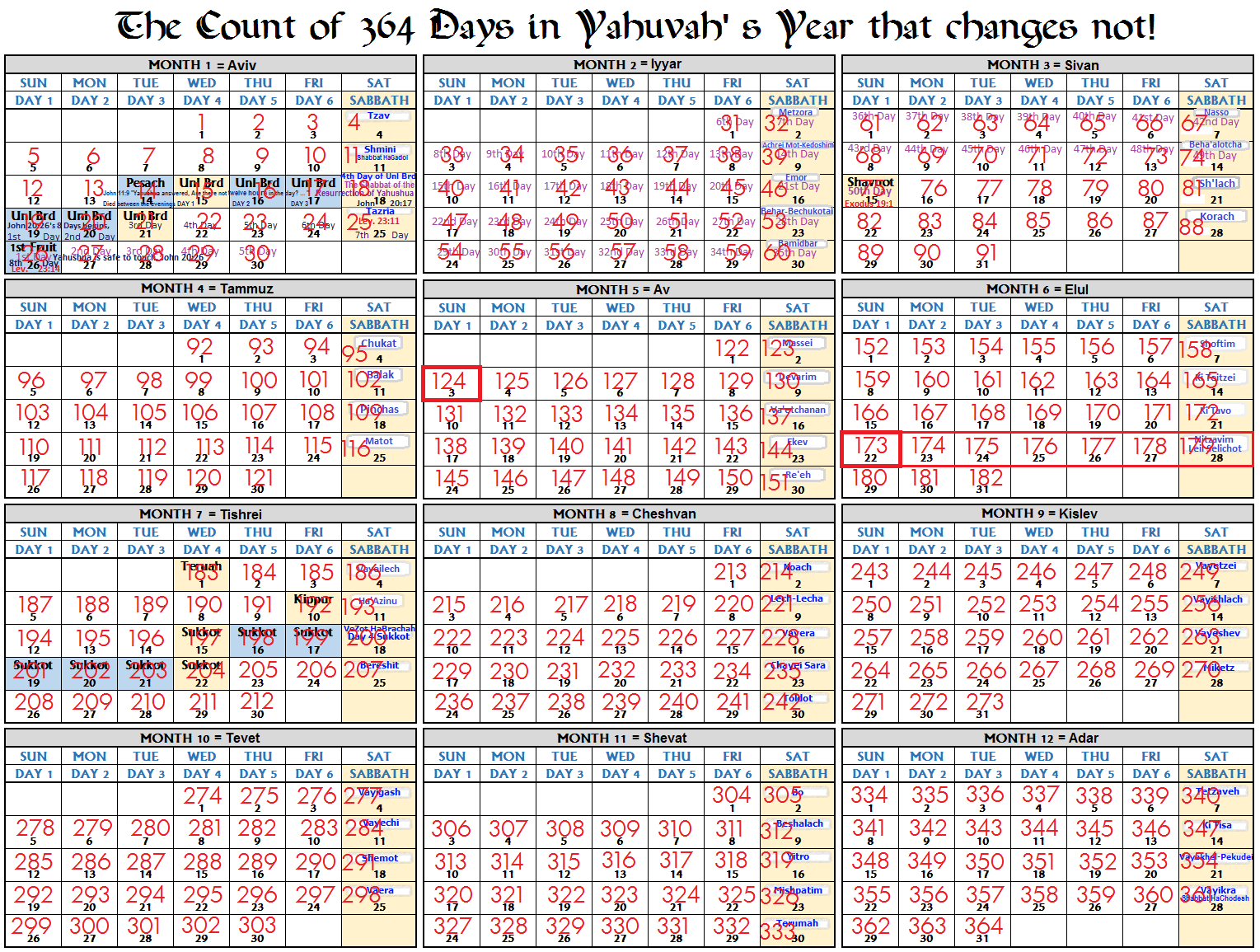
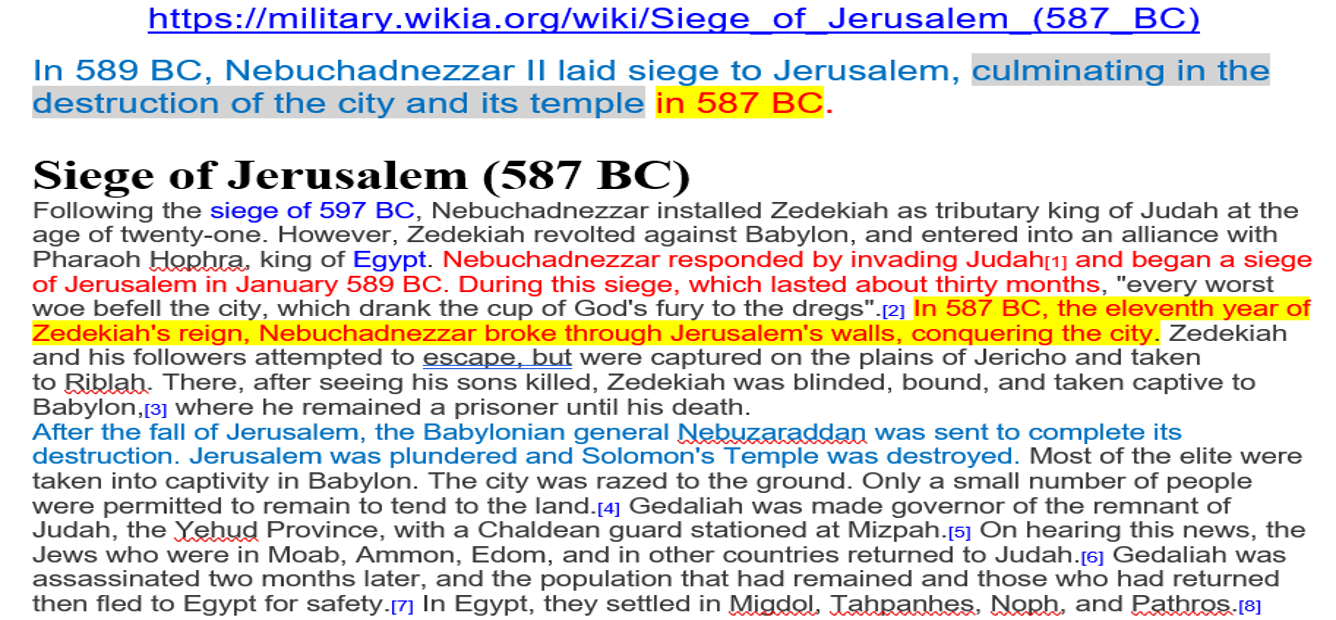
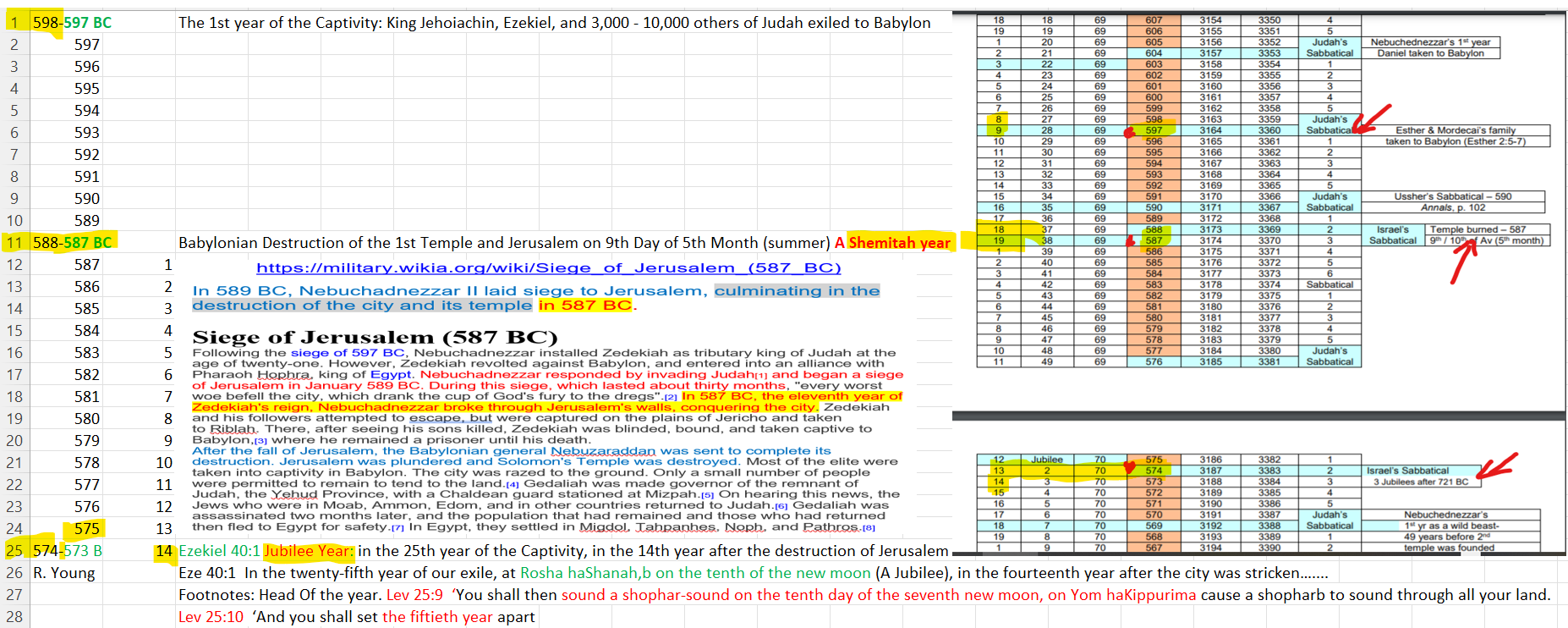
Please take note that on [ the 120th Jubilee@ the above extreme left cell ], and on the 7X7th week/Sabbatical week, the last 7 week of it, indicating that we are @ 5878 year; the 5th year of the LAST 7 year!
The Sabbatical year of this chart is 5880 ( =120 Jubilee X 49 years ), which will be declared from the Sukkot of the 6th year of it, i.e. year 2023 Feast of Tabernacle to 2024 Feast of Tabernacle.
And on the day of atonement of 2024 ( the completion of the 120th Jubilee: the 7X7 sabbatical year =the 49th year ) to Yom Kippur 2025, on that day, we shall declare the completion of the 120th Jubilee!
“Thanks so much. How do you know it’s year 5878 this year? Because it’s 2 years before 5880, which is 120 years before the begun of the millennium. Is this a date working from the millennium or is there a proper timeline from creation that’s been done to show how to arrive at this year?”
Answer to the above question that has been raised listed below:
1. “Because it’s 2 years before 5880, which is 120th Jubilee; 5880 years since Adam, the year before the begun of the 121st Jubilee! ”
A. 49year/one Jubilee X 120 Jubilee =Year 5880!
B. 2024 Yom Kippur is the 7X7 Shemitah year of the 120th Jubilee since Adam
Pay attention to this section: Searching for the 7X70 Jubilee = the 490th “Shmita-Cycle” : [70 jubilees elapse from the Conquest 1407/1406BC to AD 2024/2025]
Jubilee 50:4 Wherefore I have ordained for you the year-weeks and the years and the jubilees: there are forty-nine jubilees from the days of Adam until this day, [2410A.M.] and one week and two years: and there are yet forty years to come (lit.distant’) for learning the [2450 A.M. the 50 Jubilee] commandments of YAHUWAH, until they pass over into the land of Canaan, crossing the Jordan to the west.
The above quotation of Jubilee 50:4 tells us that “until they pass over into the land of Canaan, crossing the Jordan to the west.” which is the year 1407/1406BCE [= 2450 A.M. the 50 Jubilee since Adam!! ] 50 jubilee+70 Jubilee=120 Jubilee= 2024AD. ( Count down from 1407/1406BCE to 2024/2025AD Exactly 70 Jubilee)
2. According to the DSS Q11: “SECOND RETURN OF MESSIAH FOUND IN DEAD SEA SCROLLS”
~ One particular Dead Sea Scroll entitled “I IQ – Melchizedek Text” which contains a sermon called “The Last Jubilee”. This scroll is about the “Last Days” during which time it says, a “Melchizedek redivivus” (revived, reincarnate) will appear and Destroy Belial (Satan) and lead the Children of YaHuWaH Almighty to eternal forgiveness!
Jubilee 50:4 Wherefore I have ordained for you the year-weeks and the years and the jubilees: there are forty-nine jubilees from the days of Adam until this day, [2410A.M.] and one week and two years: and there are yet forty years to come (lit.distant’) for learning the [2450 A.M. the 50 Jubilee] commandments of YAHUWAH, until they pass over into the land of Canaan, crossing the Jordan to the west.
70 jubilees elapse from the Conquest 1407/1406BC [2450 A.M. the 50 Jubilee]
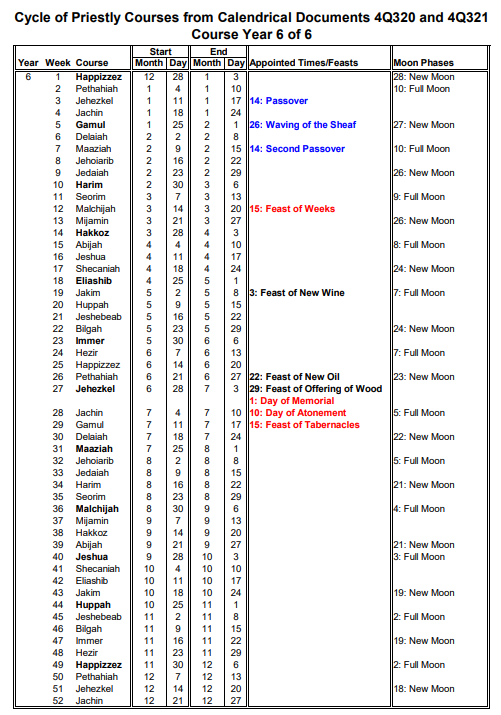
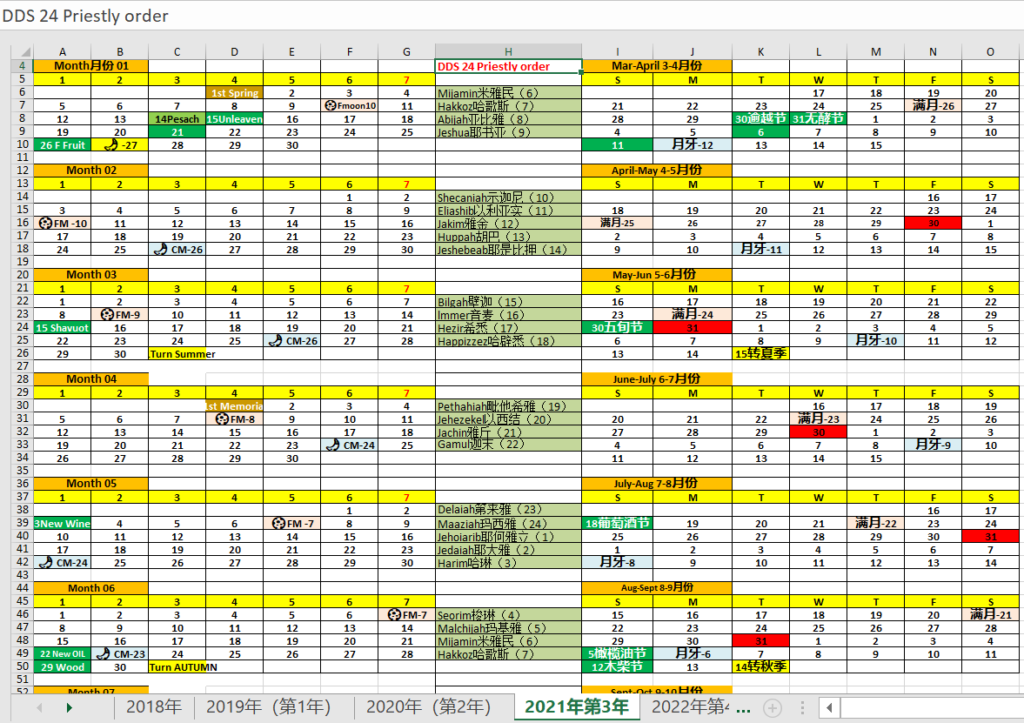
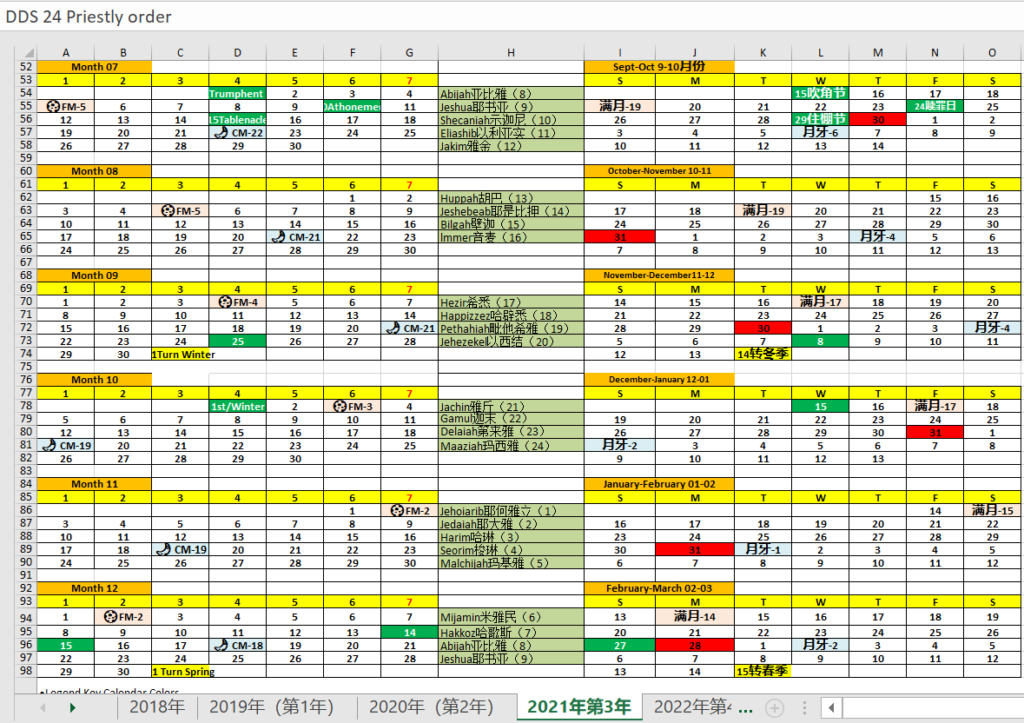
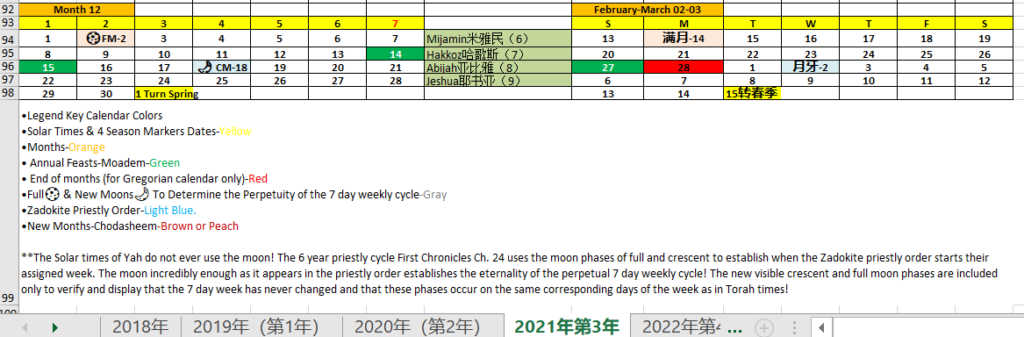
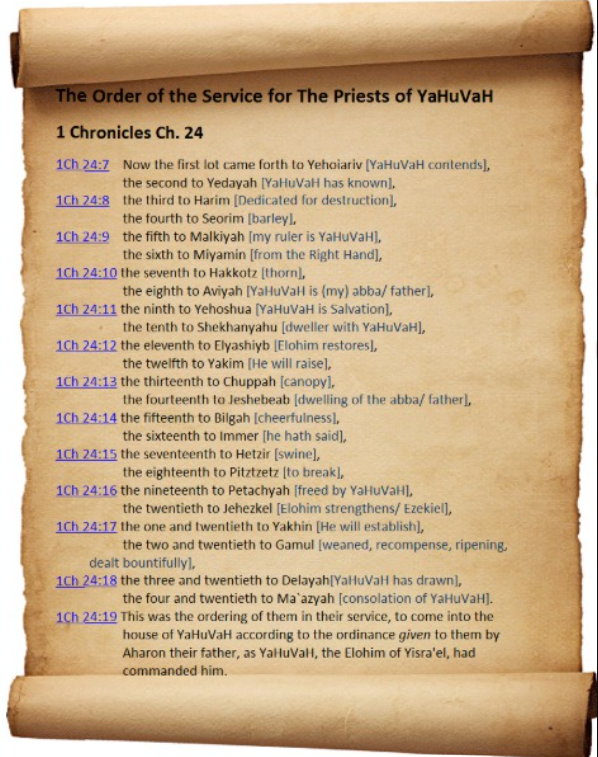
(link attached)The 6 years priestly order cycle started from year 1 then count every 6 years ( which every 3 years will witness a Full Moon as a heavenly Sign )…. by the highlighting yellow color continuously counting forward until the year of 5878 year which is 2022 this year, the chart will show the same reference of this that the priestly order on duty of this Aviv 1 is the course of Gamul of the 1/6 year cycle! ( We knew it as we have tested it from year 2016-2022, the last 6 years moon phases reported on DSS 4Q320; the priests on duty on their particular week of the month matched perfectly to our calendar’s observation since 2016. ) Please take note that the year 5878 has been highlighted with yellow color which indicating that this is the 1st of the 6 year Priestly Order Cycle!
How to get to this? By counting the 6 years cycle of the Priestly Order week by week 52 shabbats a year non-stop as well as year by year as the above quoted 4Q319 chart non-stop from the beginning of the 1st Jubilee Chart started by 1/6 year, the class of 22/24 Priest /Gamul on duty non-Stop until the 5878, which will come to exactly the 1/6 priest /Gamul on duty again; and it is also arrived to the year 2022!
Same way, if you count from 1407/1406BCE the 50th Jubilee + 70 Jubilee ( Total 3,430 years =49X70Jubilee ), you will eventually count down to 2024/2025AD as the 120th Jubilee. Hence, for year 2022, we are currently the 5th year/5878 year of the last week of the 120th Jubilee!!!
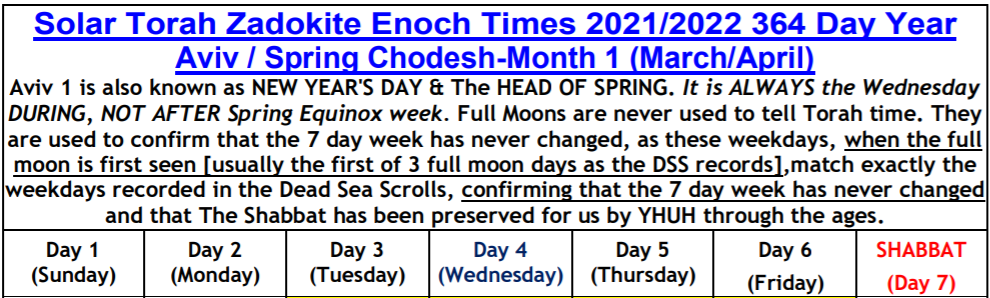
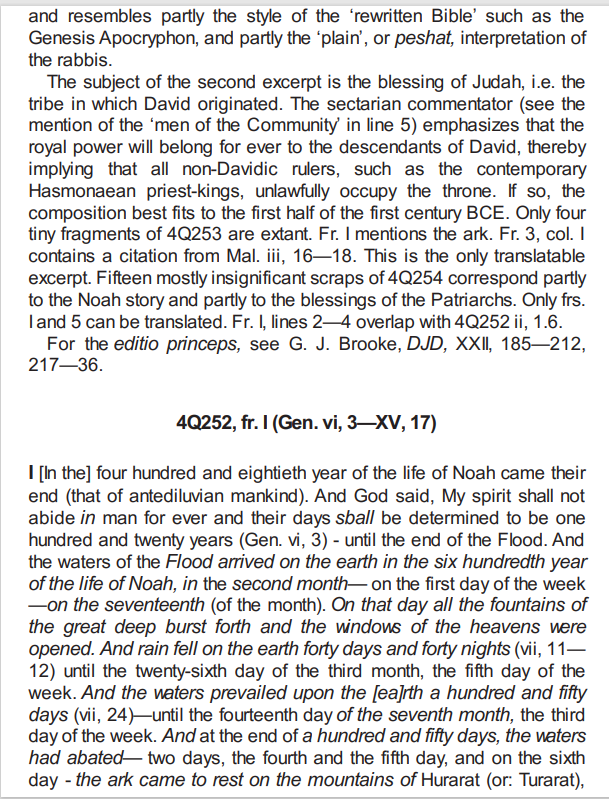
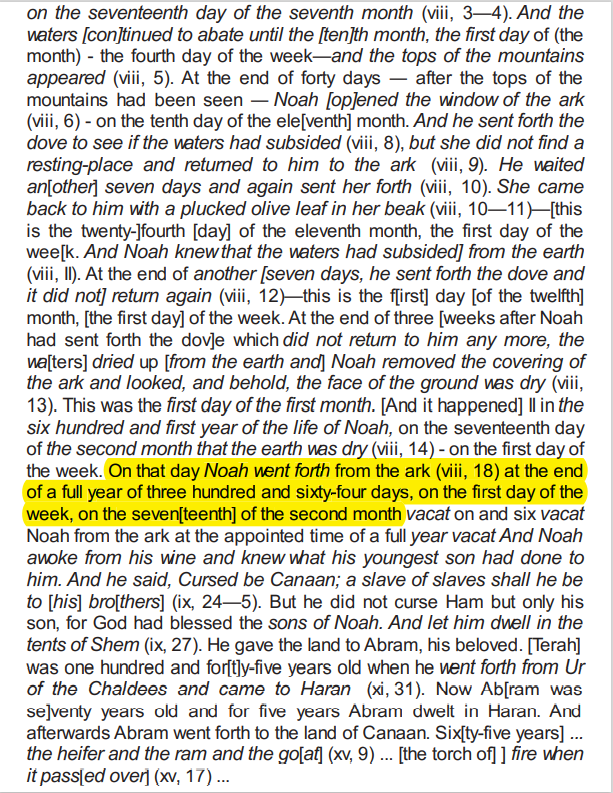
During the last 6 years ( 2016-2022 ), we do not need to skip a day after the Torah year 364days being completed on the 3rd day of the week and started the new Torah year Aviv 1 on the next day, the 4th day of the week.
However, this coming Spring 2022 on the 7th year (since 2016-2022) after we have completed the 6 years circle of the Priestly Order Schedule, we will run the following 7 days off the clock and they will not be included in this coming new 364 days Torah year: March 16, 17, 18, 19, 20, 21, 22 and then we begin our New Year on Wednesday, March 23, 2022.The Full moon will be on March 18 as our witness that we have the correct year. Details of it ( Summary of Intercalation rules) is at the bottom part of this article!
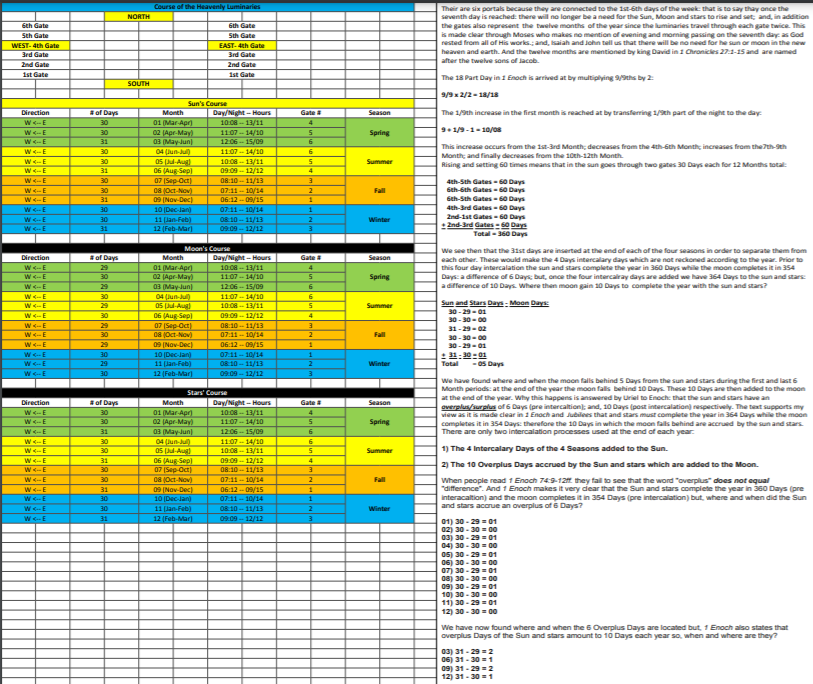
The blue color indicating starting Aviv1 every year after the count of 364days immediately the next day! by 10 years or more later, we are going to start Aviv 1 on the Winter/Autumn or even Summer, which has violated the instruction of YHWH to Moses in Exo 12 & 13 ” Exo 13:4 This day came ye out in the month Aviv! (The Sign for Spring season is Spring Equinox; winter, autumn and summer are not to be called as spring! (Yellow colorindicating Spring Equinox as SIGN falls on any week day of the Creation week representing by Menorah inside the temple; as soon as the Spring Equinox Day been verified by the Priests ( it can be any day of the week, from day 1 to day 7, from left move to the right candle sticks vary in every year!! )thenthat same week day 4 of the week ( indicating by GREEN color ) shall be the Aviv 1 of the year!)
We have been studying & making progress in grasping all there is regarding Torah time & we share with you each piece as He, our loving Abba, reveals it to us. This is now our 36th year of study on this vital matter & so we bring you our latest & most up to date understanding, building & not negating past revelations of time restoration! The weekly Shabbat is on Saturdays this year and every other year as well, since the Torah based Year Aviv 1, CANNOT START ON ANY DAY OF THE WEEK OTHER THAN DAY 4-Yom Revee, WHICH WE HAVE PROVEN CORRESPONDS TO OUR MODERN WEDNESDAY!The first Shabbat yearly is always Aviv 4 and Resurrection Morning is always on Aviv 18 the Shabbat of Life!
From our studies so far we can assert the following few details as facts:
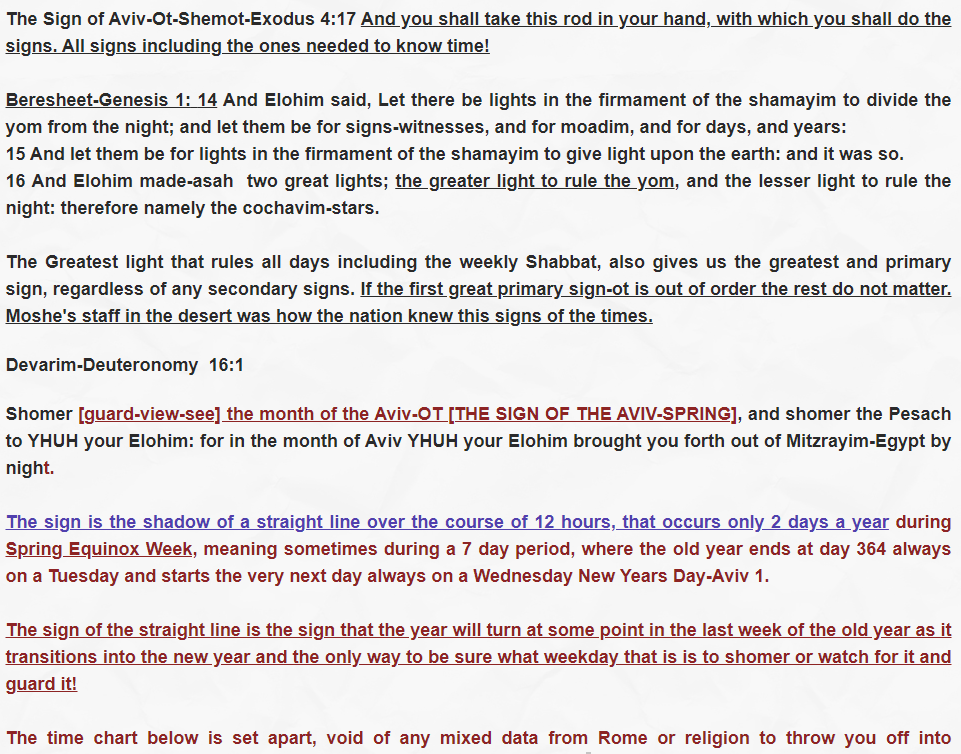
-The Vernal Spring Equinox is The Sign that a New Torah Year can or is in its right season to begin. It can fall on any day within the same Spring Equinox Week,when the 364 day count ends!
-Both the Vernal & Fall Equinoxes are confirmed by the shadows throughout the day making a straight line. A second witness is that only on the Spring and Fall Equinoxes does the moon rise in the east, in the same exact window that the sun sets in the west. A 3rd witness is that the year begins in the constellation of Pisces for at least another 400 or so years.
-Every 3 years Aviv 1 starts with a full moon on years 1 and 4 of a 6 year priestly cycle! That is when the full moon occurs on the same day or 2 days before or after Aviv 1 which occurs, that same Wednesday, during Spring Equinox Week.
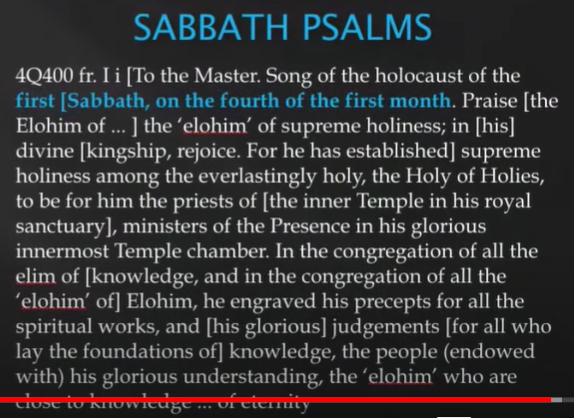
“Frag. 1 verse 1 In the first month: on the fourth of the month is a Sabbath …” 4Q326 A new Translation, The Dead Sea Scrolls. Page 405 Priestly Service: Sabbath, Month, and Festival – Year Four
-That the first 4th day of the week Yom Revee [the first Wednesday] after Day 364 [always on a Tuesday] is always Aviv 1 each and every year based on the Torah command of a 364 day year. The Wednesday CLOSEST TO THE SPRING EQUINOX DAY [either before or after] DURING the Spring Equinox Week, Sunday-Shabbat, is always Aviv 1. For example, if the Spring Equinox is on a Friday, Aviv 1 is the prior Wednesday, as going back 2 days is closer than forwarding 4 days to the following Wednesday. Not to mention, the following Wednesday is a new week, the week AFTER the Spring Equinox! Aviv 1 must be after 364 days are counted fullyand within the Spring Equinox week, not the week before or after! -That the Torah year always starts on a 4th Day-Yom Revee, Wednesday & always ends on a 3rd Day-Yom Shleshee, Tuesday & is exactly 364 days as required by Torah, The New Covenant & Enoch.
-That YHUH masterfully built in intercalation and there is absolutely no need FOR MAN to ever add days, months, weeks or years, as long as we wait each year until the first Wednesday after the 364th day on a Tuesday, during The Spring Tekufah-Equinox week Sunday-Shabbat. This method adjusts itself over the years! Within 7th year YHUH Himself adds a full 7 day week, so the seasons remain intact. He Himself intercalates but man cannot and must not mess with His built in system. An example will be Roman year 2022, when the Spring Equinox is on a Sunday and the old year ends on the previous Tuesday. We must wait until the following Wednesday during equinox week, thus YHUH allows us to wait a week, once the 364 day count has concluded. That is how He Himself does it automatically.
In Short, every 5-6 years, an intercalary week is added, run off the clock, in order to keep the calendar in sync with the seasons. This happens naturally when we keep the start of the year to the 4th day of the week that falls closest to the vernal equinox. This regularly occurs when the full moon is sighted near the time of the equinox.
C. Additional Readings regarding this matter can be found below.
Not everyone understands how to use Ancient picto Aluphbyt but from all we know today Exo 12:2 This month (Spring Equinox as Sign: Tau) shall be unto you the beginning(Aleph) of months: it shall be the first (Aleph) month of the year to you.
Time is Measured with a Aleph and Tau cross ;
Spring Equinox using a Cross (Tau) as marking the east west north south shadow markings . This is the word for time
Deu 16:1 GUARD/WATCH carefully [Ayin=The Hebrew letter Ayin means eye and correspondingly, the Ayin has to do with vision and bringing forth lights that are hidden. ] the month of Aviv, and keep the Pecach unto Yahuah Elohayka: for in the month of Aviyv Yahuah Elohayka brought you forth out of Mitsrayim by night.
D. Some good explanation regarding the discussion on
“why this year Aviv1 needs a 7 days intercalation”
It is inside the PDF attached below from one of our social media chat group! If any reader is interested in this and check whether You Can download it ” PDF Summary of Intercalation rules ” as well as another link attached below! The link below is an offer from our sister Rojo Mathews: ” Thank you Yahn El for your work on the calendar which has helped me along the way! I put this together and hope it blesses those of you in this web site. I’ll see if I can figure a way to have it available for print for a decent price over there in there in the US, if there’s an interest. Please see the pdf in the link below (ignore the order form because it is exclusively for those local to me in Malaysia). Shalom!
https://perfectgiftorg.com/wp-content/uploads/2022/03/Summary-of-Intercalation-rules.pdf By John and Donna Mitten :
Essentially what we are doing every year is starting each New Year on the closest 4th day (Wednesday) to the Spring Equinox (or the First Day of Spring). The Full Moon is simply our witness which helps us determine which years have the closest 4th Days to the Spring Equinox.
Since Yah’s Calendar only utilizes 364 days every year, we drift backwards on our calendars by 1 day (for 365-day years) or 2 days (for 366-day Leap Years). If we don’t adjust our 364-day calendar by intercalation this coming Spring, then in only a few more years, we are going to be way off with our timing with Mother Nature and we will be disturbing the 4 Seasons (the 4 Intercalary Days) for their correct timing. The Moon calendars will have the 4 seasons off of their proper timing by up to a month sometimes before they get adjusted by them adding in another (13th) month. Enoch and Moses are clear that every year has 12 months. Read Jubilees Chapter 6, where it shows moon calendars will have each New Year coming in 10 days too soon. (Solar 364 days vs Lunar 354 days)
Enoch tells us the Full Moon is our witness that brings in all the years…but we are not to start our years either too far forwards or too far backwards of the Spring Equinox. Since we want to start every year on the closest 4th day (Wednesday) to the actual First Day of Spring, Abba gave us the Full Moon at the time of the Spring Equinox as our sign or witness for intercalating on the correct years. In other words, we might go astray a year or so if we don’t wait for the witness of the Full Moon for when we are to intercalate. If there will not be a Full Moon somewhere in the 7 days that we are to run (non-counted) off the clock, then we know we have the wrong year to intercalate. The Full Moon witness is very precise (faithful) and she will show up every 3 or 5 years without fail at the time of the Spring Equinox and so we can actually predict for thousands of years when we are to intercalate if we know her cycle. Unlike predicting the moon calendars New Months, we don’t have to look for any slivers or conjunctions and then if it happens to be cloudy on certain days, we would simply start a New Year by default on the following day (a Lunar Day 30). Abba does not need our help deciding when the New Year is to begin. There will either be a Full Moon or there won’t at the time of the Spring Equinox and that is our witness. We can calculate our calendar for many years in advance and know exactly when the Full Moons are going to happen. Moon Calendars are fickle at best and celebrating Abba’s Feasts on the correct days all depend on if the New Moon was seen in Israel or not. That is very unreliable. I know that when we were following Michael Rood’s Moon Calendar while living in Oklahoma, we would see the sliver of the New Moon very clearly on the days that it was not seen in Israel. Also know that Abba’s Calendar in Heaven is written on stone tablets. Does He rely on slivers and conjunctions or does He keep His Calendar EXACTLY THE SAME, EVERY SINGLE YEAR FROM CREATION TO THE NEW CREATION? That would be a YES! He doesn’t have to make New Stone Tablets each year. Like He does, we also use the same calendar year after year. We change the pagan dates…Abba changes nothing!
So, at the beginning of every new intercalation year (which is every 5, 6, or rarely 8 years), the Full Moon will be located somewhere in those 7 days that we are to run off the clock.
For example, this coming Spring 2022 we will run the following 7 days off the clock and they will not be
included in the 364 days: March 16, 17, 18, 19, 20, 21, 22 and then we begin our New Year on Wednesday, March 23, 2022.The Full moon will be on March 18 as our witness that we have the correct year.
At the BEGINNING of each new intercalation cycle, we will start our New Year about 3 days AFTER the Spring Equinox (March 20) has already occurred, like it will be on March 23, 2022 of this coming year, after we adjust. (The pagan Gregorian is not an accurate calendar and the New Year does not start on January 1.) Then, when this upcoming 5 or 6-year cycle is toward its END, we will once again be starting the new year about 3 days BEFORE the Spring Equinox occurs and it will again be time for another intercalation. (For example, this current 364-day year, we started the New Year on March 17, 2021, which was 3 days BEFORE Spring (March 20). It was the closest (4th Day) Wednesday to Spring, but after we intercalate on March 23, 2022, we will be starting our New Year 3 days AFTER Spring. It will also be the closest 4th Day to the Spring Equinox. Notice in our calendar pdf that if we don’t intercalate this coming Spring, we would be starting our New Year on March 16th. That would be 4 days away, and BEFORE the actual Spring Equinox, which will occur on March 20th. So, when we intercalate this next Spring, we will still be starting our New Year on the closest 4th Day Wednesday to the Spring Equinox, but it will be AFTER the Equinox has already occurred, and it will only be 3 days away from the Equinox of March 20. In other words, (the 3 days away) on Wednesday, March 23 (after intercalation of 7 days) will be one day CLOSER to the Vernal Equinox of March 20 (First Day of Spring) than the (4 days away) on Wednesday, March 16.The Full Moon on March 18 will simply be our witness to show us that we have the correct year to jump from one Wednesday over the Spring Equinox to the next Wednesday, for the start of the New Year. We can also employ sundials as a great confirmation tool for using as another witness that will show the exact day of the Equinox.
So, to repeat for clarity, by intercalating this coming Spring, we will still be starting on the closest 4th Day Wednesday to the Spring Equinox (only 3 days away). Enoch tells us not to go too far forwards or too far backwards and we have the Full Moon as our witness to give us complete confidence that we have the correct year to intercalate.
Notice in our calendar pdf charts that each of the next few years from now, going forward, we will be getting closer to the Equinox year by year for the start of each New Year (3,2,1) and then for 1 year (0), we will actually start that year on the Equinox (First Day of Spring). Then the next couple of years after that we will drift away in the opposite direction again until Miss Moon shows up and tells us to jump back over to the other side of the Equinox again. So, we truly are always starting every New Year on the Closest 4th Day Wednesday to the First Day of Spring. We are never more than 4 days away and that only occurs about one time per century when we need an 8-year correction cycle. Enoch gives us very precise numbers of days between Full Moon events of 1092 days (3 years), 1820 days (5 years) and 2912 days (8 years). We never intercalate after only 3 years, but we believe the 3-year intervals do mark the 366-day Leap Years, which on Abba’s Calendar appear to be every 3 or 5 years. Leap Years do not affect our intercalation process of waiting for Miss Moon as our witness. They simply show us when we accrue 2 days on certain years. We will be discussing 48-hour days shortly and I will be requesting help from some of you, to record the exact days on which they occur. This is when the sun will take a double orbit in the
same pathway. I will take pictures of the simple process I am using and I want others to help in case I have cloudy days when it’s critical or vise-versa and many witnesses will put the matter to rest. 48-hour days are either real or they aren’t. There is scripture to back it up and also Enoch says the sun has exactly 364 pathways and that is all. So, the Full Moon (at Spring (Vernal) Equinox) is simply our witness who tells us when we have the correct year to go from when we are starting our years before the Equinox… to jumping
back over the Equinox and starting our new cycle again after the Equinox has occurred. Then each year we will drift backwards again by either 1 or 2 days every year until Miss Moon gives us her witness again in an eternal cycle until the End of Days. Hopefully I didn’t repeat myself too many times, but without a visual presentation, I wanted to help everyone grasp the concept of how and why we intercalate. Perhaps I will be able to do videos again if I don’t need to return to work. The best way to remember intercalation is: 1. Start every New Year on the closest Wednesday to the First Day of Spring. 2. Have Miss Moon as your faithful witness to tell you when to “leap frog” over the Equinox from one Wednesday to the next Wednesday and don’t count those 7 days on your 364-day calendar. Keep the Sabbath like normal. The beauty of Abba’s Calendar is it’s a perfect 52-week cycle that allows us to keep our Feasts and Sabbaths on the exact same days of the month and days of the week each year. We can memorize the calendar because it will never change. The 4 Intercalary days are always on 3rd Day Tuesdays. The First Day of every new season is always on a 4th Day Wednesday. You can memorize every feast date and Sabbath date. We haven’t changed our basic calendar structure since the beginning in 2016, but we simply change the pagan, Gregorian dates each year so we can do business until Messiah returns. I don’t think Yahushua will be using the Gregorian Calendar during His Millennial Reign, and we will likely be able to carry around the same copy of Abba’s Calendar year after year. Of course, Abba’s Calendar is written on Heavenly Stone Tablets but that might be a little cumbersome to carry copies of that around in our pockets. Abba does not ever need to change His Calendar that was written into stone… It is the same Yesterday, Today, and Forever.
Basically, from the day AFTER equilux, until the 23rd, there is a seven day cycle, with the VEQ/great sign on the earth in the middle. It is similar to the original creation seven day cycle. 17 – Light/Darkness separated badal beyn equal 18 19 20 – VEQ Great Sign Day 4 21 22 23 – Seventh Day”
The Equilux is NOT the beginning of the year. It is the day of equal day\equal night. The Equilux happens on Jerusalem will always fall on the March 16th in today Pagan Calendar but NOT on the other regions of the world on that same day! ( It shifts over a week time to complete its covering). However, The whole world experiencing Equinox ( it happens) on the same day ( within 24 hours just quote it as the Same equal Day & Night from sun rise to sun set!) from Jerusalem throughout the world!
The Equilux is NOT the same as the Vernal Equinox which produces a “great sign upon the earth; a sundial can be used to confirm the straight line of the shadow on the day of EQUINOX as the SIGN.
G. Interesting New version of Book of Enoch’s Translation provided by Brother Daniel de Caussin:
(He has been translating Enoch from the original Ge’ez manuscripts),and there is a day of lingering:
There is a day of lingering after the 360days within the 12 months, plus the 4 markers of the seasons =364days/Yearly. The year ended after the 364days. The new year will only be started by the SIGN OTTO of Spring Equinox appear normally on the 4th days of the Spring Equinox week. However, the Spring Equinox Day will be shifted to different day of the week year by year due to the 365.25/366 days gregorian calendar’s dating! Hence, Aviv 1 will only be identified by [ the closest 4th day of the week relating to the OTTO : The Spring Equinox.
The sun marks the heads and tails of days as they are to be reckoned from earth.
Path taken by the point of the March equinox along the ecliptic over the past 6,000 years; DSS 4Q318, the calendar New year Aviv 1st shall fall on Tropical Zodiac “Pisces” ; for example year 2021, some believers want to start YHWH New Year on the 24th March Wednesday, as they decided to skip a week after the sight of March Equinox which will not match the DSS 4Q318 description. By doing that, they are not only disrupting the continuous weekly Priestly duty schedule, they shall missed the sign of the every 3 years full moon falls on Aviv 1 to start the new year which especially obvious on Jerusalem having the witness of the Tropical Zodiac Spices appear in the sky with the rises of the moon!!
The biblical year Aviv 1 starts on the 4th day during spring equinox week. Why day 4 that is when the lights were assigned Gen 1:14-16. Also the year must begin in the constellation of Pisces and as you can see the sun is in Pisces this year March 23rd 20202. In messiahs time the year began in The Ram.
I. What does it mean 364days count yearly recorded in the book of Enoch?
Enoch 75:2:the exactness of the yearis – accomplished through its separate three hundred and sixty-four stations. Meaning, you must stop at day 364 for exactness,even if it is a few days before the Spring Equinoxand it’s visible straight line sign or even if the Roman calendar says it’s on A Friday, Sunday or any other day! Again be careful to obey HIM and not mix biblical and Roman data! YHUH is watching and testing you, with the restoration of Torah time! Even if science and religion are against the 364 day 52 week per year COMMAND! Enoch 82:6: And the year is completedin three hundred and sixty-four yamim-days. Nothing confusing about exactness right! Obey and get it right! Disobey! And Stay Confused! Enoch 71:32: On that yom-day the lyla-night decreases and amounts to nine parts and the yom to nine parts and the lyla 33 is equal to the yom-day and the year is exactly as to its yamim-days three hundred and sixty-four days! Revelation 12:3And I will give power to My two witnesses, and they shall prophesy one thousand two hundred sixty days [1,260 days = 42 months of 30 days], clothed in sackcloth. Revelation 12:6And the woman [Israel] fled into the wilderness, where she has a place prepared by YHUH, that they should feed her there one thousand two hundred sixty days [1,260 days = 42 months of 30 days]. If The Book of Revelation allowed for years with more than 364 days, 12 months and 52 weeks, then the 42 months would not be perfect months of 30 days each. We cannot make the perfect solar times like the lunar errors of the rabbinics, which would make us just as guilty as they are! YHUH has not given us permission to change or adjust HIS REVEALED MATHEMATICAL PERFECTION, designed specifically to work for you His follower the exact same way it works for angels! His set times are designed NOT TO WORK for the worldly, fearful and unbelieving!
Since 364 is divisible by 7, we get a perfect 52 weeks of 7 days each, with 4 seasons of exactly 13 weeks + 4 season marker days 360 + 4 = 364! That means, using biblical DATA, the Vernal Equinox will always be during the last week of the year and New Year’s Day Aviv 1 on The Wednesday of that same Vernal Equinox Week, either before or after the Spring Equinox and the Wednesday closest to it, as “364 math” doesn’t lie, because YAH cannot lie. He does not need to guess! The Vernal Equinox can and does shift to differing weekdays during week # 52, nevertheless, the divine mathematical formula used by YAH still must be followed! The counting ends on day 364 ALWAYS ON A TUESDAY of the last week of the old year during the Spring Equinox Week! The Spring Equinox will always fall somewhere in those 7 days where the old year transits to the new one, always during the LAST WEEK OF THE OLD YEAR!
We cannot worry about the Roman dates that change due to the Gregorian calendar. We suggest counting the 364 days out from Aviv 1 each year [the Wednesday on the same week when the Spring Equinox appears i.e. during the Spring Equinox WEEK] to be exact, marking each New Month. The command to count only 364 days a year is not a suggestion but a command from YHUH our Abba, regardless of what other intellectuals do, say or think! EVEN IF THERE IS AN ALLEGED OR REAL 365th or 366th SUNRISE IN A YEAR, IT MUST BE IGNORED OR NOT COUNTED, as we wait for the Aviv 1 day to arrive.
Torah, Enoch & Jubilees all say that every year will have 364 days and 52 Shabbats forever from year to year, ordained by heaven for man!! Heaven has gifted us the times of heaven written on the heavenly Torah- ablets allowing us mere mortals to partake with angels! Let us not squander that high calling! Man and astronomy-science say that the year is now 365.25. Who is right? Only The House of Zadok’s Everlasting Priesthood & Corresponding Anointing-Charge, resolves the Torah required 364 day [360 +4 season markers] 12 month, 52 week Solar Year. Praise be to YHUH-Yahushua for the unfolding revelation He is and will yet provide. Enjoy the journey with us!
The Solar times of YAH do not ever use the moon for times and seasons as this is forbidden in Scripture, in such places as Torah & Jubilees Chapter 6! The 6 year priestly cycle First Chronicles Ch. 24:1-19, uses the moon phases of full and dark moons to establish when the Zadokite priestly order starts their assigned weeks in the Temple. These 2 checkpoints occur monthly, to make sure the priestly orders are ready, prepared and correct in their turn/watch! These 2 monthly checkpoints were not used for time determination, as these were the Zadokite priests, who would never use lunar calendars, which is the primary reason they abandoned the Second Temple in Jerusalem. To the true priesthood therefore, neither the full nor dark moons are new months & moreover are not to be observed like the fallen watchers used to. They were mathematically calculated and recorded to and for the kohaneem-priests, who would then be on time in their commanded order of Temple service, NOT OBSERVED WITH HUMAN EYES, AS THE FALLEN WATCHERS DID AND TAUGHT MEN TO DO! HOWEVER, There IS IN FACT A UNIQUE PURPOSE FOR THE MOON, PREVIOUSLY NOT SEEN NOR UNDERSTOOD BY MANY AMONG US! The moon incredibly enough as it appears in the Zadokite priestly order actually establishes the eternality of the perpetual 7 day weekly cycle! The calculated dark and full moon phases are included by those solar time advocates, only to verify and display that the 7 day week has never changed and that these phases occur on the same corresponding weekdays of the modern week, as they did in Torah times & as they did in Messiah Yahushua’s time, as long as we make super sure to use the correct year in each recorded six year priestly cycle! These phases confirm that not only the 7 day week has never changed but that most importantly, neither has the Shabbat on the day THEY, the Pagans call Saturday! https://perfectgiftorg.com/2021-2022-calendar-based-on-dds-priestly-order-6-years-calendar-excel-spreadsheet/
An easy way to see which year of the priestly cycle we are in is to see which priestly order starts it. [First Chronicles 24:1-19] Have a look for yourself!
The Full Moon will be seen on Aviv 1 Wednesday only in years 1 and 4 of a 6 year priestly cycle. The next Aviv 1 with a Full Moon will be year 1 in March of 2022. March 2021 starts year # 6 in the 6 year priestly cycle! You can use the Full Moon of Aviv 1 to determine which year of the cycle it is. If you see it on Aviv 1 you know it’s either year 1 or year 4 of a 6 year priestly Zadokite cycle. REMEMBER JUBILEES 6 & OTHER PLACES FORBID ANY USE OF THE MOON TO DETERMINE TIME. WE FOLLOW ONLY SOLAR TIMES! WE ARE MERELY SHOWING HOW THE PHASES APPEARED ON THE SAME DAY OF THE WEEK 2,000 YEARS AGO, AS THEY DO TODAY [DSS], SHOWING US THAT THE SHABBAT OF THAT DAY, REMAINS THE SAME TODAY, WITH THE HEATHEN NAME OF SATURDAY.
J. Proof That Day 4-Our Modern Wednesday Was Lit Continually In The Temple
K. The lamps of the menorah
The candle sticks were lit daily from fresh, consecrated olive oil and burned from evening until morning, according to Exodus 27:21. The Roman-Jewish historian Flavius Josephus states that three of the seven lamps were allowed to burn during the day also; [13] however, according to one opinion in the Talmud (Rashi, Tractate Shabbat 22b), only the center lamp was left burning all day, into which as much oil was put as into the others. Although all the other lights were extinguished, that light continued burning oil, in spite of the fact that it had been kindled first. This showed Israel where to start the new year and where all 4 seasons start. On Yom Revee a Wednesday. DAY 4 OF THE WEEK-MIDDLE LIGHT OF THE MENORAH LIT FIRST AND BURNED ALL DAY AND NIGHT AS THE SIGN OF THE MESSIAH [WHO CAME ON DAY 4 OR 4,000 YEARS AFTER ADAM AND EVE]. Day 7 represented by candle 7, is symbolic of the weekly and millennial Shabbat , when Messiah physically returns at the dawn of the millennial Shabbat. This miracle according to the Talmud (Tractate Menahot 86b) was taken as a sign that The Shekan-Esteem and Honors rested over Israel forever into the kingdom. [14] It was called the Ner Hama’aravi (Western lamp) because of the direction of its wick. This middle lamp was also referred to as the Ner Elohim-Ner Tamid (Eternal Lamp of El). YAHUSHUA The Alef Taf The Middle 4th Light Called “The Light of the World” Burns Eternally Also mentioned in I Samuel 3:3. The miracle of the Ner Tamid-Eternal Flame ended about 40 years before the destruction of the Second Temple (30 CE) according to the Talmud (Tractate Yoma 39a), “Our Rabbis taught: During the last forty years before the destruction of The Second Temple (that is to say from around 30 CE the very year Yahushua died) the lot [‘For YHUH’] did not come up in the right hand of the priest [on Yom Kippur-Day of Atonements]; nor did the crimson-colored strap [in the Temple] become white; nor did the westernmost light shine” or that middle light of Messiah that man killed on Day 4 went out. What day did the Light die? Yes, day 4 of the week or Wednesday Yom Revee Aviv 15! THIS PROVES BEYOND A SHADOW OF A DOUBT THAT AT THE TIME OF YAHUSHUA, THEY KNEW THAT TIME AND THE TORAH WEEK CENTERED AROUND DAY 4 of Week One-Modern Wednesday, Not day1 of Week One, as many falsely claim. Shema Yisrael!!!! https://en.wikipedia.org/wiki/Menorah_(Temple) 4Q394 1-2 (Cave 4) – Note, yet another SIGN- Where was the Torah Shabbat confirmed in the Dead Sea Scrolls? Cave 4 of course, corresponding to day 4 of week 1. Another YAH-Incidence!
L. From Professor Rachel Elior a rabbinical Jew-
“The present Jewish calendar is not matching the old Jewish priestly times. This ancient priestly time was replaced by the Greek lunar calendar, in the time of Antiochus Epiphanies by force” and later on by the sages, who chose the lunar calendar based on the people’s observation and not by precalculated calculations.
2. Searching for the 7X70 Jubilee = the 490th “Shmita-Cycle” :
( 70 jubilees elapse from the Conquest 1407/1406BC to AD 2024/2025)
Jubilee 50:4 Wherefore I have ordained for you the year-weeksand the years and the jubilees: there are forty-nine jubileesfrom the days of Adam until this day, [2410A.M.] and one week and two years: and there are yet forty years to come (lit.distant’) for learning the [2450 A.M. the 50 Jubilee]commandments of YAHUWAH, until they pass over into the land of Canaan, crossing the Jordan to the west.
On 2021 July 16th I contacted Professor Rachel Elior, and she has enlightened me with the most important missing piece of the calendar’s puzzle. Then I found this article of her that she has given the answer to my question regarding the calendar’s issue:
quotation from her article posted below:: ”
Each month numbered thirty days, and at the end of the third month in each quarter—which always ended on a Tuesday[JL1] —an additional day was added, making for a month of thirty-one days. This additional day, the ninety-first in the quarter, was called “yom pagu`a,” (“the defective day”). Once every seven years, during the sabbatical year, an extra week appears to have been added in order to make up the difference between the 364 days of their calendar and the solar year of 365¼ days, a period well known in antiquity and referred to in 2 Enoch. They may have added two weeks once every twenty-eight years in order to make up the missing quarter day. They selected a year of 364 days rather than of 365¼ days, as astronomical calculation of the solar year would require, because the priestly calendar was one of fixed Sabbaths, calculated in advance and based on a symmetric division of the days of the year and its seasons into equal seven-day periods. The symmetrical yearly calendar of identical weekly and quarterly periods comprised fifty-two weeks, as detailed in the Psalms Scroll found in Qumran Cave 11, and was divided into four equal, 91-day periods, as detailed in Enoch and Jubilees. On this fixed, mathematically calculated calendar, which provided the underpinnings for the priestly sacred service and was anchored in oath and covenant, each Sabbath and each of the seven appointed times of the Lord/YaHuWaH had a fixed day, a fixed date, and a fixed interval between it and the appointed time that preceded it. The three pilgrimage festivals fell on the fifteenth of the first, third, and seventh months. Thus, the festival of Shavuot—the appointed time of the first fruits of the wheat harvest, set by Scripture at seven weeks following the time of the barley harvest—invariably fell on Sunday, the fifteenth of the third month, seven weeks after the time of the waving of the sheaf. The latter, according to the priestly calendar, invariably fell on the Sunday following the conclusion of the Passover festival, the twenty-sixth of the first month. This 364-day, 52-week calendar is referred to at various points in the Dead Sea Scrolls. It begins with the month of Abib (that is, Nisan) and, as noted, comprises four 91-day seasons (Jub. 6:23-29); they are known as the season of early harvest, the summer time, the season of sowing, and the season of grass (Comm. Rule, 1QS X:7). The calendar is discussed in various traditions, beginning with the books of Jubilees and Enoch, continuing through the Qumran Psalms Scroll and the calendar at the beginning of MMT, and culminating in the Temple Scroll, the Priestly Courses Scroll and the Qumran version of the flood story, which is an account of the determination of the yearly calendar. All of the Zadokite priestly traditions are identical in this regard, emphasizing the fixed 364-day year divided into fifty-two weeks that were allocated to the twenty-four priestly courses (1 Chr. Ch. 24) who served in the Temple for one week at a time on a fixed rotation and after whom the weeks of the festivals were named. The Qumran Priestly Courses Scroll enumerates the cycles of songs sung by the priests over a period of hundreds of years. During the six-year period between sabbatical years, each of the twenty-four courses of priests was on duty thirteen times for a week at a time and followed the song cycles listed in the Priestly Courses Scroll. The priestly courses—the groups who maintained the rotation in the sanctuary—were endowed with responsibility for the eternal priestly covenant; they observed the continuous annual cycle of fifty-two Sabbaths and seven appointed times of the Lord/YaHuWaH along with the seven-year cycle of sabbatical years and jubilees. These cycles were the essence of the eternal testimony to the sacred cycles of respite (“the appointed times of the Lord/YaHuWaH, holy convocations”) that maintain the covenant; accordingly, the festival of Shavuot, which attests to them, is called “the day of testimony.” The cycles embodied the essence of the oath taken at Sinai, the oath that the festival of Shavuot was meant to maintain and renew annually. Once each of the priestly courses had served thirteen times over six years, the seventh year was declared to be a sabbatical year in which work ceased, just as the seven days of the week concluded with the seventh day, the Sabbath, on which all labor was forbidden. After seven seven-year cycles—forty-nine years—a jubilee year was declared.The twenty-four priestly courses were a living liturgical calendar, for their rotation into and out of service every Sunday marked the start of the new week and their rotation after fifty-two weeks marked the start of a new year. The completion of thirteen cycles of service by each of the twenty-four courses marked the time for the sabbatical year, and the completion of ninety-one cycles of service marked the time for the jubilee. The rigorous observance of these eternal and sacred seven-based cycles of respite from labor—fixed and calculated in advance as cycles of rest, sabbatical year, equality, freedom, and liberty, and made known from the heavens through the oath and covenant at Sinai—were regarded by the Zadokite priests as the essence of the oath and covenant maintained by the festival of Shavuot and written in the tablets of the covenant.”
FROM THE COVENANT OF THE RAINBOW TO THE COVENANT AT SINAI; FROM THE PILGRIMAGE TO THE TEMPLE TO THE VISION OF THE CHARIOT, FROM THE BERACHAH OF THE FIRST FRUITS TO THE PRIESTLY BERACHAH, AND FROM THE TIQQUN LEIL SHAVU`OT TO THE REVELATION OF THE SHEKHINAH
“One must rejoice on this festival in particular, for it is the day on which we acquired the crown of Torah….” Shelah, Masekhet shavu`ot, shenei luhot ha-berit, p. 7.
“If all their experiences are not here, certainly a memorial to their lives is here. And it is fitting and proper that we afford them a name and a vestige in Hebrew script and in the kadosh tongue.” S. Y. Agnon, Ha-esh ve-ha-ezim, p. 337.
The festival of Shavuot (lit., “weeks”)—the fourth of the seven “appointed times of the Lord/YaHuWaH” detailed in the Pentateuch and one of the three pilgrimage festivals—is known in the Pentateuch by four names. In the book of Exodus, it is expressly mentioned as one of the pilgrimage festivals and termed the “Feast of the Harvest” (Ex. 23:14-16); it is later called the “Feast of Weeks, of the first fruits of the wheat harvest” (Ex. 34:22). In Leviticus (23:15-22), it is mentioned in detail as the day on which “you shall bring an offering of new grain to the Lord/YaHuWaH,” associated with the counting of seven full weeks from “the day after the sabbath,” following the time for harvesting the first sheaf (“omer”; id. 10-11). In Deuteronomy, the holiday is called the “Feast of Weeks” in the context of the instruction that “You shall count off seven weeks; start to count the seven weeks when the sickle is first put to the standing grain. Then you shall observe the Feast of Weeks [hag shavu`ot] for the Lord/YaHuWaH your God/Aloah , offering your freewill contribution according as the Lord/YaHuWaH your God/Aloah has Baruched you. You shall rejoice before the Lord/YaHuWaH your God/Aloah …at the place where the Lord/YaHuWaH your God/Aloah will choose to establish His name” (Dt. 16:9-11). The joy of the festival is associated with the pilgrimage to the sacred place, as stated in Deuteronomy, and the occasion is termed “the day of the first fruits” in Numbers 28:26 on account of the first fruits of the wheat harvest brought to the sanctuary on that day by those who had been Baruched with the harvest and were coming to appear before God/Aloah . The festival sacrifices, offered by the priests at the sanctuary and including the “offering of new grain to the Lord/YaHuWaH on your Feast of Weeks [on which] you shall observe a sacred occasion” (id.) are described there in detail.
Rather astonishingly, therefore, this central festival—known variously as the Feast of the Harvest and the Feast of the First Fruits of the Wheat Harvest, the day of the first fruits, the Feast of Weeks, the festival observed on the fiftieth day, after counting seven weeks, one of the three pilgrimage festivals, the feast of the harvest Berachahand the feast of the offering of new grain—is not mentioned by any of its biblical names in the early rabbinic tradition recorded in the Mishnah. The rabbis identify no commandment uniquely dependent on the Feast of Weeks, which is based on the precise counting of seven Sabbaths or seven weeks, known as the “counting of the omer,” that precedes the pilgrimage to the sanctuary, and the Mishnah likewise contains no tractate devoted to the holiday and named for it, analogous to the tractates devoted to other holidays (such as Sukkah, Pesahim, or Yoma). Compounding one’s surprise at the omission of the festival from mishnaic tradition and the single fleeting reference to it as an aside in the Tosefta is the perplexing suppression of the ancient tradition’s explicitly stated time for observing it. That, in turn, becomes even more perplexing given that holiday is known in the ancient, pre-Christian-era priestly tradition recorded in the Book of Jubilees as the day of testimony, the festival of the giving of the Torah, the festival of the covenants, the festival observed by the angels, and the festival associated with Ezekiel’s vision and the tradition of the chariot. In the Temple Scroll found at Qumran, the festival of Shavuot is described in a manner that blends various biblical traditions and emphasizes the holiday’s place in the sanctuary and in the service of priests who wave the sheaf; it appears in the context of the cycle of seven weeks between the first fruits of the barley harvest and the first fruits of the wheat harvest:
You[JL1] shall count seven complete Sabbaths from the day of your bringing the sheaf of [the wave-offering. You shall c]ount until the morrow of the seventh Sabbath. You shall count [fifty] days. You shall bring a new grain-offering to YHWH from your homes, [a loaf of fine fl]ou[r], freshly baked with leaven. They are firstfruits to YHWH, wheat bread, twe[lve cakes, two] tenths of fine flour in each cake…the tribes of Israel. They shall offer…their [grain-offerin]g and dr[ink-offering] according to the statute. The [priests] shall wave…[wave-offering with the bread of] the firstfruits. They shall b[elong to] the priests and they shall eat them in the [inner] court[yard], [as a ne]w [grain-offering], the bread of the firstfruits. Then…new bread from freshly ripened ears. [On this] da[y] there shall be [a kadosh gathering, an eter]nal [rule] for their generations. [They] shall [do] no work. It is the feast of Weeks and the feast of Firstfruits, an eternal[l] memorial (Temple Scroll, XVIII-XIX, Vermes, p. 195).
The festival of Shavuot was known in antiquity as the festival of Pentecost, as in the Book of Tobit, which describes the pilgrimage and refers to “our festival of Pentecost, which is the sacred festival of weeks” (Tobit 1:6-8; 2:1), and in 2 Macc. 12:31 and Josephus (Jewish Antiquities 13:252; Jewish Wars 1:253). In Christian circles, Pentecost was the festival on which the Kadosh Spirit alit on the Apostles in Jerusalem in connection with the renewal of the covenant (Acts 2:1-4). Early midrashim from the Land of Israel associate the festival of Shavuot with the angels and with the Chariot tradition tied to the revelation at Sinai: “The Kadosh One Baruched Be He descended on Sinai with 22,000 bands of ministering angels. Another comment: ‘God/Aloah ’s chariots are myriads upon myriads, thousands upon thousands’ (Ps. 68:18); this teaches that 22,000 chariots descended with the Kadosh One Baruched Be He, and each and every chariot was as the vision seen by Ezekiel” (Pesiqta de-rav kahana, Ba-hodesh ha-shelishi, 107b). The holiday was linked in the early Jewish-Christian tradition with the receiving of the Torah from the angels, as suggested by the comments of Stephen, the first Christian martyr, who was stoned to death in Jerusalem. Stephen rebuked the High Priest who served during the fourth decade of the first century CE: “You are the ones that received the law as ordained by angels[JL2] ” (Acts 7:53). Even earlier, in the mystical tradition of the Dead Sea Scrolls, the festival of Shavuot was the festival of the vision of the Chariot, linked to the world of the cherubim and angels, and early in the first millennium BCE, it was the festival associated with the renewal of the Sinai covenant during the third month of the year (2 Chr. 15:10-15). In kabbalistic lore based on ancient traditions, the festival that renewed the giving of the Torah and the Sinaitic covenant was regarded as the time of the nuptials between the Kadosh One Baruched Be He and the Shekhinah,[2] and the tiqqun leil shavu`ot—a ritual of staying awake all Shavuot night, engaged in study and prayer—was the occasion for readying the bride for her nuptials. That description is based on the portrayal of the Sinaitic covenant as a marriage bond between God/Aloah and the congregation of Israel; and that, in turn, is connected to the wedding descriptions in the Song of Songs, which tannaitic tradition says was recited at the revelation at Sinai (Song of Songs Rabbah 81:2). In the debate over whether Song of Songs should be deemed canonical, R. Akiva called the book the “kadosh of holies,” saying that “The entire world is not as worthy as the day on which the Song of Songs was given to Israel; for all the scriptures are kadosh, but Song of Songs is kadosh of holies” (Mishnah, Yadayim 3:5). The song that was given at the Sinai revelation is taken to refer to the day of the giving of the Torah as a wedding day, to the groom who gives the Torah and to the congregation of Israel, His bride: “O maidens of Zion, go forth and gaze upon King Solomon wearing the crown that his mother gave him on his wedding day—this is the time of the giving of the Torah; on his day of bliss—this is the building of the Temple” (Mishnah Ta`anit 4:8). “On his wedding day—this is Sinai, which was his wedding, as it is said, ‘stay pure today and tomorrow’[3] [Ex. 19:10]. On the day of his bliss—this is the giving of the Torah, as it is said, ‘He gave it [the Torah] to Moses when he finished [ke-khaloto] speaking with him’ [Ex. 31:18]. But the ketiv is ‘his bride’ [ke-khalato]” (Numbers Rabbah 12:8).[4]
Nevertheless, for reasons that will be explained presently, the authors of the Mishnah preferred to suppress these ancient traditions and to avoid drawing explicit connections between the festival of Shavuot and the day of the giving of the Torah, between the giving of the Torah and the revelation of the Chariot, and between the revelation at Sinai and the day of testimony, the day when the covenant was renewed at the time of the wheat harvest. Instead, they passed in silence over the priestly, mystical traditions associated with the oath, the covenant and its renewal, the giving of the Torah, the divine revelation at Sinai, the encounter the angels, and the Chariot. They repressed this rich collection of memories when they struck the name “Shavuot” and instead referred to the sacred occasion by the rootless name “Azeret” (lit., assembly), disregarded the renewal of the covenant, and forbade expounding the passage in Ezekiel that describes the Chariot or reading it as the prophetic portion (haftarah) in the synagogue. During the first generations following the destruction of the Temple, the sages relegated the tradition of the oaths and the covenants to the domain of the forgotten. They did so when they argued with the Sadducees over when the holiday was properly to be celebrated; when they ordained the counting of seven weeks from the day following the first day of Passover instead of counting seven weeks from the day after the Sabbath following the full week of Passover; and when they forbade the reading Ezekiel’s vision of the Chariot, which had been associated with the festival of Shavuot, determining instead that “one does not read the Chariot [as the prophetic passage] for Shavuot (Mishnah, Megillah 4:10). The commandments related to the first-fruits festival are very briefly treated in the Mishnah; the sages devote to it only a few lines in tractate Bikkurim, which deals primarily with the agricultural aspects of the first-fruit offering and therefore appears in the order Zera`im, pertaining to agricultural matters, rather than in the order Mo`ed, where the other festivals are considered. No attention is devoted specifically to the wheat harvest, which is conflated with the first fruits that are harvested in the seventh month; the festival is referred to not as Shavuot (Weeks) but as Azeret (Assembly); no gemara was written about this mishnaic passage; and no unique customs are associated with the holiday. Moreover, the mishnaic passage omits all mention of cherubim and angels; and it transforms the holiday’s association with the vision of the Chariot and the angels into a covert tradition. To do so, it rules that “the [passage concerning the] Chariot is not expounded” and “the [passage concerning the] Chariot is not read as the prophetic reading.” Moreover, the sages deemed the written traditions that discuss the Chariot, linked to the Kadosh of Holies, and that expand upon the celestial chariots, associated with the calendar for Temple service, to be “external books” (i.e., the non-canonical works of the Apocrypha and Pseudepigrapha) not to be read. The absence of the festival of Weeks from rabbinic memory is striking, as is the sages’ reluctance to deal with it as the festival of the giving of the Torah and the entry into the covenant, the festival of the written Torah and of the Chariot, the festival observed by the angels, the festival of the offering of new grain and the waving of the first-fruit offering, associated with the counting of seven weeks, or as “[a kadosh gathering, an eter]nal [rule] for their generations…. It is the feast of Weeks and the feast of Firstfruits, an eternal[l] memorial” (Temple Scroll XIX, Vermes, p. 195). It appears that these phenomena are all associated with the fact that the pre-Common-Era priestly traditions that appear in the Dead Sea Scrolls and in parallels in the Apocrypha and Pseudepigrapha assign the festival of Shavuot a central place as the festival of renewal of the covenant observed by the angels in heaven (Jub. 6:18) and the priests on earth.
And so, for example, the second-century-BCE Book of Jubilees tells of the covenant entered into with Noah during the third month, at the conclusion of the flood: “He set his bow in the clouds for a sign of the covenant which is forever…. Therefore it is ordained and written in the heavenly tablets that they should observe the feast of Shebuot [Weeks] in this month, once per year, in order to renew the covenant in all (respects), year by year. And all of this feast was celebrated in heaven from the day of creation until the days of Noah….” (Jub. 6:16-18). The parallel version in Gen. 9:16-17 says nothing of the date or of the renewal of the covenant: “‘When the bow is in the clouds, I will see it and remember the everlasting covenant between God/Aloah and all living creatures, all flesh that is on the earth. That,’ God/Aloah said to Noah, ‘shall be the sign of the covenant that I have established between Me and all flesh that is on earth.’” The rainbow is elsewhere mentioned in the Hebrew Bible only in Ezekiel’s vision, which also forms part of the tradition regarding covenants in the third month, as will be explained below. In Jubilees, the holiday is termed “the festival of the renewal of the covenant,” a name derived from the command just quoted: “they should observe the feast of Shavuot in this month, once per year, in order to renew the covenant in all (respects), year by year.” It is referred as well as a day of testimony and a kadosh day (Jub. 6:12, 36-37) and as a twofold feast (Jub. 6:21); and numerous traditions linking the Patriarchs to the covenants and the angels who enter into a covenant in the third month are associated with it (Jub. 14:18-20; 15:1-15; 16:13-14).
The name Shavuot is associated not only with weeks (shavu`ot) but also with oaths (shevu`ot) and covenant. It is tied to the covenant entered into between God/Aloah , the liberator from servitude, and those who left Egypt and attained freedom from servitude. That covenant was entered into at Mount Sinai, after the passing of seven weeks from the start of the Israelites’ journey through the wilderness, which had begun on the twenty-sixth day of the month declared to be the first: “This month shall mark for you the beginning of the months; it shall be the first of the months of the year for you” (Ex. 12:2).
The festival of Shavuot is known in the Book of Jubilees as the time for renewal of the ancient covenants entered into on that occasion: the covenant of the rainbow, entered into with Noah during the third month, as described earlier, and the covenant between the pieces entered into with Abraham at the mid-point of the third month (Jub. 14:10). The angels are those who execute the covenant, as the angel of the presence says: “And on that day [the mid-point of the third month], we made a covenant with Abram, just as we had made a covenant in that month with Noah. And Abram renewed the feast and the ordinance for himself forever” (Jub. 14:20). Like every one of the seven appointed times of the Lord/YaHuWaH, the festival of Shavuot forms a crossroads of remembrance and forgetting, canonization and censorship, hegemonic memory and alternative memory, transmission and loss. It is a holiday linked to the struggle over memory and the weaving of historical alternatives from antiquity to our own time, and it is linked as well to polemics and disputes that have been little considered and that most have preferred to pass over in silence.
The history of the hidden festival of Shavuot is linked to three disputes that raged in late antiquity: one between the Zadokite priests and the Hasmonean priests during the second century BCE; one between the Sadducees and the Pharisees during the first century BCE and first century CE; and one between the sages and the Jewish-Christians during the first and second centuries CE. For the priests of the House of Zadok, Shavuot occupied a central and sacred place as the festival of the covenants and oaths executed during the third month and of the renewal of the covenant at that time. This is evident from passages in Jubilees and the Temple Scroll, from the account of the giving of the Torah that appears in the Dead Sea Scrolls, from the calendar appearing at the beginning of the letter in the Dead Sea Scrolls known as Miqzat ma`aseh ha-torah (“Some Observances of the Law,” abbreviated as MMT), and from the beginning of the Dead Sea “Community Rule,” all of which were written during the last centuries BCE. The sages, however, who were active following the destruction of the Second Temple, sought to suppress the traditions associated with this priestly festival—the festival of the covenant and the testimony, of the angels and the Chariot; the festival of the Zadokite priests and of the pilgrimage to the Temple. They did so during the first centuries following the destruction of the Temple, an event that necessarily entailed the abolition of the sacred Temple service and the rejection of the cultic and mystical priestly tradition set forth in the written Torah and its Dead Sea Scroll expansions. All of those texts without exception were considered sacred scriptures, and many were linked to the Zadokite priests and their covenantal associates, the angels.
* * * * * * *
The priests of the House of Zadok were a dynasty that served as High Priests for nearly a millennium, from the time of Aaron the priest until 175 BCE. In the tradition of the rabbinic sages, they are known as Sadducees and Boethians; in Hellenistic literature they are known as the House of Honyo, named for Honyo ben Simeon III, the last Zadokite priest to serve in the Temple in Jerusalem; and in the Dead Sea Scrolls they are known as the Zadokite priests and the men of their covenant, named for Zadok ben Ahituv, the priest who served as the “first among the sons of Phineas” in Jerusalem at the time of King David, as mentioned in the Joshua Apocryphon. The Bible tells that Zadok was the priest who served in the time of King David (2 Sam. 8:17; 15:24-29) and anointed Solomon as David’s successor (1 Kgs. 1:34, 39-45). Toward the end of the First Temple period, they are referred to as the sons of Zadok, in view of the words of the priest and prophet Ezekiel: “the priests who perform the duties of the altar—they are the sons of Zadok, who alone of the descendants of Levi may approach the Lord/YaHuWaH to minister to Him” (Ez. 40:46; 43:19; 44:15; 48:11). Zadok ben Ahituv’s lineage goes back to Aaron, the priest, progenitor of the High Priesthood (Ezra 7:2-5; Neh. 11:11; 1 Chr. 16:39), and his descendants served in Solomon’s Temple until the time of Seraiah, the chief priest, who was exiled with King Jehoiachin (1 Kgs. 4:2; 2 Kgs[JL3] . 25:18; 1 Chr. 5:29-34, 38; 9:11; 2 Chr. 31:10). Thereafter, the descendants of Seraiah’s grandson, Joshua ben Jehozadak, served in the Second Temple from the return from the Babylonian Exile until the time of Antiochus Epiphanes, who conquered Jerusalem in 175 BCE. The dispute between the Zadokite priests and the sages regarding the time for harvesting the omer and the consequent time for the festival of Shavuot is known as a dispute between Sadducees and Pharisees, but it was preceded by the intense conflict between the displaced Zadokite priests, who maintained the use of a solar calendar, and the Hasmonean priests who supplanted them and maintained the use of a lunar calendar. For 120 years, from the middle of the second century BCE until the time of Herod, during the final third of the first century BCE, the Hasmonean priests took the place of the Zadokite priests. In general, little attention is devoted to the nature of these disputes, which related to the festival of Shavuot, the festival of the renewal of the covenant and the time of the priestly Berachah, and were tied to the dispute over the fixed weekly calendar vs. the variable monthly calendar and to the dispute over the times of the harvest. That lack of attention may be attributable to the complexity of the disputes’ historical context, to the widespread anachronistic tendency to read ancient history exclusively through the rabbinic tradition, or to the struggles over remembrance and forgetting that have been waged through the ages, from antiquity until our own time.
The disputes over the festival of Shavuot—its names and timing, the commandments that depend on it, and the memories associated with it—are connected to the polemic over the calendar and the struggle over who had the authority to fix it and determine the premises that would guide its calculation. The Torah, in the formulation adopted by the sages following the destruction of the Temple, does not specify a fixed number of days in a year or in a month, does not specify a day of the week to be associated in advance with the date for any of the seven fixed times of the Lord/YaHuWaH, and lacks a set time for the festival of Shavuot. In contrast, the parallel and earlier versions of the Torah found among the Dead Sea Scrolls, written by the “priests of the House of Zadok and the men of their covenant,” contain a fixed time for Shavuot, known and calculated in advance—Sunday, the fifteenth day of the third month, seven weeks after the day of waving the sheaf; the latter observance likewise is always on a Sunday, the twenty-sixth day of the first month. The difference between the two perspectives flowed from the view of the Zadokite priests and the men of their covenant that the Temple was to follow a fixed, 364-day solar calendar, known and calculated in advance. The calendar was made known by the angels to Enoch son of Jared, of the seventh Adamite generation (Gen. 5:21-24; Jub. 4:16-25) and is associated with various events in the tradition of the books of Genesis and Jubilees. The calendar began each year with the first day of the first month (Ex. 12:2), which always fell on a Wednesday, the day on which the sun, moon, and stars were created; it was the first day of the month of Nisan, the day of the vernal equinox. The year thus began with the day on which the heavenly luminaries were created, in the first month, also known as the month of Abib, from which cyclical and eternal Jewish time was counted—a time system encompassing cycles of respite from servitude. The times of respite were termed in the Bible “the appointed times of the Lord/YaHuWaH” and were tied to the counting of seven-based cycles that establish the covenant. In the Book of Exodus, the first month is the month of transition form enslavement to liberty, and it is the point from which one begins to count the Sabbaths and the seven appointed times of the Lord/YaHuWaH. Time is marked by Sabbaths, by the seven appointed times, and by sabbatical years and jubilees, all of which point to the covenant through sacred seven-based cycles. This seven-based cycle is introduced by “These are the set times of the Lord/YaHuWaH, the sacred occasions, which you shall celebrate each at its appointed time” (Lev. 23:4) and is detailed in Chap. 23 of Leviticus; it is referred to in the Scrolls as “appointed times of freedom.” These seven appointed times, and the cycles of sabbatical years and jubilees associated with them in the seven-based cycles of respite, are tied to the commandments made known in the covenant entered into in the third month on the festival of Shavuot, in the encounter at Sinai.
The Dead Sea Scrolls version of “The Book of Heavenly Luminaries,” a portion of 1 Enoch (chapters 72-82), tells of the receipt of the calendar from the angels, and Jubilees (chapter 6) recounts the flood story as the story of the calculation of the calendar. According to both of these texts, the year is divided into four equal quarters of ninety-one days each. The first day of each quarter is called the “day of remembrance.” As already noted, the first day of the year is invariably a Wednesday, the day on which the heavenly luminaries were created; it is the day of remembrance on the first day of the first month. Each of the quarters, corresponding to the four seasons of the year, likewise begins on a Wednesday: the first of Nisan, corresponding to the vernal equinox; the first of Tammuz, the summer solstice; the first of Tishri, the autumnal equinox; and the first of Tevet, the winter solstice. Each quarter began with the day of remembrance on a Wednesday, encompassed thirteen Sabbaths with designated dates, and continued for thirteen identical weeks. The first Sabbath would fall invariably on the fourth day of the first month of the quarter, and the final Sabbath, the thirteenth in the quarter, would fall on the twenty-eighth of the third month.
The festival of Shavuot, on this calendar, always falls on the day following the eleventh Sabbath of the first quarter, that is, Sunday, the fifteenth day of the third month. All of the quarters are marked by a similar, regular division into thirteen Sabbaths having fixed dates, known in advance: the first Sabbath in the quarter falls on the fourth day of the first, fourth, seventh, and tenth months, respectively, and the final Sabbath in the quarter falls on the twenty-eighth day of the third, sixth, ninth and twelfth months, respectively. Each month numbered thirty days, and at the end of the third month in each quarter—which always ended on a Tuesday[JL4] —an additional day was added, making for a month of thirty-one days. This additional day, the ninety-first in the quarter, was called “yom pagu`a,” (“the defective day”). Once every seven years, during the sabbatical year, an extra week appears to have been added in order to make up the difference between the 364 days of their calendar and the solar year of 365¼ days, a period well known in antiquity and referred to in 2 Enoch. They may have added two weeks once every twenty-eight years in order to make up the missing quarter day. They selected a year of 364 days rather than of 365¼ days, as astronomical calculation of the solar year would require, because the priestly calendar was one of fixed Sabbaths, calculated in advance and based on a symmetric division of the days of the year and its seasons into equal seven-day periods. The symmetrical yearly calendar of identical weekly and quarterly periods comprised fifty-two weeks, as detailed in the Psalms Scroll found in Qumran Cave 11, and was divided into four equal, 91-day periods, as detailed in Enoch and Jubilees. On this fixed, mathematically calculated calendar, which provided the underpinnings for the priestly sacred service and was anchored in oath and covenant, each Sabbath and each of the seven appointed times of the Lord/YaHuWaH had a fixed day, a fixed date, and a fixed interval between it and the appointed time that preceded it. The three pilgrimage festivals fell on the fifteenth of the first, third, and seventh months. Thus, the festival of Shavuot—the appointed time of the first fruits of the wheat harvest, set by Scripture at seven weeks following the time of the barley harvest—invariably fell on Sunday, the fifteenth of the third month, seven weeks after the time of the waving of the sheaf. The latter, according to the priestly calendar, invariably fell on the Sunday following the conclusion of the Passover festival, the twenty-sixth of the first month. This 364-day, 52-week calendar is referred to at various points in the Dead Sea Scrolls. It begins with the month of Abib (that is, Nisan) and, as noted, comprises four 91-day seasons (Jub. 6:23-29); they are known as the season of early harvest, the summer time, the season of sowing, and the season of grass (Comm. Rule, 1QS X:7). The calendar is discussed in various traditions, beginning with the books of Jubilees and Enoch, continuing through the Qumran Psalms Scroll and the calendar at the beginning of MMT, and culminating in the Temple Scroll, the Priestly Courses Scroll and the Qumran version of the flood story, which is an account of the determination of the yearly calendar. All of the Zadokite priestly traditions are identical in this regard, emphasizing the fixed 364-day year divided into fifty-two weeks that were allocated to the twenty-four priestly courses (1 Chr. Ch. 24) who served in the Temple for one week at a time on a fixed rotation and after whom the weeks of the festivals were named. The Qumran Priestly Courses Scroll enumerates the cycles of songs sung by the priests over a period of hundreds of years. During the six-year period between sabbatical years, each of the twenty-four courses of priests was on duty thirteen times for a week at a time and followed the song cycles listed in the Priestly Courses Scroll. The priestly courses—the groups who maintained the rotation in the sanctuary—were endowed with responsibility for the eternal priestly covenant; they observed the continuous annual cycle of fifty-two Sabbaths and seven appointed times of the Lord/YaHuWaH along with the seven-year cycle of sabbatical years and jubilees. These cycles were the essence of the eternal testimony to the sacred cycles of respite (“the appointed times of the Lord/YaHuWaH, kadosh convocations”) that maintain the covenant; accordingly, the festival of Shavuot, which attests to them, is called “the day of testimony.” The cycles embodied the essence of the oath taken at Sinai, the oath that the festival of Shavuot was meant to maintain and renew annually. Once each of the priestly courses had served thirteen times over six years, the seventh year was declared to be a sabbatical year in which work ceased, just as the seven days of the week concluded with the seventh day, the Sabbath, on which all labor was forbidden. After seven seven-year cycles—forty-nine years—a jubilee year was declared. The twenty-four priestly courses were a living liturgical calendar, for their rotation into and out of service every Sunday marked the start of the new week and their rotation after fifty-two weeks marked the start of a new year. The completion of thirteen cycles of service by each of the twenty-four courses marked the time for the sabbatical year, and the completion of ninety-one cycles of service marked the time for the jubilee. The rigorous observance of these eternal and sacred seven-based cycles of respite from labor—fixed and calculated in advance as cycles of rest, sabbatical year, equality, freedom, and liberty, and made known from the heavens through the oath and covenant at Sinai—were regarded by the Zadokite priests as the essence of the oath and covenant maintained by the festival of Shavuot and written in the tablets of the covenant.
* * * * * *
According to the priestly historiography, this solar calendar of Sabbaths, mathematically calculated in advance and always beginning in the month of Abib (Nisan) was followed in the sanctuary from the time of the High Priest Zadok son of Ahituv, who served in the First Temple and whose descendants are referred to by the prophet Ezekiel—himself a priest—as “the levitical priests who are of the stock of Zadok, and so eligible to minister to Me” (Ezek. 43:19). It remained in force until 175 BCE, the year in which the Seleucid king Antiochus Epiphanes, the son of Antiochus III (a descendant of Alexander the Great’s successors) came to power. He conquered Jerusalem and imposed, in the Temple as throughout his dominions, the Seleucid-Greek calendar (Dan. 7:25; 11:31). That calendar, instituted for administrative reasons, was a lunar calendar whose year began in the fall; it was based on human observation of the moon and required intercalation to keep the lunar and solar years synchronized—something not contemplated by the Bible. The High Priest serving in Jerusalem at the time—Honyo ben Simeon, the last of the Zadokite priests—rejected Antiochus’s demand to institute the lunar calendar with its variable number of days. He insisted that there could be no change in the sacred, 364-day solar calendar with its spring-time new year, a calendar that was based on divinely revealed fixed calculations and that provided the basis for the entire sacred service of the priestly courses. For his defiance, Honyo was ousted by Antiochus from his position as High Priest and, in 171 BCE, was murdered by Andronicus, an agent of the Hellenizing High Priest Menelaus, whom Antiochus had appointed. From 175 to 164 BCE, Antiochus appointed a series of Hellenizing high priests who purchased the position and obeyed Antiochus’s directive to change the calendar. Three Hellenizing priests—Jason, Menelaus, and Alcimus—served in place of the ousted Zadokite priests between 175 and 159 BCE. In the wake of the Hasmonean war against Antiochus (167-164 BCE) and the corrupt and defiling calendar and ritual that he imposed on the Temple (Dan. 11: 31-32; 2 Macc. 6:1-7), the Hasmonean dynasty came to power, serving as priests from 152 to 37 BCE. During that long period, the ousted Zadokites and their allies called themselves “the sons of light,” for they struggled on behalf of the sacred, seven-based solar calendar, in which the festival of Shavuot would always fall on Sunday, the fifteenth of the third month, following the eleventh Sabbath of the quarterly season, as written in the MMT Scroll found at Qumran. In the account of the calendar with which that letter begins, its authors determined that: “[…On the seventh of the third month: sabbath. On the fourteenth of it: sabbath. On the fifteenth of it: Feast of Weeks. On the twenty-f]irs[t] of it: sabbath. [On] the twenty-eighth of it: sabbath. The first of the sabbath (=Sunday) and the second[d da]y (=Monday) [and the third are to be added. And the season is complete: ninety-one days…]” (MMT A:I-II, Vermes, pp. 221-222). The Zadokites referred to their rivals, the Hasmonean priests, as the “sons of darkness.” The latter were not included in the biblical account of the high priestly dynasty and assumed the priesthood by force of arms (1 Macc. Chap. 10). They adopted the Seleucid calendar—a variable, lunar calendar, dependent on human observation of the new moon and precluding advance determination of the times for the festivals. The Hasmonean priests came to power as the appointees of Antiochus’s successors, King Alexander Balus and King Demetrius II, during the 150s and 140s BCE (1 Macc. 10:18-21; 11:27-37, 57-58; 13:36-42; 14:38), and these Seleucid kings imposed their lunar calendar on the Hasmoneans, their protégés. The Hasmoneans were termed not only “the sons of darkness” but also “the priest of wickedness” (opposite of “the priest of righteousness”), the “sons of evil” (opposite of “the sons of righteousness”), and the “dominion of malice and Mastema”; they were so called because they stole the priesthood from the Zadokites, desecrated and defiled the sanctuary, and accepted—evidently having no choice in the matter—the lunar calendar of their Seleucid patrons. In contrast to the Hasmonean priests, who affirmed the variable lunar calendar and were therefore termed “sons of darkness” and “sons of evil, nullifiers of the covenant,” the Zadokite priests, who adhered to the fixed and sacred solar calendar, termed themselves “sons of light” and “sons of righteousness, preservers of the covenant.” They saw themselves as loyal to the covenant, divinely chosen to maintain the ways of righteousness and of the sacred and covenantal appointed times, grounded on preservation of the fixed, pre-calculated, seven-based cycles. They saw themselves as well as preservers of the sacred priestly courses, the stock of Aaron, who was the holiest of the kadosh, able to trace their lineage all the way back to the Israelites’ wandering in the wilderness, and “the stock of Zadok, and so eligible to minister to me” (Ezek. 43:19), going back to the kingdom of David and Solomon. The Qumran Habakkuk Commentary, written in the circles of the “men of truth who keep the Law” (Vermes, p. 482) and are led by the Teacher of Righteousness (id.), tells of a struggle between two priestly houses regarding the time for observing the fast of the Day of Atonement. On the one hand are those loyal to “the Covenant of God/Aloah ” who follow the path of light[JL5] ; they are the House of Zadok. Arrayed against them are “the breakers of the Covenant” who walk in the paths of darkness; they are the Hasmoneans. The scroll describes how the wicked Hasmonean priest persecutes the righteous Zadokite priest on the day considered to be the Day of Atonement on the sacred Zadokite calendar (Friday, the tenth day of the seventh month):
Its interpretation concerns the Wicked Priest who pursued the Teacher of Righteousness to consume him with the heat of his anger in the place of his banishment. In festival time, during the rest of the day of Atonement, he appeared to them to consume them and make them fall on the day of fasting, the sabbath of their rest (DSSSE p. 21).
The Day of Atonement and the festival of Shavuot were the two central priestly festivals on which the service of the High Priest was assigned the highest level of importance. Shavuot stood at the focus of the Zadokite world, for they interpreted its name as referring not[JL6] only to weeks (from shavu`a, a week) but also to an oath or covenant (shevu`ah), as declared by Jeremiah, the priest-prophet: “Who keeps for our benefit the weeks [shevu`ot, also translatable as ‘oaths’] appointed for harvest” (Jer. 5:24) (Ezek[JL7] . 16:8) and consistent with the meaning of the word sheva in Scripture, also associated with an oath or covenant (Gen. 26:31-33). As noted, the oath concerns the maintenance of the seven-based cycles of respite referred to as “the fixed times of the Lord/YaHuWaH…sacred occasions” and as the “times of liberty” established in the fixed, eternal, and pre-determined order of cycles made known in the covenant of Sinai that was entered into on the festival of Shavuot. These cycles of respite preserve the cycles of days of freedom and liberty that lie at the basis of the covenant between God/Aloah and his people. Their meaning is that man is bound by oath to forgo his dominion, possession, and ownership on one day in every seven; on the seven appointed times that fall during the first seven months of each year; during one year in every seven; and once in every seven seven-year cycles. Man is commanded to rest, in accord with these seven-based cycles of appointed times, from all labor and from any enslavement of himself or another; to cease from earning any profit and from changing creation for his benefit. This respite from all labor entails following the paths of righteousness, which interrupt secular enslavement and treat all members of the resting community equally, sanctifying them through the sacred occasions. These ways of righteousness are conditioned on observing “the fixed times of the Lord/YaHuWaH…the sacred occasions” and are tied to “the spirits of true and righteous knowledge in the Kadosh of Holies,” as referred to in the Song for the Sacrifice of the Eleventh Sabbath found at Qumran[JL8] . That sabbath (the eleventh) falls on the fourteenth day of the third month, the day preceding the festival of Shavuot, which always falls on Sunday, the fifteenth day of the third month. The ways of true and righteous knowledge were conditioned on the cycles of respite and release, of renouncing mastery and ownership, wealth and enslavement, all in accord with the rhythm of fixed, seven-based cycles. These continuous cycles of “fixed times, the fixed times of the Lord/YaHuWaH, which you shall proclaim as sacred occasions” (Lev. 23:2) constitute cycles of social justice; sacred, seven-based cycles preserved in oath and covenant. They comprise a periodic waiver of mastery and renunciation of ownership, emancipation of lands and emancipation of slaves. These cycles, all based on seven (sheva) and oath (shevu`ah), consist of five[JL9] segments: fifty-two Sabbaths and seven fixed times of the Lord/YaHuWaH, all falling during the first seven months of the year (Lev. 23), on which no work at all permitted; together they come to seventy days every year. In addition, they include the sabbatical years once in every seven years and the jubilee once in every seven seven-year cycles (Lev. 23:1-14). These cycles are the precondition to the Berachahof the seven species with which the Land of Israel is Baruched during the first seven months of the year, during which the seven “fixed times of the Lord/YaHuWaH” fall.
The oath and the covenant—referred to, as noted, in the words of the priest-prophet Jeremiah as “the weeks [oaths] appointed for harvest”—are based, on the one hand, on the divine promise given to those who observe the covenant grounded on seven-based cycles of human rest and, on the other, on divine Berachahthrough seven-based cycles of agricultural productivity. The covenant was entered into with those adjured to maintain the seven-based cycles of respite, known as the “fixed times of the Lord/YaHuWaH, the sacred occasions.” Those who observe these cycles will be Baruched with, and enjoy to satiation, the seven forms of produce yielded by the Land of Israel during the first seven months of the year—that is, between Nisan and Tishri—in accord with God/Aloah ’s words that sum up the Torah portion of Be-har and introduce the portion of Be-huqqotai:
[If] you…keep my sabbaths and venerate My sanctuary [or: My sacred occasions—R. E.]….If you follow My laws and faithfully observe My commandments, I will grant your rains in their season, so that the earth shall yield its produce and the trees of the field their fruit. Your threshing shall overtake the vintage, and your vintage shall overtake the sowing; you shall eat your fill of bread and dwell securely in your land….I will…make you fertile and multiply you; and I will maintain My covenant with you (Lev. 26:2-9).
“Threshing” refers to the barley harvest and the wheat harvest, which are seven Sabbaths, or seven weeks: the barley harvest—that is the “sheaf” (omer), as noted, is on Sunday, the twenty-sixth day of Nisan, and the wheat harvest is seven sabbaths later, on Sunday, the fifteenth of Sivan. The “vintage” is the time for gathering wine grapes, which begins seven sabbaths, or seven weeks, following the conclusion of the wheat harvest, on Sunday, the third day of the month of Av. Seven weeks after that, on Sunday, the twenty-second of the month of Elul, is the beginning of the olive-pressing season. After these four species have been gathered—at seven-week intervals during the period running from the first month through the sixth; that is, barley on Sunday, 26 Nisan (termed “the festival of the barley time” in the Priestly Courses Scroll), wheat on Sunday, 15 Sivan, wine on Sunday, 3 Av, and oil on Sunday, 22 Elul—the year concludes with the seven-day festival of Sukkot, beginning at the mid-point of the seventh month, Tishri. It is then that dates, figs, and pomegranates are harvested in their respective ways. The dates for harvesting all seven of these species are specified in the Qumran Temple Scroll and alluded to in Scripture in the expression “grain, wine, and oil.”
An example of this seven-based enumeration, providing for seven-week cycles between the onsets of the times for harvesting the first four of the seven species (barley, wheat, grapes and olives) can be found in the Temple Scroll’s comments about the time of the grape harvest, which begins seven weeks after the time for the offering of new bread first-fruits—that is, the wheat time, the festival of Shavuot:
You [shall count] seven weeks from the day when you bring the new grain-offering to YHW[H], the bread of firstfruits. Seven full Sabbaths [shall elapse un]til you have counted fifty days to the morrow of the seventh Sabbath. [You] shall [bring] new wine for a drink-offering (Temple Scroll XIX:11-14; Vermes, p. 195).
Maintenance of the sacred seven-based cycle of rest on the Sabbaths, the seven fixed times of the Lord/YaHuWaH, the sabbatical years, and the jubilees—detailed in God/Aloah ’s word in Torah portions of Emor and Be-har (Lev. 23 and 25) and in God/Aloah ’s word transmitted in the first person in the Temple Scroll—ensures the continuation of the seven-based cycles of harvest or the annual cycle of the seven species that promises Berachah, fertility, and life, as detailed in the portion of Be-huqqotai (Lev. 26). The encounter at Sinai at the middle of the third month (Ex. 19:1; Jub. 1:1) takes place at the time of the first-fruit festival—the fixed time of the wheat harvest; the festival of Shavuot; the time of the “weeks [oaths] appointed for harvest” (Jer. 5:24); the time at which the covenant was entered into and the oath was taken regarding the seven-based cycles of respite commanded from the heavens, whose pinnacle is the festival of Shavuot; the day of testimony; the festival observed by the angels on high, known as the festival of the giving of the Torah. There is a divine command regarding cyclical times of rest on Sabbaths and on the seven sacred fixed times, during the sabbatical year and the jubilee, all of which were made known by divine revelation at the time the covenant was entered into at Sinai; and the promises made to those who maintain the covenant, also made known at that time, are renewed and attested to again annually, in concrete form, beginning with the entry into the Land of Israel at the fiftieth jubilee (Jub. 50). That process takes place through the cyclical renewal of the “weeks [oaths] appointed for harvest” and the harvest cycles of the seven species, all dependent on divine Berachah. That Berachah, in turn, is conditioned on maintaining the way of righteousness through oath, respite, and renunciation of mastery on one day in every seven; on each of the seven fixed times of the Lord/YaHuWaH; during one year in every seven; and during the jubilee year once in every seven seven-year cycles. These sanctified, seven-based cycles of sacred time were observed in the Temple by the priests of the House of Zadok and the priests of the House of Aaron, the guardians of the sacred courses, who served in the Temple by divine selection (Ex. 27:21; 28:1; 29:44; Lev. 3:38; 1 Chr. 23:13) and were maintained by oath and covenant as summed up in the calendar of Sabbaths, fixed times of the Lord/YaHuWaH, sabbatical years, and jubilees referred to earlier. For the people, all of whom (except for the tribe of Levi) were engaged in agriculture, the harvest times were days of rest, joy and gladness (“you shall rejoice in your festival”). The planters and reapers who realize Berachahin their toil would joyfully and gratefully bring to the Temple the first fruits of their barley harvest, along with the first fruits of their wheat, grape, and olive harvests at seven-week intervals during the first seven months of the year (Deut. 28:51; 2 Chr. 31:5; 32:28; Hos. 2;10; Neh. 10:40).
2 Chronicles, chapter 15, recounts the joy felt by the pilgrims going up to Jerusalem during the third month for the festival of Shavuot, the first-fruits festival of the wheat harvest, in the time of King Asa, Solomon’s great-grandson, who reigned in Jerusalem from 908 to 867 BCE. The pilgrims, grateful for the Berachahof the harvest, came to reenter and renew the covenant, to seek God/Aloah, and to swear an oath to God/Aloah in loud voice, accompanied by trumpets and rams’ horns recalling the encounter at Sinai (2 Chr. 15:10-15). In its translation of that passage, the Aramaic Targum of Chronicles refers specifically to the festival of Shavuot.
The Qumran Community Rule text describes a ceremony by which those who maintain the oath related to the priestly, seven-based cycle of rest and the solar calendar of Sabbaths enter into the covenant on the festival of Shavuot:
In order to seek God/Aloah with [all (one’s) heart and] with a[ll (one’s) soul;] in order to do what is good and just in his presence, as he commanded by the hand of Moses and by the hand of all his servants the Prophets….In order to welcome all those who freely volunteer to carry out God/Aloah ’s decrees into the covenant of kindness; in order to be united in the counsel of God/Aloah and walk in perfection in his sight, comply with all revealed things concerning the regulated times of their stipulations….And all those who enter in the Rule of the Community shall establish a covenant before God/Aloah in order to carry out all that he commanded….When they enter the covenant, the priests and the levites shall Baruch the God/Aloah of victories and all the works of his faithfulness and all those who enter the covenant shall repeat after them: “Amein, Amein” (Rule of the Community, I:1-20; DSSSE, p. 71).
The account, only part of which is quoted above, concludes with the Berachah recited by the priests for each individual entering the covenant:
And the priests will Baruch all the men of God/Aloah ’s lot who walk unblemished in all his paths and they shall say: “May he Baruch you with everything good, and may he protect you from everything bad. May he illuminate your heart with the discernment of life and grace you with eternal knowledge. May he lift upon you the countenance of his favor for eternal peace” (Rule of the Community II:1-4; DSSSE, pp. 71-73).
This Berachah is an interesting priestly version of the priests’ Berachah prescribed in Num. 6:24-27; the version here is addressed to an individual and does not mention God/Aloah ’s name, while that in Numbers mentions God/Aloah ’s name three times. The Dead Sea Scrolls also include a version of the Berachah addressed to the congregation as a whole, to be recited by the priest for the pilgrims coming to renew the covenant before God/Aloah and the angels. That version likewise mentions God/Aloah ’s name several times; it is the source of the Berachah of the cyclical four seasons of the year—referred to in Enoch as the “chariots of heaven” (1 Enoch 75:3[JL10] )—and of the treasure house of Baruched rain, the preconditions to the cycles of productivity and fertility:
[Answering, he shall say] to the sons of [I]srael: May you be Baruched in the name of the Most High [God/Aloah ]…and may His Kadosh name be Baruched for ever and ever. [May all His kadosh angels be Baruch ed. May] the M[ost High] God/Aloah [Baruch ] you. [May He shine His face towards you and open for you His] good [treasure] which is in heaven [to bring down on your land] showers of Berachah, dew, rain, [early rain] and late rain in His/its time, and to give [you the fruit of the produce of corn, wine, and o]il plentiful. And may the land [prod]uce for [you fruits of delight. And you shall eat and grow f]at. And there shall be no miscarriage [in yo]ur [la]n[d] and no [sickness, blight or mildew] shall be seen in [its] produ[ce. And there shall be no loss of children n]or stumbling in [your] congrega[tion, and wild beasts shall withdraw] from your land and there shall be no pestil[ence in your land.] For God/Aloah is wi[th you and His kadosh angels stand in your congregation, and His] kadosh [name] shall be invoked upon you…in your midst… (4Q285[JL11] , fr. 1, Vermes, pp. 187-188).
The High Priest’s Berachah for the festival pilgrims, recited in the Temple before God/Aloah and the angels and before the Ark of the Covenant and the cherubim (cf. BT Yoma 54a), was in the nature of a renewal of the covenant and oath entered into at Sinai on the festival of Shavuot, the festival of the giving of the Torah. But it was also a Berachah of thanksgiving for the satiety and abundance granted to those who maintained the covenant, who had just now gathered their wheat harvest into the granary. Entry into the covenant was the pivotal event in the world of the Zadokite priests, for it constituted undeniable evidence of the link between resting on the seven-based cycle of sacred fixed times and the Berachah of the harvest. It also served as a promise that this Berachah would be renewed in the ensuing year for those who maintain the covenant and rest on Sabbaths and festivals, sabbatical years, and jubilees. The Zadokite priests declared, on the Sabbath preceding the festival of Shavuot, their faith in “the spirits of true and righteous knowledge in the Holy/Kadosh of Holies,” as set forth in the Song for the Sabbath Sacrifice. They believed with all their hearts in “justice, justice shall you pursue” and spoke of the “covenant of kindness” and the commandment to support the stranger, the orphan, and the widow and to walk in the ways of righteousness. In their writings, they waged war against those who walked in the ways of corruption and evil, headed by the wicked Hasmonean priest, whom they spoke of in their commentary on Hab. 2:14:
Because of the blood of men and the violence done to the land, the city, and all its inhabitants…. Interpreted, the city is Jerusalem where the wicked priest committed abominable deeds and defiled the Temple of God/Aloah . The violence done to the land: these are the cities of Judah where he robbed the Poor of their possessions (Commentary on Habakkuk XII; Vermes, p. 484).
In the writings of the Zadokite priests and the men of their covenant, the festival of Shavuot—referred to as well as the “festival of weeks,” the “day of testimony,” and the “second festival” and described as the festival celebrated by the angels on high from Creation until the encounter at Sinai—is the festival of the giving of the Torah. That is the view taken in Jub. 1:1, in the Dead Sea Scrolls, in the Samaritan tradition, the Ethiopic tradition, and the tradition of the Babylonian Talmud (Pesahim 68b). The Amidah prayer for Shavuot so states explicitly: “this festival day of Shavuot, the time of the giving of our Torah” (cf. Shulhan arukh, Orahhayyim 494:1). But this identification of the festival of Shavuot with the time of the encounter at Sinai, the time at which the Written Torah was given, is nowhere stated in the masoretic version of the Torah, as edited by the sages of the Oral Torah following the destruction of the Temple, and it is not expressly mentioned in the Mishnah or the Tosefta. A fragmentary tradition found among the Qumran Scrolls describes the festival of Shavuot and the entry into the covenant at Sinai, linked to the giving of the Torah (referred to here as “the precepts of Moses”) in wording that preserves the exalted essence of the revelatory encounter; the fear and trembling associated with the divine loftiness and wondrous sounds; and the angelic speech linking heaven and earth, heard from the mouth of Moses as he sanctifies himself before the glory/Kavod of God/Aloah :
[…] and your signs … […] they understand the precepts of Moses. […] And Elyab[o(?)] began to speak, saying: He[ar,] congregation of yhwh, and pay attention, all the assembly …[…] to a[ll his] wor[ds] and [his] rulin[g]s. Cursed is the man who does not persevere and keep and carry [out] all the la[ws of y]hwh by the mouth of Moses his anointed one, to follow yhwh, the God/Aloah of our fathers, who command[ed] us from the mountains of Sina[i.] He has spoken wi[th] the assembly of Israel face to face, like a man speaks to his neighbour. And like a man sees li[gh]tm he has appeared to us in a burning fire, from above, from heaven, and on earth he stood on the mountain to teach us that there is no God/Aloah apart from him and no Rock like Him. [And all] the assembly […][…] … and trembling seized them before the glory/Kavod of God/Aloah and the wonderful thunders, and they stayed at a distance. But Moses, the man of God/Aloah , was with God/Aloah in the cloud, and the cloud covered him because […] when He sanctified him and he spoke as an angel through his mouth, for who was a messen[ger] like him, a man of the pious ones? And he sho[wed…] … which were never created before or afterward… […] … (4Q377; DSSSE, p. 745).
Religious precepts, as we know, cannot be given without an epiphany, and the entry into the covenant, or the giving of the divine law made known in the encounter at Sinai, was bound up with a glorious divine revelation: “Now the Presence of the Lord/YaHuWaH appeared in the sight of the Israelites as a consuming fire on the top of the mountain” (Ex. 24:17). In response, “All the people witnessed the thunder and lightening and the blare of the horn and the mountain smoking; and when the people saw it, they fell back and stood at a distance (Ex. 20:14). According to the version in the Scrolls, God/Aloah ’s commandments from Sinai were bound up with burning fire from the shaking heavens or with fear and trembling that seized those who were present on account of the “wondrous voices” and the glory/Kavod of God/Aloah speaking “with the assembly of Israel face to face.” The transmission of the laws of Moses to the congregation of the Lord/YaHuWaH, and the glorification of the image of Moses, a man of the tribe of Levi, are likewise bound up with the covenant at Sinai according to this version, which constitutes an account of an exalted divine revelation that took place at the middle of the third month. The revelation served as a numinous structure, filled with splendor and exaltation, for the ceremony of entering into the covenant at the middle of the third month, a ceremony performed by the Zadokite priests at the Temple in Jerusalem. The account at the beginning of the Community Rule, quoted in part earlier, and the account in chapter 15 of 2 Chronicles, attest to the importance of the oath-renewal and covenantal ceremony on the festival of Shavuot at the middle of the third month and to its link to the giving of the tablets of the covenant at the Sinai encounter.
* * * * * * *
The cycles of sacred time are preserved in oath and covenant and ensure the precise recurrence of the barley harvest each year on Sunday, the twenty-sixth day of the first month, and the wheat harvest seven Sabbaths later, on Sunday, the fifteenth day of the third month. Maintaining those cycles is tied as well to the structure of the sacred space that houses the sacred law, written on the tablets of the Covenant and kept in the Ark of the Covenant over which the cherubim spread their wings. As noted, the giving of the tablets of the Covenant on Sunday, the fifteenth of the third month, is linked to the divine revelation on the festival of Covenant and testimony, and that revelation of the One Who dwells upon the Cherubim (1 Sam. 4:4; 2 Sam. 6:2; Ps. 99:1) is tied to the sacred place, the Kadosh of Holies, in which the cherubim were situated (Ex. 25:18-22; 1 Kgs. 6:23-28; 2 Chr. 3:10-13). At the time the tabernacle was built by the Israelites in the wilderness, the cherubim were constructed in accord with a celestial pattern shown to Moses at Mount Sinai (Ex. 25:40); later, when the Temple was built in Jerusalem, they were constructed in accord with a heavenly pattern shown to David: “…the gold for the figure of the chariot—the cherubs—those with outspread wings screening the Ark of the Covenant of the Lord/YaHuWaH. All this that the Lord/YaHuWaH made me understand by His hand on me, I give you in writing—the plan of all the works” (1 Chr. 28:18-19). During the time of the Zadokite priests’ service, the Temple was the place where the seven-based cycles of oath and covenant were maintained, at least ideally, in both law and practice; the mechanisms for doing so included sacrifices, prayers, Brachot, and sacred assemblies performed by the priests who maintained the sacred courses. According to the biblical historiography, the Zadokite priests served continuously for nearly one thousand years, from the time of Aaron the priest, Moses’ brother, until time of Honyo ben Simeon, who was murdered by those who ousted him and seized his place in 171 BCE.
In the ideal order of these priestly writers, the traditions regarding the sacred place of the cherubim’s Chariot in the Kadosh of Holies and the heavenly chariot described in the Songs of the Sabbath Sacrifice—“his glorious chariots […] kadosh cherubs, shining ophanim, in the in[ner shrine … spirits of God/Aloah s…purity…]” (4Q405, frag. 20; DSSSE, p. 833)—were integrated with the tradition of sacred time, that is, the tradition of the “heavenly chariots” in the Book of Enoch, which expressed the eternity of the cycles of time visible to the eye, as learned from the angels (1 Enoch 75:4). The “heavenly chariots” are the continuous, natural cycles of time associated with the celestial luminaries and the seasons of the year; they are independent of human reckoning and depend only on the kindness of God/Aloah and the angels, extended equally to all creatures (see “The Book of Heavenly Luminaries,” 1 Enoch, chaps. 72-82). They are supplemented by “fixed times of liberty,” that is, the seven-based cycles made known aurally at the Sinai encounter; the latter are dependent on the reckoning of the human beings who rest and are maintained in covenant and oath by those who enter the covenant. Naturally enough, the vagaries of history subjected this ideal system, which prophets and priests sought to hand down, to varied and recurring challenges.
* * * * * * *
Early in the sixth century BCE, around the time of the destruction of the First Temple, the tradition of the cherubim and the structure of the chariot in the Kadosh of Holies was tied to the vision of the Chariot, in which the priest-prophet Ezekiel ben Buzi saw the appearance of cherubim. In his vision of the future Temple (chapters 40-48 of the book that bears his name), Ezekiel spoke at length in praise of the Zadokite priests, and many of his prophecies were tied to the fixed times and the sanctuary. The mystical tradition sets Shavuot as the time of Ezekiel’s vision and explains the opening verse of his book: “R. Eliezer began and said: In the thirtieth year, on the fifth day of the fourth month, when I was in the community of exiles by the Chebar Canal—on the fifth day we have already explained, but this day was the day of Shavuot, that being the day on which Israel received the Torah on Mount Sinai” (Zohar hadash, parashat yitro 37c). Judah Liebes, a Zohar scholar, has determined that the idra rabba (an assembly of sages) described in the Zohar and often equated in the text itself to the encounter at Sinai and the giving of the Torah, was, in fact, a tiqqun leil shavu`ot (an all-night mystical and study session on Shavuot night), for the Zohar states that the idra rabba took place on Shavuot. The conclusion unconditionally reached by scientific study coincides with that reached in the mystical tradition, for according to calculations based on the metonic cycle (which synchronizes dates on the lunar and solar calendars), Ezekiel’s vision indeed took place on Shavuot, the festival of the terrestrial Temple which held the cherubim in its Kadosh of Holies and which became, in the vision of the exiled priest prophesying in the time of the destruction, a heavenly chariot or the place of the cherubim in the heavenly chariot. If that is so, the surprising date that opens the Book of Ezekiel—“In the thirtieth year, on the fifth day of the fourth month…. On the fifth day of the month—it was the fifth year of the exile of King Jehoiachin” (Ezek. 1:1-2)—makes no sense on its face. In his book The War of the Calendars During the Second Temple Period (Heb.) (Tel-Aviv, 1993), p. 75, Michael Chyutin examines that date along with others mentioned in Ezekiel and suggests they be explained by relating them to the solar calendar through the metonic cycle: “The beginning of Ezekiel’s prophecy (1:1), if synchronized with the solar calendar, was on Shavuot Eve (the fourteenth of the third month) or on the festival of Shavuot (the fifteenth of the month), as the members of the Qumran sect believed. But “the members of the Qumran sect” a common but erroneous term invented by scholars, are none other than “the Zadokite priests and the men of their covenant,” whose writings were found in 930 scroll fragments in eleven caves at Qumran and Masada and in the Cairo Genizah. As noted, all of the scrolls are sacred scriptures and their writers referred to themselves as the “Zadokite priests and the men of their covenant.”
It is entirely possible that what gave rise in Ezekiel’s consciousness to the vision of the chariot in the heavenly sanctuary was the cognitive dissonance between his recollection of Shavuot, the central priestly festival, in all its splendor, and the reality of the Temple’s destruction and its aftermath that he saw all around him. On the one hand was the holiday etched in his memory—the festival of the covenant, the day on which that covenant was entered into, and the day of testimony regarding the revelation of the written Torah. It had been celebrated with great pomp at the Temple in Jerusalem, in the presence of the pilgrims who had come to Jerusalem with the first fruits of their wheat harvest and with festive Brachot by the priests. On the other hand were the bitter reality of the destruction of the Temple and of Jerusalem (described in all their horror by Ezekiel’s contemporary, the prophet Jeremiah, in the Book of Lamentations) and the overwhelming experience of exile and the profound sadness felt by the exiled priest-prophet on the once-joyous day in the midst of the third month—a day on which mourning was forbidden but that nonetheless had been transformed into a day of mourning among the exiles in Babylonia.
Some two thousand years later, a similar conjoining of terrible destruction with a festival on which mourning was forbidden led to the revelatory episode experienced by R. Joseph Karo’s circle of kabbalists in Adrianopolis on Shavuot night of 1533. On that occasion, as they were engaged in a tiqqun leil shavu`ot in the Zoharic tradition, they received the bitter news that their colleague, the messianic kabbalist Solomon Malkho, had been burned at the stake. Malkho was born a converso in 1500 and lived as a Christian until his twenties, attaining a prominent position in the Portuguese court. He then publicly returned to his Judaism, choosing the name Malkho (“his king”) on the basis of 2 Sam. 22:51—“[God/Aloah is a] tower of victory to His king [malko] [and] deals graciously with His anointed [meshiho; His messiah]”—and sought to advance a political messianic movement. His was condemned by the Inquisition and burned at the stake in Mantua in November 1532. Malkho’s attempt to work for redemption through political means engendered hope and inspired confidence in the generation that had been expelled from Spain and Portugal—he had been, after all, an officer in the Portuguese court—and the news of his death, which did not reach Adrianopolis until Shavuot night, 1533, embodied the loss of that hope. The news produced an extreme disparity between the intense joy of the festival of renewing the covenant and receiving the Torah—a joy felt by those participating in the tiqqun leil shavu`ot—and the no less intense mourning over the terrible death of the last messianic kabbalist, a man who embodied a realistic hope for redemption during the first third of the sixteenth century. Public expression of that mourning was forbidden on the sacred festival, and the clash between the two emotions aroused within R. Joseph’s Karo’s consciousness the voice of the exiled daughter of Zion crying out in the Book of Lamentations. She appeared to him on the festival night in the image of the Torah / Shekhinah / diadem / Mishnah and, in a voice emanating from his throat and speaking in first-person feminine, spoke dramatically to him and his colleagues of the destruction recounted in the Book of Lamentations and the redemption associated with the encounter at Sinai:
Fortunate are you and fortunate are they who bore you…. For you set your mind to adorn me on this night, after many years since my diadem fell from my head and during which there has been none to comfort me; I was cast in the dust, grasping refuse heaps. But now you have restored the diadem to its former [glory/Kavod] …. And you have gained the merit to be of the king’s palace; and the sound of your Torah-learning and the breath of your mouth have risen before the Kadosh One Baruched Be He, splitting several Firmament and several atmospheres in order to rise [there]. And angels were hushed, seraphs fell silent, and [heavenly] beasts stood still, as the entire heavenly host and the Kadosh One Baruched Be He heard your voice…. Now I, the Mishnah, have come to speak to you…. And by your hands I have been exalted this night…and you have been bonded to the Lord/YaHuWaH and He is happy with you. And so, my children, be strong and of good courage and rejoice in my love, my Torah, and my awe…. Be strong and of good courage and rejoice, my children and friends; do not allow the study to cease…. Therefore stand on your feet and exalt me and say aloud, as on the Day of Atonement, “Baruched be the name of His glorious kingdom forever and ever,” and we said “Baruched be the name of His glorious kingdom forever and ever,” as we were commanded. He again said “Fortunate are you my sons, return to your studies and do not stop for [even] a minute, and go up to the Land of Israel…. And know that you are among those who go up…and you are bonded with me, and a line of kindness is extended to you. And were the eye authorized to see it, you would see the fire surrounding this house.
A few centuries later, a similarly stark contrast gave rise to a mystical experience powerfully expressed by S. Y. Agnon in his story “Ha-siman” (“The Sign”) first published in 1944 in the periodical Moznayim. It was on Shavuot eve 1943 that Agnon had learned of the terrible destruction of his hometown, Buczacz, Galicia. On the one hand, the time was one of joy at the onset of the festival of the giving of the Torah, the time of the covenant between God/Aloah and his people, memorialized in the image of Mount Sinai aflame and flames flashing around it. On the other hand, it was a time of mourning for the terrible devastation of the world of Torah and the annihilation, in the fires of the final destruction, of those faithful to the covenant. Dan Laor, in a study of Agnon’s works, writes as follows[JL12] :
In mid-June 1943, the last residents of the Buczacz ghetto were liquidated, taken out to be killed in the city’s Jewish cemetery. Around the same time, the labor camp adjacent to the city was likewise liquidated…. Jews who had hid and were found in the ghetto or in the surrounding woods were brought to the cemetery in groups and murdered there…. When the Soviets returned to the city in July 1944, fewer than one hundred survivors were to be found.
“Ha-siman,” Agnon’s account of his vision on Shavuot night, was first published during the Second World War, in the Spring 1944 issue of Moznayim, as a one-page story. It was republished as a longer story in 1962, and went through several editions.[5] Agnon writes:
I made no Lament for my city and did not call for tears or for mourning over the congregation of God/Aloah whom the enemy had wiped out. The day when we heard the news of the city and its dead was the afternoon before Shavuot, so I put aside my mourning for the dead because of the joy of the season when our Torah was given (p. 379).
Agnon, deep in mourning over the destruction of his hometown but required by the sanctity of the festival to set aside his mourning and to rejoice even with a broken heart, experienced cognitive dissonance. In his story, he traverses boundaries of time and space and has a vision of the greatest Spanish-Jewish poet, Solomon Ibn Gabirol (1021 -1058), author of the azharot liturgical poem[6] for Shavuot, reviewing in verse the commandments that made up the covenant:
Once, on Shavuot night, I was sitting alone in the house of study, reciting the azharot. I heard a voice and raised my eyes. I saw a kadosh man of God/Aloah standing near me…. I returned to my book and read the commandments of God/Aloah , as was my practice every year on Shavuot night, when I would read the commandments of God/Aloah as poetically rendered by R. Solomon, may his soul rest (from the original version in Moznayim).
The doors of the kadosh ark opened, and I saw a likeness of the form of a man standing there, his head resting between the scrolls of the Torah, and I heard a voice come forth from the ark, from between the trees of life.[7] I bowed my head and closed my eyes, for I feared to look at the kadosh ark. I looked into my prayer book and saw that the letters that the voice from among the scrolls was reciting were at the same time being written into my book. The letters were the letters of the commandments of the Lord/YaHuWaH, in the order set for them by Rabbi Solomon Ibn Gabirol, may his soul rest. Now the man whom I had first seen between the scrolls of the Torah stood before me, and his appearance was like the appearance of a king (Mintz-Hoffman ed., p. 405).
The man who appeared before the author’s eyes is the tormented poet Solomon Ibn Gabirol, author of the azharot for Shavuot. The author speaks to him of the festival of Shavuot, of the destruction of his hometown, of memory and forgetting; and he asks that Ibn Gabirol remember all that the enemy has destroyed and set a sign for it in the heavens. All that can be done in the face of the terrible destruction wrought by human beings, and of the annihilation and oblivion associated with it, is to leave a sign in the heavens, in eternity, in poetry, story and memory. Memory is the metamorphosis of annihilation into eternity, of oblivion into written testimony; and the story or the poem effects the transformation in which loss and annihilation on earth (lethe in Greek) become eternal heavenly existence (alethea) and death becomes immortality and eternal covenant:
Rabbi Solomon said, “I’ll make a sign, so I won’t forget the name of your town.” …Once more a voice was heard, the sound of rhyme…. And he said, “Baruched among cities is the city Buczacz,” and he went on composing a poem based on the seven letters of my town’s name, a rhymed poem in faithful verse. My soul went out of me, and I forgot six lines of the town’s song (from the original version in Moznayim).
He did not speak to me by word of mouth, but his thought was engraved into mine, his kadosh thought into mine. Every word he said was carved into the forms of letters, and the letters joined together into words, and the words formed what he had to say. These are the things as I remember them, word for word (Mintz-Hoffman ed., p. 405).
Once more he moved his lips. I turned my ear and heard him recite a poem, each line of which began with one of the letters of the name of my town. And so I knew that the sign the poet made for my town was in beautiful and rhymed verse, in the kadosh tongue.
The hairs of my flesh stood on end and my heart melted as I left my own be0ing, and it was as though I was not. Were it not for remembering the poem, I would have been like all my townsfolk, who were lost, who had died…. But it was because of the power of the poem that my soul went out of me…. And if I don’t remember the words of the poem, for my soul left me because of its greatness, the poem sings itself in the heavens above, among the poems of the kadosh poets, the beloved of God/Aloah (Mintz-Hoffman ed., p. 409).
* * * * * *
The experience of seeing divine visions on Shavuot, visions involving flashing fire among the cherubim and angels, and of hearing the heavenly voices of angels or the Kadosh Spirit, is an ancient tradition, mentioned in many sources: “All the people witnessed the thunder and the lightening” (Ex. 20:15); “…the heavens opened and I saw visions of God/Aloah ” (Ezek. 1:1); “You are the ones that received the law as ordained by angels” (Acts 7:53). Midrash Exodus Rabbah 29:5 notes “The saw His glory/Kavod and heard His voice, as it is said (Dt. 5:21), The Lord/YaHuWaH our God/Aloah has just shown us His majestic Presence.” The festival of Shavuot, one of the three pilgrimage festivals observed in the Temple, is linked to the tradition of the winged cherubim in the Kadosh of Holies, which were shown to the pilgrims at a distance: “When Israel would go up for the pilgrimage festival, they would roll back the curtain for them and show them the cherubim, which embraced each other” (BT Yoma 54a). Many years earlier, the heavenly model of the cherubim had been made known to Moses on Mount Sinai (Ex. 25:40) in the middle of the third month. It was made known to David on Mount Zion (2 Chr. 1:28, 18-19), at an unknown time, and it was made known through the vision revealed to the prophet Ezekiel on Shavuot.
As we know, the Torah reading for Shavuot tells of the encounter at Sinai. It begins with the verse that sets the encounter in the third month (Ex. 19:1); continues with the transformation of the mountain into a sacred place that may be neither touched nor approached because of the expected divine presence (id. 12-13, 23); and it reaches its climax with the reading of the Decalogue, concluding with the verse “All the people witnessed the thunder and the lightening, the blare of the horn and the mountain smoking; and when the people saw it, they fell back and stood at a distance” (Ex. 20:15). The haftarah (reading from the prophets) for the holiday is the vision of Ezekiel ben Buzi the priest (chaps. 1 and 10), describing the divine visions revealed to him at the Chebar Canal, including winged animals described as cherubim and the image of the One seated upon the cherubim, linked to the description of the encounter at Sinai: “As for the likeness of the living creatures, their appearance was like coals of fire, burning like the appearance of torches; it flashed up and down among the living creatures; and there was brightness to the fire, and out of the fire went forth lightning. And the living creatures ran and returned as the appearance of a flash of lightening” (Ezek. 1:13-14[8]). The account of the divine visions continues: “And above the Firmament that was over their heads was the likeness of a throne, as the appearance of a sapphire stone; and upon the likeness of the throne was a likeness as the appearance of a man upon it above (Ezek. 1:26), imagery tied to the description at the conclusion of the entry into the covenant: “And they saw the God/Aloah of Israel: under His feet there was the likeness of a pavement of sapphire, like the very sky for purity” (Ex. 24:10). Chapter 10 of Ezekiel, which describes a vision at the Temple in Jerusalem (id., 8:3), tells anew of the vision at the Chebar Canal, referring explicitly to the vision of the sacred beasts in Chapter 1: “I looked, and on the expanse over the heads of the cherubs, there was something like a sapphire stone; an appearance resembling a sapphire stone could be seen over them” (Ezek. 10:1). They are referred to twice again: “the cherubs ascended; those were the creatures that I had seen by the Chebar Canal” (id. 15); “they were the same creatures that I had seen below the God/Aloah of Israel at the Chebar Canal; so I now knew that they were cherubs” (id. 20). The divine visions shown to Ezekiel on Shavuot night, encompassing cherubim and ofanim, wings and flares, beasts and sapphire are recounted in several versions and are referred to in the Qumran texts as “The[JL13] vision that Ezekiel saw…the light of a chariot and four creatures.” At the beginning of the second century BCE, the priest Joshua Ben-Sira refers to it as the vision of the chariot: “It was Ezekiel who saw the vision of glory/Kavod, which God/Aloah showed him above the chariot of the cherubim” (Sir. 49:8).
The account of Ezekiel’s vision of the chariot, revealed to him at the mid-point of the third month, the time of the covenant at Sinai, contains references to previous covenants and uses wording that calls to mind previous divine revelations during the third month, as recounted in Jubilees. These references include, among others, the rainbow associated with the covenant with Noah, the flares that were part of the covenant “between the pieces” with Abraham and of the encounter at Sinai, and the block of sapphire seen in the encounter at Sinai. The verse linking the Torah reading for Shavuot (the encounter at Sinai) with the haftarah (Ezekiel’s vision of the chariot) is one that preserves an ancient tradition tying the encounter at Sinai to the divine chariot and the angels: “God/Aloah ’s chariots are myriads upon myriads, thousands upon thousands; the Lord/YaHuWaH is among them as in Sinai in holiness” (Ps. 68:18). The verse echoes a line in Deuteronomy: “The Lord/YaHuWaH came from Sinai; He shone upon them from Seir; He appeared from Mount Paran; and approached from Ribeboth-kodesh [mei-rivevot-qodesh; perhaps to be emended to be-merkavot-qodesh, “in kadosh chariots”], lightening flashing at them from His right” (Dt. 33:2).
The treatment of Shavuot in the rabbinic tradition differs substantially from that in the various priestly traditions. In the latter, the chariot of the cherubim, Ezekiel’s vision of the chariot, and various visions of God/Aloah are all associated with the encounter at Sinai, where the cherubim were revealed to Moses and he was instructed to make models of them and place them in the Kadosh of Holies. Those various traditions regarding the cherubim and the chariot are tied, in turn, to the festival of Shavuot—the festival on which the covenant is renewed, and the Sinai experience recreated, the festival of the angels who presented the Torah to Israel at the Sinai encounter. The rabbinic tradition, in contrast, simply declares that “One does not read the [account of the] chariot as a haftarah” (Mishnah Megillah 4:10). The matter seems to have been in dispute, for a baraita in the Babylonian Talmud, in which the schedule of haftarot is first mentioned, notes that Ezekiel’s vision of the chariot is, in fact, read as the haftarah on Shavuot (BT Megillah 31a-b). Pertinent to this dispute is the inclusion of the word “chariot” in the versions of chapter 1 of Ezekiel that appear in the pre-Common-Era texts of Scripture found at Qumran and in the Septuagint. The word appears as well in the Septuagint to Ezekiel 43:3, which reads “and the vision of the chariot which I saw was like the vision which I saw at the river Chobar”[9]; the Masoretic Text, in contrast, reads “the very same vision that I had seen by the Chebar Canal.” The version of the Scripture edited by the sages following the destruction of the Temple omits the word “chariot.” There is a tradition that the sages wanted to exclude the entire Book of Ezekiel from the canon (BT Shabbat 13a), and that tradition, too, may be related to the book’s references to the chariot and to the priest-prophet’s clear association with the Zadokite priests. The description in Ezekiel 45 of the fixed times of the Lord/YaHuWaH skips over the festival of Shavuot, going directly from Passover to Sukkot; but when it describes Passover as “a festival of seven days,” the Masoretic Text reads hag shevu’ot yamim. This, too, suggests that there may have been an earlier version of the text that included the festival of Shavuot. And despite the rabbis’ prohibition on reading Ezekiel’s vision of the chariot as the haftarah for Shavuot, synagogues have continued to do so from antiquity to this day.
* * * * * *
The dispute between the sages and the priests, alluded to in the bans on reading the account of the chariot as a haftarah (“the [account of the] chariot is not read as a haftarah”) and on expounding it (“the [account of the] chariot is not expounded”) is tied to the dispute between the Pharisees and the Sadducees / Boethians over the timing of the holiday. The Sadducees and Boethians mentioned in the rabbinic tradition, known in Scripture and the Scrolls as the Zadokite priests, set a fixed day and date for the festival of the first fruits of the wheat harvest; it was Sunday, the fifteenth day of the third month. As explained earlier, this was keyed to the fixed time for the beginning of the barley harvest and the waving of the omer-sheaf; that occurred on Sunday, the twenty-sixth day of the first month, all pursuant to the fixed solar calendar calculated in advance. The Pharisees and the sages, on the other hand, followed a lunar calendar, either continuing to use the Hasmonean lunar calendar or else electing, after the destruction, to adopt a variable lunar calendar—a calendar differing from both the Zadokite solar calendar described earlier and from the 365¼-day Julian calendar of the Roman Empire in whose shadow they lived. They argued that the biblical phrase “the day after the Sabbath,” mentioned three times in the account of the waving of the sheaf of barley (Lev. 23:11, 15, 16), refers not to a Sunday but to the day after the first day of Passover (Mishnah, Menahot 10:3; Sifra, Emor 10:5, 100c). That day would always be the sixteenth of Nisan, but the day of the week on which it fell would vary from year to year, depending on when the onset of the month of Nisan—based on the sighting of the new moon—was proclaimed. The Pharisees / sages maintained that the term “sabbath” was applied to the first day of Passover because it was a festival day on which no work was to be done; they thus disagreed with the Priests, Sadducees, Boethians, Karaites, Ethiopian Jews, and Samaritans, all of whom took the term at face value, as referring to the first Sabbath following the conclusion of the week of Passover—that is, the fourth Sabbath of the quarter, falling invariably on the twenty-fifth of Nisan. On the Sunday that followed it, the twenty-sixth of Nisan, the barley harvest began. The Pharisees and sages rejected that date, which was based on the understanding that “the day after the Sabbath” referred to the Sunday following the conclusion of Passover and declined to accept the ancient date for Shavuot (15 Sivan) that followed from it in the priestly tradition. They briefly quoted the views of their rivals, the Boethians, regarding the festival of Shavuot, which they declined even to mention by name, referring to it, instead, as Atseret: “the sheaf is not harvested at the conclusion of the festival day” (Tosefta, Menahot 10b; 23[JL14] p. 528); “Atseret follows the Sabbath.” They mounted a polemic against that view, but they avoided any mention of the fixed day for the barley harvest, the twenty-sixth of the first month, on which the time for the first fruits of the wheat harvest—the fifteenth of the third month—was dependent. Mishnah Bikkurim is silent with respect to the time for the first fruits of the wheat harvest, dealing only with the times for the first fruits that are not associated with a particular day. The Book of Jubilees, which attests to the antiquity of the first-fruits festival, states expressly that “…in the third month, in the middle of the month, Abram made a feast of the firstfruits of the harvest of grain. And he offered up a new sacrifice upon the altar, the firstfruits of the [produce[JL15] ]…” (Jub. 15:1-2). MMT, cited above, likewise states explicitly: “of the third month…. On the fifteenth of it: Feast of Weeks” (Vermes, p. 221-222).
* * * * * *
The sages thus did all they could to suppress the holiday’s name, to expunge its ancient date, and to ban the various pre-Common-Era priestly traditions pertinent to the holiday, most notably the giving of the Torah and revelation of the chariot, the entry into and renewal of the covenant, and the Berachah by the priests and Ezekiel’s vision at the time of the covenant at Sinai. That they did so is certainly tied to the fact that some of these traditions were adopted by the Jewish-Christian community that was active in Jerusalem during the first century CE and that set Shavuot—the day after the conclusion of the seven weeks that began with the waving of the sheaf of barley, that is, the fiftieth day (Pentecost in Greek)—as the time when the Kadosh Spirit was revealed in stormy sounds and fiery flares:
When the day of Pentecost had come, they were all together in one place. And suddenly from heaven there came a sound like the rush of a violent wind, and it filled the entire house where they were sitting. Divided tongues, as of fire, appeared among them, and a tongue rested on each of them. All of them were filled with the Kadosh Spirit and began to speak in other languages, as the Spirit gave them ability (Acts 2:1-4).
The festival of Shavuot became transformed into a foundational holiday of the Jewish-Christian community, the day on which the Kadosh Spirit, revealed in tongues of fire, came to rest on its members, who began to speak in tongues. The festival always fell on a Sunday at the mid-point of the third month, fifty days after Master Yahushua’s resurrection on Easter, likewise a Sunday; and the new Jewish-Christian community saw in it a sort of renewal of the covenant with them, tied to the prophecy of Joel (3:1). They also saw the descent of the Kadosh Spirit as evidence of the fulfillment of Master Yahushua’s promise that his spirit would dwell on his church. Shavuot thus became the festival of the Kadosh Spirit’s descent on the Sunday at the mid-point of the third month, observed by the Jewish-Christian community during the thirties of the first century CE, and it remained the holiday of the founding of the church, celebrated with great pomp, as Pentecost, from then until today. Accounts of its celebration, including the singing of Halleluiah and of “Veni Creator” (“Come, Creator Spirit”) in honor of the Kadosh Spirit can be found in the writings of late-fourth-century pilgrims. Needless to say, this glorification of Shavuot among the Jewish Christians as the festival of the church did not enhance the standing of the mystical-priestly festival among the sages, and it is nearly certain that it contributed substantially to the holiday’s rejection within the Jewish community that came to be led by the tanna’im in the years following the destruction of the Temple in 70 CE. It may well be that these developments likewise influenced the liturgical treatment by the tanna’im of the chariot tradition as related to Shavuot.
According to tannaitic tradition, the Song of Songs was spoken at the Sinai encounter, which was interpreted, in midrash and by mystics, as involving the marriage covenant and mystical union between the Kadosh One Baruched Be He and the community of Israel; Shavuot thus comes to be seen as the wedding day. The link between Shavuot and a covenant of marriage appears in various contexts within the rabbinic tradition; one is that of the encounter at Sinai: “The Lord/YaHuWaH came from Sinai—to greet Israel, in the manner of a bridegroom who goes forth to greet the bride” (Mekhilta de-rabbi yishma’el, Parashat ba-hodesh ha-shelishi, sec. 3).
A second context in which the connection is drawn is that of the nuptials described in the Song of Songs, taken to refer to the bridegroom-Torah giver and his bride, the community of Israel. The talmudist Saul Lieberman noted a mystical interpretation of the Song of Songs in the tannaitic tradition that tied it to the tradition of the cherubim and the chariot, and he cited a later version of that interpretation based on the comments of the medieval kabbalist R. Joshua Ibn Shuib: “For the words of this song are extremely obscure and impenetrable and it therefore was considered to be kadosh of holies, for all its words are mysteries of the chariot…. For the bridegroom is the Kadosh One Baruched Be He and the bride is the community of Israel…. And by received tradition these are hidden matters that one may not even think about; they are the supernal chariot higher than Ezekiel’s chariot and they are the sefirot [the kabbalistic divine emanations].” According to the tradition in the Babylonian Talmud, the pilgrims would be shown the cherubim “which embraced each other” on the ark-cover in the Kadosh of Holies, and it was said that “their mutual affection was like that of male and female” (BT Yoma 54a).
The Zohar, written in late-thirteenth-century Spain in the wake of the terrible destruction wrought by the Crusades on the Ashkenazi communities between 1096 and 1296, likewise associates Shavuot, the covenant festival, with the covenant of marriage—in this instance, the celestial nuptials between God/Aloah as bridegroom and the Shekhinah as bride. It associates the custom of staying awake all night on Shavuot, referred to in various midrashic sources, with the need to prepare the bride for entry into the marriage canopy: “The early pious ones would not sleep that night and would engage in Torah study, saying: Let us come and acquire a kadosh inheritance for ourselves and our children in both worlds. When the initiates gathered and joined him that night, R. Simeon said: Let us go and prepare the bridal jewels so she may be found tomorrow bejeweled and prepared as befits the King” (Zohar, part 3, 98a). As noted earlier, the Zohar associates Shavuot with the idra rabba, the occasion on which R. Simeon bar Yohai and his students convened, understood as the occasion for receiving the Torah anew and as a nuptial festival. In the Zohar, Shavuot night is called “the night of the bride uniting with her husband,” “the tiqqun leil shavu`ot” (the “repair” [of the fabric of the world] on Shavuot night) (Zohar, part 1, 8a-9a; part 2, 98a). Implicit in that conception of the night is the hope for renewal of the covenant—a new revelation of the heavenly Written Torah along with the beginning of redemption, linked to the Oral Torah, the Shekhinah, and the bride—with the nation that had violated the covenant and was exiled from its land for hundreds and thousands of years.
The late thirteenth century, the end of the Crusades, was a time when destruction and annihilation had been visited upon many Jewish communities in Ashkenaz and weighty questions were being raised about the nature of the oath and covenant between God/Aloah and his people, who were suffering such devastating persecution. It was in that context that the Zohar was written, seeking to forge a new unity between the memory of the Written Torah (God/Aloah , the bridegroom) and the creative memory of the Oral Torah (the bride, the community of Israel). The author of the Zohar, R. Moses de Leon, wrote the following account of a tiqqun leil shavu`ot, in which the ten martyrs were transformed from sages who had died for the sanctification of God/Aloah ’s name in the time of the tanna’im into beings enjoying eternal life one thousand years later, thanks to the traversal of boundaries of time and space within the tradition of the Zohar:
The mystery of the festival of Shavuot….The ancient ones, of Baruched memory, the pillars of the world who knew how to draw down from on high the grace/unmerited Favor that would enable them to go without sleep on these two nights of Shavuot, spend the entire night reading from the Torah, the Prophets and the Writings and then skip through the Talmud and aggadot [non-halakhic rabbinic texts] and read from the mysteries of the Torah until morning light, continuing their fathers’ traditions…. And at those times [that is, the days of counting the omer—R. E.] the bride would adorn herself and enter the region on high, and on that fiftieth night, this night devoted to God/Aloah , uniting the Written Torah with the Oral Torah, her devoted children on earth would escort her into the wedding canopy. And it is listed and written in the book of memories that they would sing joyfully on the night of the bride’s rejoicing…. And they should not, therefore give[JL16] ransom for their souls through the singing of Torah, for they are listed before God/Aloah …and God/Aloah will listen and heed and inscribe their memory before him with joy” (MS Schocken 14, 87a-b, quoted in Y. D. Yahalom, “Sidrei tiqqunim,” in Alei ayin—Festschrift for S. Z. Schocken on his Seventieth Birthday [Jerusalem, 1948-1952], p. 126).
The mystical tradition shaped Shavuot night into a time of preparation for the kadosh union to take place on the festival—the nuptial day for heaven and earth, God/Aloah and His people, bridegroom and bride, Written Torah and Oral Torah, the sefirah of tif’eret (glory) and the sefirah of malkhut (sovereignty), the Kadosh One Baruched Be He and the Shekhinah (that is, the masculine and feminine aspects of divinity), all symbolized by the embracing cherubim that the pilgrims coming to observe the festival were allowed to observe from afar (BT Yoma 54a-b). This tradition generated a wealth of mystical symbols for the idea of king’s coupling with his consort (matronita) or the union between the Kadosh One Baruched Be He and His Shekhinah—that is, the covenant between the bridegroom as giver of the Torah and the bride (the congregation of Israel) as receiver of the eternal Torah who perpetuates and continues to form it. The mystical tradition treats these images of union and coupling between “the Kadosh One Baruched Be He and His Shekhinah” in thousands of pages of kabbalistic literature and liturgical poems and sees the souls of Jewish men and women as the fruit of this mystical union. That tradition even formulated wording for a ketubbah (marriage contract) between “the bridegroom, the Kadosh One Baruched Be He” and the “bride, the virgin Israel” (Gershom Scholem, Pirqei yesod be-havanat ha-qabbalah u-semalehah [Jerusalem, 1976], p. 132) and described ceremonies in which that ketubbah was read as part of the tiqqun leil shavu`ot.
The mystical tradition recounts various occasions on which revelations of the Kadosh Spirit took place on Shavuot, as the passages telling of the encounter at Sinai or Ezekiel’s vision of the Chariot were read. They include, in chronological order:
The idra rabba described in the Zohar at the end of the thirteenth century.
The revelation of the Shekhinah / Mishnah in R. Joseph Karo’s circle during the first third of the sixteenth century, which culminated in their immigration to the Land of Israel in 1535 and the establishment of the kabbalistic settlement in Safed. These events are described in the introduction to Karo’s Maggid meisharim and in Shenei luhot ha-berit by R. Isaiah Leib Horowitz, known as the kadosh Shelah, in the chapter titled “Masekhet shevu`ot”.
The Kadosh Spirit’s alighting on Nathan of Gaza on Shavuot night 1665. When he lost consciousness, Nathan began to prophesy in bizarre voices that his listeners interpreted to foretell the renewal of the covenant and the ascent to sovereignty of the king messiah Shabbetai Zevi, who would lead his nation to redemption, just as had Moses.
That last episode decisively influenced the growth of the Sabbatean movement during the seventeenth and eighteenth centuries, as detailed in Gershom Scholem’s Shabbetai zevi ve-ha-tenu`ah ha-shabta’it bi-yemei hayyav (Tel-Aviv, 1967), vol. 1, pp. 177-178) and Mehqarei shabta’ut (ed. Yehuda Liebes) (Tel-Aviv, 1992), pp. 310-320. While there is disagreement over who wrote the account of the vision and some see it as pseudepigraphal, there is no dispute about its link to Nathan’s vision on Shavuot, which begins with a sentence that echoes other ceremonies from the Book of Ezekiel:
Now, it was Shavuot night and I was studying with the initiates in my home in Gaza. After midnight, I heard a voice from behind the ark curtain speaking to me [and saying]: Arise, and go to the outer courtyard, and I will speak with you there. My heart was stirred, and I went out to the courtyard, where I saw a man wearing a linen tunic; his appearance was that of a very awesome angel of God/Aloah and he said to me… (id., p. 310).
Another appearance of the Kadosh Spirit during the month of Sivan (the third month) took place in Italy, at the end of the first third of the eighteenth century, among the followers of R. Moses Hayyim Luzzatto. On that occasion, which was influenced by R. Joseph Karo’s Shavuot-night vision, an angel-maggid appeared to Luzzatto and dictated heavenly Torah to him in a book titled Zohar teniyya (“Second Zohar”) or Adir ba-marom. Luzzatto describes the beginning of the revelation as follows:
On the new moon of Sivan 5487 (1727), while I was performing a certain unification ritual, I nodded off and when I awoke, I heard a voice saying: “I have come down to reveal hidden secrets of the Kadosh King.” I arose shaking a bit, but then gained my strength, but the voice did not cease, and told the mystery that it told…. Thereafter, on a certain day, it revealed to me that it was a maggid sent from heaven…and that while I did not see it, I would hear its voice speaking from my mouth (Iggerot moshe hayyim luzato u-venei doro, ed. Simon Ginsburg [Tel-Aviv 1937], p. 39).
Luzzatto here describes not only his own angel-maggid but also R. Joseph Karo’s angel-maggid, which appeared on Shavuot night as well, and his account seems to echo in that of the wondrous man in Agnon’s Shavuot-night vision quoted earlier.
The mystical innovation in the kabbalistic tradition is that the unification takes place between, on the one hand, God/Aloah , the One Who establishes the eternal covenant, the Kadosh One Baruched Be He, the sefirah of tif’eret (glory/Kavod) and the Written Torah, and, on the other hand, the Shekhinah, the community of Israel, the party entering into the covenant, the sefirah of malkhut (sovereignty), and the Oral Torah. The kabbalists who participated in covenant-renewal rituals called “tiqqun leil shavu`ot” or “yihud qudsha berikh hu u-shekhinteih” (unification of the Kadosh One Baruched Be He and His Shekhinah) experienced, from time to time, a renewal of the covenant in the form of a divine voice speaking in the spirit of such persons as the author of the Zohar, R. Joseph Karo, Nathan of Gaza, Moses Hayyim Luzzatto, or S. Y. Agnon. Some of them identified with Moses and internalized his image (the author of the Zohar, Karo, Luzzatto, the Seer of Lublin), while others identified with other written traditions (Malkho, Nathan, Agnon); but in all cases, the divine revelation is preceded by a written tradition, which undergoes transformation and reincarnation in the spirit of the person who experiences the new vision in his mind’s ear, “seeing the voices.”
As a practical matter, it was the reading of the biblical text that triggered these episodes. The text describes the entry into the covenant at Sinai, before the building of the Tabernacle, and its renewal in Ezekiel’s vision, in the course of the destruction of the First Temple, and it was read loudly in kabbalistic circles during the tiqqun leil shavu`ot. That reading prompted a mystical awakening in which the voice of the Shekhinah was heard as a voice speaking from above the cover atop the tablets of the covenant or a voice calling for a return to the Land of Israel as it spoke from the mouth of the person reading from Scripture in the Zoharic tradition about the mystical nuptials. The Shekhinah is described as an angel oscillating between male and female, in a manner resembling the accounts of the cherubim and kadosh beasts as bisexual entities in the visions of Ezekiel and of R. Joseph Karo. The voice of the angel-maggid therefore is sometimes heard as a qol midabber (addressing voice), as in the verse (Num. 7:89) “When Moses went into the Tent of Meeting to speak with Him, he would hear the Voice addressing him from above the cover that was on top of the Ark of the Pact between the two cherubim; thus He spoke to him”; at other times, it is heard as the voice of the exiled daughter of Zion; and at still other times as a voice described in terms of “Hark! My beloved knocks” (Song 5:2) or “Who announce[s] what is true [maggid meisharim]” (Isa. 45:19). As noted, an event involving renewal of the covenant was experienced by R. Joseph Karo, the author of Maggid meisharim, in Adrianopolis on Shavuot night 1533 and led him and his colleagues to immigrate to the Land of Israel in 1535 and establish the community of kabbalists in Safed. The Safed community, which devoted its time to hastening the redemption and uniting the Shekhinah with the Kadosh One Baruched Be He so as to renew the covenant at Sinai, spread kabbalistic-messianic awareness throughout the Jewish world and contributed decisively to fostering the yearning for Zion and the return to the Land of Israel.
R. Simeon bar Yohai’s final words in the Zohar, uttered as he dies, are “There the Lord/YaHuWaH ordained Berachah, everlasting life” (Ps. 133:3), a sentence linked to the eternal promise warranted to those who walk in the paths of righteousness, as declared by Jeremiah, the priest-prophet and advocate of justice: “Then only will I let you dwell in this place, in the land that I gave to your fathers for all time” (Jer. 7:7). Bound up with these words are the array of ideas related to Shavuot discussed above: the eternal covenant or oath related to the eternity of the divine promise and dependent on maintaining the eternal cycles of justice associated with the sacred fixed times and with the seven-based cycles of rest that have gone on from Sinai to this very day of Shavuot. These are sacred biblical cycles of memory, knowledge, justice and truth, cycles of the covenant and the Berachah in their varied manifestations over the course of history and in the pages of books. The verse in Jeremiah just quoted ends with the words “for all time” (ad olam), and “Ad olam” (“Forevermore”) is the title of the story with which S. Y. Agnon ends the volume of his works entitled Ha-esh ve-ha-ezim. In the final pages of the volume, Agnon summons up the memory of the witnesses to the covenant who call up from the depths of oblivion that which was engraved on the tablets and recall, against all odds, what had been forgotten:
How great is the true writer…who does not abandon his work even when the sword of death hangs over his neck, who writes with his very blood, in his soul’s own script, what his eyes have seen!… So he would sit and discover new things which had been unknown to all the learned men of the ages until he came and revealed them. And since there were many things and learning is endless and there is much to discover and investigate and understand, he did not put his work aside and did not leave his place and he remained there forevermore.[10]
[1] Translated from the Hebrew by Joel Linsider. Except as noted below and elsewhere in the article, translations from primary sources and Hebrew secondary materials are by the present translator, as are all footnotes. Except as otherwise noted, the following translations of ancient texts have been used:
Jubilees: translation by O. S. Wintermute, in James H. Charlesworth, ed., The Old Testament Pseudepigrapha (Charlesworth) (New York: Doubleday, 1985), vol. 2, pp. 35-142.
1 Enoch: 1 Enoch, translated by Ephraim Isaac, in Charlesworth, vol. 1, pp. 5-90.
Qumran literature (Dead Sea Scrolls): Geza Vermes, The Complete Dead Sea Scrolls in English (New York and London: Penguin Books, 1997 [1962]) (referred to as Vermes) or Florentino García Martínez and Eibert J. C. Tigchelaar, The Dead Sea Scrolls Study Edition (Leiden: Brill and Grand Rapids: William B. Eerdmans Pub. Co., 2000) (referred to as DSSSE).
[2] The Shekhinah refers variously to God’s presence, often personified in feminine form, or to the feminine qualities within God, again often personified as a separate entity.
[3] The Hebrew translated “stay pure” is ve-qidashtem. Literally, it means “sanctify yourselves,” but qiddushin also refers to marriage (more specifically, betrothal).
[4]Ketiv refers to the Masoretic written consonantal text; it is distinguished from the qeri, the text as vocalized and read.
[5] An English translation by Arthur Green was first published in Response 19 (1973), pp. 5-31 and was reprinted in David Roskies, ed., The Literature of Destruction: The Jewish Response to Catastrophe (Philadelphia: The Jewish Publication Society of America, 1988), pp. 585-604 and in S. Y. Agnon, A Book That Was Lost and Other Stories, ed. with introductions by Alan Mintz and Anne Golomb Hoffman (New York: Schocken Books, 1995), pp. 378-409. The extracts that follow are variously from the original edition in Moznayim (translated by the present translator) and from the Green translation of the expanded story (with page references to the Mintz-Hoffman edition). The Hebrew original appears in Ha-esh ve-ha-ezim, vol. 8 of Kol sippurav shel shmu’el yosef agnon. The story “Forevermore,” quoted from at the end of this article, is the final story in that volume; it is followed by the afterword from which the second epigraph to this article is taken.
[6]Azharot (lit., admonitions) are a genre of liturgical poems written for Shavuot, in which the 613 commandments are reviewed in verse.
[7] “Trees of life” is the term used for the staffs on which a Torah scroll is wound.
[8] The translation of these verses, and the one next quoted (Ezek. 1:16) are from the Old Jewish Publication Society translation (OJPS), The Holy Scriptures (Philadelphia: The Jewish Publication Society of America, 1917).
[9]English Translation of the Greek Septuagint Bible: The Translation of the Greek Old Testament Scriptures, Including the Apocrypha. Compiled from the Translation by Sir Lancelot C. L. Brenton 1851, at http://www.ecmarsh.com/lxx/Jezekiel/index.htm.
[10] S. Y. Agnon, “Forevermore,” trans. from the Heb. by Joel Blocker, revised by Robert Alter, in Robert Alter, ed., Modern Hebrew Literature (New York: Behrman House, 1975), pp. 248-249). The Hebrew original is the concluding story in Ha-esh ve-ha-ezim.
[JL1]This is the passage as it appears in Vermes. It differs in some respects from the Hebrew, but the version in DSSSE is much more different.
[JL2]The quotation doesn’t link the events to Shavuot. Should that be further explained?
[JL3]I added this citation because it seems to be the only one that speaks of Seraiah’s exile.
[JL4]Should this be Monday, so that the yom pagu`a is Tuesday and then the next month can begin, as always, on Wednesday? Since 91 is a multiple of 7, a 91-day period beginning on a Wednesday will end on a Tuesday—or am I misunderstanding something?
[JL5]I could find no reference to paths of light or darkness in either the Vermes or DSSSE version of Pesher Habakkuk. Also, the Hebrew citations are שם, but I’m not sure what the reference is to, so I left out most of the references.
[JL6]I assumed they maintained both interpretations side by side, and added this clause to clarify that.
[JL7]This citation appears in the Hebrew but the verse—which mentions “covenant” but not “oath”—isn’t quoted.
[JL8]I could find this text neither in Vermes nor in DSSSE; what is its 4Q citation?
[JL9]It’s not clear what constitute the five. Is it (1) Sabbaths; (2) fixed times; (3) sabbatical years; (4) jubilees; and (5) seven species?
[JL10]Hebrew reads 75:4, but in Charlesworth it seems to be v. 3.
[JL11]Hebrew reads Q2854, but this seems to be right.
Dear readers, our site has had encountered a sever crash in December 2019, and it took us a few month to finally restored the site minimally. The functionalities of the editorial operation have been compromised and has caused us great difficulty in uploading new post. We also notice that the cyber attack against us is still active and blocking readers from visiting us since then. Please bear with us for slow responses and pray for us to advance in this cause for MessiYAH YAHUSHUA in this coming year. HalleluYAH, HE Reigns!
Attached below here is a quick reply to one of our readers most recent question that concerning the subject of DSS Enoch calendar issue, and which is also the most concerned subject that many of you have been asking, here is the reply:
Dear beloved brother, a quick reply to inform you that we are on the same page:
YES. The MessiYAH was lay in the heart of the earth in day time before HE was placed in the grave! YES, HE was raised on the 3rd day! Please refer to our updated article with the same subject. https://perfectgiftorg.com/?p=3741
You are correct, we should do one latest summary of our final research on this calendar subject matter. Sorry for the confusing researched papers ( published articles ) throughout the years that have been “improved/changed” as our understanding shifted. For now, we only tracked and matched the DDS 6 years priestly calendar according to Enoch with only and straightly 364 days yearly with 52 “Shabbats” not weeks, and the 1st day, we only start the year on the 4th day of the first week of the new year… by doing it, we discovered that we are observing the exact same day same month and the same 6 years uninterrupted priestly order ( for example, this coming year 2021/20222 is the 3rd year of this priestly order circle) , hence, even though after 2000+ years between us and them, we are sharing the same calendar even with the moon position monthly with the same priest on duty every 6 years circle!!!! And this was supported with scripture records as well as Jewish history when they mentioned of particular priestly order was on duty at that day of that month! And because of this, we also know how to identify the sabbatical years and Jubilee years according to the scriptures. The numbers match perfectly! We have done this exercise in Chinese, will try to describe it in English for this coming new Year of YHWH! Amein.
P.S. we have been active on social media groups instead of publishing new post on this site since DEC 2019 after we have encountered multiple cyber crashes on this site! Todah Rabah Thank you for leaving your comment here.
Additional proof that our calendar is corresponding to the exactly same calendar that Noah was using on the Flood account recorded in the book of Genesis:
Father, all praise be to You, the Eternal YAHUWAH Aloahiym Aleph Tau, our Creator Father, and Yahushua, our Messiah Aloahiym Aleph Tau, one with the Father [John 10:30], Who has us kept us alive, sustained us, and enabled us to reach this moment in your plan for all of the eternity. Father, we know that our entire existence is a function of you alone, and that our salvation is only through Yahushua [Rev 5: 12-13], and that your love of us preceded our love for you [1 John 4:19]. We only have an existence, sustenance, and prosperity because of your love for us and your pleasure, and for no other reason [Rev 4:11]. Without an existence, we cannot give you the praise and thanks that you so richly deserve, and that is rightfully Yours. YAHUWAH, you inhabit the praises of your people, Israel [Psalm 22:3], and not our complaints [Phil 2: 14; James 3: 14-18]. We thank you, Father, for bringing forth all believers in you and of You to read this article, whereby you have revealed yourself to each and every one of us during our tenure here on the earth, to serve your purposes, and whereby the brilliance of your magnificent Light is tangibly apparent, and glowing in, around, and through each one of us [Psalm 91:1; Matt 6:22]. Even though we all have walked in times past in the darkness of Satan, according to the ways and course of this world, [Eph 2: 2], You have redeemed us for Your purposes, enabling us to witness and perceive who You are in us, and who we are in You, even allowing us to perceive the origin of our core existence (our respective spirits) as being of you (your divine Light)[1 John 1:5], and literally having our spirits with you in Shamayim [Eph 2:6] as joint heirs with Yahushua, the one and only Messiah [Rom 8:17; John 14:6], so as to accomplish Your perfect will (YAHUWAH’S Perfect Will = YAHUWAH’S pure, perfect divine Light) in and for each one of us [Eph 2:10]. You and you alone provide us with what we are in need of [Phil 4:19], and what we desire [Psalm 23:1]. Father, we ask that you Baruch each and every reader of this article by consuming our respective spirits, souls, and bodies, and manifesting your perfect, divine Light tangibly and recognizably as coming only from You as the sole, exclusive and Sovereign source [Isa 43:11, 15; 44:6; others], such that each person receive, ponder, and decisively act on this message as you have delivered it to me, and that each reader hereof would clearly and tangibly experience the explosion of your perfect, divine Light as the Perfect Gift of James 1:17 (active motion/movement = demonstration of power of the Ruach ha Qodesh), according to Your perfect will for each of us, in the manner in which you have revealed it here. We thank you, Father, for answered prayer. Amein. Shalom,
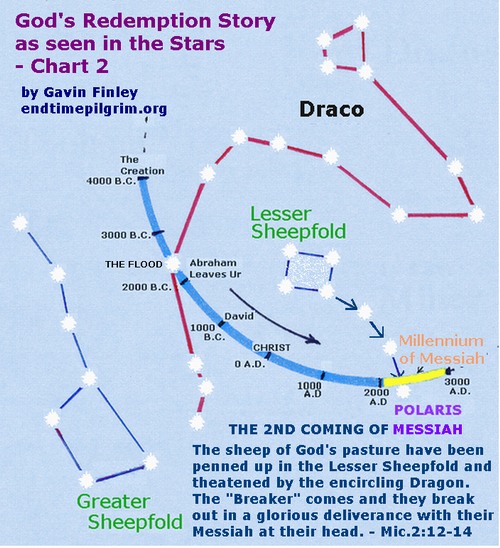
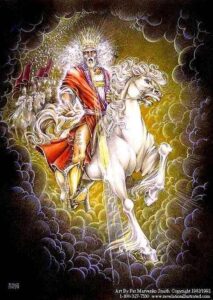 Art used by permission of Pat Marvenko Smith, copyright 1992. Visit her ‘Revelation Illustrated’ website.
 Micah 2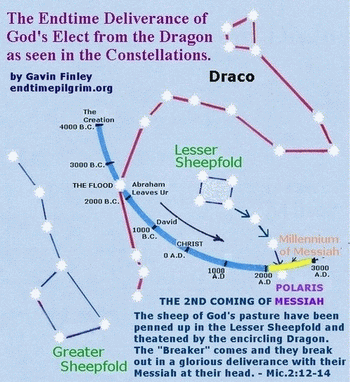
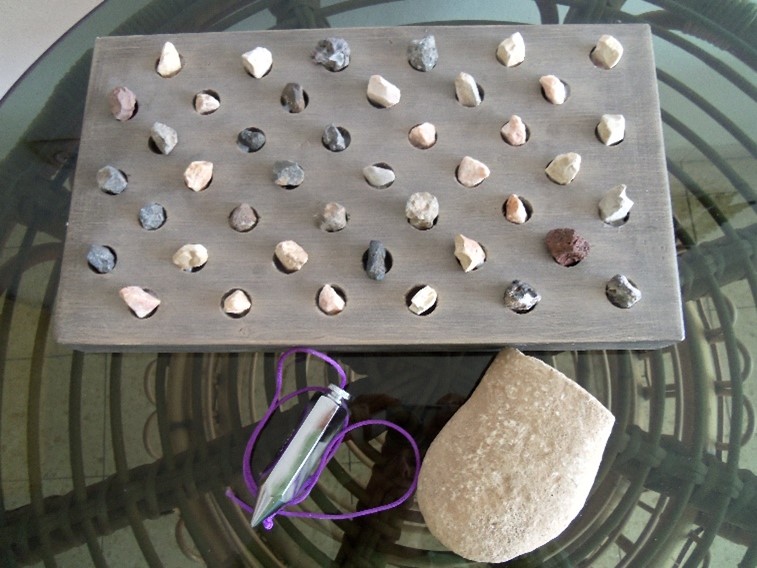
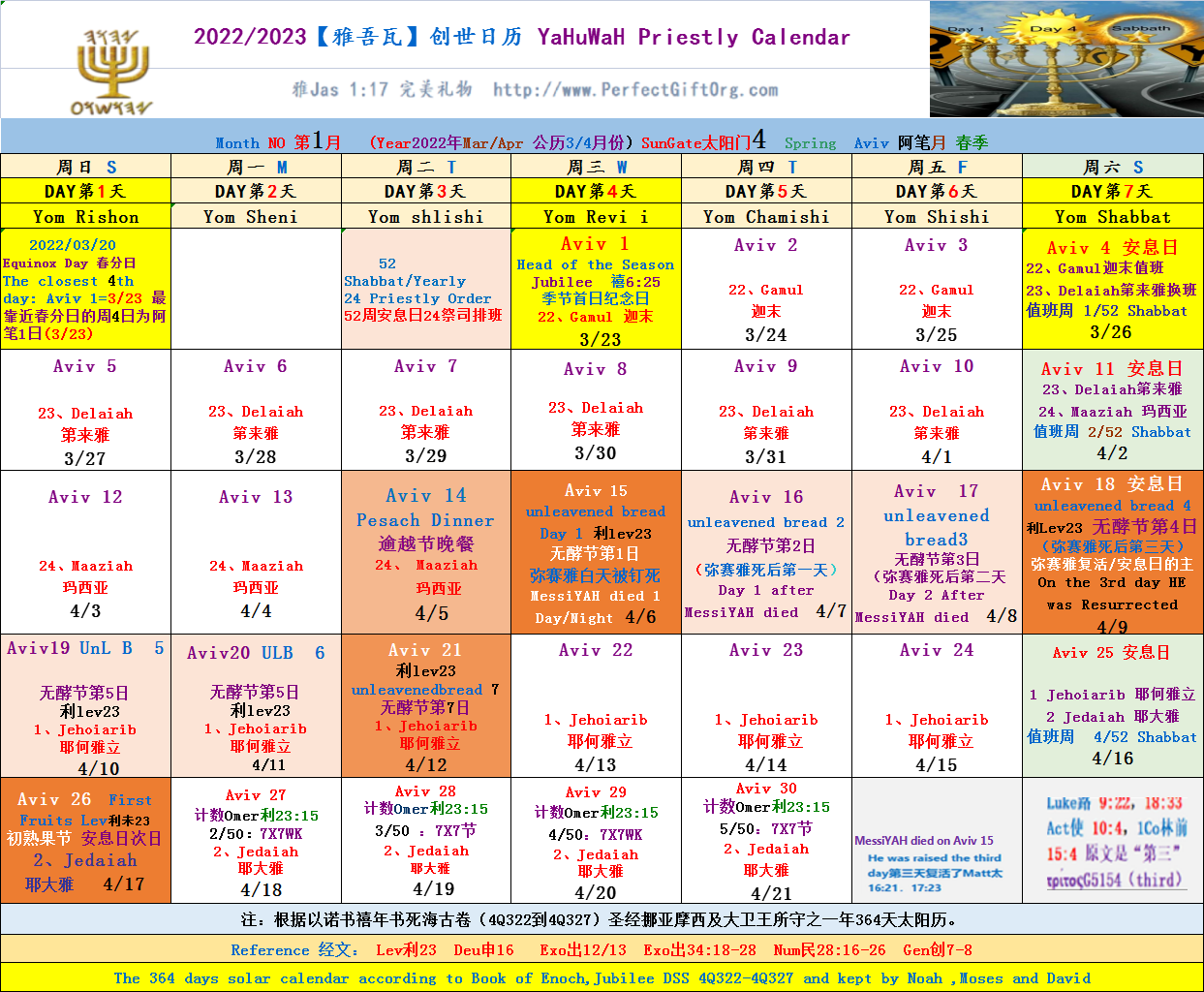
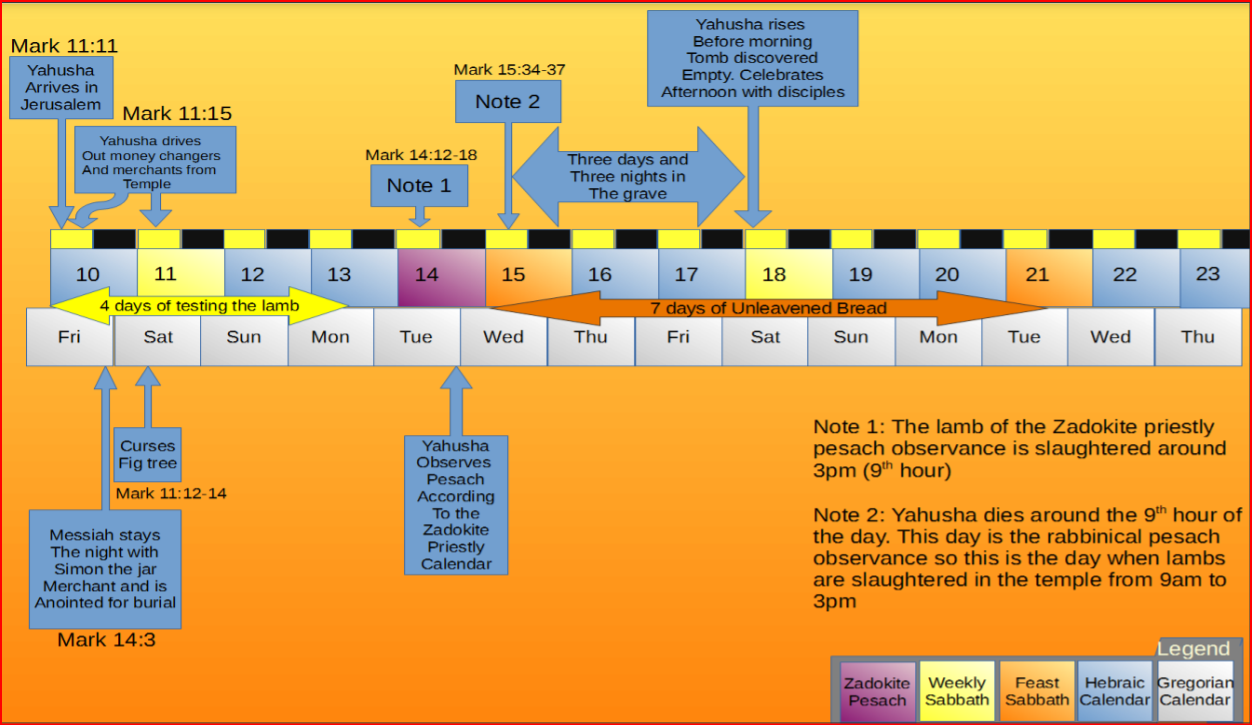
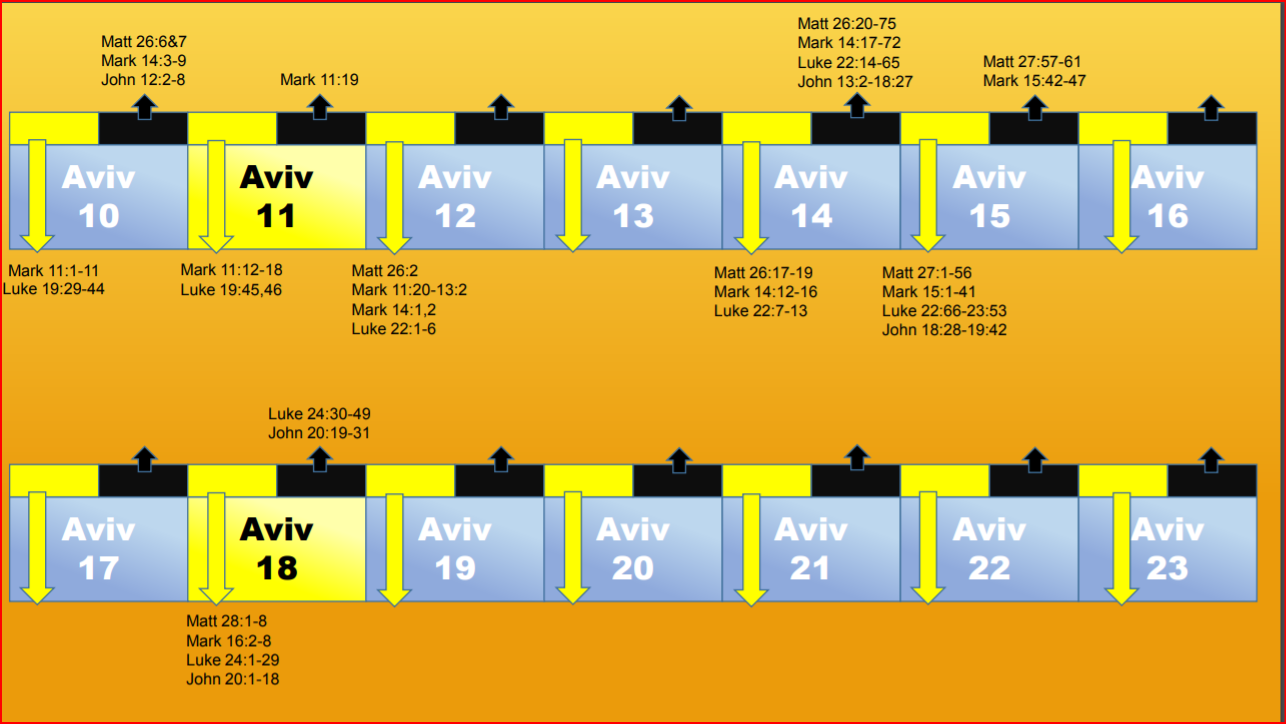
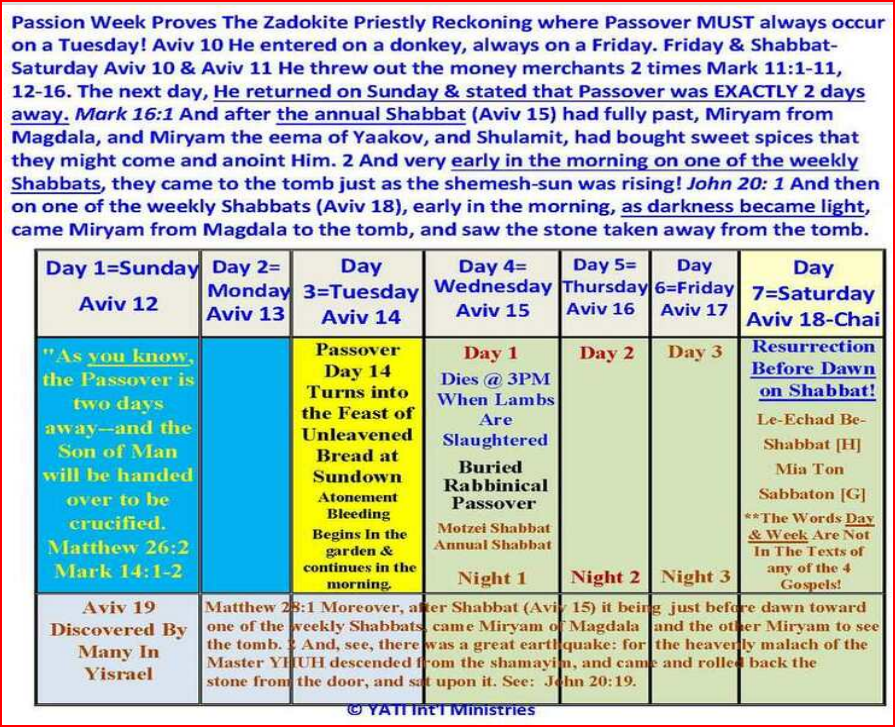
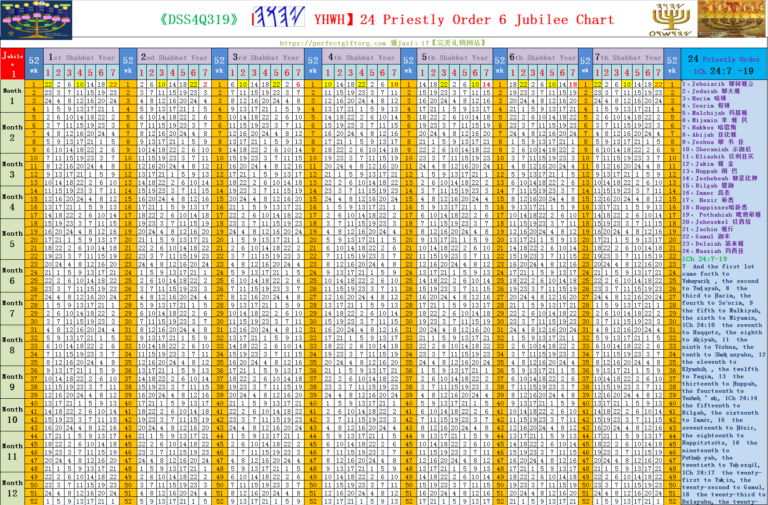
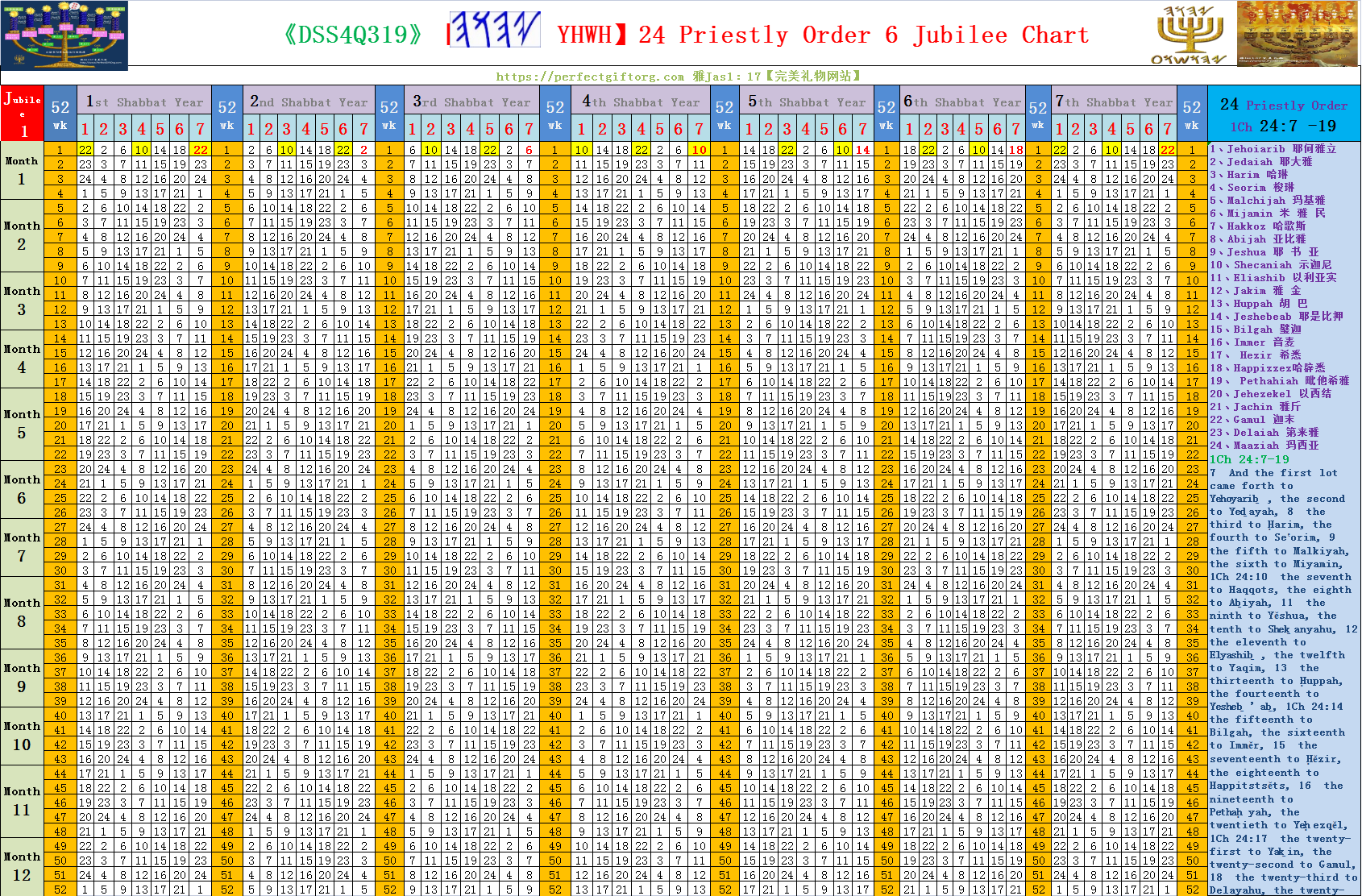
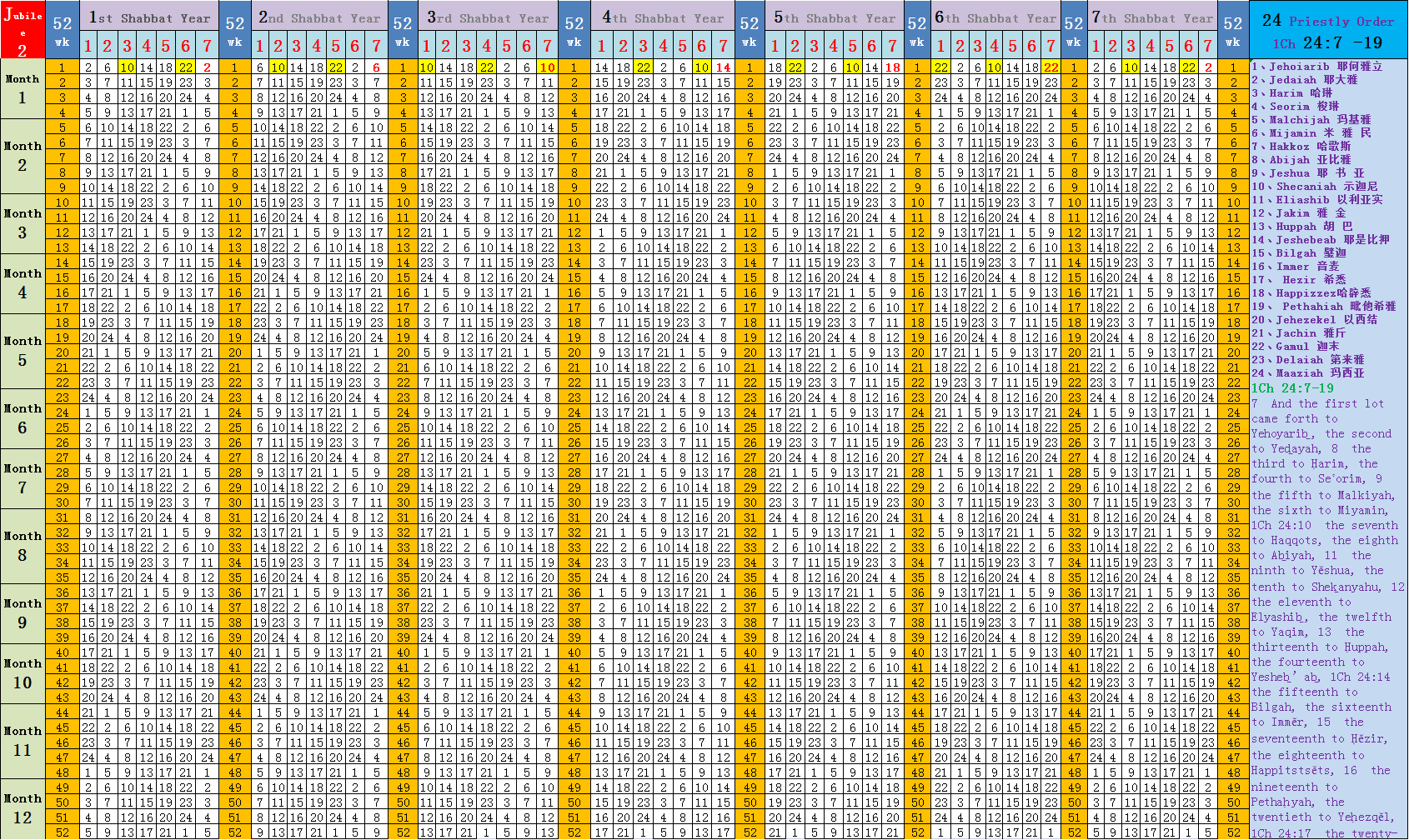
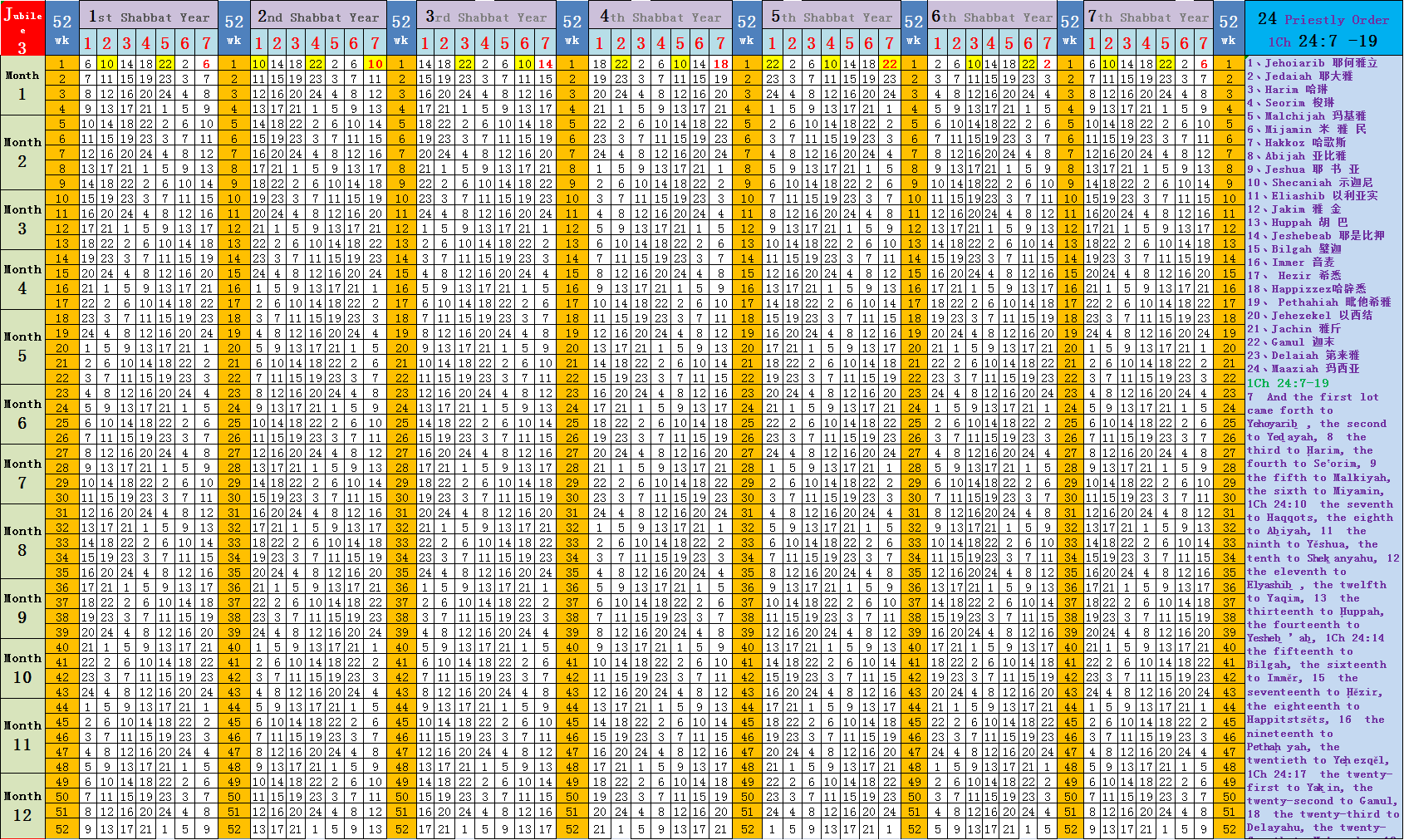
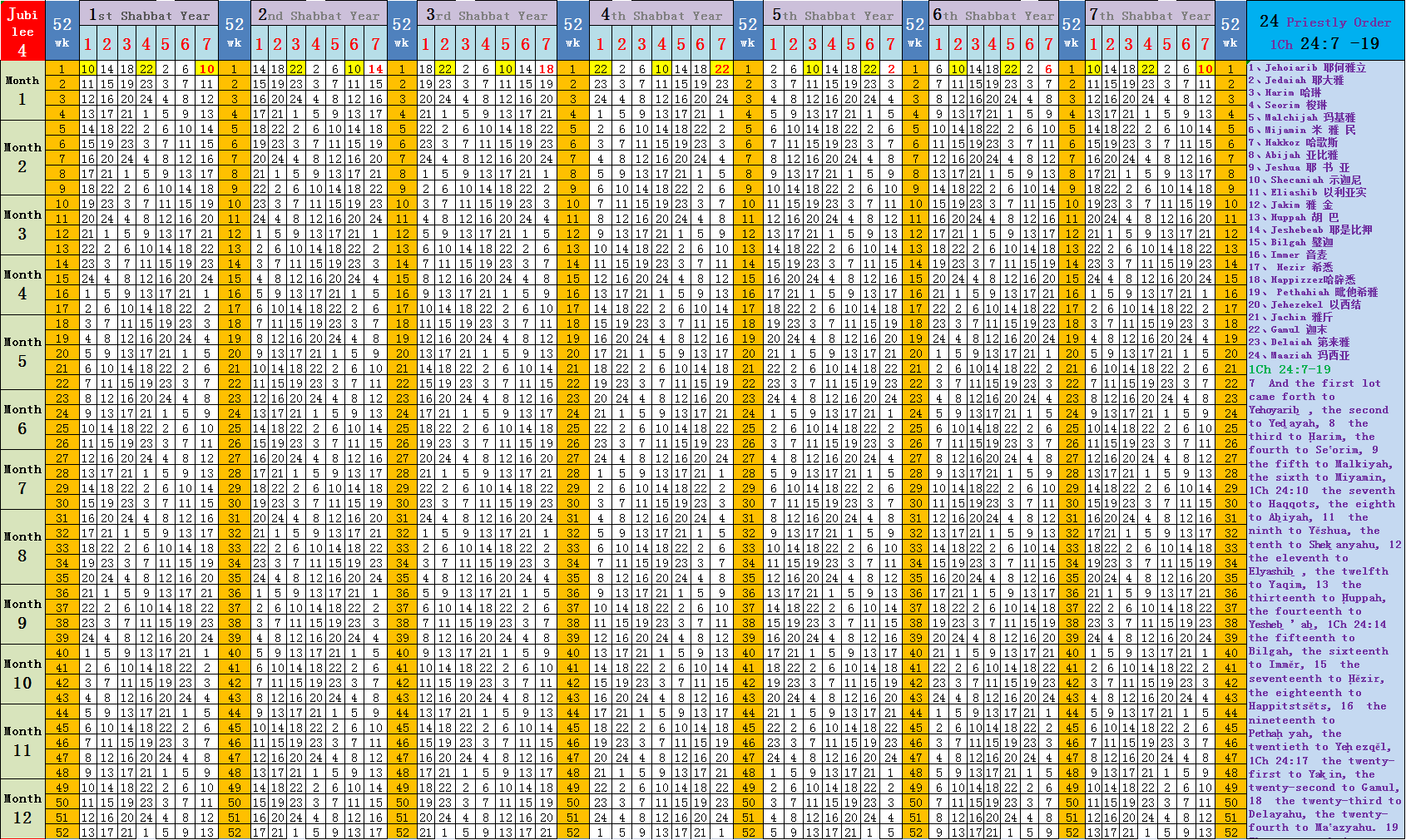
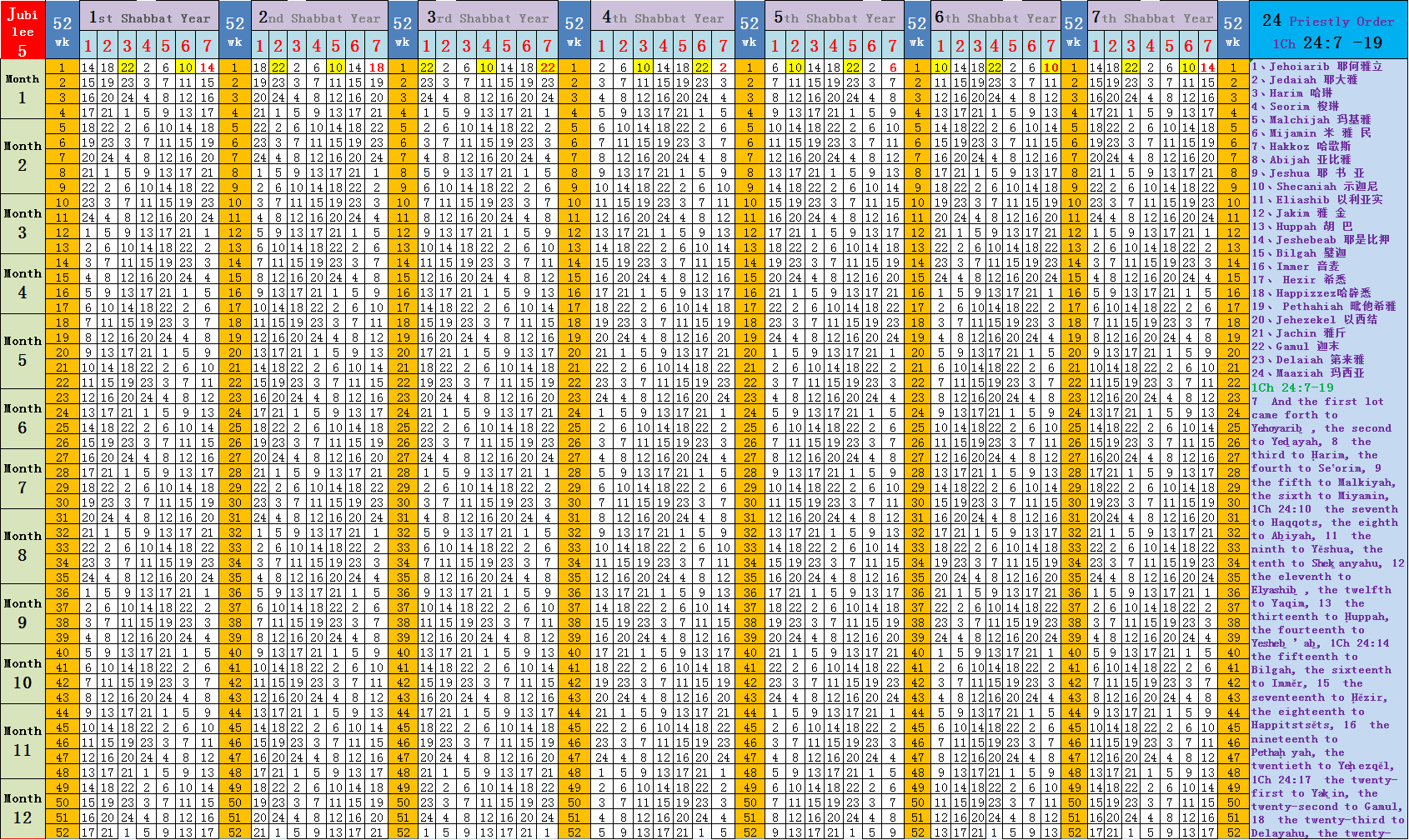
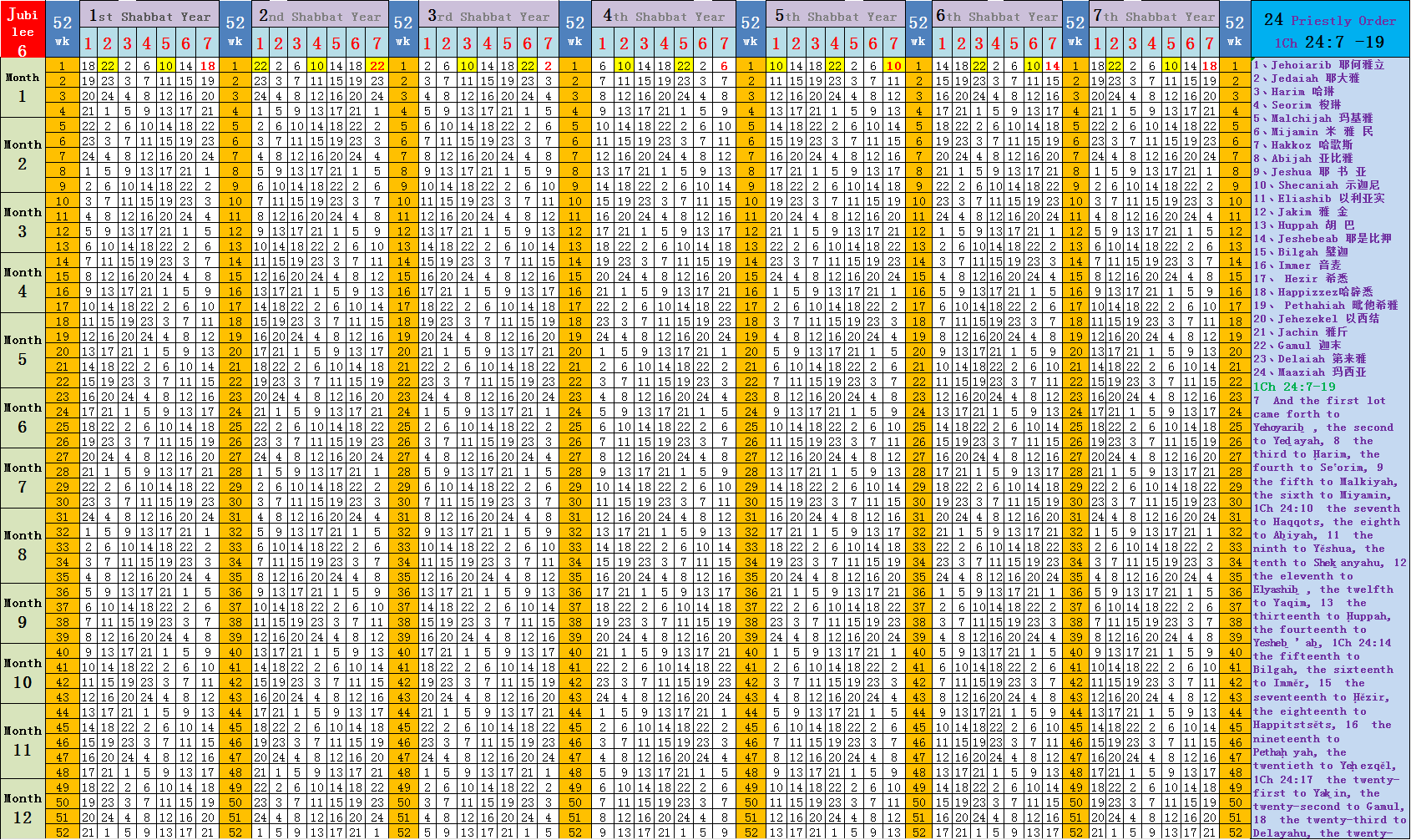
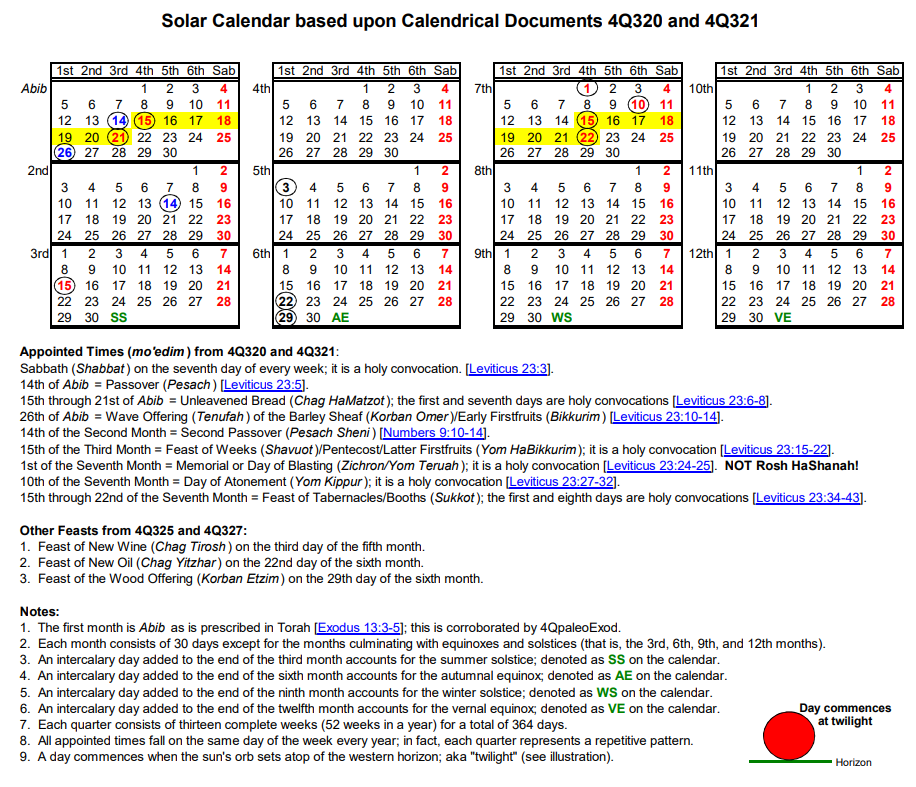
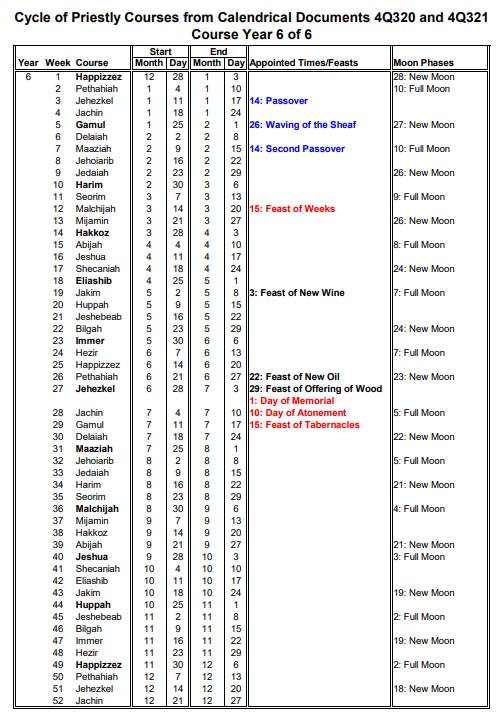

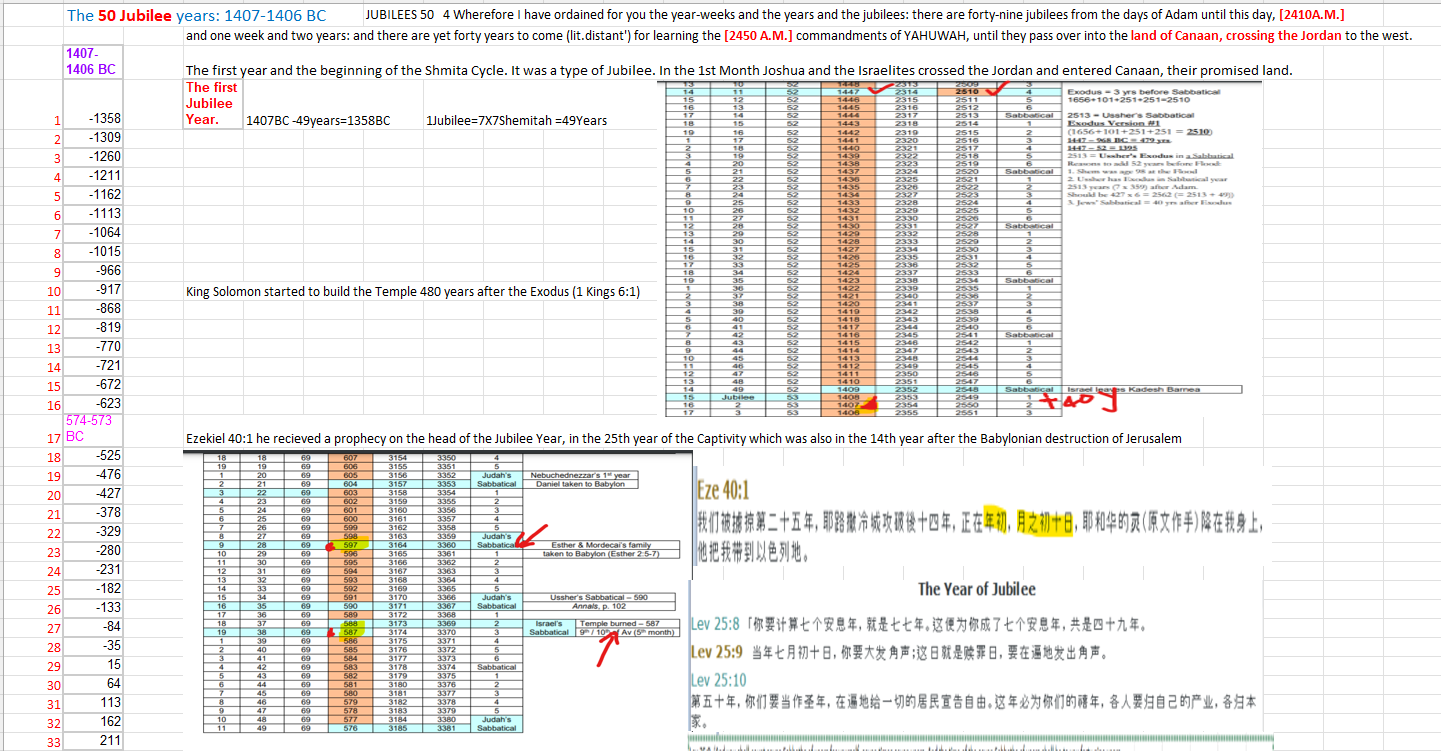
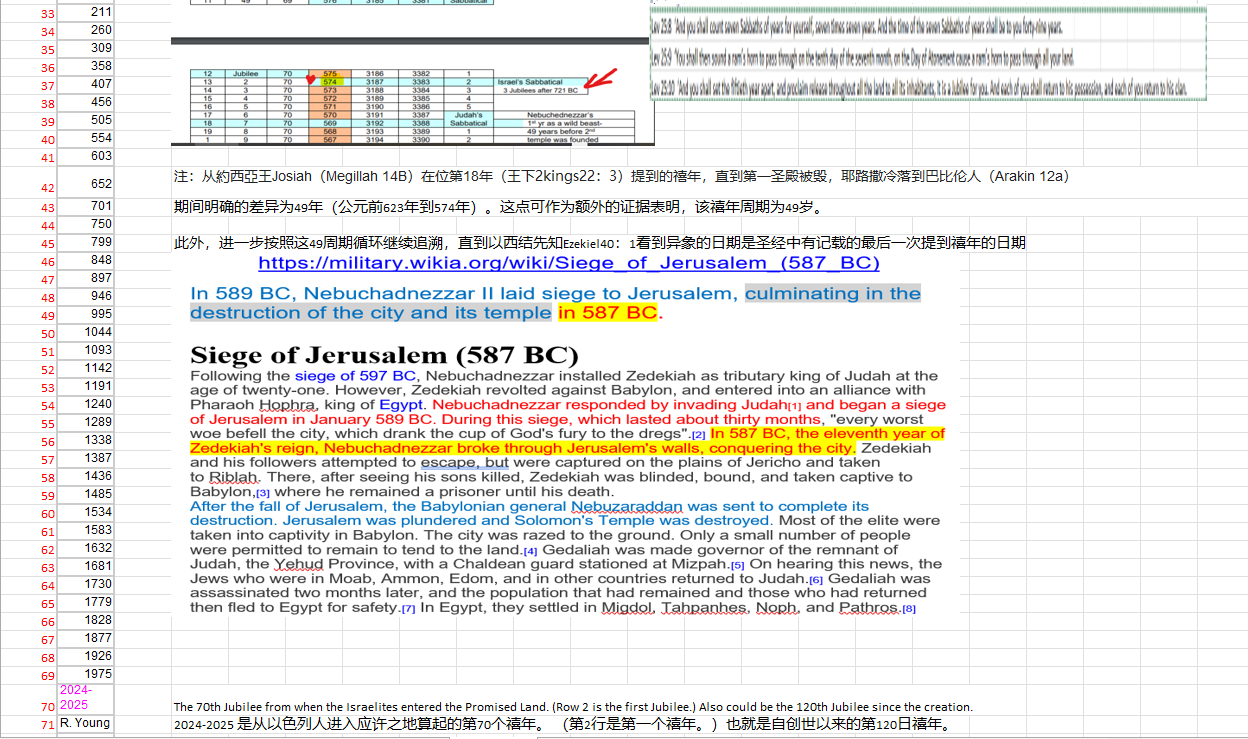

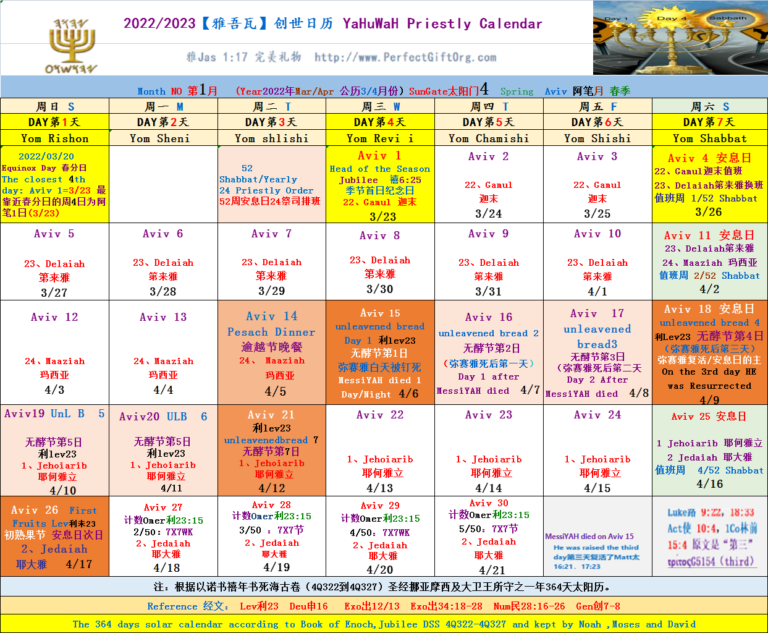
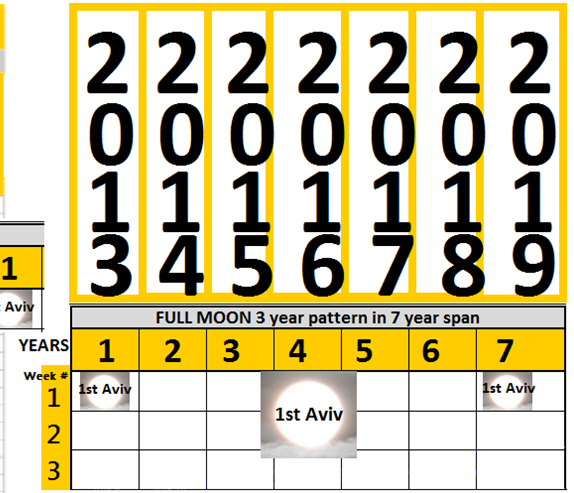
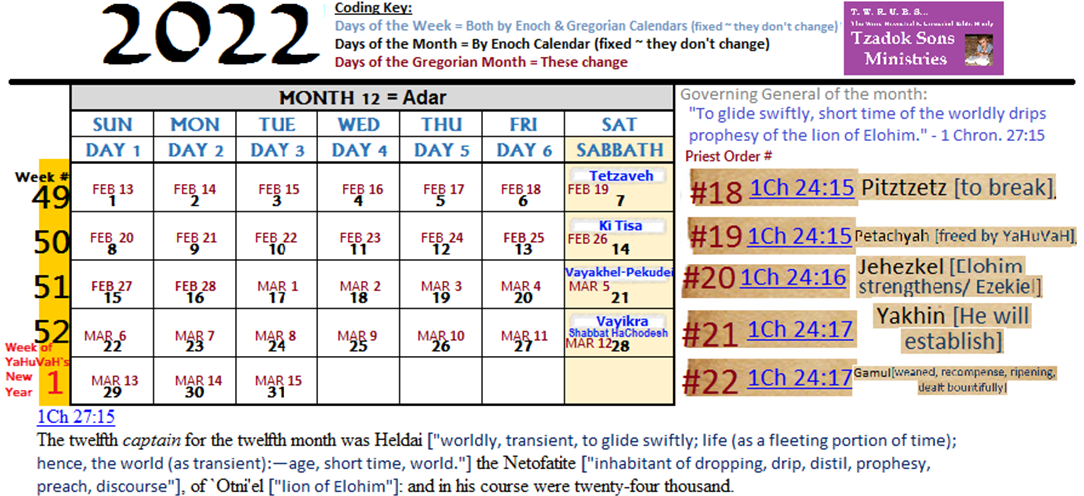

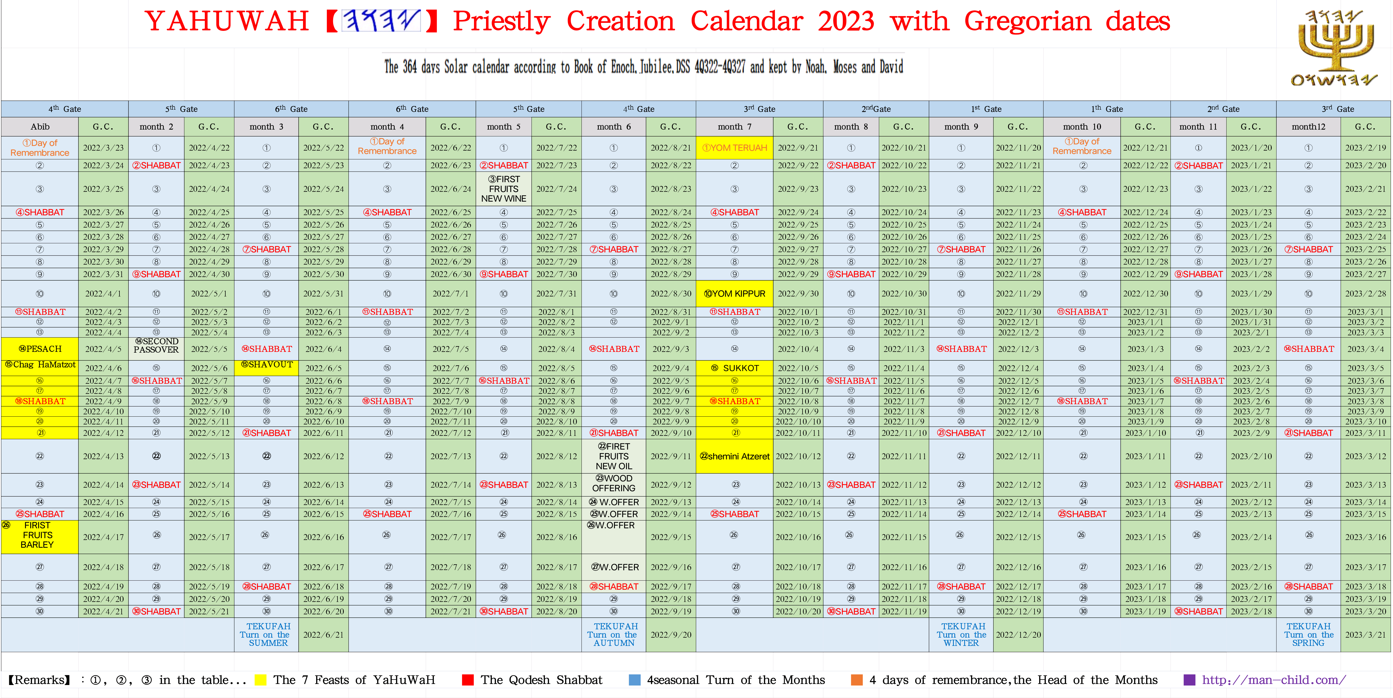

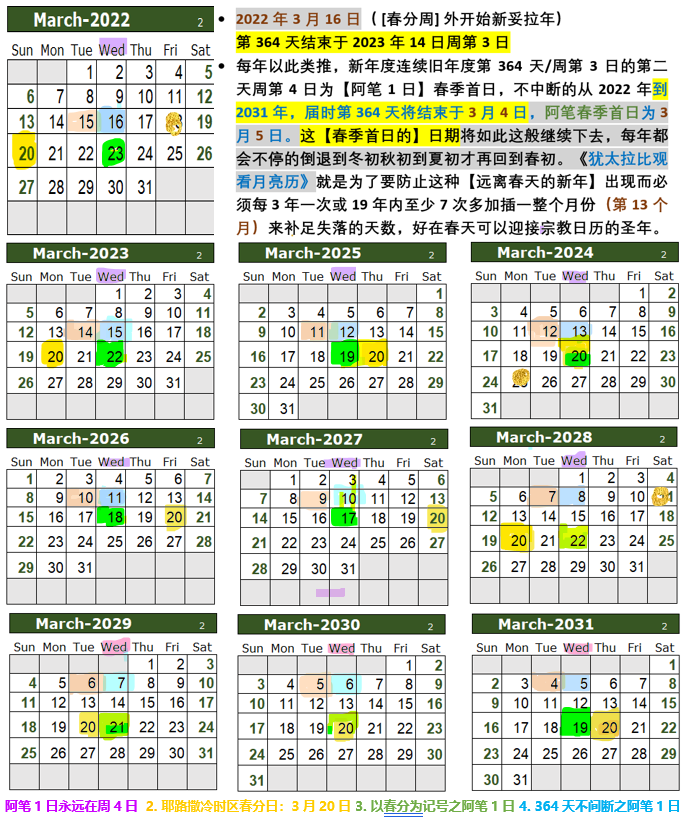
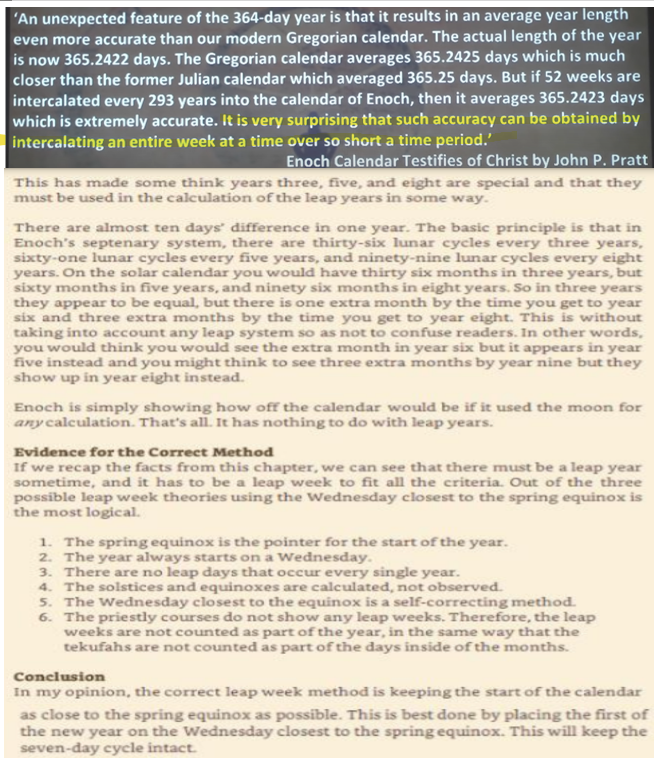
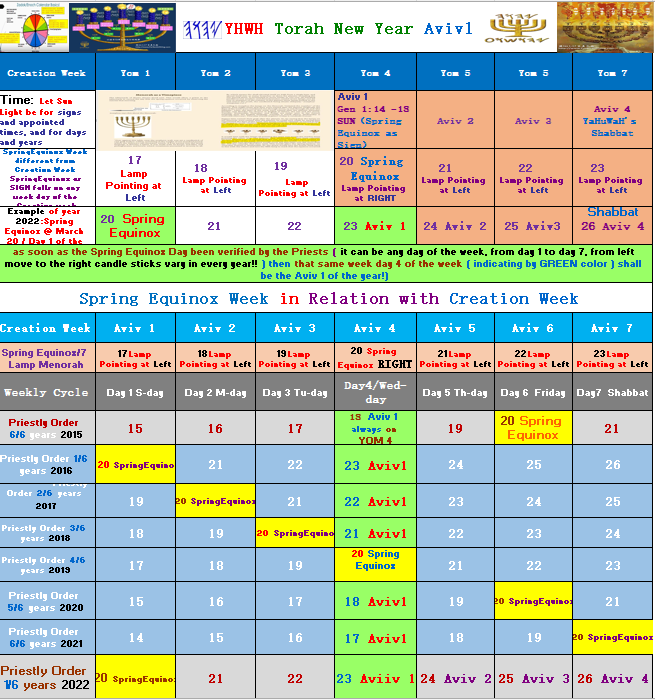

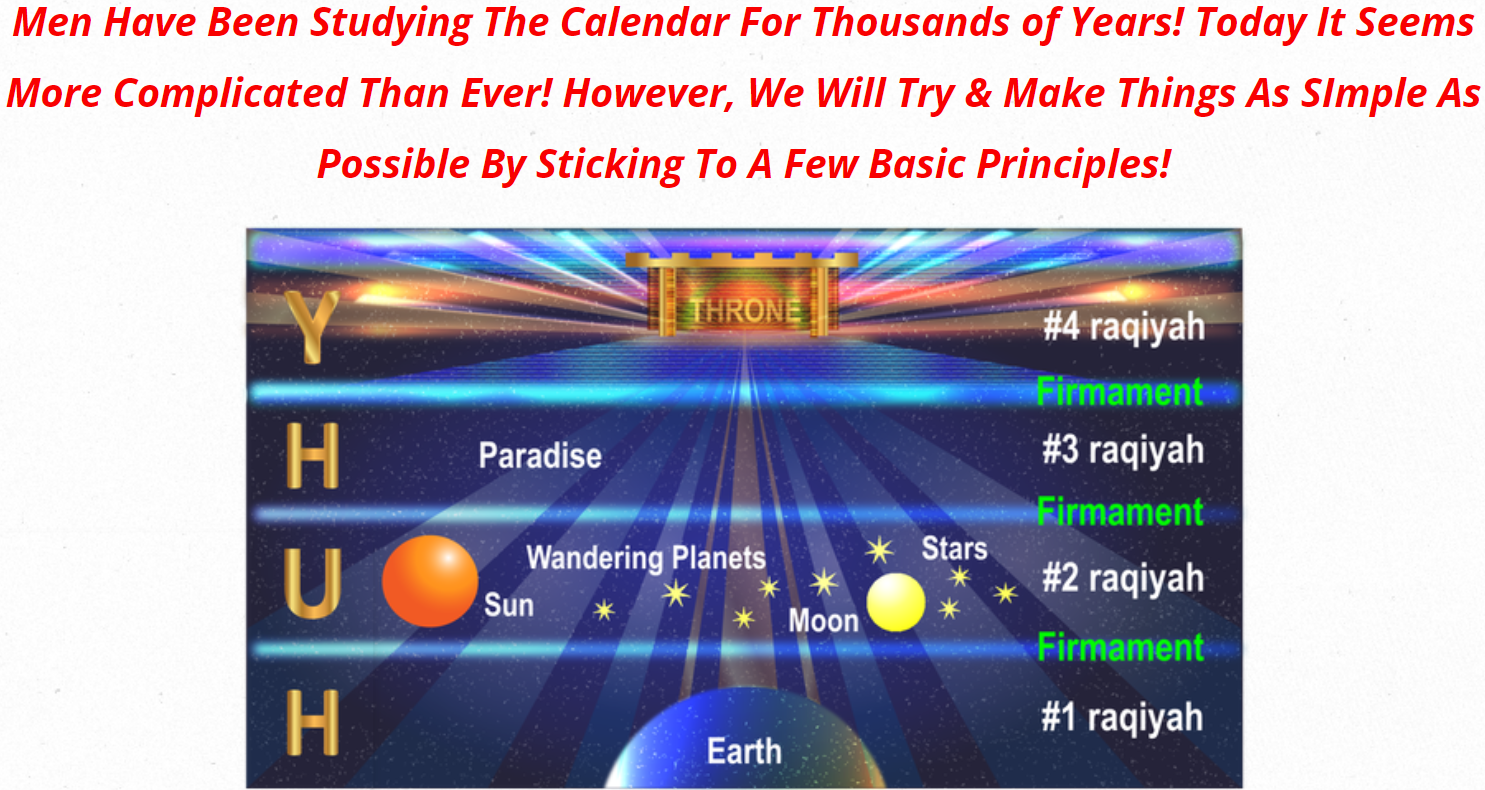
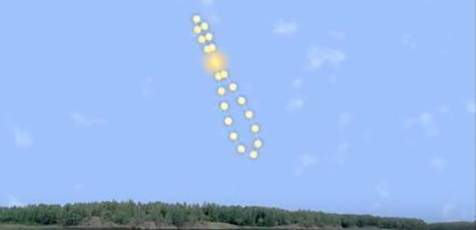
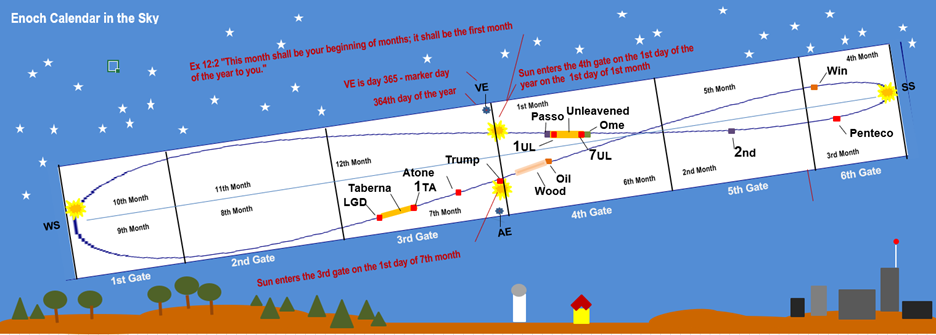

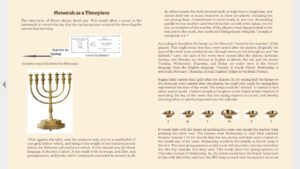 (PDF)
(PDF) 
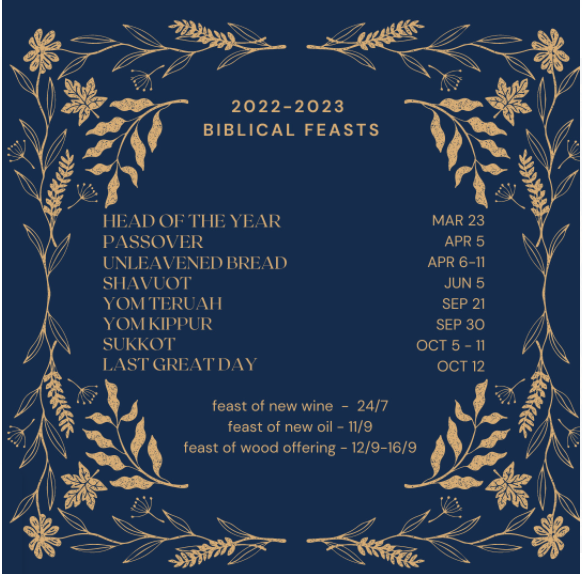


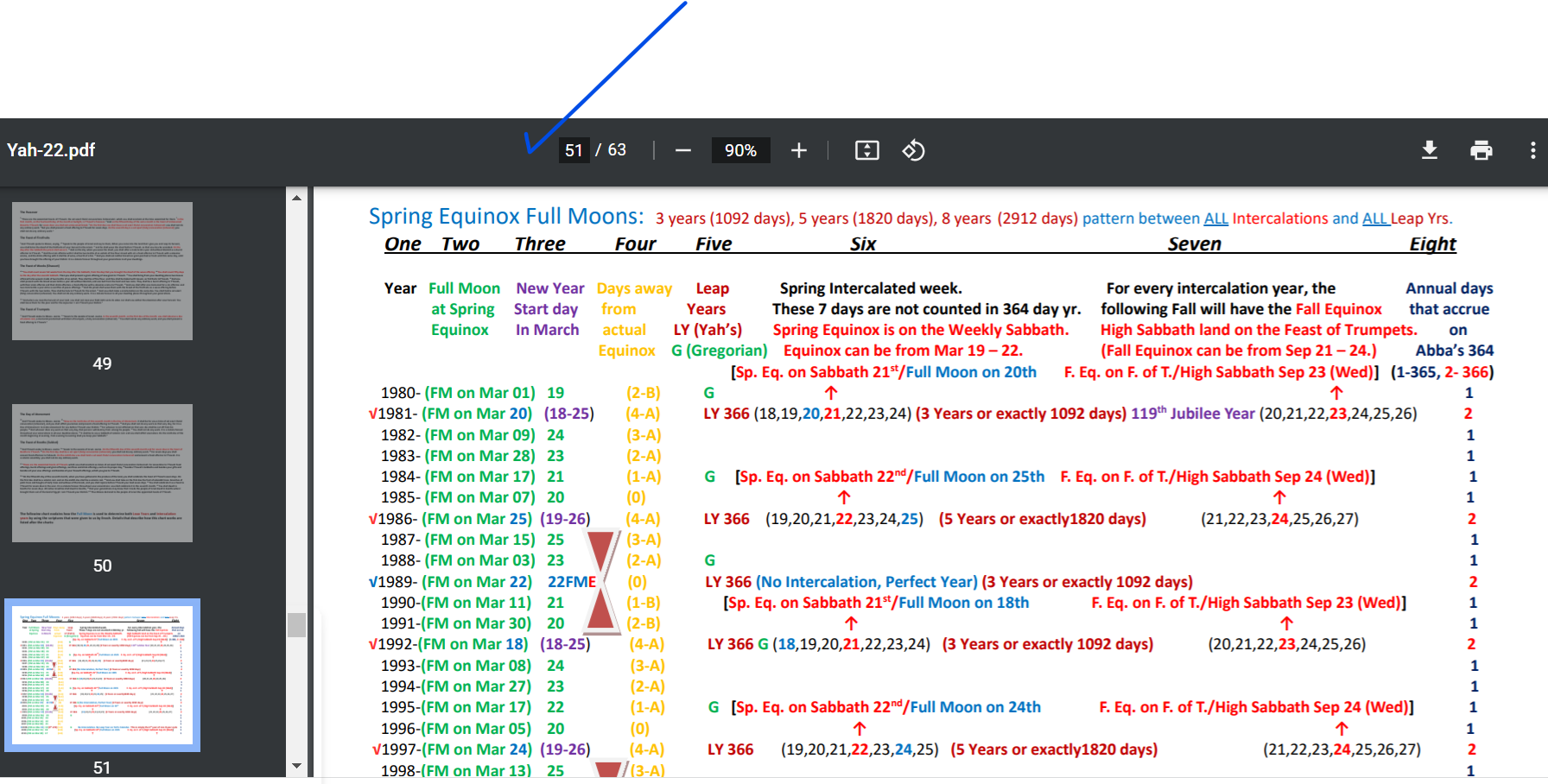
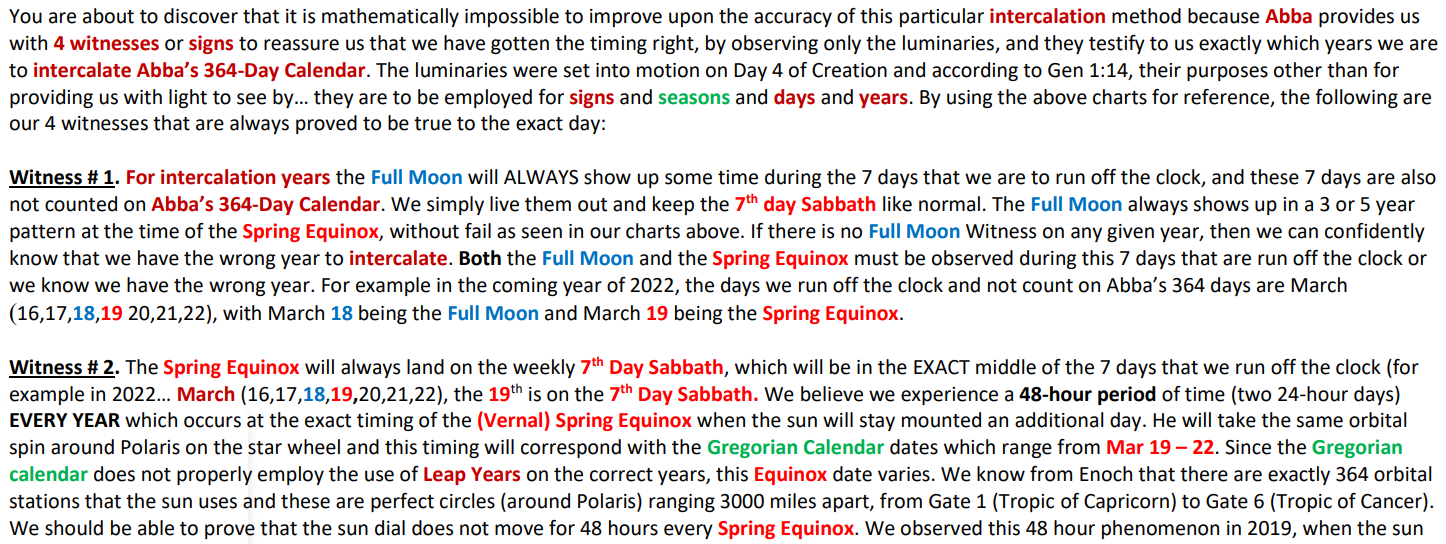
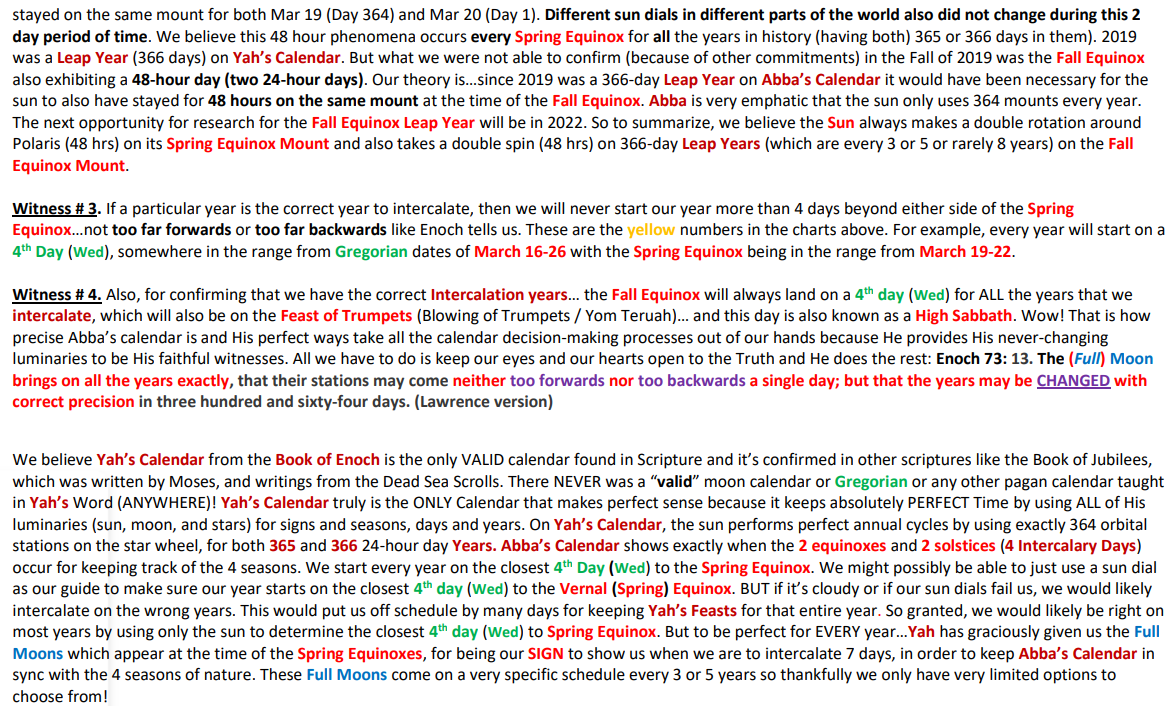 E. Professor Rachel Elior’s View on this subject: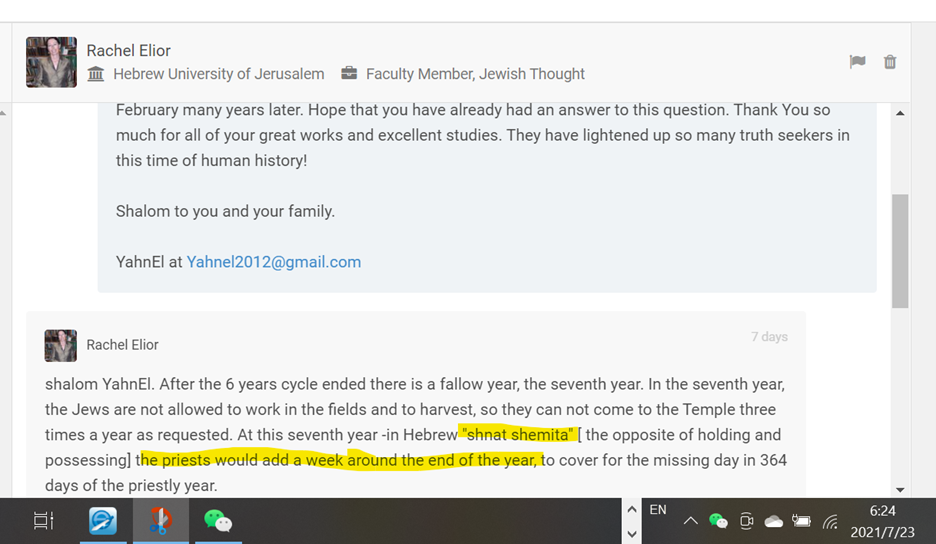

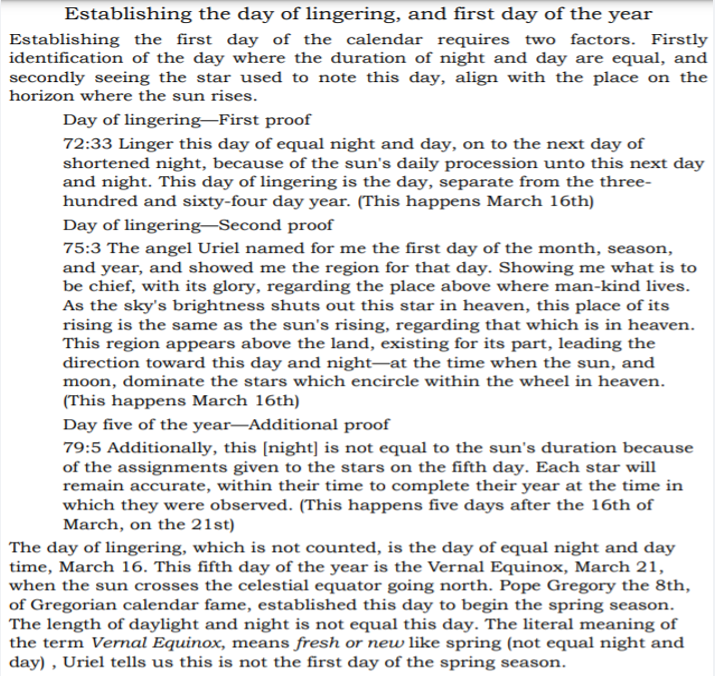
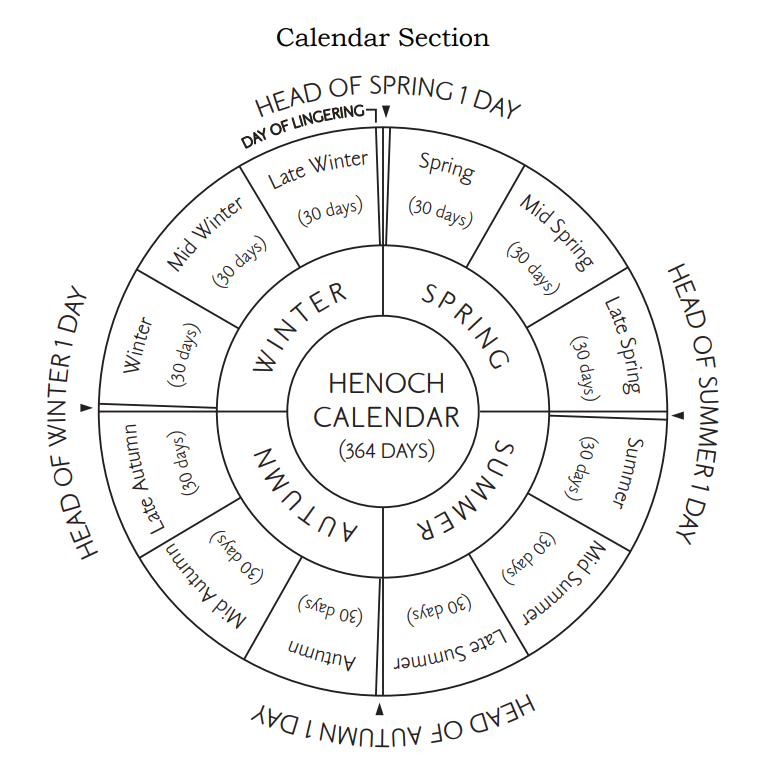
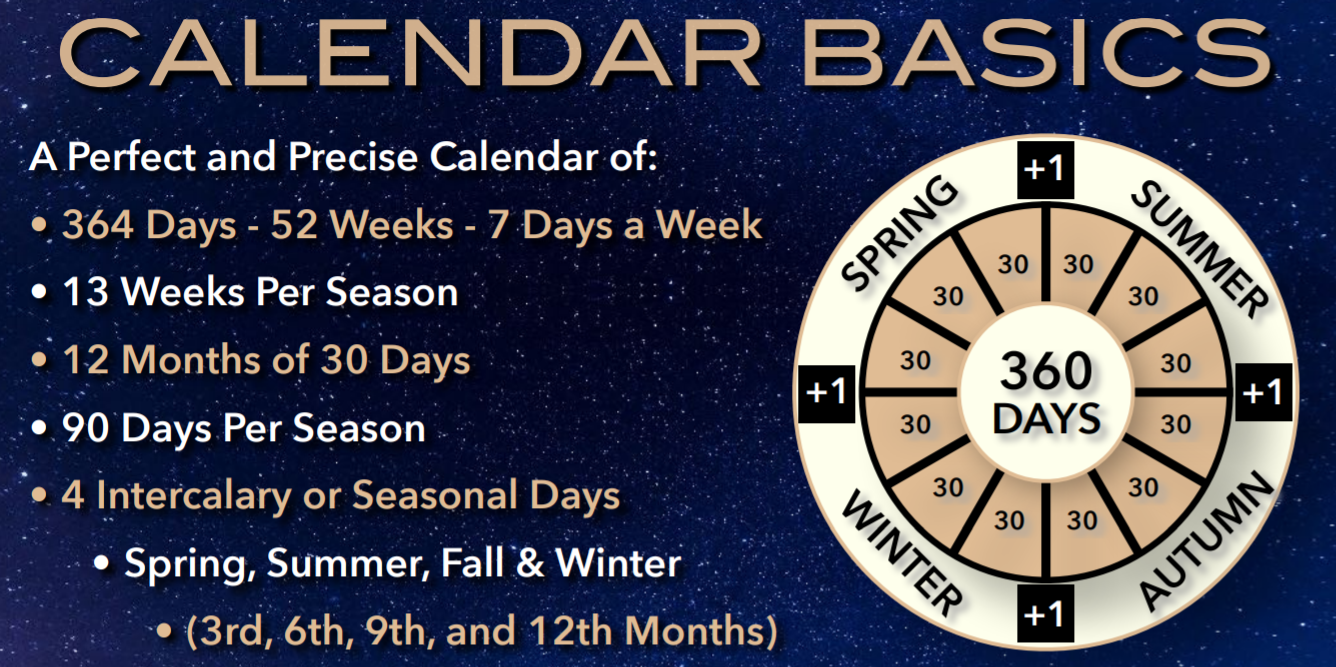
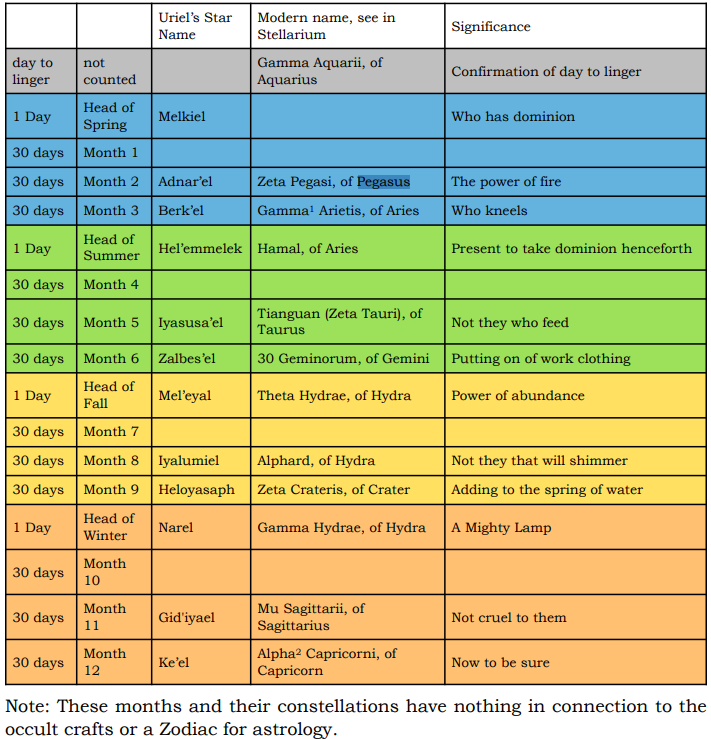
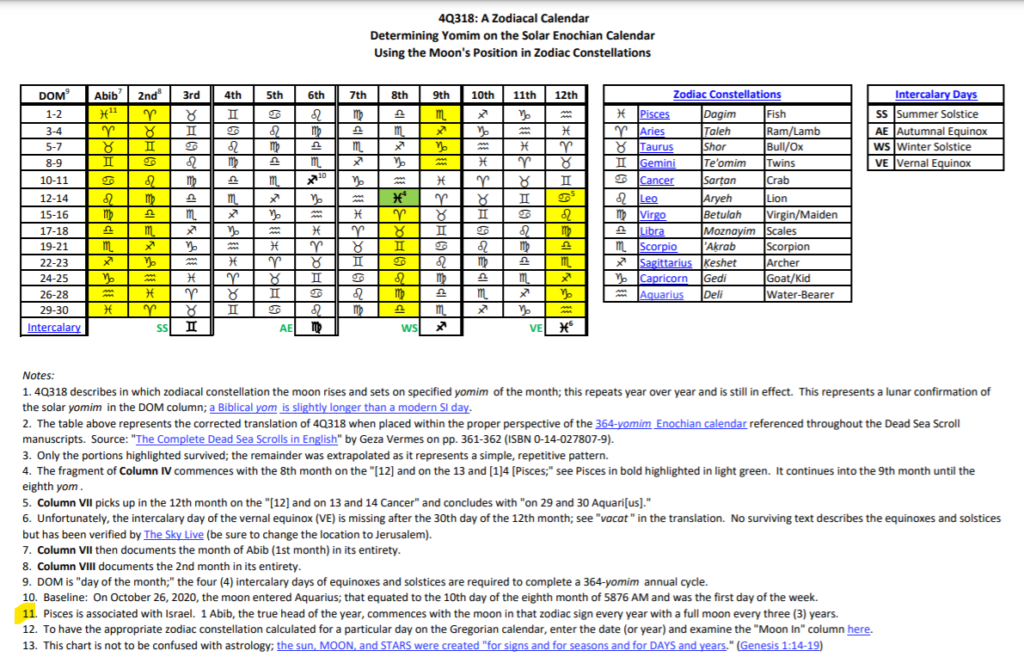

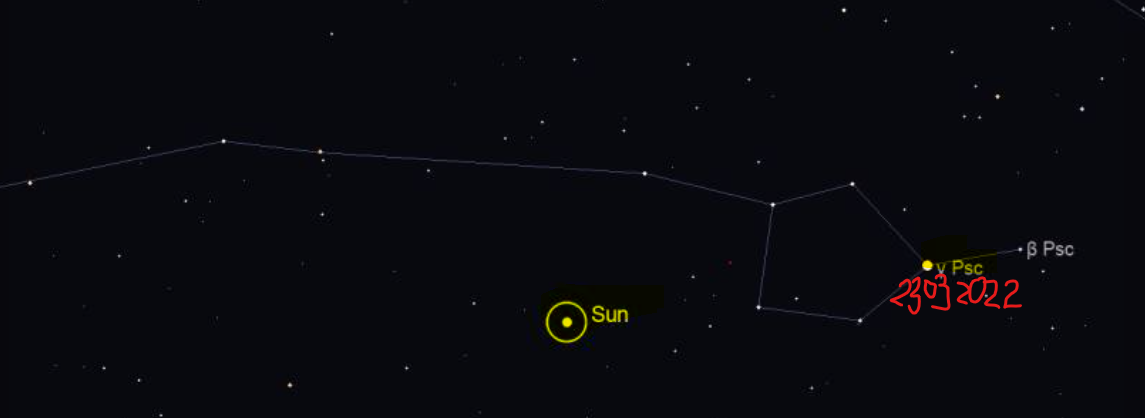

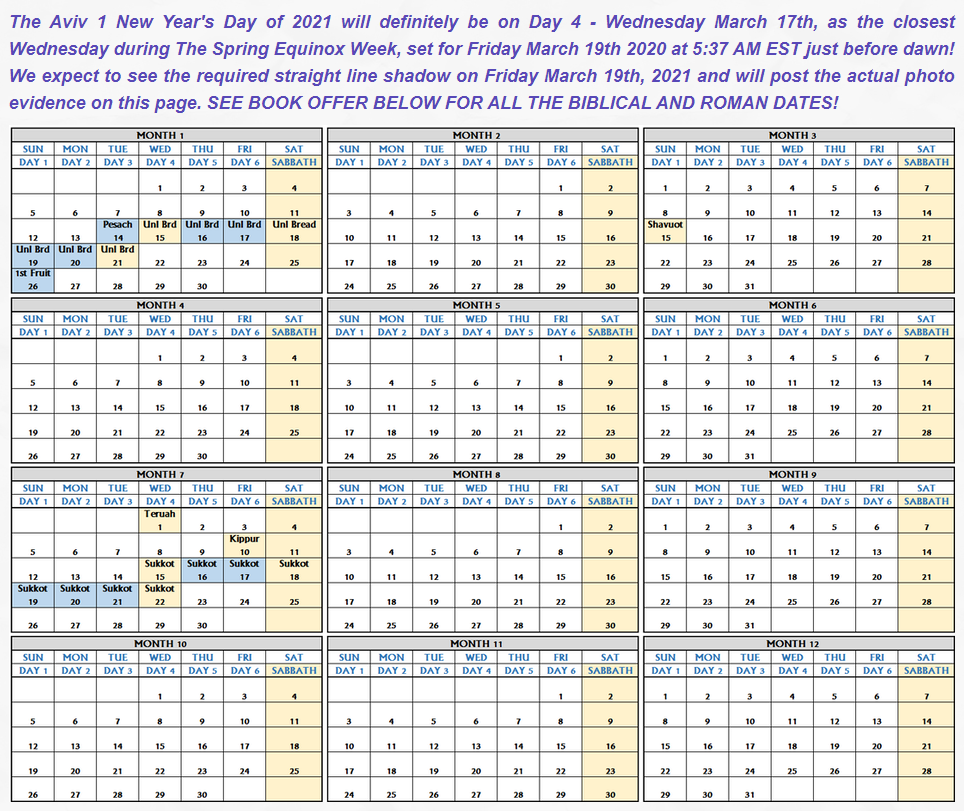
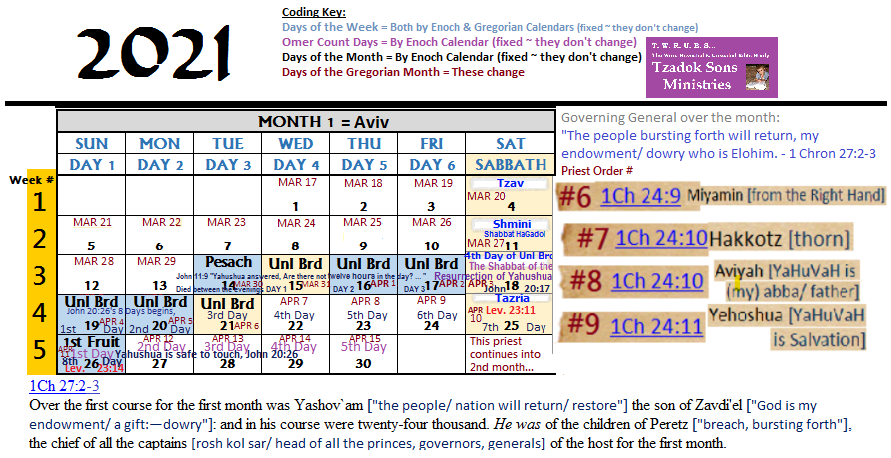
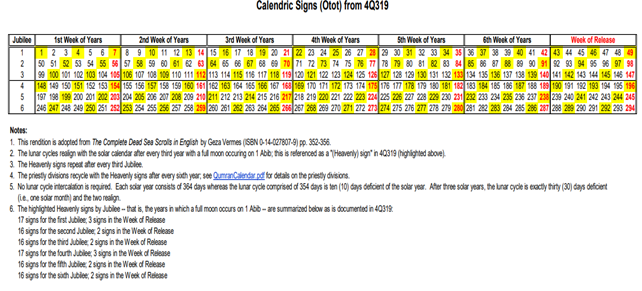
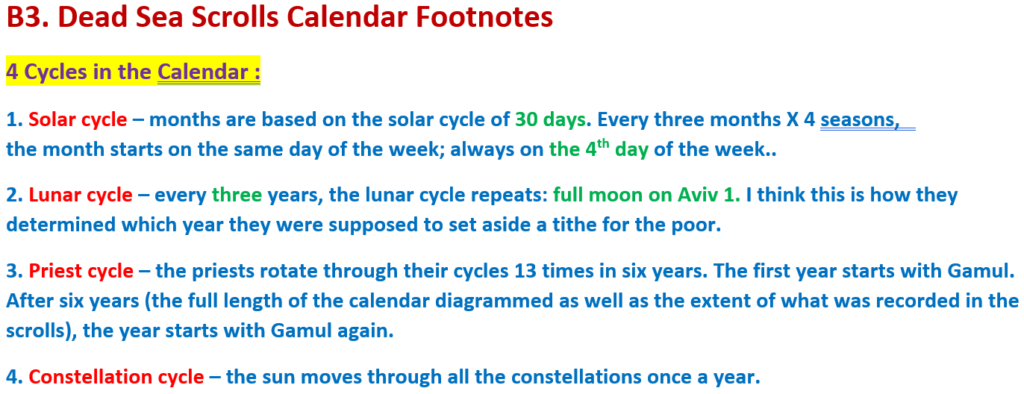
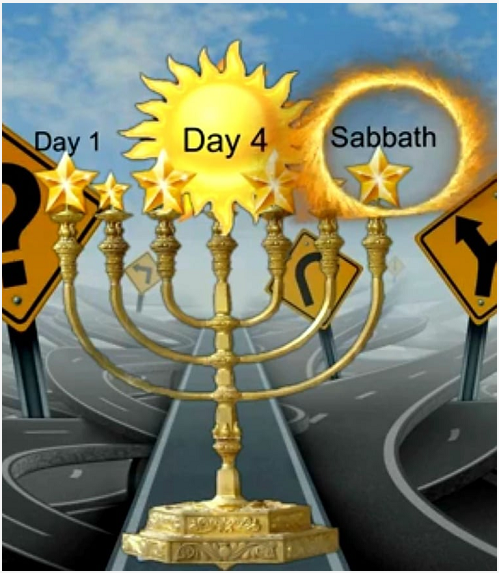
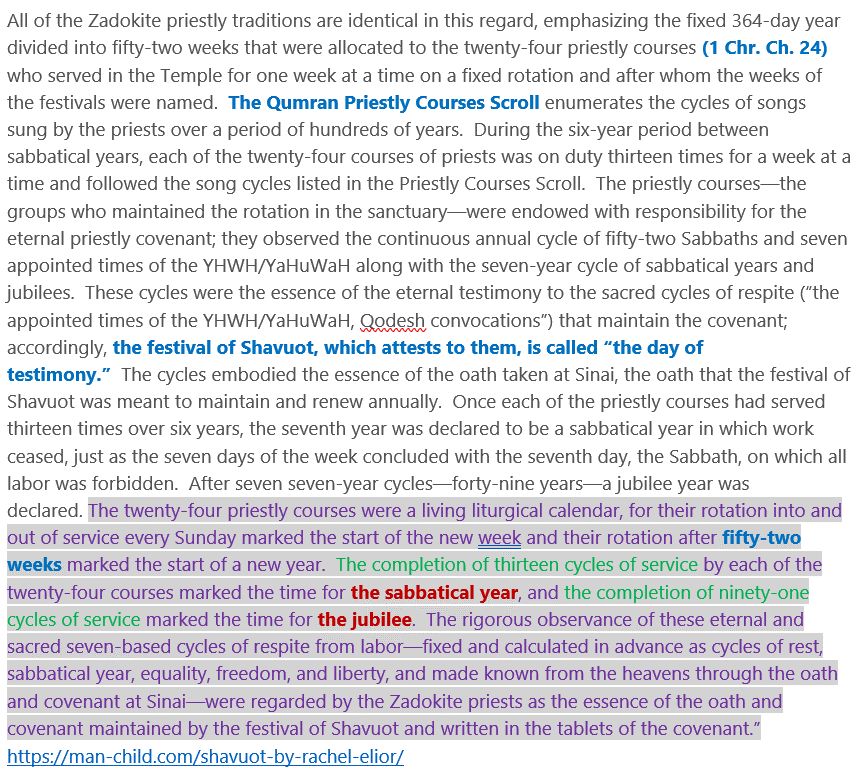 https://perfectgiftorg.com/shavuot-by-rachel-elior/